
Transcendental Meditation explained in simple terms: origins, key principles, benefits, how to practice it, challenges, and how it compares with mindfulness.
When stress feels normal, people stop asking if they are okay and start asking how to function anyway.
That is often where interest in Transcendental Meditation begins. Not in a perfect morning routine or a quiet retreat, but in a life that feels too full, too noisy, or too tense.
Transcendental Meditation, or TM, is one of the most recognized meditation methods in the world.
It is known for a simple structure, a private mantra, and the idea that meditation should feel effortless rather than like mental hard work.
That promise has helped TM move from spiritual circles into workplaces, schools, clinics, and everyday wellness conversations. At the same time, people have fair questions.
What is it really? Where did it come from? Why do some people swear by it? And what does the research actually support?
This guide follows a clear path. First, it explains what TM is and how it became visible in modern wellness.
Then it looks at its roots, key principles, possible benefits, and the practical side of learning and using it.
It also makes space for doubt, limits, and common challenges, because helpful wellness writing should inform people rather than pressure them.
Quick Summary Box
Estimated read time: 23 minutes
What TM is: A specific meditation technique built around silently using a mantra while sitting comfortably with the eyes closed, typically for 20 minutes twice a day.
How it is learned: Through a standardized four-day course with a certified TM teacher, followed by continued support.
Why people try it: Most people are looking for less stress, a calmer nervous system, better daily balance, and a meditation method that doesn’t feel like another task.
What research suggests: Meditation programs can help with stress-related outcomes, and TM has shown modest benefits in some blood pressure and mental health studies, but the evidence is not final and should not be exaggerated.
What to remember: TM can be a useful real-world tool, but it works best as part of a broader approach to health, not as a replacement for medical or psychological care.
Why Transcendental Meditation Matters in Today’s Wellness World
What is Transcendental Meditation (TM)?
Transcendental Meditation is a specific meditation technique in which a person silently repeats a special mantra to settle the mind into a state of inner calm.
It is not a general label for “deep meditation.” It refers to a specific method associated with Maharishi Mahesh Yogi and taught in a standardized manner by certified instructors.
Britannica describes it as a technique in which practitioners mentally repeat a special Sanskrit word or phrase, often called a mantra, to experience inner peacefulness and bodily calm.
One reason TM stands out is how it describes effort. In many forms of self-improvement, success is linked with trying harder. TM teaches almost the opposite idea.
The practice is presented as natural and effortless, which is why many people who struggled with concentration-based meditation feel drawn to it.
According to the official TM organization, the technique is designed to allow the mind to settle inward without controlling thoughts or forcing focus.
The rise of TM in Modern Wellness
TM became visible long before social media made wellness a market category. It gained broad public attention in the 1960s and 1970s.
It was helped by celebrity interest, global teaching tours, and the idea that meditation could be practiced in ordinary daily life rather than only in monastic or religious settings.
Britannica notes that TM was taught and practiced in the West as a secular path toward mental, emotional, and physical well-being, even though its deeper perspective had roots in Vedanta.
That positioning matters today. Modern wellness culture often promotes tools that are simple, portable, and easy to fit into a busy life.
TM matches that demand well. It does not require a special room, a yoga-level body, or hours of daily training.
It asks for a chair, a regular routine, and instruction. That combination of structure and simplicity explains why it continues to appeal to students, professionals, parents, and people worn down by constant mental noise.
Origins and History
Ancient Vedic Roots
The roots of TM sit within the broad tradition of Vedic and later Vedantic thought from India.
Britannica notes that mantras in Sanskrit developed within the Vedic religion, which is one reason sound and repetition have such a central place in later meditative traditions.
TM itself is modern in branding and global reach, but its underlying logic did not appear from nowhere.
It draws from a long tradition that treated sound, consciousness, and inward attention as meaningful tools rather than decorative symbols.
This background is worth understanding because it helps clarify a common confusion: TM is often marketed as secular, and for many people, it functions that way in practice. But secular use does not erase historical roots.
A more honest explanation is that TM is a modern teaching format built around a technique from older Indian contemplative traditions. That is a balanced way to understand both its origins and its modern presentation.
Maharishi Mahesh Yogi and the global spread
Maharishi Mahesh Yogi was the figure most responsible for turning TM into a global movement. Britannica identifies him as the Hindu religious leader who introduced Transcendental Meditation to the West.
Through teaching tours, organizations, and media attention, he helped frame meditation as something ordinary people could learn and use in everyday life.
The global spread of TM was not just about meditation. It was also about messaging. Maharishi presented the technique in a way that appealed to modern audiences interested in stress relief, consciousness, and practical well-being.
In time, TM entered schools, businesses, and wellness settings. That helped it become more than a spiritual export.
It became a recognizable lifestyle tool, especially for people who wanted a method that felt disciplined but not severe.
Key Principles of TM
The Mantra: using sound as a vehicle for the mind
At the center of TM is the mantra. In practical terms, this means a sound or phrase is used silently during meditation.
Historically, it connects the practice to much older traditions that treated sound as a means of guiding awareness inward.
Britannica’s entry on mantra explains that mantras first developed within the Vedic religion, and TM adapts that broad idea into a modern meditation method.
What matters for a beginner is not the academic history but the role the mantra plays.
In TM, the mantra is not there to make you “think positive thoughts.” It functions more like a gentle vehicle for attention.
Instead of analyzing, forcing, or trying to empty the mind, the person quietly recites the mantra, which helps mental activity settle.
That is one reason TM is usually described as different from guided meditation or classic mindfulness observation.
Effortlessness: Why “trying” is counterproductive
This is one of the most important ideas in the technique. TM teaches that trying too hard gets in the way.
That sounds strange in a culture where effort is treated like the answer to everything, but it makes sense if you think about the nervous system.
A stressed person can turn meditation into another performance.
They try to “do it right,” get frustrated by thoughts, and then leave the session feeling like they failed. TM tries to interrupt that pattern by removing the pressure to control the mind.
That does not mean the practice is passive in the sense of being lazy. It means the practice is non-forceful.
You sit, use the technique as taught, and let thoughts come and go without treating them as proof that meditation isn’t working.
This is why TM often appeals to people who say, “I can’t meditate because I think too much.” In TM language, having thoughts is not a sign of failure. It is part of being human.
The State of Restful Alertness
A common phrase connected with TM is “restful alertness.” The idea is that the body can experience a deep kind of rest while the mind remains awake rather than drifting into sleep.
The official TM organization describes the practice as producing a settled state of awareness, and this concept has been a major part of how TM explains itself in both educational and wellness settings.
For many people, that phrase makes more sense after they practice than before. They may notice they are not asleep, yet they come out of meditation feeling less tight, less rushed, or less mentally scattered. Not everyone describes it dramatically.
Sometimes the shift is plain and practical: fewer stress spikes, less irritability, and a slightly clearer head in the middle of a demanding day.
That kind of change is often more useful than chasing intense experiences.
Benefits of Transcendental Meditation
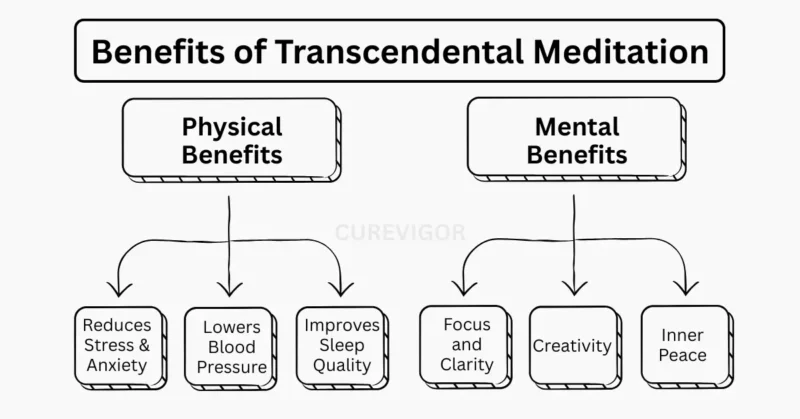
Physical Benefits
Reduces Stress and Anxiety
The strongest evidence for meditation, in general, is not that it creates instant bliss. Meditation programs can reduce some negative dimensions of psychological stress.
A major review in JAMA Internal Medicine found that meditation programs can help reduce anxiety, depression, and stress-related outcomes, although effects are usually small to moderate rather than dramatic.
For TM specifically, some clinical studies have shown improvements in distress-related symptoms.
That does not mean every person will feel the same change, nor does it prove that meditation lowers cortisol in a clinically meaningful way in every case.
A careful reading is better: TM may help some people feel less mentally burdened, and that shift can matter in daily life.
Stress relief is not always a spectacular event. Sometimes it is simply feeling less overwhelmed by the same day.
Lowers Blood Pressure
Blood pressure is one of the most discussed health areas in TM research. A 2022 meta-analysis found that TM mildly reduced systolic and diastolic blood pressure, though the benefit appeared to wane after about 3 months.
The authors concluded that TM might be recommended as one aspect of a healthy lifestyle rather than as a standalone solution.
That is the kind of phrasing readers should trust. A mild benefit is still a benefit. But it is not a replacement for medication, monitoring, or medical guidance.
NCCIH also notes that meditation may have small beneficial effects on blood pressure.
So the most useful takeaway is this: TM may support cardiovascular health as an add-on, especially for people whose blood pressure is affected by chronic stress, but it should remain supportive care.
Improves Sleep Quality
Meditation is often used by people whose nervous systems never seem to fully power down.
While evidence on sleep varies by method and study quality, meditation programs are commonly explored for sleep-related complaints because calming mental and physical arousal can make rest easier.
NCCIH notes that meditation has been studied for problems such as anxiety, depression, pain, and sleep-related concerns.
In practical terms, people often describe better sleep not because TM knocks them out, but because it lowers the inner overdrive that follows them into the evening.
The mind may still be active, but it can feel less hooked by every thought.
That can make it easier to transition into rest. Sleep improvement is rarely guaranteed, but it is one of the reasons many people keep returning to a regular practice.
Mental Benefits
Focus and Clarity
When people say TM helps them think more clearly, they usually mean something simple. They feel less mentally clogged. They react less impulsively. They can stay with one task a little longer.
The evidence on attention and cognitive function is not as settled as the marketing sometimes suggests, but reduced stress alone can improve how a person experiences focus in daily life.
That matters because many people do not need perfect concentration. They need enough mental space to think straight.
If TM helps lower strain, then clearer thinking may follow as a secondary benefit, even if the main change is not “brain optimization” in the flashy way wellness ads often suggest.
Creativity
TM literature often speaks about accessing deeper levels of thought or the “source” of thought. That language comes from the TM tradition itself and reflects how the method understands consciousness.
Research does not provide a simple final answer that TM directly boosts creativity in every user, but many practitioners report feeling less mentally jammed and more open, which can indirectly support creative work.
A grounded way to say this is that mental quiet can create room. When the mind is less crowded by stress loops, ideas sometimes come more easily.
That does not make TM a magic switch for creativity. It can support people whose creativity suffers when they are tired, tense, or constantly overstimulated.
Inner Peace and Emotional Regulation
The phrase “inner peace” can sound vague until you put it into real life. It may mean pausing before reacting. It may mean feeling less emotionally flooded.
It may mean not carrying every stressful conversation in your body for the next six hours.
Meditation research broadly supports the idea that regular practice can help reduce some forms of psychological distress, and TM is often used for exactly that reason.
One small but useful case example comes from research on veterans with PTSD.
A pilot randomized trial found that TM was associated with greater reductions in self-reported PTSD symptoms, depression, anxiety, and sleep difficulties compared with treatment as usual.
It was a small study, so it should not be overclaimed, but it does show why people interested in calmer emotional regulation keep looking at TM as a practical tool.
How to Practice Transcendental Meditation
The 4-Day Course with a Certified Teacher
TM is not usually taught as a fully self-guided practice. According to the official TM organization, it is learned through a four-day course with a certified TM teacher.
The first day centers on personal instruction, and the next days are used to clarify the experience and deepen understanding. Continued support is also part of the system.
This is one of the biggest practical differences between TM and many other meditation styles. Some people value that structure because it reduces confusion and gives them a human guide.
Others find it inconvenient or too costly. Both reactions are fair. But if someone wants TM, this formal learning model is part of what they are choosing.
The Routine: 20 Minutes, Twice daily
The official recommendation is straightforward: practice for about 20 minutes twice a day, usually once in the morning and once later in the day while sitting comfortably with the eyes closed.
That consistency is a big part of the method. TM is not built around occasional long sessions. It is built around brief, regular practice.
This routine is one reason TM feels realistic for many people. Twenty minutes is not a retreat schedule.
The practice is meant to fit around normal life rather than replace it. That is why so many people describe it as usable. It asks for commitment, but not a dramatic lifestyle change.
Tips for Consistency in Busy Schedules
Consistency is where many good intentions collapse. The simplest fix is not motivation. It is placement.
Morning practice often works best when attached to something that already happens, such as waking up, washing up, or having a quiet few minutes before work.
Late afternoon or early evening practice often works best before dinner, before the evening rush, or before the part of the day when stress peaks again.
A useful rule is to stop waiting for the ideal mood. A method like TM is not designed only for calm days. It is designed for normal days.
The people who stay consistent are usually not those with the most free time. They are the ones who stop treating practice as optional when life gets noisy.
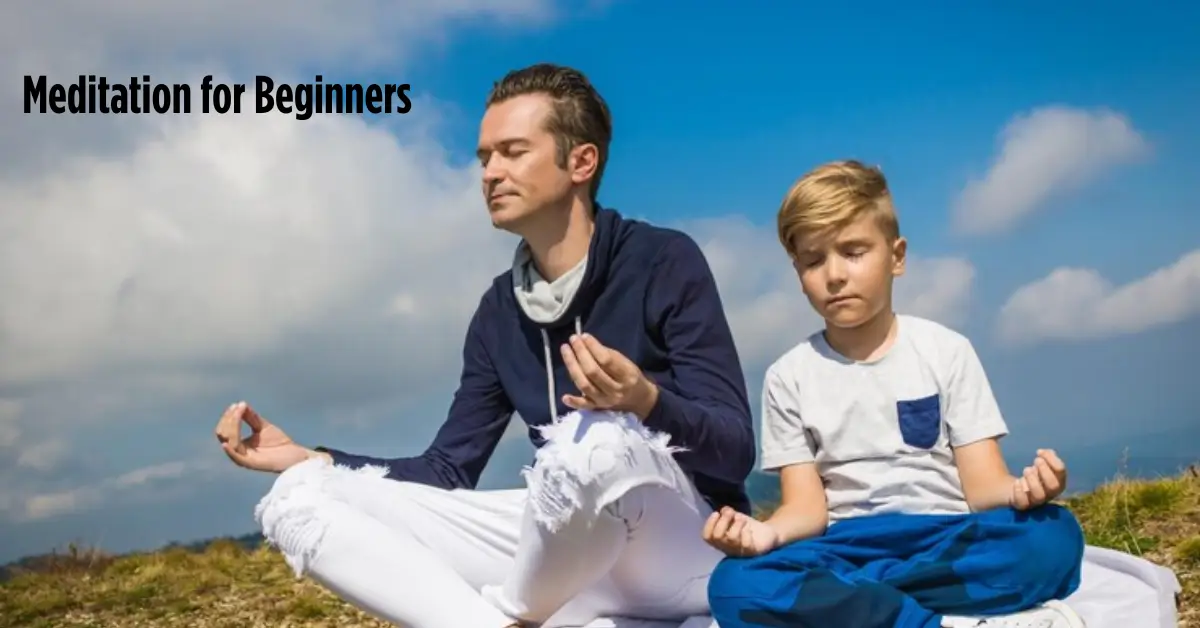
Easy Meditation for Beginners: Find Peace, Focus, and Calm
Checklist for Beginners
- Be clear about your main goal: stress support, better routine, sleep support, or emotional steadiness.
- Confirm the course details, total cost, and the kind of follow-up support included.
- Protect two regular 20-minute windows in your day before you sign up.
- If you have trauma, severe anxiety, depression, or a medical condition, talk with a qualified clinician first. NCCIH advises people not to delay medical care because of meditation practices.
- Track how you feel over a few weeks rather than judging the practice from one session.
- Stay honest: if something feels unsettling rather than helpful, do not ignore it. NCCIH notes that some people do report negative experiences with meditation.
What to Expect & Overcoming Challenges
Common Experiences: calm, awareness, mental drifting
Many new meditators expect fireworks or total silence. Most of the time, what they get is more ordinary. They may notice calm.
They may notice drifting thoughts. They may notice moments of quiet followed by planning, remembering, or random mental chatter.
None of that is unusual. TM is not based on the idea that a good session has no thoughts.
That is helpful because it removes one of the biggest emotional barriers to meditation: self-judgment.
People often abandon a practice because they think their mind is “too busy.” In reality, a busy mind is often the reason they came to meditation in the first place.
Addressing the “I can’t stop my thoughts” concern
This is one of the most common worries, and it deserves a straightforward answer: you do not need to stop your thoughts to meditate.
In TM, thoughts happening during practice are not automatically a problem. The technique is designed to work with the mind’s natural activity, not against it.
There is also a larger wellness point here. A lot of people carry shame around their own mental noise. They think calm people meditate, and they do not. But the better question is not whether you can stop thinking.
It is whether you can learn a method that helps you relate to your mind with less strain. That is a very different goal, and a more humane one.
Challenges Section: where TM may feel difficulty
TM is often described as easy, but that does not mean it is friction-free. Cost can be a barrier because the standard course is paid for. Time can be a barrier because twice-daily practice asks for routine, not just interest.
Some people may also feel disappointed if they expect rapid transformation and instead get slower, quieter change.
There is also the issue of negative effects. Meditation is usually considered low-risk, but NCCIH reports that in a review of more than 6,700 participants, about 8 percent reported negative effects, most often anxiety or depression.
That figure applies to meditation practices broadly, not TM alone, but it still matters. Meditation should be approached with honesty, especially if someone has a trauma history or significant mental health symptoms.
How It Differs from Other Meditation Styles
| Feature | Transcendental Meditation | Mindfulness Meditation | Zen Meditation |
| Focus | Silent mantra repetition | Breath, body, present moment | Posture, koans, awareness |
| Effort | Effortless, no concentration | Requires sustained attention | Often disciplined and structured |
| Goal | Restful alertness, transcendence | Awareness of thoughts/emotions | Insight, emptiness, detachment |
| Instruction | Certified teacher required | Can be self-taught | Often guided by Zen masters |
TM vs. Other Techniques
How it differs from mindfulness and guided meditation
TM, mindfulness, and guided meditation are often grouped together under the umbrella of “meditation,” but they are not the same experience.
Mindfulness usually asks the person to notice breath, thoughts, feelings, or body sensations in the present moment without judgment.
Guided meditation depends on an outside voice leading the process. TM uses a specific silent mantra technique taught through formal instruction.
| Technique | Focus | Effort | Instruction | Goal |
| TM | Mantra | Effortless | Certified teacher | Restful alertness |
| Mindfulness | Breath, awareness | Active attention | Apps/books | Present-moment awareness |
| Guided Meditation | Visualization | Moderate | Audio guide | Relaxation, imagery |
The difference is not only technical. It is emotional too. Mindfulness can feel observational. Guided meditation can feel supportive and held. TM can feel private and inward.
Some people love that. Others prefer the clarity of breath awareness or the comfort of a guided voice. There is no single best method for every person.
The better question is which approach you can practice consistently and safely.
Short Recap
- TM is a specific mantra-based meditation method, not a generic label for deep meditation.
- It is usually practiced for 20 minutes twice a day and learned through certified instruction.
- Research suggests possible benefits for stress-related symptoms and modest support for blood pressure, but the evidence is not definitive.
- TM may work best as an added support within a bigger health routine, not as a replacement for therapy or medical treatment.
- Cost, access, and the need for structured learning are practical factors worth thinking through before you commit.
FAQs
Q. Is Transcendental Meditation religious?
TM has roots in Indian contemplative traditions, but it has often been taught in the West as a secular practice for well-being. So the most accurate answer is that it has a spiritual history, but many people use it as a non-religious meditation method in daily life.
Q. Can TM really help with stress?
It may help, and that is one of the main reasons people choose it. Research on meditation programs overall shows reductions in some stress-related outcomes, and TM has promising findings in some groups.
But the benefit is not guaranteed or identical for everyone.
Q. Is TM better than mindfulness?
Not universally. They are different techniques with different experiences. TM uses a private mantra and emphasizes effortlessness, while mindfulness usually centers on present-moment awareness.
The better fit depends on the person, not on marketing claims.
Q. What if I keep thinking during meditation?
That is normal. In TM, having thoughts does not mean you are doing the practice wrong. One reason many beginners like TM is that it does not treat normal mental activity as failure.
Q. What are the 7 steps of meditation?
There is not one official, universal “7-step” meditation system.
A common beginner-friendly version is to get settled, choose a posture, take a few slow breaths, pick an anchor, such as the breath, notice when the mind wanders, gently return attention, and close the session slowly.
Different sources list the steps differently, so it is better to treat this as a simple framework rather than a strict doctrine.
Q. What are the 5 R’s of meditation?
This is also not fully standardized. A common meditation version is Recognize, Release, Relax, Return, Repeat.
In mindfulness education, another version is Recognize, Relax, Review, Respond, Return. Same basic idea: notice distraction, soften, and come back without judging yourself.
Q. What are the 7 C’s of mindfulness?
There is no single official list. A common version includes Curiosity, Compassion, Clarity, Calm, Courage, Connection, and Concentration.
Some online versions swap in words like “creativity,” “commitment,” or “confidence,” so this is best treated as a flexible teaching model rather than a formal clinical framework.
Q. What is the 3-3-3 rule in mindfulness?
It is a grounding technique often used for anxiety. The most popular variation involves moving three bodily parts, naming three things you can see, and naming three things you can hear.
The third step in some handouts is slightly different, but the idea is the same: bring attention back to the present moment from spinning thoughts.
Q. What is the 5 4 3 2 1 rule?
It’s a sensory grounding practice. You enumerate five things that you can see, four that you can feel or touch, three that you can hear, two that you can smell, and one that you can taste. It is often used to calm anxiety and return to the present.
Q. What is the 5-second wake-up rule?
This usually refers to Mel Robbins’ popular “5 Second Rule”: when the alarm goes off, or you need to act, count 5-4-3-2-1 and move before hesitation takes over.
It is a self-help activation tool, not a formal mindfulness technique or clinical rule.
Q. What is the 3 backup rule?
Usually, this does not refer to mindfulness. It most often means the 3-2-1 data backup rule: keep 3 copies of important data, on 2 different media types, with 1 copy off-site.
If you meant a calming or therapy tool, that phrase is not a standard mindfulness term.
Q. What is the 3-2-1 calming technique?
This grounding technique is quicker. The phrase “name three things you see, two things you hear, and one thing you can touch” is frequently used.
When you need something fast, it works like a simplified, quicker version of the 5-4-3-2-1 method.
Conclusion
Transcendental Meditation has lasted in public conversation for a reason.
It offers something many people want but rarely find: a method that feels simple without being casual, structured without being harsh, and practical enough to use in ordinary life. It does not mean it should be treated like a miracle.
The honest view is better. TM can be a real-world tool for balance, especially for people seeking less stress, greater steadiness, and a meditation practice that does not ask them to fight their own mind.
It has meaningful roots, a clear method, and some encouraging research behind it.
It also has limits, costs, and an evidence base that should be respected rather than exaggerated.
If TM sounds like a fit, the next practical step is not to chase random clips online. It is to attend an introductory talk or review guidance from an official TM center so you can understand the method, the course structure, and whether it feels right for you.
That kind of slow, informed beginning is usually better than jumping in on hope alone.
What do you think about TM after reading this? Have you tried meditation before, or does this feel like the first method that actually sounds realistic? Share your thoughts or experience in the comments.
Read more Health and Wellness articles.