
Boost your mood, focus, and energy with 7 simple yet powerful habits that can instantly elevate your life. Start your transformation today with practical steps that stick.
How to Instantly Elevate Your Life with 7 Simple Daily Habits
Ever felt like your life is stuck in neutral, like you’re spinning your wheels but not moving forward? You’re not alone, and the fix isn’t a major overhaul or a dramatic change.
It’s the small, consistent actions you take every day that shape who you become. Science shows that your habits determine up to 40% of your daily behavior.
Thus, rather than striving for the next big change, what if you concentrated on seven minor behaviors that seem insignificant but can improve your life right away?
Let’s explore routines that can shift your perspective, boost your vitality, and help you feel more in charge, focused, and alive every day.
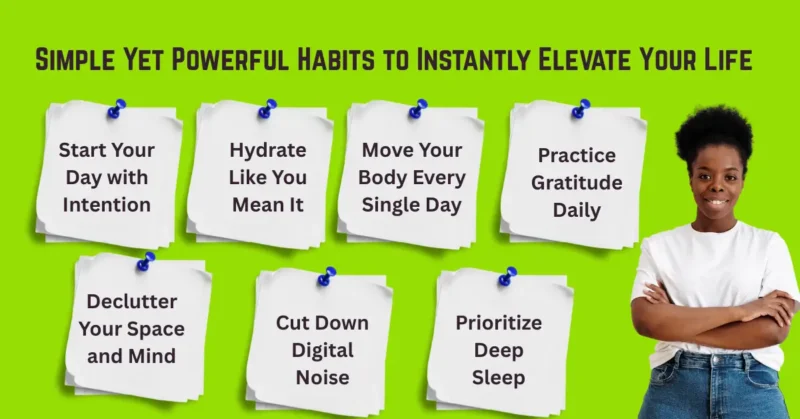
Habit #1 – Start Your Day with Intention
The Power of a Mindful Morning
The way you begin your morning often dictates the quality of the rest of your day. Yet most people fall into a reactive loop, grabbing their phone, diving into emails, or scrolling social media the moment they wake up. This rush of information and external noise floods your brain with stress hormones before you’ve even gotten out of bed.
By starting your day with purpose, you reclaim that precious early space for calm, clarity, and control. A mindful morning doesn’t have to be elaborate. What matters is that it’s intentional and centered around your well-being. Just a few conscious moments can ground you, elevate your focus, and boost emotional resilience.
How to Create a Morning Ritual That Sticks
You don’t need a long list of tasks or a 5 a.m. wake-up to create a successful morning routine. It’s more about how you feel during those first few minutes than how much you do. The aim is to engage your mind, body, and soul in a way that gets you ready for the day.
To begin, take a deep, centering breath and slowly sit up. “Today, I choose peace over pressure,” you tell yourself. This simple declaration lays the foundation for composed, deliberate thinking. Your body is awakened, and any stiffness from sleep is released when you stretch softly, even for a few minutes.
Stat: 40% of our daily behaviors are driven by habits, not conscious decisions, according to a Duke University study. What you do automatically defines your health more than your best intentions do.
Following that, write down three things you’re genuinely grateful for. This short practice activates the brain’s reward center and trains it to focus on positivity instead of stress.

When you begin the day by prioritizing yourself, not your inbox or notifications, you create a foundation of emotional strength and focus. Over time, this becomes not just a habit but a sacred space that supports every part of your life.
Habit #2 – Hydrate Like You Mean It

Why Water Fuels Everything—Mind and Body
Water isn’t just a basic need—it’s the life force behind nearly every function in your body. Your brain, for example, is about 75% water, and even slight dehydration can affect your focus, memory, and mood. Your muscles also rely on proper hydration to stay energized and prevent cramps or fatigue.
Still, despite water’s importance, most people forget to drink enough throughout the day. The outcome? Lacking this basic component can cause headaches, dull skin, poor digestion, and persistent fatigue.
Avoiding thirst is only one aspect of staying hydrated. It’s about maintaining optimal bodily function. Hydration keeps your metabolism running smoothly, flushes away toxins, sustains energy levels, and promotes healthy circulation.
When you’re hydrated, you think more clearly, perform better physically, and even feel emotionally more stable.
How to Make Drinking Water an Unshakable Habit
Drinking large amounts of water all at once isn’t the key to staying hydrated; instead, build modest, regular habits that make water a priority, not an afterthought.
A great place to start is first thing in the morning. Before you reach for coffee, drink a full glass of water to wake up your organs and jumpstart your metabolism. This one habit alone can dramatically improve how your body feels for the rest of the day.
Another powerful way to build consistency is to use a reusable water bottle with clear measurements. Visual cues make it easier to track your progress and gently nudge you to sip regularly.
If you find plain water boring, add slices of lemon, cucumber, mint, or berries to make it more appealing without adding calories or sugar.
When drinking water becomes automatic, just like brushing your teeth, you’ll start to notice that everything from your energy to your skin and even your mental clarity starts to improve.
Hydrating like you mean it isn’t just about drinking water—it’s about showing up for your body in the most foundational way possible.
Habit #3 – Move Your Body Every Single Day
Micro-Movements, Macro-Results
We often think of exercise as something we need to schedule, prepare for, and sweat through—but movement doesn’t have to be intense or time-consuming to be effective. In reality, your body just needs consistent movement. Movement is fuel.
It wakes up your muscles, boosts circulation, sharpens your mind, and naturally lifts your mood. You don’t need a gym membership or a one-hour workout. You need intention and a little creativity.
Daily movement rewires your brain and body to function better. Your body produces less cortisol, the stress hormone, and more endorphins, naturally occurring feel-good chemicals.
As a result, even five to 10 minutes of exercise can instantly shift your mood, thoughts, and performance. People who move about a lot during the day typically sleep better, concentrate longer, and recover from stress more quickly. Movement is about vitality, not simply fitness.
Staying Active Despite a Busy Schedule

The key to staying active when life gets chaotic is to ditch the all-or-nothing mindset. You don’t need an hour-long sweat session to make progress.
You need consistency and spontaneity. Turn routine moments into movement opportunities. While brushing your teeth, do calf raises. Waiting for your coffee to brew? Stretch your shoulders and back. Watching TV? Get down on the floor for some light yoga or a few push-ups.
One of the best ways to build this habit is to pair movement with things you’re already doing. Walk while taking phone calls. Do a few squats or lunges before your shower. Use your work breaks for quick desk stretches or a 7-minute app-guided routine.
Take the stairs instead of the elevator whenever you can. These little moments add up fast and become the rhythm that keeps your body alive and strong.
When movement becomes a natural part of your day, not a chore or checklist, you start to look forward to it. You’ll notice that your body feels more agile, your mind more refreshed, and your energy more stable. Daily movement is a form of self-respect, and it doesn’t require perfection—just participation.
Habit #4 – Practice Gratitude Daily
Rewire Your Brain for Happiness
Gratitude may sound like a soft, feel-good habit, but its effects run deep, right down to your brain’s neural circuitry.
Science shows that regularly practicing gratitude activates brain regions associated with dopamine and serotonin, the same chemicals that make you feel happy and fulfilled.
It’s not just emotional fluff; it’s powerful brainwork. When you take time each day to notice and appreciate the good in your life, you start to train your mind to look for more of it.
Gratitude is like a reset button in a society where we’re inundated with bad news, social media comparisons, and pressure to perform better.
It strengthens your immune system, lowers cortisol levels, enhances heart health, and improves sleep quality. But perhaps most importantly, it shifts your focus from lack to abundance—from what’s missing to what’s present.
Making Gratitude a Daily Habit
Gratitude doesn’t require a fancy journal or deep meditation. It just needs your presence and a few intentional minutes each day.
The easiest way to start is by writing down three things you’re thankful for. They don’t have to be grand; sometimes, the smallest things—a warm cup of tea, a text from a friend, or a moment of quiet—carry the most weight.
Over time, no amount of outside turbulence can shake the grounded delight this little routine creates. If you’re feeling stuck or unsure where to begin, ask yourself, “What made me smile today?”
Did I learn something unexpected from a tiny challenge? Is there someone in my life right now who gives me comfort or inspiration? These simple questions encourage deeper reflection and help you focus on the aspects of your life that matter most.
It’s amazing how quickly appreciation can change your viewpoint. You’ll notice that you’re reacting more composedly, grumbling less, and enjoying the moments you used to skip. Being grateful means remembering there is beauty to behold even in the midst of chaos, not disregarding life’s challenges.
Habit #5 – Declutter Your Space and Mind

Physical Clutter = Mental Chaos
Ever notice how hard it is to concentrate when your desk is buried in papers, your kitchen sink is full of dishes, or your room feels like it’s closing in on you? That’s not just a coincidence. There’s a strong connection between the physical environment you live in and your mental state.
Your brain interprets cluttered surroundings as incomplete tasks. Even if you’re not aware of it, it can create feelings of overwhelm, increase tension, and divide your concentration.
It is supported by science. Studies suggest physical clutter can raise cortisol levels and impair concentration. It creates visual clutter that drains your mental energy, competes for your attention, and makes it harder to unwind.
Conversely, a neat, purposeful environment fosters peace, clarity, and mastery. You may think more clearly, feel more centered, and be more productive when your surroundings are organized.
The 10-Minute Tidy-Up Hack That Changes Everything
Now, it can be intimidating to clear out an entire room, or worse, your entire home. This is where the 10-minute tidy-up’s magic happens.
It is not about thorough cleaning or perfection. It is about making a tiny, concentrated effort to reset your thoughts and your space. This is how it works: clean or organize a single area for ten minutes on a timer. It might be your email inbox, your bedside, your workstation, or even the floor of your living room.
What matters most is that you permit yourself to stop after those 10 minutes. Surprisingly, you’ll often end up doing more because momentum kicks in. But even if you don’t, those few minutes of cleaning can provide an instant shift.
You’ll physically see progress, which triggers a mental reward and makes you feel lighter, clearer, and more in control of your day.
Decluttering isn’t just about aesthetics. It’s about creating an atmosphere that supports your goals and psychological well-being.
You may bring clarity and tranquility into your life by clearing out distractions and making room in your mind and body. Think of it as pressing the reset button during a hectic day. It only takes one drawer, one corner, or one 10-minute session at a time to restore order to your life and vitality to your thoughts.
Habit #6 – Cut Down Digital Noise
The Cost of Constant Scrolling
In today’s world, we’re plugged in 24/7. Our phones are often the first thing we check in the morning and the last thing we see before bed. Notifications, social media, emails, and news alerts bombard us constantly. While it might seem harmless, this endless digital chatter takes a massive toll on our mental clarity, emotional health, and ability to be truly present.
Every ping you hear pulls you away from what you’re doing, fragmenting your attention. Over time, this trains your brain to crave short bursts of stimulation rather than sustained focus.
That’s why it’s getting harder to finish a book, stay focused in meetings, or simply sit still without reaching for your phone. Constant scrolling also fuels anxiety and comparison, subtly making you feel like you’re not doing enough, being enough, or living enough.
What’s more alarming is how this digital noise dulls your creativity. When your mind is always busy absorbing others’ opinions, trends, and updates, it doesn’t have space to generate its original thoughts. Your brain needs quiet, stillness, and boredom to unlock creative ideas and meaningful insights.
Digital Detox Habits That Work
Now, let’s be real—most of us can’t just ditch our phones and live off-grid. But you can build healthier boundaries with technology. First, avoid using your phone in your bedroom. This one change can help you sleep better, feel less anxious at night, and start your day with greater awareness.
Another powerful strategy is to designate a “phone-free” hour each day. Maybe it’s during meals, before bed, or in the morning.
You’ll be surprised how refreshing it feels to exist without constantly checking or reacting. You can also use productivity apps like “Forest” or “Focus Keeper” that reward you for staying off your phone while you work or relax.
Reducing digital noise is ultimately about regaining your focus and tranquility. Use technology purposefully rather than impulsively, without becoming anti-technology. Reducing digital distractions makes room for improved sleep, genuine connection, deeper concentration, and a calmer nervous system. It’s like wiping out static so you can hear your ideas again.
Habit #7 – Prioritize Deep Sleep

Sleep Is Your Body’s Secret Weapon
Sleep is typically viewed as an afterthought, something to fit in after completing all other tasks. But sleep is your body’s most effective tool for resilience, healing, and focus; it is not a luxury. Your body enters full recuperation mode while you sleep. It clears toxins from your brain, balances hormones, restores tissues, and strengthens memories. It is rejuvenation, not merely rest.
When you skimp on quality sleep, everything suffers. Your mood drops. Your patience thins. You’re more likely to make poor decisions, eat junk food, and feel overwhelmed by even small tasks. Sleep deprivation also weakens your immune system, increases inflammation, and impairs cognitive function. Simply put, if you’re not sleeping well, you’re not functioning well.
Creating a Sleep Sanctuary That Works for You
So, how can you make restorative, deep sleep a priority? Before bed, start by setting the right mood. Turning off all screens at least an hour before bed is one of the easiest changes that has the biggest impact.
Blue light from phones, iPads, and televisions interferes with your body’s natural production of melatonin, the hormone that causes fatigue. Instead, let your brain wind down naturally.
Your sleep environment matters, too. A cool, dark room signals your body that it’s time to rest. Blackout curtains can help eliminate disruptive light, and lowering the temperature slightly, around 65°F or 18°C, can help your body fall asleep faster and stay asleep longer.
Use a calming sound app or a white noise machine if you’re sensitive to sound or silence. Many people also find that the scent of lavender or other soothing essential oils helps cue the brain into relaxation mode.
Consistently winding down signals to your body that it’s time to sleep. The secret is repetition, whether you’re reading a book, meditating for a short while, or drinking a cup of warm, caffeine-free tea. These cues gradually teach your nervous system to change gears, which helps you fall asleep more deeply.
Recall that sleep is not a waste of time. It’s the cornerstone of all the improvements you want in thinking, feeling, working, and living.
The Ripple Effect of Small Daily Habits
How One Habit Snowballs into Others
It’s easy to underestimate the power of small habits. After all, drinking a glass of water, stretching for five minutes, or jotting down a line of gratitude seems too simple to make a difference, right?
The secret, though, is that these insignificant deeds are not isolated. They set off a chain reaction. Your entire day, and eventually your life, can shift in a better direction with one tiny, constructive decision that easily leads to another.
For instance, you may become more hydrated and less likely to seek processed snacks or sugary drinks if you start drinking more water regularly. That can lead to fewer energy crashes, making it easier to stay focused and in a better mood.
Then, maybe because you’re feeling sharper, you decide to go for a short walk during your break, which helps you sleep better at night. And because you sleep better, you wake up refreshed and more likely to start your day with purpose again.
It’s a domino effect. That single decision to take care of yourself sets off a positive loop, reinforcing your other goals naturally without feeling forced. It’s the complete opposite of a downward spiral—it’s an upward lift.
That’s why consistency, not intensity, is the real game-changer when it comes to self-improvement. It’s not necessary to completely change your way of life all at once. Start with a single habit that feels doable. That is enough to shift the balance.
Impact Compound: Your Future Self Will Appreciate It
Consider everyday routines as tiny investments in a private bank account. No matter how tiny, every mindful action contributes to your mental, emotional, and physical health. At first, you might not notice a huge return.
But over weeks and months, those investments grow. They compound, much like interest in a savings account. The more you stick with them, the more their impact multiplies.
What’s beautiful about this process is that it’s forgiving. You don’t need to be perfect. You just need to be consistent. If you miss a day, that’s okay; the habit bank doesn’t reset to zero. The next time you show up, you’re still building momentum.
Over time, these microchanges shape your identity. You start seeing yourself as someone who takes care of your body, who values mental peace, and who prioritizes growth. And that self-image fuels more positive action.
In the long run, your daily habits become the architecture of your life. They build the routines, the mindset, and the emotional resilience that carry you through tough times and help you thrive in good ones.
Your future self isn’t asking for perfection; they’re just asking you to start. And when you do, you’ll look back and realize that all the little things weren’t little at all. They were everything.
Overcoming Resistance to Change
Why We Self-Sabotage
Change is uncomfortable; let us face it. Something within us resists, even when we fervently desire a better life, healthier routines, or a calmer mind.
That resistance is not a sign of weakness or indolence. It is your brain’s natural tendency to seek out familiarity and steer clear of imagined danger. Ironically, the “familiar” feels safer than the unknown even when it is harmful, stressful, or ineffective.
Self-sabotage often wears a convincing mask. It shows up as procrastination, perfectionism, or the sudden urge to binge-watch a show instead of going for a walk. Deep down, it’s not that you don’t care. It’s that your subconscious is afraid. Afraid of failure, of judgment, or even of success, because success means things will change, and change is uncomfortable.
Sometimes, our identity is tied to the old version of ourselves, and stepping into a new one feels like letting go of something stable, even if it’s dysfunctional. That internal conflict can paralyze progress, especially if you believe you have to overhaul your entire life all at once to get results.
Micro-Commitments Beat Motivation
Lowering the bar is the key to overcoming obstacles, not boosting your motivation. Much lower. Motivation is erratic; it fluctuates. But little doable obligations? They are long-lasting. They link action and intention.
Instead of saying, “I’ll meditate for 30 minutes every morning,” start with, “I’ll take 3 deep breaths after waking up.” Don’t commit to running five miles—start by putting on your sneakers. The trick is to make the task so ridiculously easy that your brain has no excuse not to do it. Once you’ve started, that initial action builds momentum. And momentum beats motivation every time.
You develop self-confidence when you constantly show up, even in small ways. That trust has great power. It overcomes your fear, erodes your resistance, and transforms who you are.
Suddenly, you no longer “want to change.” You are a person who is evolving. That new version of yourself gradually becomes your default—not because you took a big step, but rather because you made a number of small, courageous decisions.
Being flawless is not the goal. It is about continually making even the slightest appearances. That is how long-lasting change really starts and resistance loses its hold.
Building a Habit Stack
What is habit stacking?
When it comes to improving your life without feeling overloaded, habit stacking is revolutionary. The premise is easy yet incredibly strong. Rather than starting a new habit from scratch and hoping it will stick, you “stack” it onto something you already do consistently.
This strategy exploits your brain’s affinity for consistency and familiarity. The new habit has a better chance of becoming second nature because your brain already recognizes the old behavior as a part of your regular routine.
Think of it like this: your existing behaviors are like hooks on a wall. You simply hang the new habit on an existing one rather than forcing a new one, which requires effort and may slip. This method removes the difficulty of deciding when and how to start the habit and makes it easier to remember.
Pairing Old Habits with New Ones
Let’s say you’re trying to develop a gratitude practice but keep forgetting or feel too busy to add “one more thing” to your day. Here’s where habit stacking comes in. Pick something you already do without thinking, like brushing your teeth.
Now, tie your new habit to that. For example: “After I brush my teeth at night, I’ll say one thing I’m grateful for.” That simple addition doesn’t require rearranging your schedule or carving out extra time. It just rides the coattails of what’s already happening.
Another way habit stacking works is by creating flow. If you already have a morning coffee ritual, you might add, “While my coffee brews, I’ll do five deep breaths,” or “As I sip, I’ll jot down my top priority for the day.” The more natural and consistent the anchor habit is, the more likely your new habit will stick.
Over time, these little habit pairs create a chain reaction. One small action leads to another, and before you realize it, you’ve created a rhythm that supports your goals without feeling forced or overwhelmed. That’s the beauty of habit stacking—it respects your current routine while helping you become the person you’re aiming to be.
The Mindset Shift That Makes Habits Stick
Creating lasting change in your life isn’t just about what you do—it’s about who you believe you are. That’s where identity-based habits come in. Instead of focusing only on results or goals like “I want to lose weight” or “I want to be productive,” you shift the focus to your identity.
You start seeing yourself as the kind of person who naturally does those things, which makes sticking to new habits feel more natural and less forced.
When you say, “I want to be healthy,” you’re talking about a destination. But when you say, “I am a healthy person,” you’re stepping into the role of someone who already lives that way. It’s a small but powerful shift.
You’re no longer chasing the outcome—you’re becoming the kind of person who consistently makes choices aligned with that outcome. It feels authentic. It becomes your default setting, not a temporary effort.
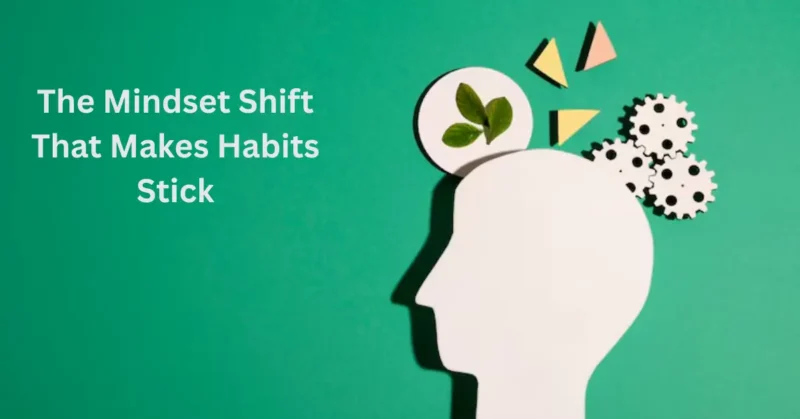
Think of it like an actor preparing for a role. If you believe you are the character, your actions and emotions naturally reflect that identity. Similarly, when you embody the identity of someone who wakes up with purpose, who moves every day, and who makes mindful choices, you don’t have to rely on motivation or willpower as much. You simply act from who you are.
This mindset also makes you more resilient. When setbacks happen, and they always do, you’re less likely to give up.
Why? Because you’re not just doing something to achieve a goal; you’re living in alignment with your core self. Missing a workout doesn’t threaten your progress; it’s just a blip because you still identify as someone who takes care of your body.
Over time, this identity shapes your behavior on autopilot. You start asking different questions, like “What would a healthy person do right now?” or “How would someone who values peace respond in this moment?” That’s the secret to making habits stick. You’re not pretending. You’re becoming.
When You Fall Off the Wagon
Let’s get this straight: everyone slips up. Falling off the wagon doesn’t mean you’ve failed; it means you’re human. Life happens. You oversleep, forget to drink water, miss a workout, scroll too long, or skip your gratitude journal. That’s not the end. What matters is how quickly you reset. Missing one day of a habit?
Fine. Missing two? That’s when a new pattern starts to form. The key is to interrupt that pattern before it becomes your new normal.
Instead of spiraling into guilt or negative self-talk, practice grace. Seriously, be kind to yourself. Guilt rarely leads to growth—it usually just fuels avoidance. So when you miss a day, don’t say, “I failed.” Say, “That was a bump. I’m back on.” That mindset shift changes everything.
Start Small, Stay Consistent
Think of your progress as brushing your teeth. If you forgot last night, would you stop brushing forever? Of course not. The next morning, you would just brush again and keep going. The same is true for your habits. It’s not about being flawless. The goal is to show up more often than not.
Now, some tools can help you stay on course if you’re the type of person who needs a little structure or incentive. As you level up and create streaks, habit-tracking applications like Habitica may transform your progress into a game that gives you a sense of accomplishment.
Visual trackers like Streaks let you see your consistency grow, which is incredibly motivating. Even something as simple as setting up a Google Calendar reminder for your 10-minute tidy-up can be enough to nudge you into action.
And don’t forget to reward yourself. Progress should feel fantastic. Allow yourself to feel proud, whether it’s a treat at the end of the week or simply checking a box. Make it enjoyable, noticeable, and uniquely yours. Falling off the wagon is a stop, not a sign of failure. The key? Simply get back on.
In summary, start modestly and stay consistent.
You don’t require a drastic change in your life. You need little victories, daily, repetitive, happy deeds that gradually create the life you’ve always wanted. These 7 simple yet powerful habits can help you unlock clarity, health, and happiness, starting now.
So, choose just one habit today. Start there. And tomorrow? Build on it. Step by step, you’ll create a life you truly love.
FAQs
Q. What habit will improve your life?
Developing mindfulness can make the biggest difference in your life. Mindfulness has several advantages because it helps you focus on the here and now. It can reduce stress, improve concentration, strengthen emotional control, and promote overall well-being.
Mindfulness promotes a relaxed, focused state of mind, whether through meditation, deep breathing, or simple acts of gratitude.
It helps you relate to people more healthily, make better-informed judgments, and savor moments more fully. Making mindfulness a daily practice can shift your perspective and lead to lasting gains in many areas of your life.
Q. What does it mean to raise my life?
To “elevate your life” means taking deliberate steps to improve your experiences, mindset, and overall well-being. It’s about improving oneself and pursuing new possibilities for learning, developing positive connections, or adopting healthier behaviors.
Making small, consistent changes that add up over time is key to growth. It means aligning your daily activities with your beliefs, goals, and ideal life. When you improve your life, you’re actively working toward a more fulfilled, balanced, and purposeful existence. Personal development and self-care are continuous processes.
Q. What behaviors alter one’s life?
Your life can change significantly by developing habits like practicing thankfulness, exercising regularly, drinking enough water, and prioritizing sleep. Each of these significantly affects your mental and physical health. By rewiring your brain for positivity, gratitude helps you find delight in the little things in life.
Frequent exercise improves mood, lowers stress, and increases energy. Proper hydration supports mental and physical performance, and enough sleep helps heal and revitalize your body and mind. Together, these behaviors create a solid foundation for a more content, healthy, and productive life, which can lead to significant change.
Q. What do good habits bring to your life?
Good habits bring structure, consistency, and progress to your life. They help you take charge of your everyday activities, which ultimately affects your satisfaction and long-term success. Developing positive habits lays the groundwork for your accomplishments, mental and physical health, and overall well-being.
For instance, journaling or mindfulness exercises can help you build emotional resilience, while regular exercise and a healthy diet increase your energy and focus. Good habits build over time, creating a positive feedback loop that boosts happiness and a sense of achievement in all facets of life.
Q. What are healthy daily habits for a better routine and life?
Read more articles on health and wellness tips.
You might like: