
New to healthy living? This beginner healthy lifestyle guide covers eating, movement, sleep, stress, and a 30-day starter plan to help you build habits that actually last.
Start Smart: Train Your Brain
Healthy habits aren’t about willpower—they’re about patterns. Your brain follows a simple loop: cue → action → reward.
Make it work for you. Want to walk in the morning? Keep your shoes nearby (cue) and enjoy a podcast while walking (reward). This makes the habit feel natural rather than forced.
Your environment matters too. Keep healthy food visible. Keep distractions out of reach. Small changes around you make it easier to form good habits.
Understand Before You Change
Before improving your lifestyle, observe it. Spend a few days noticing your routine—when you feel active, when you feel tired, and what triggers unhealthy choices.
This awareness is powerful. Once you understand your patterns, building better habits becomes simple and sustainable.
QUICK SUMMARY
This guide is for anyone who wants to live healthier but is not sure where to start.
You will learn what a beginner healthy lifestyle looks like, the seven key habits to focus on, a simple 30-day starter plan, and the most common mistakes people make.
There are no extreme diets or harsh workouts here, just honest, practical steps you can begin today.
Most people do not struggle with healthy living because they lack willpower. The real problem is trying to change everything at once.
After a week, life gets busy, motivation drops, and many people quit, feeling worse than when they started. If this sounds familiar, you are not alone, and there is nothing wrong with you.
Starting a healthy lifestyle as a beginner does not require a perfect Monday, a pantry overhaul, or a gym membership.
It requires one honest step in the right direction, repeated more days than not.
This guide will walk you through, not lecture you.
What Is a Beginner Healthy Lifestyle?
I always think that I plan better for a healthy lifestyle. Maybe you also think so. Because it is a general approach, as we earn more, we change our lifestyle, from poor to rich, compromise to a luxurious life, and set our tiptop rules.
Sometimes, simple meals turn into unhealthy junk-food meals. Silently, our innocent sleep gives way to a late-night awakening.
This is the time we move to SMART objectives and adopt a style that leads to a beginner healthy lifestyle. That is our plan to move forward.
A beginner healthy lifestyle is not a strict set of rules.
It is a gradual shift in how you eat, move, sleep, and manage stress, done at a pace that your real life can actually hold.
The word “healthy” generates a lot of noise.
Magazine covers, social media fitness accounts, and wellness trends all compete to define it for you, and most of those definitions are extreme, expensive, or just plain exhausting.
Healthy living, at its core, is about giving your body and mind what they need to function well and feel good over time.
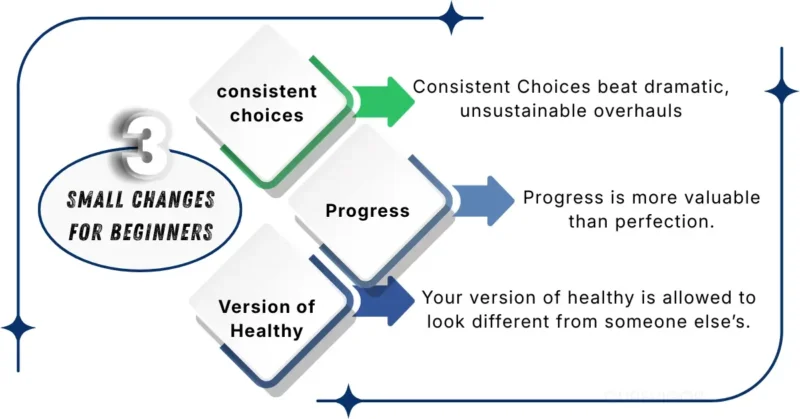
For beginners, this means three things. First, small, consistent choices beat dramatic, unsustainable overhauls.
Second, progress is more valuable than perfection. Third, your version of healthy is allowed to look different from someone else’s.
The science supports the gentle approach, too. Research consistently shows that gradual habit change has a far higher success rate than sudden, radical shifts.
Your brain resists big change but adapts beautifully to small, repeated patterns.
How Is It Beneficial?
Living a healthy and mindful lifestyle offers far-reaching benefits that go beyond physical appearance.
It influences how you feel, how you spend, and even how you impact the world around you. Here’s a deeper look at why adopting beginner healthy lifestyle habits truly matters.
1. Prevents Disease
Your first line of protection against many common ailments is a healthy lifestyle.
Your immune system grows more robust and resilient when you nourish your body with healthy meals, maintain an active lifestyle, control your stress, and get adequate sleep.
It lowers the chance of developing long-term illnesses like obesity, diabetes, and heart disease.
Over time, small daily decisions, like taking a quick walk or choosing fresh meals over processed ones, can have a significant impact.
2. Saves Money with a Beginner Healthy Lifestyle
Good health doesn’t just protect your body; it also protects your wallet.
Preventive care through healthy habits helps you avoid frequent doctor visits, expensive medications, and long-term treatments.
Investing in nutritious food, regular exercise, and self-care may seem like an upfront cost, but it significantly reduces long-term medical expenses.
Simply put, staying healthy is often far more affordable than treating illness.
3. Lengthens Lifespan
Healthy living contributes to a longer and more fulfilling life. When your body functions efficiently, your organs stay stronger, and your energy levels remain higher as you age.
Habits such as staying physically active, maintaining a balanced diet, and avoiding harmful behaviors like smoking can add years to your life.
More importantly, it’s not just about living longer, it’s about living better, with vitality and independence.
4. Good for the Environment
Your personal health choices can also benefit the planet. Choosing natural, minimally processed foods, reducing waste, and adopting sustainable habits, such as walking or cycling instead of driving, all contribute to a healthier environment.
When you prioritize clean living, you naturally reduce your carbon footprint and support eco-friendly practices. In this way, taking care of yourself also means taking care of the world around you.
This approach to healthy living creates a positive cycle. When you feel better, you make better choices, and those choices continue to improve your life and environment.
5 Signs When to Start a Beginner Healthy Lifestyle
You Feel Tired or have low energy often
Fatigue is one of the earliest signs that your body is asking for something different. When you rely on caffeine to get through mornings, feel heavy after meals, or hit a wall every afternoon, your body is speaking to you.
Energy, not weight, is actually a more honest and motivating starting metric for beginners.
When you start eating better, sleeping more, and moving your body, you feel the energy shift within days. That feeling becomes its own motivation.
Lifestyle habits have a direct, measurable impact on daily energy levels. Poor sleep, processed foods, dehydration, and sedentary behavior all drain your energy reserves.
The good news is that even one changed habit can begin to restore that vitality.

You Want Better Sleep and Less Stress
Sleep and stress are deeply connected to the choices you make each day. What you eat, how much you move, when you look at screens, and how you wind down before bed all shape the quality of your sleep.
And when sleep is poor, stress tolerance drops, leading to worse choices, which in turn lead to worse sleep. It becomes a cycle.
Stress is not just an emotional experience. Prolonged stress impairs immunity, increases the risk of heart disease, boosts cortisol levels, and interferes with digestion.
Starting a beginner healthy lifestyle is one of the most powerful ways to break that cycle from the inside out.
You Are Confused About Where to Begin
Information overload is one of the biggest reasons people never start. One source says to eat low-carb.
Another says eat plant-based. One influencer promotes 75 Hard. Another says just walk more. With so much noise, doing nothing feels safer than doing the wrong thing.
The power of a beginner’s approach is to focus on the basics first. Sleep, hydration, movement, whole foods, stress management.
These fundamentals have never changed and never will. Everything else is a variation on a foundation you have not yet built.
You Want to Prevent Health Issues Later
One of the most compelling reasons to start now is what you are quietly building, or quietly avoiding.
A beginner healthy lifestyle is not just about feeling better today. It is a kind of long-term investment. Exercise, a healthy diet, and good sleep prevent type 2 diabetes, heart disease, certain cancers, anxiety, and depression.
The habits you build in your thirties protect your sixties. The choices you make this month matter further down the road than you might realize.
Within the first 30 days of consistent healthy habits, most people notice better digestion, more stable moods, improved focus, and a feeling of general lightness. Those early wins are real and worth starting for.
You Are Done With Quick Fixes
This is perhaps the most important sign of all.
When you are tired of chasing 30-day detoxes, cutting out entire food groups, or restarting the same crash diet for the fourth time, you are ready for something that actually lasts.
Sustainable habits are not glamorous. They do not promise you a transformation in 21 days. But they work because they fit into real life.
The shift from thinking in terms of “diet” to “lifestyle” is the most important mindset change a beginner can make.
7 Pillar Tips for a Beginner Healthy Lifestyle
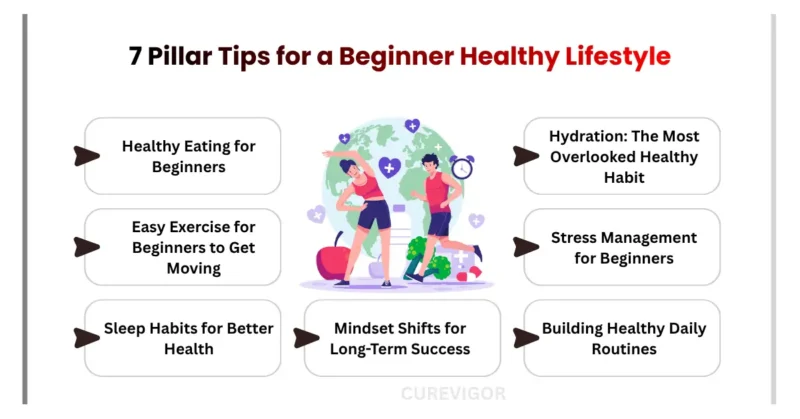
Healthy Eating for Beginners
Keep It Simple.
You do not need to count calories or memorize macros. The plate method is one of the simplest and most effective tools for beginners.
One quarter of your plate should be made up of lean proteins like chicken, fish, eggs, or lentils; the other half should be made up of whole grains like brown rice, oats, or whole wheat bread.
A few easy grocery swaps can make a meaningful difference without disrupting your whole routine. Swap white bread for whole grain.
Choose sparkling water instead of soda. Trade chips for a handful of nuts. Cook eggs instead of skipping breakfast. None of these feels extreme, but they quietly add up.
Eating healthy on a budget is also more achievable than most people think. Canned beans, frozen vegetables, oats, eggs, bananas, and brown rice are among the most affordable and nutritious foods available.
Cooking at home even three or four times a week saves money and gives you control over what goes into your meals.
Eating more whole grains is associated with a lower risk of diabetes, obesity, heart disease, and even some types of cancer, according to a 2020 study. Greater grains, greater health, to put it simply.
You don’t need a drastic change. Start small. Replace just one refined grain each day. For example, switch your usual breakfast cereal with a bowl of oatmeal.
Better choices include:
- oats
- whole-grain bread or pasta
- brown or wild rice
- quinoa, barley, or millet
Try to limit:
- white bread and pasta
- white rice
- sugary cereals
- chips, pretzels, crackers
Small swaps like these quietly build powerful long-term results.
Easy Exercise for Beginners to Get Moving
The most common misconception about exercise is that it has to be intense to count. For beginners, the goal is to start, not to impress anyone.
Current guidelines suggest 150 minutes of moderate movement per week. That is about 22 minutes a day, which is genuinely manageable.
No equipment is required to start. Bodyweight exercises like squats, push-ups, lunges, and planks can be done in your living room and build real strength over time. YouTube is full of free beginner workout videos that take 15 to 30 minutes.
Walking deserves special mention because it is one of the most underrated forms of exercise on the planet.
It is low-impact, free, accessible to almost everyone, and backed by research linking it to improved heart health, better mood, lower blood sugar, and longer life. A daily 30-minute walk is a legitimate, powerful health habit.
When it comes to staying active, the best choice is something you genuinely enjoy. If it feels fun rather than forced, you’re far more likely to keep going.
You don’t need anything complicated. Simple activities can be just as effective, like:
There’s no pressure to do long sessions right away. Start small, just 10 minutes a day, five times a week, is enough to build momentum. As your energy and confidence grow, you can slowly increase the time.
Sleep Habits for Better Health
Your body heals, your brain solidifies memories, your hormones balance, and your immune system gets stronger as you sleep.
Sleep deprivation is not a sign of productivity. You’re slowly withdrawing money from your health bank.
A few basic sleep practices can make a big impact for beginners. You may train your body clock by going to bed and waking up at the same time every day, including on the weekends.
Reducing exposure to blue light, which suppresses melatonin, can be achieved by avoiding screens 30 to 60 minutes before bed. Deeper sleep is facilitated by keeping your room quiet, dark, and cool.
Sleep affects weight, mood, and cognitive focus more than most people realize. When you are sleep deprived, hunger hormones spike, emotional regulation suffers, and your ability to make good decisions drops.
Better sleep is one of the highest-return habits a beginner can build.
Hydration: The Most Overlooked Healthy Habit
Your body uses water for almost all its processes, including digestion, temperature regulation, joint lubrication, nutrient transport, and mental clarity. However, most people are unaware that they are slightly dehydrated.
Although individual requirements vary by body size, activity level, and climate, most people should aim for roughly 8 cups (2 liters) of water per day as a starting point.
Headaches, exhaustion, trouble focusing, dry mouth, and dark yellow urine are indicators that you might not be drinking enough.
Habit cues play a key role in facilitating hydration. At your workplace, keep a water bottle handy.
Before you have coffee in the morning, have a glass of water. To make ordinary water more intriguing, add a slice of cucumber or lemon.
Set a gentle reminder on your phone mid-afternoon. Small triggers build big habits.
Stress Management for Beginners
Stress is unavoidable. Chronic, unmanaged stress is where the damage happens. Learning to interrupt the stress response, even briefly, is a skill that benefits every area of your health.
Two-minute techniques fit into any day, so they’re a terrific place to start for novices.
In just a few minutes, the parasympathetic nervous system is activated, and your body is taken out of fight-or-flight mode through slow, deep breathing: inhale for 4 counts, hold for 4, and exhale for 6.
A short walk outside, five minutes of stretching, or even splashing cold water on your face can shift your nervous system state.
Mindfulness does not require meditation cushions or an hour of silence. At its most basic, mindfulness is simply paying attention to what you are doing while you are doing it.
Eating without your phone, taking three conscious breaths before a meeting, or spending five quiet minutes with your morning coffee are all forms of beginner mindfulness that genuinely work.
Building Healthy Daily Routines
Healthy living is not a series of isolated choices. It is a rhythm that your day falls into. A simple morning routine, even 10 to 15 minutes, can anchor the rest of your day.
Drinking water, getting some light, moving your body briefly, and eating a real breakfast are morning habits that set a positive tone.
An evening routine matters just as much. Dimming lights, stepping away from work, doing something calming like reading or light stretching, and going to bed at a consistent time all signal to your body that rest is coming.
Habit stacking is one of the most practical tools for building routines. It means attaching a new habit to an existing one. After I pour my morning coffee, I will drink a glass of water first.
After I sit down at my desk, I will take three deep breaths. After I brush my teeth at night, I will write one thing I am grateful for. These small links build chains of behavior that eventually feel automatic.

Mindset Shifts for Long-Term Success
The biggest barrier to lasting healthy change is almost never information. It is a mindset. Specifically, all-or-nothing thinking: the belief that if you cannot do it perfectly, there is no point in doing it at all.
Missing one workout does not erase your progress. Eating a slice of birthday cake does not ruin your nutrition. A stressful week that disrupts your sleep routine does not mean you have failed. It means you are human.
The habit of getting back on track quickly, without dramatic guilt or self-punishment, is what separates people who sustain healthy lifestyles from people who give up. Progress really does beat perfection. Every single time.
Beginner Healthy Lifestyle: 30-Day Starter Plan
Week 1: Master the Basics of a Beginner Healthy Lifestyle
Choose two or three habits from the pillars above and commit to those only. Trying to overhaul everything in week one is the most common mistake beginners make.
A sample day might look like this. Wake up and drink a glass of water before anything else.
Eat a breakfast that includes protein and whole grains. Take a 20-minute walk after lunch or dinner. Drink water consistently throughout the day.
Wind down screens 30 minutes before bed and plan for 7 to 8 hours of sleep.
That is it. That is a real and meaningful day of healthy living.
Week 2: Add One New Healthy Habit
Once your week-one habits feel more automatic, layer in one addition. This might be adding vegetables to one meal per day.
Starting a simple 10-minute bedtime stretch, or swapping your afternoon snack for something less processed.
Meal prep does not have to be complicated. Cooking a pot of grains, washing and chopping vegetables, and boiling a batch of eggs on Sunday takes about 30 minutes and makes weekday eating dramatically easier. Simplicity is the goal, not culinary perfection.
Week 3: Move Your Body More
By week three, most beginners have a little more energy and confidence. This is a good time to increase movement.
Aim for 7,000 to 10,000 steps daily. Take the stairs. Park farther away. Walk to a nearby errand instead of driving. These additions do not require extra time blocked out for exercise.
Start with two 20- to 30-minute sessions each week if you wish to try strength training. Squats, wall push-ups, glute bridges, and modified planks are safe and effective starting points for nearly everyone.
Week 4: Lock In Your Routine
In week four, pause and reflect. What worked? What felt forced? What did you enjoy?
Adjusting your routine based on honest self-reflection is not giving up. It is building something that actually fits you.
Set your next 30-day goal. Make it specific and achievable. Adding a 15-minute morning walk. Cooking at home four nights per week.
Going to bed by 10:30 pm on weekdays. One clear target is more powerful than a vague intention to be healthier.
Common Beginner Healthy Lifestyle Mistakes to Avoid
Doing too much too fast is the number one reason people quit. When you try to change your diet, start exercising daily, quit caffeine, and meditate all in the same week, you are setting yourself up for burnout. Pick less and do it longer.
Comparing your journey to others is a quieter but equally damaging mistake. The person posting their transformation photos online has a completely different body, history, schedule, and starting point than you do. Their timeline is irrelevant to yours.
Ignoring rest and recovery is something beginners often overlook in their enthusiasm. Rest is not laziness.
It is where adaptation happens. Your muscles grow during recovery, not during the workout itself. Sleep and rest days are not optional extras; they are part of the plan.
Chasing perfection over progress will stall almost anyone. Consistency over time, with flexibility and self-compassion built in, is what actually produces lasting change.
What Should You Do First in a Beginner Healthy Lifestyle?
If you are just starting out, begin with these five actions in order. Drink a full glass of water when you wake up each morning.
Add one vegetable to at least one meal per day. Take a 20-minute walk at least four times a week. Set a consistent bedtime and protect it.
Choose one stress-relief practice, such as deep breathing or a short walk, to use when tension rises. These five habits, done consistently, are enough to create a real, noticeable shift in how you feel within 2 to 4 weeks.
FAQs on Beginner Healthy Lifestyle
Q. How long does it take to see results from a beginner healthy lifestyle?
Most beginners notice early changes within one to two weeks of consistent healthy habits. Energy levels often improve first, followed by better sleep quality and more stable moods.
Physical changes like weight shifts or visible fitness improvements typically take four to eight weeks of consistent effort.
The important thing to remember is that internal changes, like improved blood sugar regulation, better gut health, and reduced inflammation, begin to occur long before you can see them in the mirror.
Trusting the process, even when visible results feel slow, is a key part of staying the course.
Q. What is the easiest healthy habit to start with?
Hydration and walking are two of the easiest and highest-impact habits for beginners.
Drinking more water requires no skill, no equipment, and no extra time. Walking is free, low-impact, and accessible to nearly everyone, regardless of fitness level.
Either of these habits, practiced consistently for a few weeks, tends to create a positive ripple effect that makes other healthy choices feel more natural and appealing.
If you can only pick one, start with whichever one feels least intimidating to you right now.
Q. Can I start a beginner healthy lifestyle without giving up all the foods I love?
Absolutely, and in fact, you are more likely to succeed if you do not try to eliminate everything at once.
A sustainable beginner healthy lifestyle is built on addition before subtraction. Add more whole foods, more water, more vegetables, and more movement.
Over time, those additions naturally crowd out some of the less nourishing choices without requiring a battle of willpower.
The goal is not dietary perfection. It is a pattern of choices that leans toward nourishment more often than not, with plenty of room for real life, celebrations, and food that brings you joy.
Q. Do I need to go to a gym to live a healthy lifestyle?
No. A gym can be a useful tool, but it is not a requirement for healthy living. Bodyweight exercises at home, walking, hiking, cycling, dancing, swimming, yoga, and countless other forms of movement can meet your fitness needs without ever stepping into a gym.
The best exercise is the one you will actually do consistently. If home workouts or outdoor movement fit your life better than a gym membership, then that is the right choice for you. Start where you are with what you have, and build from there.
Q. How do I stay consistent when my motivation runs out?
Motivation is an unreliable foundation for long-term health habits because it comes and goes based on mood, energy, and circumstances.
What sustains healthy behavior after motivation fades is routine, environment design, and identity. Build habits into your existing schedule rather than relying on enthusiasm to make them happen.
Make healthy choices easier by keeping fruit visible, your water bottle filled, and your walking shoes by the door.
And gradually start to see yourself as someone who takes care of their health. Identity-based habits are the stickiest of all.
Q. Is it normal to feel worse before feeling better when starting a beginner healthy lifestyle?
Yes, this can happen, and it is worth knowing about in advance. If you suddenly increase your intake of vegetables, reduce your intake of processed foods, or cut back on caffeine, your body may go through a short adjustment period.
Headaches, mild fatigue, digestive changes, and irritability are all possible in the first few days.
This is not a sign that healthy living is not for you. It is a sign that your body is adjusting.
Drinking plenty of water, easing into changes gradually rather than all at once, and getting adequate sleep will significantly ease this transition.
Recap
A beginner healthy lifestyle starts with small, consistent steps across seven core areas: eating, movement, sleep, hydration, stress management, daily routine, and mindset.
Signs you are ready to start include low energy, poor sleep, stress, and frustration with quick fixes. The 30-day starter plan builds habits gradually, one week at a time.
The most common mistakes are doing too much too fast, comparing yourself to others, and chasing perfection.
Start with two or three habits, stay consistent more days than not, and adjust as you learn what works for your life.
Your Wellness Journey Starts With One Step with A Beginner Healthy Lifestyle Plan
You do not need to feel completely ready. You do not need a clean slate, a new week, or the perfect plan. You need one honest, small action taken toward your own wellbeing.
The person who drinks an extra glass of water today is already living differently than they did yesterday.
The person who takes a 15-minute walk after dinner is already someone who moves their body. Change does not arrive in dramatic announcements.
It sneaks in through small, repeated choices that quietly become who you are.
A beginner healthy lifestyle is not a destination you arrive at once everything is figured out.
It is a way of paying attention to your own body, a willingness to keep trying even after setbacks, and a gentle commitment to your long-term self.
Pick one tip from this guide. Choose one habit within it. Do it today, even imperfectly.
That is how every lasting wellness journey has ever started: with a single, unremarkable, quietly powerful step.
Start Small, Stay Consistent
Big changes often fail because they’re too hard to sustain. Keep it simple and build slowly:
- Drink more water
- Sleep 7–8 hours
- Walk daily for 20–30 minutes.
- Add fruits and vegetables to meals.
- End your day with gratitude.
Small habits, done daily, create lasting results.
Nutrition: What You Eat Matters
Your diet powers everything—energy, mood, and immunity. Keep it balanced and natural.
Focus on:
- Fruits & vegetables (aim for 5 servings daily)
- Whole grains (brown rice, oats, multigrain roti)
- Healthy fats (nuts, seeds, olive oil, limited ghee)
- Lean protein (lentils, eggs, tofu, paneer)
- Plenty of water (2–3 liters daily)
Limit:
- Processed foods (chips, instant meals)
- Sugary drinks
- Too much salt
- Trans fats (fried and bakery items)
Eat clean, feel better, live stronger.
What is the one habit you are going to start with? Share it in the comments below. Your answer might be exactly the encouragement someone else needs to begin.
Key Takeaway
A beginner healthy lifestyle is not about being perfect. It is about being consistent enough, across enough days, that your body and mind slowly begin to feel the difference. You do not need to overhaul your entire life this week.
You do not need to eat salads every day or run five miles before sunrise. What you need is a genuine willingness to show up for yourself in small, repeatable ways.
The seven pillars covered in this guide, eating well, moving your body, sleeping enough, staying hydrated, managing stress, building daily routines, and shifting your mindset, are not separate challenges.
They are connected. When you sleep better, you make better food choices. When you drink more water, your energy improves, and exercise feels easier. When you manage stress, your sleep deepens.
Each habit you build strengthens the ones around it, and over time, that quiet momentum becomes something real and lasting.
A beginner healthy lifestyle does not ask you to be someone new overnight. It simply asks you to take one step today that your future self will thank you for.
Final Thoughts
If you have read this far, something in you is already ready to begin. Maybe you are tired of feeling tired.
Maybe you want to feel more in control of your own health. Maybe you have tried before, and it did not stick, and you are wondering if this time could be different.
It can be. And the reason it can be different is simple: this time, you are starting smaller, thinking longer, and giving yourself more grace along the way.
A beginner healthy lifestyle is not a race with a finish line. It is a relationship you build with your own body over time, through patience, attention, and a willingness to keep going even when you miss a day or two.
The people who sustain healthy habits for years are not the ones with the most discipline. They are the ones who stopped waiting for perfect conditions and simply decided to begin with what they had.
You already have everything you need to start. A glass of water. A pair of shoes. A few minutes of quiet in the morning. The willingness to try one more time.
Start there. Stay consistent. Be kind to yourself along the way. Your beginner healthy lifestyle begins not when everything is lined up perfectly, but the moment you decide that your health is worth showing up for, one small, honest choice at a time.
Read more Health and Wellness Tips.
You might like: