

There’s a quiet fear many parents carry but rarely admit out loud: What if I’m doing something that’s hurting my child emotionally… without even realizing it?
Not the big, obvious mistakes. The small ones. The rushed replies. The sharp tone after a long day. The “you always…” or “why can’t you just…” moments that slip out when patience runs thin.
Children don’t always argue back. They absorb. They internalize. They build their sense of self from the way we speak, react, and respond.
And over time, even small patterns can shape how they see themselves, their worth, and their place in the world.

If you’ve ever worried about this, you’re not overthinking. You’re paying attention. And that already puts you ahead of most.
This guide isn’t about being a perfect parent. That fantasy needs to retire. It’s about becoming a conscious one.
The kind who understands how everyday interactions quietly build or break emotional strength.
Quick Summary Box
- Children’s emotional well-being is deeply shaped by everyday communication
- Negative communication can damage confidence, trust, and emotional safety
- Positive communication builds emotional intelligence and resilience
- Small changes in tone, language, and listening can have a lasting impact
- Consistency, empathy, and modeling behavior matter more than perfection
Estimated Read Time: 12–14 minutes
Why Emotional Well-Being Matters More Than You Think
Children don’t just learn math, language, and routines. They learn how to feel about themselves. And most of that learning comes from home.
When a child feels emotionally safe:
- They express themselves without fear
- They recover faster from setbacks
- They form healthier relationships
- They trust their own thoughts and feelings
When emotional safety is missing:
- They hesitate to speak openly
- They become overly sensitive or withdrawn
- They struggle with confidence
- They may carry those patterns into adulthood
The uncomfortable truth is this: emotional damage rarely comes from one big event. It builds slowly through repeated experiences. A tone here. A dismissal there. A pattern that becomes normal.
And yes, before you panic, this doesn’t mean you’ve already ruined everything. It means there’s time to adjust.
The Hidden Damage of Negative Communication
Negative communication isn’t just shouting or harsh words. It’s often subtle. And that’s what makes it dangerous.
It includes:
- Criticism that targets personality instead of behavior
- Dismissive responses to feelings
- Sarcasm that confuses or hurts
- Constant correction without encouragement
- Body language that signals disapproval
Children don’t process this the way adults do. They don’t think, “My parent is stressed.”
They think, “Something is wrong with me.”
Over time, this can lead to:
- Low self-esteem
- Anxiety about making mistakes
- Fear of expressing emotions
- Difficulty trusting others
As highlighted in your original content, repeated negative interactions can create long-term emotional barriers that affect how children communicate and form relationships later in life.
That’s not exactly the legacy most people are aiming for.
How Communication Shapes Emotional Development

Every interaction is a signal. Every response teaches something.
When you listen carefully, validate emotions, and respond calmly, your child learns the following:
- My feelings are valid
- I am safe to express myself
- I can handle emotions
When communication is harsh or dismissive, they learn:
- My feelings don’t matter
- I should stay quiet
- I might be the problem
This is where emotional intelligence begins. Not in books. Not in schools. In conversations at home.
Practical Strategies to Support Your Child’s Emotional Well-Being
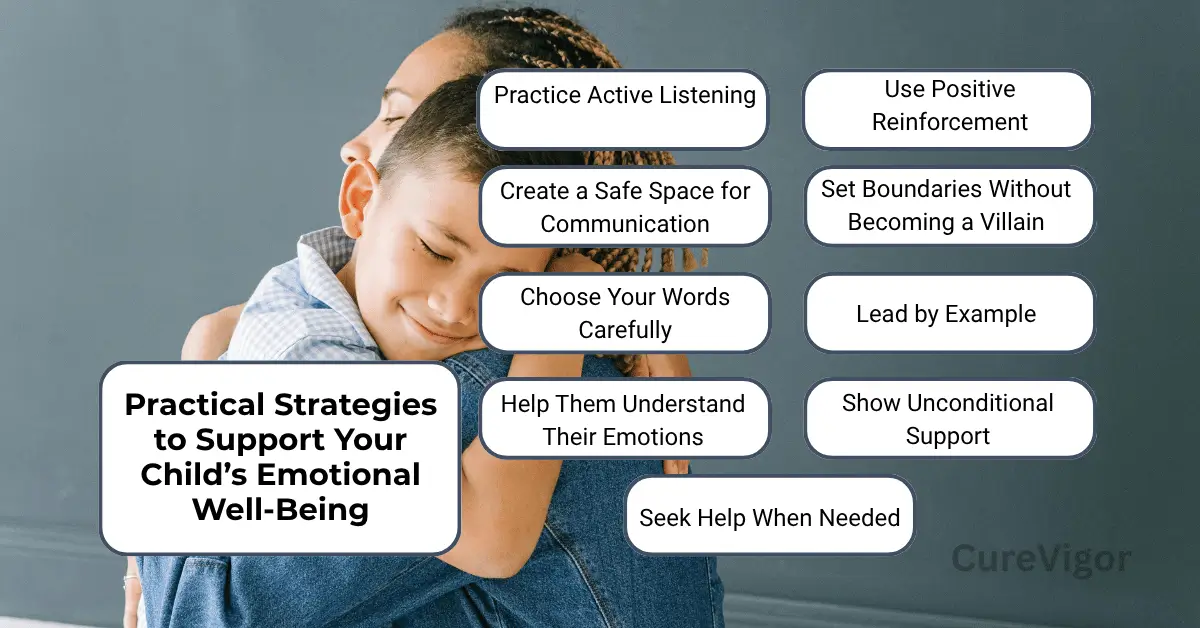
Let’s get into what actually works. Not theory. Not motivational fluff. Real, usable approaches.
Practice Active Listening (Yes, Actual Listening)
Most people listen to respond. Children can tell.
Active listening means:
- Pausing distractions
- Making eye contact
- Letting them finish
- Reflecting what they said
Simple phrases help:
- “I can see you’re upset.”
- “That sounds frustrating.”
You’re not fixing the problem. You’re acknowledging the feeling. That alone builds trust.
Create a Safe Space for Open Communication
If a child feels judged, they stop sharing. Fast.
A safe space means:
- No immediate criticism
- No overreaction
- No turning everything into a lecture
Regular moments help:
- Family meals
- Walks
- Casual conversations
These aren’t “serious talks.” They’re opportunities for connection without pressure.
Choose Your Words Carefully (They Stick Longer Than You Think)
Words like “always” and “never” are lazy and damaging.
Instead of:
- “You never listen.”
Try:
- “I need you to pay attention right now.”
It sounds small. It isn’t.
You’re shifting from labeling the child to addressing the behavior. That protects their self-image while still setting expectations
Help Them Understand Their Emotions
Children don’t automatically know what they’re feeling. They need help labeling it.
Teach them:
- “This is frustration.”
- “This is disappointment.”
- “This is excitement.”
Use real-life moments. Stories. Daily situations.
And yes, you also have to model it:
- “I’m feeling stressed, so I need a moment.”
You’re not just parenting. You’re teaching emotional literacy.
Use Positive Reinforcement (Without Overdoing It)
Constant correction kills motivation.
Instead:
- Notice effort
- Acknowledge progress
- Highlight positive behavior
Not:
- “You’re the best ever!” (empty praise)
But:
- “I saw how patient you were. That was really good.”
Specific praise builds confidence. Generic praise builds… confusion.
Set Boundaries Without Becoming a Villain
Children need structure. They just don’t enjoy it.
Good boundaries are
- Clear
- Consistent
- Explained
Bad boundaries are
- Random
- Emotional
- Inconsistent
You’re not there to win popularity contests. You’re there to provide stability.
Lead by Example (Because They Copy Everything)
You can give speeches all day. They’ll still copy what you do.
If you:
- Handle stress calmly
- Speak respectfully
- Show empathy
They will learn it.
If not… well, you already know how that ends.
Show Unconditional Support
Children need to know one thing clearly:
Your love isn’t performance-based.
Not tied to:
- Grades
- Behavior
- Achievements
This doesn’t mean ignoring mistakes. It means separating the child from the action.
- “I don’t like what you did, but I still care about you.”
That distinction matters more than most people realize.
Seek Help When Needed (Yes, This Is Allowed)
Sometimes the situation goes beyond “just parenting better.”
If you notice:
- Persistent anxiety
- Extreme emotional reactions
- Withdrawal or behavioral shifts
A professional can help.
No, it’s not a failure. It’s a responsibility.
Benefits of Nurturing Emotional Well-Being

When you consistently apply these approaches, the results show up quietly but powerfully.
- Stronger parent-child trust
- Better emotional control in children
- Higher self-esteem
- Improved communication skills
- Healthier social relationships
- Greater resilience in stressful situations
Basically, you’re raising someone who doesn’t crumble the moment life gets inconvenient.
Challenges You Might Face (Because It’s Not Effortless)
Let’s not pretend this is easy.
Common challenges include:
- Losing patience during stressful days
- Breaking old communication habits
- Balancing discipline with empathy
- Dealing with your own emotional triggers
- Staying consistent
You will mess up sometimes. That’s unavoidable.
What matters is what happens after:
- Do you repair the moment?
- Do you acknowledge it?
- Do you try again?
That’s what children remember.
Checklist: How to Preserve Your Child’s Emotional Well-Being Without Damaging Confidence
| ✔ | Checklist Item | Why It Matters |
|---|---|---|
| ☐ | Listen without interrupting when your child shares feelings. | Active listening helps children feel respected, understood, and emotionally safe. |
| ☐ | Validate emotions instead of dismissing them. | Acknowledging feelings teaches children that all emotions are normal and manageable. |
| ☐ | Praise effort rather than natural talent. | Encourages a growth mindset and builds lasting self-confidence. |
| ☐ | Avoid comparing your child with siblings or peers. | Comparisons can lower self-esteem and create unnecessary pressure. |
| ☐ | Correct behavior without criticizing personality. | Focus on actions, not identity, to protect self-worth. |
| ☐ | Encourage age-appropriate independence. | Small responsibilities develop confidence, resilience, and decision-making skills. |
| ☐ | Set clear, consistent, and fair boundaries. | Healthy limits help children feel secure and understand expectations. |
| ☐ | Spend quality one-on-one time every week. | Regular attention strengthens trust and emotional connection. |
| ☐ | Teach healthy ways to express emotions. | Children learn emotional regulation instead of suppressing feelings. |
| ☐ | Model calm and respectful communication. | Children often imitate how adults handle emotions and conflict. |
| ☐ | Celebrate progress, even if it’s small. | Recognizing improvement motivates children to keep trying. |
| ☐ | Allow children to make safe mistakes. | Mistakes build resilience, problem-solving abilities, and confidence. |
| ☐ | Encourage open conversations without fear of punishment. | Children are more likely to seek help when they feel emotionally safe. |
| ☐ | Limit harsh criticism and negative labels. | Negative words can damage confidence and become lasting self-beliefs. |
| ☐ | Support friendships and positive social interactions. | Healthy relationships improve emotional well-being and social confidence. |
| ☐ | Maintain predictable daily routines. | Consistency provides children with stability and reduces anxiety. |
| ☐ | Teach problem-solving instead of solving every problem. | Builds independence and confidence in handling challenges. |
| ☐ | Respect your child’s unique personality and interests. | Acceptance helps children develop a strong sense of identity. |
| ☐ | Show unconditional love, even when correcting mistakes. | Children need to know they are loved regardless of their performance. |
| ☐ | Check in regularly about school, friendships, and feelings. | Frequent conversations help identify emotional concerns before they become bigger problems. |
Quick Self-Assessment
Use this simple score to evaluate your current parenting approach:
- 16–20 checked: Excellent! You’re creating a strong emotional foundation for your child.
- 11–15 checked: You’re doing well, but a few improvements can further strengthen your child’s confidence.
- 6–10 checked: Consider focusing on emotional communication and positive reinforcement.
- 0–5 checked: Start with small, consistent changes. Every positive interaction helps build your child’s emotional well-being and self-confidence.
FAQs
Q. How can I improve my communication with my child?
Start by listening more than you speak. Focus on understanding their emotions rather than correcting immediately.
Use simple, validating language and avoid dismissive responses. Small adjustments in tone and attention can significantly improve communication over time.
Q. What are the signs my child is struggling emotionally?
Look for changes in behavior such as withdrawal, increased anger, anxiety, or reluctance to communicate. Sudden shifts in mood or loss of interest in activities can also signal emotional distress that needs attention.
Q. How can I help my child express emotions more effectively?
Encourage them to name their feelings and talk about them without fear of judgment. Use stories, daily situations, or examples to help them understand emotions. Modeling your own emotional expression also teaches them how to do it.
Q. Can negative communication really affect my child in the long term?
Yes. Repeated negative communication can impact self-esteem, emotional security, and relationship-building skills. Over time, children may internalize these patterns and struggle with confidence and trust.
Q. What should I do if I lose my temper?
It happens. The key is repair. Acknowledge what happened, apologize if needed, and explain calmly. This teaches accountability and shows that mistakes can be corrected.
Q. When should I consider professional help?
If emotional or behavioral issues persist, worsen, or interfere with daily life, it’s wise to consult a child psychologist or counselor. Early support can prevent long-term challenges.
Recap
- Emotional well-being is shaped through daily interactions
- Communication style has a lasting impact on a child’s self-image
- Small changes in language and listening create big results
- Consistency and empathy matter more than perfection
- Repairing mistakes is part of healthy parenting
Conclusion
You don’t need to be flawless to raise an emotionally healthy child. That standard is unrealistic and frankly exhausting.
What children need is something far more human:
- Attention
- Respect
- Understanding
- Consistency
They don’t remember every word. They remember how you made them feel.
And the fact that you’re even thinking about this? That already means you’re doing better than you think.
Share Your Thoughts
If this made you pause, reflect, or rethink something, put it into words.
What’s one small change you’re willing to try in your daily communication?
Read more articles on health and wellness tips for night shift workers.
You might like to read: