

Uncover easy desk yoga poses you can do at work to reduce pain, improve posture, increase focus, and feel relaxed in just minutes.
Feeling stiff, tired, or mentally drained at your desk?
You’re not lazy. You’re not unmotivated. Your body is simply asking for movement.
Long hours of sitting quietly build stress in your neck, back, hips, and mind — even if you don’t realize it.
The good news? You don’t need a yoga mat, gym clothes, or extra time.
Desk yoga is one of the simplest ways to relax your body, reset your posture, and refocus your brain — all without leaving your chair.
Quick Summary Box
What this guide covers:
- What desk yoga is and why it works
- Easy desk yoga poses you can do at work.
- Step-by-step stretches for neck, back, hips, and eyes
- Real-life office examples
- A complete desk yoga checklist
- Common mistakes to avoid
- A simple 5-step daily desk yoga action plan
Time needed: 5–15 minutes
Best for: Office workers, remote employees, students, freelancers, and anyone sitting for long hours
What Is Desk Yoga?
Desk yoga is a gentle, practical form of yoga designed for people who spend long hours sitting at a desk.
It focuses on simple movements that can be performed while seated or standing beside your workspace, making it ideal for office employees, remote workers, students, and freelancers.
Unlike traditional yoga routines that require mats, floor poses, or workout clothing, desk yoga adapts movement to your real work environment.
The goal is not exercise intensity, flexibility training, or fitness performance. Instead, it supports daily comfort, posture balance, and mental clarity during long work hours.
Desk yoga is intentionally slow, safe, and accessible. Each movement is designed to reduce strain caused by prolonged sitting, repetitive typing, screen exposure, and limited mobility throughout the day.
Unlike traditional yoga, desk yoga:
- Requires no floor poses or equipment
- Can be done in normal work clothes
- Takes only a few minutes at a time
- Fits naturally into your existing routine
- Can be practiced quietly at your desk
Desk yoga combines:
- Light, joint-friendly stretching.
- Deep and controlled breathing
- Simple movements for circulation
- Gentle posture correction
- Mind–body awareness
The goal is not flexibility.
The goal is to help your body and mind feel human again during long work hours.
Why Desk Yoga Is So Powerful
Most people do not realize how strongly the body reacts to prolonged sitting.
Physiologically, prolonged sitting triggers stress responses similar to those triggered by emotional pressure.
The body remains in a fixed position, muscles stop moving, and circulation slows down.
When you sit too long:
- Neck and shoulder muscles tighten.
- Hip flexors shorten
- Blood flow decreases
- Breathing becomes shallow
- Spinal compression increases
- Focus and alertness decline
- Mental fatigue builds silently.
Over time, this leads to discomfort, low energy, headaches, and poor posture.
Desk yoga gently reverses these effects by reintroducing movement into the body.
With slow stretches and controlled breathing:
- Muscles begin to release tension.
- Oxygen delivery improves
- The nervous system calms
- Posture naturally realigns
- Mental clarity returns
Even short movement breaks remind the body that it is not meant to stay still for hours at a time.
Benefits of Desk Yoga
Desk yoga offers both immediate relief and long-term support when practiced consistently.
Its benefits extend beyond physical comfort and directly influence productivity, mood, and focus.
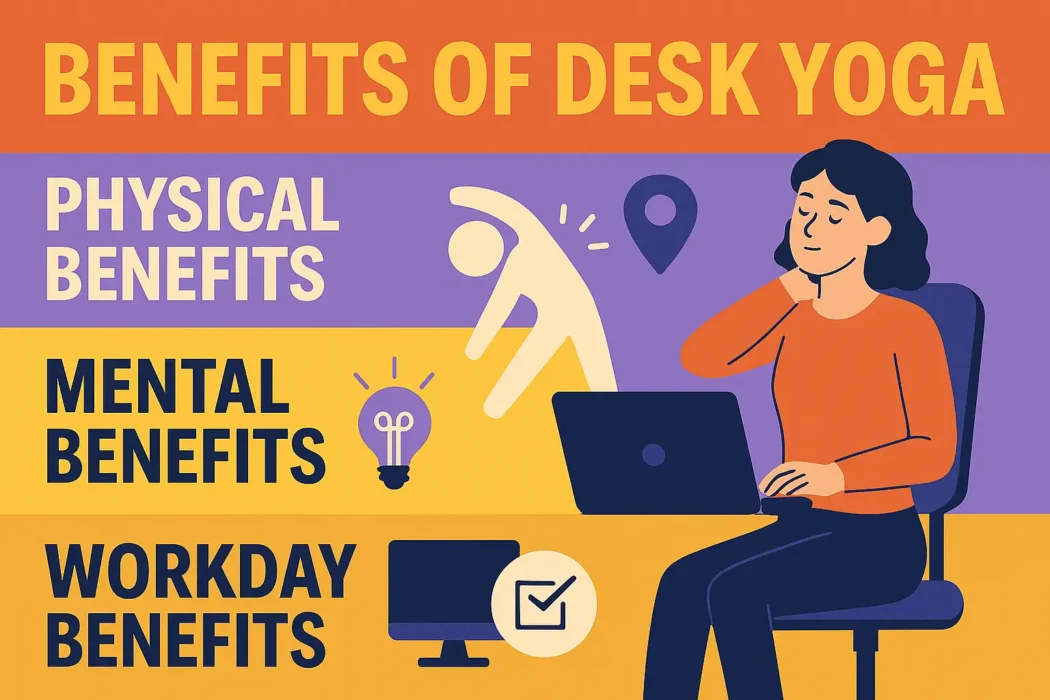
Desk yoga offers both immediate relief and long-term support when practiced consistently.
Physical Benefits
- Relieves neck and shoulder tension from screen use
- Reduces lower back stiffness and pressure
- Improves spinal alignment and posture awareness
- Enhances blood circulation in the arms and legs
- Prevents joint stiffness caused by prolonged sitting
- Supports healthy mobility throughout the workday
Mental Benefits
- Improves concentration and attention span
- Reduces stress and work-related anxiety
- Clears mental fog and decision fatigue
- Encourages calm, steady breathing
- Boosts natural energy levels without caffeine
- Enhances emotional balance during busy schedules
Workday Benefits
- Fewer tension headaches
- Reduced end-of-day exhaustion
- Improved productivity and task efficiency
- Better comfort during long meetings
- Increased ability to focus for extended periods
- Lower risk of burnout from continuous sitting
Even five minutes of desk yoga can reset your body and mind, helping your afternoon feel lighter, clearer, and far more manageable.
Why Desk Yoga Is So Powerful
Most people don’t realize this:
Your body reacts to sitting the same way it reacts to stress.
When you sit too long:
- Muscles tighten
- Blood flow slows
- Breathing becomes shallow
- Focus decreases
- Fatigue increases
Desk yoga gently reverses all of that.
Desk Yoga Poses You Can Do Anywhere
These desk yoga poses are designed to fit naturally into your workday. They are safe, beginner-friendly, and can be done while sitting or standing near your desk.
No yoga mat, special clothing, or prior experience is required.
Each movement focuses on releasing tension caused by long hours of sitting, screen use, and repetitive typing.
When practiced slowly with deep breathing, these poses help relax muscles, improve circulation, and restore mental focus.
You can perform them during short breaks, between meetings, or even while working. The key is gentle movement, steady breathing, and listening to your body without forcing any stretch.
These desk yoga poses help you:
- Reduce neck, shoulder, and back stiffness.
- Improve posture and spinal alignment.
- Increase blood flow during prolonged sitting.
- Prevent work-related aches and fatigue.
- Refresh your body and mind within minutes.
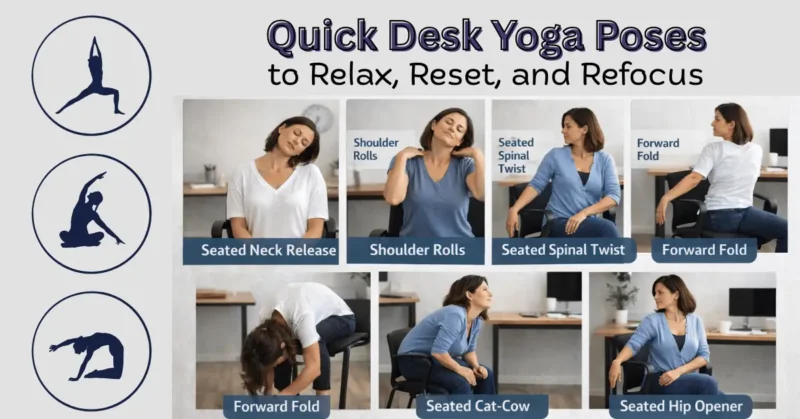
Seated Neck Release
This pose gently stretches the sides of the neck, an area that tightens quickly from screen time and poor posture.
It helps relieve stiffness, reduce tension headaches, and restore natural neck mobility.
Why it helps:
- Eases neck pain from computer use
- Relaxes muscle tightness around the shoulders
- Improves head and neck alignment
How to do it:
- Sit tall with your spine straight.
- Drop your right ear toward your right shoulder.
- Keep both shoulders relaxed.
- Hold for 10–15 seconds.
- Switch sides and repeat.
Shoulder Rolls
Shoulder rolls are one of the simplest desk yoga movements, yet highly effective. They increase blood flow and release stress stored in the upper body from typing, mouse use, and mental tension.
Why it helps:
- Loosens tight shoulder muscles
- Improves upper-body circulation
- Reduces stiffness from prolonged sitting
How to do it:
- Inhale and lift your shoulders upward.
- Exhale and roll them back and down
- Repeat 10 times
- Reverse the direction slowly.
Seated Spinal Twist
This gentle twist refreshes the spine after hours of forward bending. It supports spinal flexibility and helps relieve mid-back tension commonly felt during long desk work.
Why it helps:
- Improves spinal mobility
- Relieves tight lower and middle back muscles
- Encourages healthy digestion
How to do it:
- Sit sideways in your chair.
- Place one hand on the chair back.
- Keep your chest lifted.
- Gently twist your torso.
- Hold for 10–20 seconds.
- Switch sides
Forward Fold (Chair Version)
The seated forward fold provides a calming stretch for the entire back body. It gently relaxes the nervous system and helps release mental stress.
Why it helps:
- Stretches the spine and lower back
- Reduces tension after long sitting
- Promotes relaxation and calm breathing
How to do it:
- Sit with both feet flat on the floor.
- Fold forward slowly from the hips.
- Let your arms hang naturally.
- Relax your head and neck.
- Breathe deeply for 20 seconds.
Seated Cat–Cow Stretch
This flowing movement keeps the spine active and prevents stiffness from staying in one position too long. It is ideal during long work sessions.
Why it helps:
- Reduces back pain and stiffness
- Improves spinal flexibility
- Encourages better posture awareness
How to do it:
- Inhale and arch your back while lifting your chest
- Breathe out, tuck your chin in, and round your back.
- Move slowly with your breath.
- Repeat 8–10 times
Wrist and Finger Stretch
Typing and mouse use strain the wrists and fingers throughout the day. This simple stretch helps prevent discomfort and repetitive stress issues.
Why it helps:
- Relieves wrist and hand tension
- Improves flexibility in fingers
- Supports healthy joint movement
How to do it:
- Extend one arm forward.
- Gently pull fingers back with the other hand.
- Hold for 10 seconds
- Switch hands and repeat.
Ankle Rolls
Ankle rolls improve circulation in the lower body, which is especially useful for those who spend a lot of time sitting still.
Why it helps:
- Improves blood circulation
- Reduces leg fatigue and stiffness
- Supports joint mobility
How to do it:
- Lift one foot slightly off the floor.
- Rotate the ankle 10 times.
- Change direction
- Switch sides
Seated Hip Opener
Sitting shortens hip muscles over time, leading to lower back discomfort. This gentle hip opener helps restore flexibility and comfort.
Why it helps:
- Releases tight hip flexors
- Reduces lower back pressure
- Improves sitting posture
How to do it:
- Place one ankle over the opposite knee.
- Sit tall and engage your core.
- Lean slightly forward
- Hold for 15–30 seconds.
- Switch sides
Desk Yoga Breathing Techniques
Breathing is one of the most important parts of desk yoga.
Many people stretch their neck, shoulders, or back, but continue breathing shallowly without noticing. When this happens, the body stays in a state of stress, and the stretch feels incomplete.
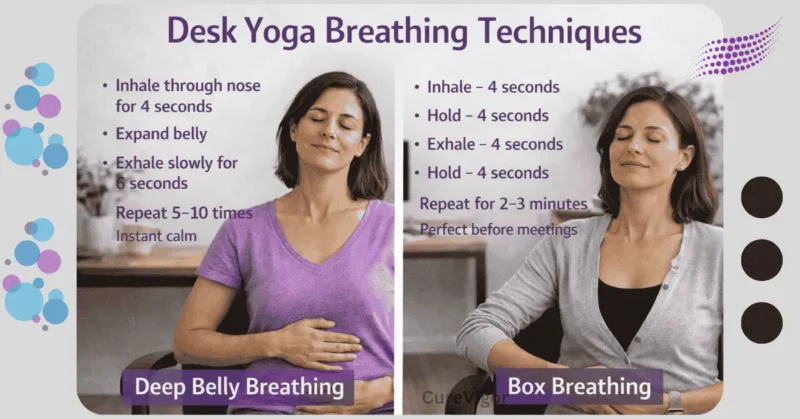
Proper breathing sends a clear signal to the nervous system that it is safe to relax.
When breath and movement work together:
- Muscles release faster
- Heart rate slows
- Mental tension decreases
- Focus improves
That is why breathing is often called half of desk yoga.
Deep Belly Breathing
Diaphragmatic breathing, or deep belly breathing, is one of the quickest ways to relax while seated at a desk.
Most people breathe into their chest during work, especially under pressure. This shallow breathing increases fatigue and anxiety.
Belly breathing reverses that pattern.
How to practice
- Place your feet flat on the floor and sit up straight.
- Place one hand on your belly.
- Inhale through your nose for four seconds.
- Feel your belly gently expand.
- Take six calm breaths out of your mouth.
- Let your shoulders soften.
Repeat five to ten times.
Why it works
- Activates the relaxation response
- Reduces muscle tension
- Improves oxygen flow to the brain
- Helps reset posture naturally
This technique is especially helpful:
- During the afternoon, energy crashes
- After long typing sessions
- When feeling overwhelmed
Even one minute of deep belly breathing can noticeably calm the body.
Box Breathing
Box breathing is a structured breathing method often used by professionals who work under pressure, including first responders, athletes, and executives.
It helps regulate breathing patterns and quickly restores mental clarity.
How to practice
- Inhale for four seconds
- Hold your breath for four seconds.
- Exhale for four seconds
- Hold again for four seconds.
This completes one cycle.
Repeat for two to three minutes.
Why it helps
- Slows racing thoughts
- Improves emotional control
- Enhances concentration
- Reduces pre-meeting anxiety
Box breathing is ideal before:
- Important meetings
- Presentations
- Phone calls
- Decision-making tasks
It can be done quietly at your desk without anyone noticing.
Gentle Breath Awareness
If structured breathing feels difficult, simple breath awareness works just as well.
- Inhale naturally through the nose.
- Exhale slightly longer than the inhale.
- Notice the rhythm of your breath.
Even mindful breathing for thirty seconds can release tension stored in the shoulders and jaw.
Gentle Breath Awareness
If structured breathing feels difficult, simple breath awareness works just as well.
- Inhale naturally through the nose.
- Exhale slightly longer than the inhale.
- Notice the rhythm of your breath.
Even mindful breathing for thirty seconds can release tension stored in the shoulders and jaw.
Desk Yoga Strategies for Busy Workdays
Desk yoga works best when it fits naturally into your schedule. These strategies help you stay consistent without adding pressure or disrupting productivity.
1. The 5-Minute Reset Rule
Every sixty to ninety minutes, pause briefly.
You do not need a full routine.
Simply:
- Stand or sit tall
- Perform two desk yoga poses.
- Take five slow, deep breaths.
This short reset prevents stiffness from building up.
Action steps
- Set a gentle phone or smartwatch reminder.
- Stretch while pages load or files download
- Use meeting transitions as movement cues.
Five minutes of movement can restore energy for the next hour of work.
2. Pair Yoga With Existing Habits
The easiest way to stay consistent is to tie desk yoga to habits you already have.
Examples include:
- Stretching after sending a batch of emails
- Taking three deep breaths before meetings
- Performing neck rolls during coffee breaks
This method is known as habit stacking.
By linking movement to routines you already follow, desk yoga becomes automatic rather than something you have to remember.
3. Use Micro-Movements
Desk yoga does not require long sessions.
Small movements repeated often are extremely effective.
Even the following can help:
- One shoulder roll
- A gentle neck tilt
- A single deep breath
Micro-movements keep blood flowing and reduce tension buildup.
Remember:
Small movement is always better than no movement.
4. Keep It Invisible at Work
Desk yoga does not need to look like a workout.
Most poses are subtle and professional.
- No floor positions
- No dramatic stretching
- No special clothing
Simple seated movements and breathing exercises are enough.
Most coworkers will not even notice you are practicing desk yoga, yet your body will feel the difference.
Real-Life Desk Yoga Examples

Example 1: Office Employee
Sarah works in a corporate office and spends nearly nine hours a day in front of a computer. Her routine included long meetings, continuous typing, and very few breaks. By evening, she often experienced tight shoulders, neck stiffness, and dull headaches that affected her sleep.
She decided to make small changes rather than overhaul her entire schedule.
She added:
- A gentle neck stretch at 11 AM after answering emails
- Shoulder rolls and chest opening at 2 PM during her afternoon energy crash
She did not change her chair, desk, or workload. She only added short desk yoga movements.
Within two weeks, she noticed clear improvements. Her neck pain reduced significantly, her posture improved, and she felt less exhausted at the end of the workday. What surprised her most was that even short stretches prevented the pain from building up in the first place.
Example 2: Remote Worker
Ali works remotely from home. Without office boundaries, his work hours slowly extended. He often sat for three to four hours straight, barely realizing how tense his body had become.
By midday, he experienced lower back tightness, mental fatigue, and difficulty focusing.
He began using desk yoga in a flexible way.
Now he:
- Practices seated cat–cow stretches during long video calls
- Performs spinal twists between tasks
- Uses slow breathing exercises after stressful emails
After a few weeks, he noticed stronger concentration and fewer energy crashes. His back stiffness reduced, and his work sessions felt smoother and more controlled. Desk yoga helped him create natural breaks without disrupting productivity.
Example 3: Student
A university student attending long online lectures began experiencing persistent upper back stiffness and a slouched posture. Sitting through multiple classes daily left little time for physical activity.
Instead of ignoring the discomfort, the student introduced two to three minutes of desk yoga after each lecture.
Simple movements such as shoulder rolls, spinal stretches, and forward folds helped release tension immediately. Over time, posture improved, restlessness reduced, and focus during lectures increased.
This small habit made long study hours more comfortable and sustainable.
Personal Insight
While researching desk yoga, one pattern became very clear.
Most people do not avoid movement because they are lazy or careless.
They avoid it because they believe:
- “I don’t have enough time.”
- “A short stretch won’t make a difference.”
In reality, the human body responds almost instantly to gentle movement.
Even one stretch can:
- Slow down, rushed breathing.
- Release tight shoulders
- Reduce jaw clenching
- Clear mental fog
Desk yoga does not aim to transform your body overnight.
Its real value lies in prevention. It stops tension from accumulating before it turns into pain, burnout, or fatigue.
Over time, these small pauses make the workday feel lighter, calmer, and far more manageable.
Practical Desk Yoga Checklist
Use this simple checklist during your workday:
- Feet placed flat on the floor.
- Screen positioned at eye level.
- Shoulders relaxed and dropped away from ears.
- Jaw unclenched and facial muscles soft.
- Movement breaks every 60–90 minutes.
- Do at least three desk yoga poses daily.
- Regular water intake
You may gently remind yourself to take care of your body during the day by keeping this checklist close to your desk.
Common Desk Yoga Mistakes to Avoid
Many beginners unknowingly reduce the benefits of desk yoga by making these mistakes:
- Holding the breath during stretches
- Forcing the body into deep positions
- Slouching instead of sitting tall
- Ignoring sharp or persistent pain
- Trying to perform too many poses at once
Desk yoga should always feel:
- Gentle
- Comfortable
- Relaxing
If discomfort appears, ease out of the pose. Slow, mindful movement is far more effective than intensity.
5-Step Desk Yoga Action Plan
Step 1: Start Small
Begin with just five minutes per day. Short, consistent practice builds long-term results.
Step 2: Choose Three Favorite Poses
Focus on the areas most affected by sitting:
- Neck
- Shoulders
- Spine
Step 3: Set Simple Reminders
Use phone alarms, calendar notifications, or natural breaks between tasks to remind yourself to move.
Step 4: Breathe With Every Movement
Pair each stretch with slow breathing. Movement combined with breath activates relaxation faster.
Step 5: Stay Consistent
Consistency matters more than duration or intensity. Daily gentle movement creates lasting comfort and focus.
Frequently Asked Questions About Desk Yoga
Q. What is desk yoga?
Desk yoga is a form of gentle stretching and movement done while sitting or standing near your desk. It helps reduce stiffness, improve posture, and increase focus during long work hours.
Q. Can desk yoga really help with back and neck pain?
Yes. Desk yoga improves blood circulation, relaxes tight muscles, and reduces pressure caused by prolonged sitting. When practiced daily, it can significantly reduce discomfort.
Q. How long should desk yoga sessions be?
Most desk yoga sessions last between five and fifteen minutes. Even two or three short stretches throughout the day can provide noticeable benefits.
Q. Do I need yoga experience to do desk yoga?
No experience is required. Desk yoga is beginner-friendly and focuses on slow, safe movements suitable for all fitness levels.
Q. Can I do desk yoga at work without drawing attention?
Yes. Most desk yoga poses are subtle and can be done while seated. Cow stretches, neck releases, breathing exercises, and shoulder rolls are easy to perform quietly.
Q. Is desk yoga safe for everyone?
Desk yoga is generally safe for most people. If you have a medical condition, recent injury, or chronic pain, consult a healthcare professional before starting.
Q. How often should I practice desk yoga?
For best results, practice desk yoga every 60 to 90 minutes during prolonged sitting periods. Consistency is more important than duration.
Final Thoughts
Desk yoga is not about flexibility or performance.
It is about giving your body small moments of care during a busy day.
A few minutes of movement can:
- Improve posture
- Reduce daily pain
- Clear mental fog
- Restore focus
You do not need special clothing, equipment, or extra time.
You only need the willingness to pause.
Start small. Stay gentle. Move often.
Your body will respond — one stretch at a time.
Call to Action
If you spend long hours at a desk, begin today.
Choose one desk yoga pose. Take one deep breath. Move once every hour.
Save this guide. Share it with a coworker or friend.
Small movement creates big change.
Read more Life-Balance articles.
You might like: