
Enhance upper body mobility, improve focus, and relieve tension from prolonged sitting. Unlock all-day energy with a 5-minute desk reset! Simple workouts that you may perform at your desk.
In today’s world, desk jobs are the norm for millions worldwide. However, a sedentary lifestyle, including long hours at a desk, can significantly impact your health and energy levels.
One of the most overlooked aspects of desk work is upper-body mobility.
Why Upper Body Mobility is the Key to All-Day Energy
Fatigue, poor posture, and discomfort can reduce your productivity if you lack sufficient upper-body mobility. But don’t worry, there is an easy and quick solution: the 5-minute desk reset.
This easy exercise can help you stay productive throughout the day, increase energy, and improve upper-body mobility.

In this blog, we’ll explore why upper body mobility matters for desk workers, how it affects your energy levels, and guide you through a 5-minute routine that you can do right at your desk.
Benefits of Upper Body Mobility for Desk Workers
Long hours spent at a desk pose unique challenges. Numerous health problems, such as neck strain, back discomfort, muscular stiffness, and reduced circulation, can result from prolonged sitting and poor posture. This is where upper-body mobility becomes critical.
Enhanced Circulation and Oxygen Flow
One of the main benefits of improving upper-body mobility is better circulation. When you move your joints and muscles, blood flow increases, helping deliver oxygen and nutrients to your muscles and organs.
This increased circulation can help prevent fatigue and improve focus, keeping you energized throughout the workday.
Improved Posture and Alignment
Desk workers often develop poor posture, which can lead to rounded shoulders, a slouched back, and neck pain. By incorporating mobility exercises, you can improve your posture, align your spine, and reduce discomfort from prolonged sitting.

Reduced Muscle Tension and Discomfort
Prolonged sitting can strain muscles, especially those in the neck, shoulders, and back. Regular mobility exercises can alleviate muscle tension, reduce discomfort, and make you feel more relaxed and comfortable at work.
Boosted Mental Focus and Productivity
Upper body mobility exercises not only benefit your body but also your mind. Regular movement helps refresh the brain by increasing blood flow and oxygen delivery, enhancing concentration, creativity, and productivity.
When you feel physically well, you can focus more effectively on tasks and solve problems.
How Upper Body Mobility Impacts Your Workday
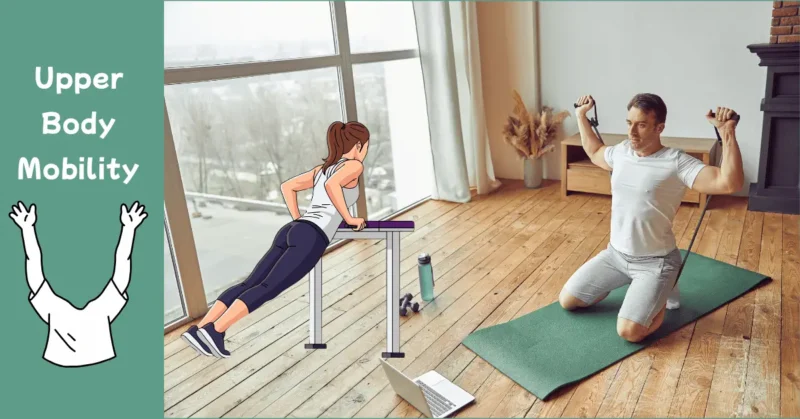
Upper-body mobility directly impacts your workday. Your ability to focus and perform at your best may be hindered by a stiff, aching body.
On the other hand, when your muscles are flexible, your posture is upright, and you’re pain-free, you can work more efficiently.
Reduce Desk Job Strain with Upper Body Mobility
One of the biggest challenges desk workers face is the strain of prolonged sitting. When you sit for long periods without moving, muscles can tighten, and circulation can slow, resulting in discomfort.
Mobility exercises focus on restoring flexibility and promoting proper posture, helping to alleviate these strains and discomforts.
Incorporating upper-body mobility exercises, such as shoulder rolls, neck stretches, and wrist rotations, can target the areas most affected by prolonged sitting.
Performing this simple exercise helps ease stiffness and reduces the risk of prolonged sitting, causing chronic discomfort.
Boost Focus with Upper Body Mobility
When you’re constantly sitting in the same position, blood flow to your brain can decrease, making you feel sluggish and unfocused.
But a quick upper-body mobility routine can help invigorate your mind. Movement increases blood flow and oxygen delivery, improving cognitive function and mental clarity.
For instance, shoulder and neck stretches stimulate the muscles and joints, which leads to a more energized state. As a result, your ability to focus on complex tasks improves, and you experience fewer brain fog moments during the day.
The 5-Minute Desk Reset for Upper Body Mobility

The best part about improving upper body mobility is that you don’t need any special equipment or even leave your desk. You can incorporate a quick 5-minute desk reset focused on key stretches to improve mobility and boost energy.
Simple Stretches for Upper Body Mobility
Here are a few simple exercises you can do in under five minutes to improve upper-body mobility. These exercises target the areas most affected by desk work, such as the shoulders, neck, spine, and wrists.
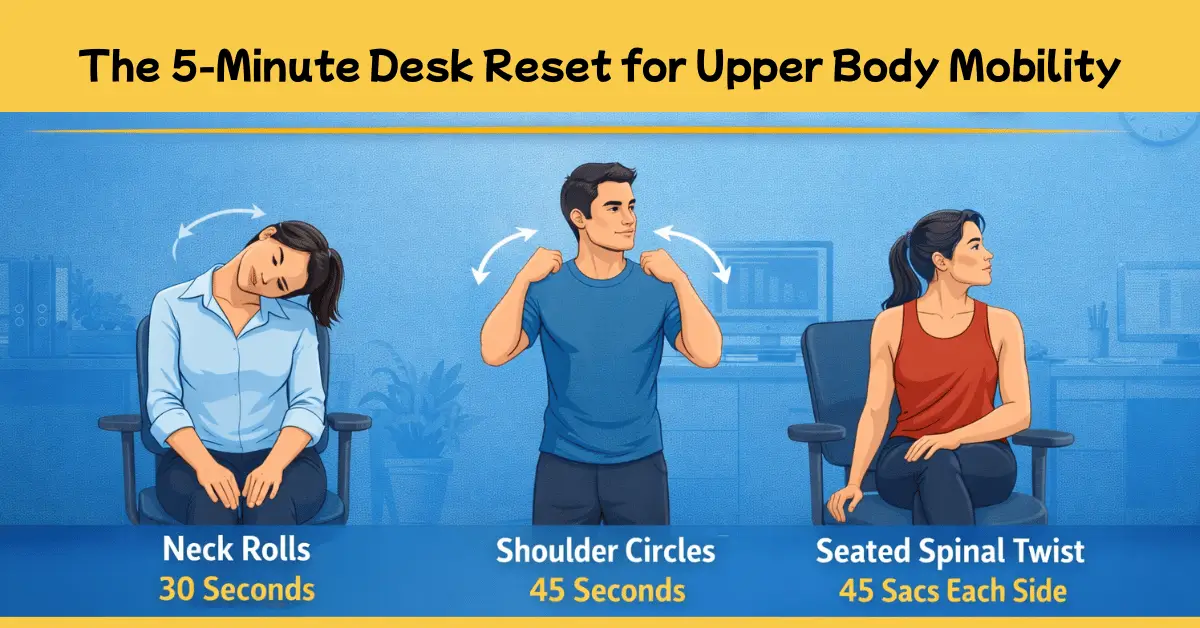
Neck Rolls (30 Seconds)
Start by slowly tilting your head side to side, forward, and back. Then, roll your neck in controlled half-circles. This will help relieve stiffness caused by looking at screens for prolonged periods and reduce neck tension.
Shoulder Circles (45 Seconds)
Roll your shoulders in large, smooth circles forward and backward while sitting or standing upright. This movement opens your chest, helps combat slouching, and relieves tension in your shoulders.
Seated Spinal Twist (45 Seconds Each Side)
Sit tall and place one hand on your opposite knee. Gently twist from the waist, holding the stretch for a few seconds before returning to the starting position. This exercise helps restore mid-back mobility and relieves lower back tightness.
Hip Flexor Stretch (1 Minute Each Side)
Stand up, step one leg back, and drop into a gentle lunge. Keep your chest upright and squeeze your back glutes to release tight hips from prolonged sitting. This stretch helps counteract hip flexor shortening from sitting.
Cat-Cow Flow (1 Minute)
Get on your hands and knees and alternate between arching your back (cow pose) and rounding it (cat pose). This movement mobilizes the spine, improves posture, and enhances circulation through the back.
Why Upper Body Mobility Matters for Energy
Upper body mobility is not just about reducing discomfort or improving posture. It is essential for sustaining your energy levels throughout the day.
Improve Posture with Upper Body Mobility
Good posture is key to maintaining energy throughout the day. When you slouch, your body has to work harder to maintain an upright posture, which can lead to fatigue.
On the other hand, proper posture allows your muscles to function more efficiently, preventing unnecessary strain and conserving energy.
By focusing on upper-body mobility, you can strengthen the muscles that support your spine and shoulders, improving your posture and ensuring you have the energy to get through your workday.
All-Day Energy with Upper Body Mobility
Improved upper body mobility doesn’t just provide short-term relief – it contributes to sustained energy levels. When you incorporate mobility exercises into your daily routine, you help prevent fatigue caused by muscle stiffness and poor posture.
A well-mobilized body supports better energy flow, leading to greater focus, reduced discomfort, and higher productivity throughout the day.
FAQs about Upper Body Mobility and Desk Work
Q. What stretches should you do if you sit all day?
If you sit all day, it’s important to stretch the muscles that tighten from prolonged sitting. Some of the best stretches include neck rolls, shoulder stretches, wrist and arm stretches, and seated spinal twists.
Additionally, hip flexor stretches and backbends, such as the cat-cow flow, can help counteract stiffness from sitting. These stretches target the shoulders, back, hips, and wrists, which are key areas affected by prolonged sitting.
Q. How to exercise while sitting at a desk all day?
You can still get a good workout while sitting at your desk by performing seated exercises like seated marches, seated leg raises, or seated torso twists. Another great option is to do seated chair dips to work your arms or desk push-ups to engage your chest and arms.
You can also perform small movements, such as ankle rolls or shoulder shrugs, to maintain circulation. These simple exercises can help improve circulation and engage your muscles without leaving your desk.
Q. What are some of the stretches that you should do periodically throughout the day when sitting at a desk?
Periodically throughout the day, perform stretches targeting the areas most affected by sitting. Neck rolls and shoulder stretches help relieve tension from the upper body, while seated spinal twists can relieve tightness in the back.
Additionally, taking a few minutes to perform wrist stretches and shoulder shrugs can alleviate typing-related discomfort. Leg extensions and standing or seated hip flexor stretches also help counteract tightness in the hips and legs from prolonged sitting.
Q. How often should I stretch at a desk job?
You should aim to stretch at least once every hour during your desk job. The detrimental effects of extended sitting can be mitigated by taking a little stretch break every 30 to 60 minutes.
Even a quick 5-minute stretch break can help relieve muscle tension, boost circulation, and keep you feeling energized. If you’re focused on a task, setting an hourly reminder or using a timer can help ensure you take these breaks.
Q. What happens to your body when you sit at a desk all day?
A number of health problems, such as bad posture, tense muscles, and poor circulation, can result from spending all day at a desk. Slouching can exacerbate your posture, cause neck and back pain, and constrict the muscles in your lower back, hips, and legs.
Prolonged sitting also increases the risk of long-term conditions like obesity, diabetes, and heart disease. To combat these effects, it’s critical to stretch and take frequent rests.
Q. What is the 5 4 3 2 1 workout method?
The 5-4-3-2-1 workout method is a simple, quick routine designed to engage different parts of your body. It involves performing 5 exercises for 5 minutes, 4 for 4 minutes, 3 for 3 minutes, 2 for 2 minutes, and 1 for 1 minute.
This method allows you to gradually decrease the intensity as you go, making it an efficient workout. It’s ideal for a quick, full-body workout that fits into a busy schedule, and it’s especially useful for those who work at a desk and need a short, effective workout.
Conclusion
Upper body mobility is a game-changer for desk workers. In just five minutes, you can counteract the effects of prolonged sitting, improve your posture, boost your energy, and increase your productivity.
Incorporating a simple mobility routine into your daily workday is one of the easiest and most effective ways to maintain health and well-being, even with a desk job.
So, the next time you feel the fatigue setting in or your back starts to ache, take a 5-minute break and reset your body with these simple mobility exercises. Your body – and your mind – will thank you.
Take control of your energy today! Incorporate the 5-minute desk reset into your routine and feel the difference in your posture, focus, and overall productivity.
Start now and boost your mobility – your body and mind will thank you! Please indicate in the comments where to start.
Read more Life Balance articles.
You might like: