Stop relying on willpower and start building systems that make success automatic. Learn how a 30-day plan can transform your habits for lasting change.
It’s time to stop relying on willpower to accomplish tasks in a society where the phrase “just will yourself” is often recommended as the answer to every problem. In actuality, willpower has a limit.
Before you burn out, it can only carry you so far. Creating mechanisms that make achievement effortless is the key to long-term success, not pushing yourself to keep going.
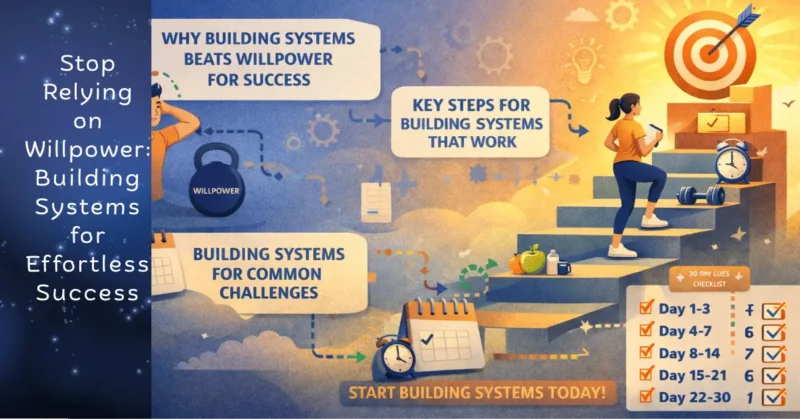
This 30-day plan will guide you in creating automated systems to help you succeed. By the end, you’ll be living your goals with ease rather than “trying” to accomplish them.
Quick Summary
What Will You Find in This Blog?
If you’re tired of fighting against your own willpower to reach your goals, this blog is for you. I’ll take you through a 30-day approach to help you develop mechanisms that make success feel natural rather than relying solely on willpower.
With these resources at your disposal, you can achieve your objectives without the ongoing struggle, maintain consistency, and reduce stress. This is what you will discover:
- The science behind willpower and why relying on it alone doesn’t work long-term.
- How to design your environment to support your goals, making them easier to achieve without thinking.
- The power of habit stacking, or attaching new habits to existing routines for seamless integration.
- Simple systems you can set up to automate your success, reducing the need for willpower entirely.
- A 30-day checklist to help you move from effort to automation, ensuring lasting change
Ready to transform your life into one where success happens naturally? Let’s dive in!
Why Building Systems Beats Willpower for Success
For years, we’ve been told that willpower is the answer to success. If you just want something enough, you’ll push through.
The reality, however, is that willpower is a limited resource. In fact, research shows that relying on willpower alone can actually work against you.
The Science Behind Willpower Depletion
Our brains are constantly making decisions, from the trivial (like what to wear) to the more significant (like whether to stick to a workout routine).
Each decision requires a small amount of energy, and when we’re faced with too many, we experience decision fatigue. This exhaustion from making choices reduces self-control, making it harder to push through on willpower alone.
As a coach and teacher, I’ve seen it time and again. People who rely on their willpower often feel guilty or frustrated when they can’t “just push through.”
But the truth is, willpower isn’t the problem. It’s the lack of systems that leads to consistent, lasting success.
The Power of Building Systems
Instead of relying on fleeting willpower, building systems creates an environment where success becomes automatic. A system is a pre-planned response to a situation.
Once you build systems, you don’t have to think about it; everything is structured to work in your favor. By the time your willpower runs out, your system is in place and continuing to drive you toward success.
Key Steps for Building Systems That Work
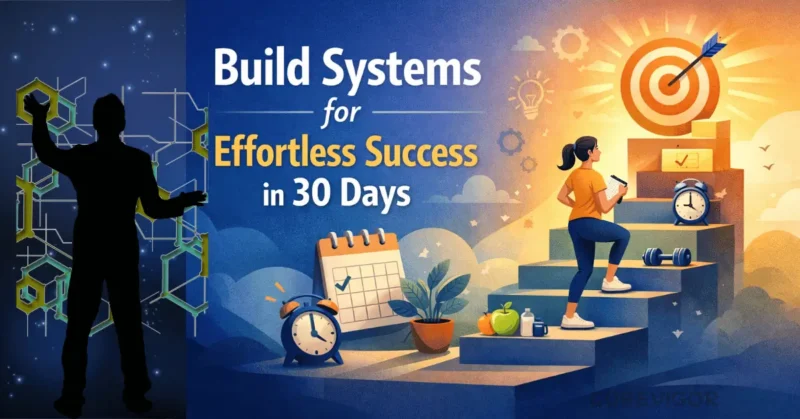
Building systems is not about adding more effort; it’s about making success automatic and sustainable. The following are the key steps that you can follow to create systems that work for you:
Identify Goals for Building Systems
The first step in building an effective system is to align it with your goals. Without clarity on your ending result, your system will lack direction and purpose. So, take the time to write down your goals—whether they’re related to productivity, health, or personal growth.
- Reflect on your priorities: What areas of your life are you struggling with right now?
- Visualize your end goal: What does success look like for you?
- Set tangible milestones: Break down your goals into actionable, bite-sized steps.
Design Simple Systems for Daily Habits
The simpler, the better. When you build complex systems, they become hard to maintain. Instead, focus on small, simple systems you can incorporate into your daily routine.
The idea is to make good habits automatic by removing any friction points that might make you hesitate.
For instance, if your goal is to read more, create a system to leave a book by your bedside so you naturally pick it up before bed. If your goal is fitness, set out your workout clothes the night before, so there’s no excuse to skip.
Track Progress in Your Building Systems
You must monitor your development to accurately gauge your success. This means being mindful of your actions, but it does not involve constantly tracking every minor action.
By tracking, you can determine what is and is not working and make the necessary adjustments.
- Create simple metrics: Track your daily actions based on your system’s objectives.
- Honor victories, no matter how minor: You will remain motivated if you acknowledge your progress.
- Analyze setbacks: If something isn’t working, break it down and adjust the system to reduce friction.
Building Systems for Common Challenges
No matter your goal, you will face common obstacles. But with the right systems in place, you can overcome these challenges effortlessly.
Building Systems for Productivity
Productivity isn’t about working harder; it’s about working smarter. Systems are the perfect way to enhance your productivity.
- Time blocking: To reduce distractions, set aside dedicated time blocks for focused work.
- Task batching: To lessen decision fatigue, group related tasks together. For instance, rather than responding to your emails intermittently, schedule time each day to respond.
Building Systems for Health and Fitness
Your physical health is not just about willpower—it’s about designing your life to make healthy choices the easiest choices.
- Meal prepping: To avoid relying on willpower when you’re hungry, schedule a day each week to prepare nutritious meals in advance.
- Fitness systems: As mentioned earlier, leaving your workout clothes out the night before or setting a reminder to move every hour can help you stay active with minimal effort.
Making Building Systems a Habit
Establishing systems is one thing, but forming a habit of them is quite another. Although the initial configuration of systems is important, the real challenge is enabling those systems to perform effortless, automated actions.
Your processes must become instinctive—something you do without thinking about—if you want to succeed in the long run. Consistency, patience, and a few tweaks along the road are necessary for this shift.
When systems become habits, they take less mental energy and free you up for more creative and fulfilling tasks.
Imagine a life where your desired behaviors are no longer a struggle—where consistency, progress, and success become your new normal. That’s the power of building habits around your systems.
30-Day Challenge for Building Systems
To make this transformation, commit to a 30-day challenge. The goal is to focus on one system at a time, refine it, and see it evolve until it works seamlessly for you. By the end of the month, you will have built foundational habits that lead to effortless success.
30-Day Checklist: Step-by-Step Plan to Make Systems a Habit
| Day | Action | Description |
| Day 1-3 | Identify Your Top 3 Willpower Leaks | Recognize the areas where you struggle most and deplete your willpower (e.g., social media, junk food, procrastination). Make a list and identify the patterns. Start by minimizing distractions or eliminating them entirely. |
| Day 4-7 | Focus on Environmental Design | Your environment is one of the most powerful tools in shaping your behavior. Take the time to audit your surroundings: Remove distractions, set up workstations, and place triggers for your desired habits in easy-to-access places. For example, put healthy snacks on the counter and hide junk food. |
| Day 8-14 | Start Habit Stacking | The key to automating new habits is tying them to existing ones. If you already drink coffee every morning, use that time to add something new, like journaling or reviewing your goals. This “stacking” method helps new habits become part of your routine without added effort. |
| Day 15-21 | Refine Your Systems & Track Progress | By now, you should have a basic routine in place. Spend this week refining your systems: What’s working? What’s not? Use a journal or app to track your progress and adjust the systems accordingly. Look for friction points and remove or adjust them to make your systems more seamless. |
| Day 22-30 | Celebrate & Fine-Tune | Take time to reflect on your progress and celebrate small wins along the way. This is the time to look at what’s been most effective and double down on those habits. Fine-tune your systems for long-term sustainability, ensuring they are scalable and adaptable as your goals evolve. |
Adjust and Scale Your Building Systems
Once you have successfully integrated small systems into your life, it’s time to think bigger.
Scaling up means refining what works and making it even more effective as your goals grow. Here’s how to adjust and scale your systems for maximum impact:
- Add More Systems Gradually: Once one system is automatic, start implementing another. It’s important to focus on one at a time to avoid overwhelming yourself. Build momentum as you go.
- Track and Reflect Regularly: Consistent tracking helps you identify patterns and refine your systems. Set aside time each week to review your progress and adjust as needed.
- Make Systems More Efficient: As you grow in your practice, find ways to optimize your systems. Search for opportunities to streamline processes, automate tasks, and reduce friction to make your systems even smoother.
- Celebrate Milestones: Scaling your systems doesn’t just mean increasing their size—it’s about enjoying the process. To keep yourself motivated, recognize your progress and acknowledge minor triumphs.
By day 30, your new systems will begin to feel less like “new habits” and more like ingrained behaviors that support your long-term goals. You’ll be well on your way to a life where success feels effortless.
Overcoming Challenges in Building Systems
While building systems can be incredibly empowering, it’s not always a smooth path. Here are some common challenges you may face as you build and solidify your systems—and tips on how to overcome them.
Challenges and How to Overcome Them
| Challenge | How to Overcome |
| The Boredom Trap | It’s easy to get frustrated when routines feel repetitive. However, this monotony is actually a sign that your system is working. The key is to remind yourself that the “boring” routines are the foundation for future success and freedom. Keep your eyes on the long-term rewards. |
| Perfectionism | You may feel the need to have everything perfect, which can stall your progress. Let go of the idea of perfection. Systems should evolve and be flexible, not rigid. Start small, iterate, and allow for adjustments over time. |
| Initial Overwhelm | Setting up systems takes effort, and in the beginning, it can feel like a lot of work. Break down the process into manageable tasks and focus on one system at a time. Celebrate small wins to maintain motivation. |
| Resistance to Change | Adjusting your mindset to trust in systems over willpower can feel uncomfortable. Understand that willpower alone isn’t sustainable. Lean into the system-building process and remember, this is a long-term strategy for success. |
| Staying Consistent | It’s easy to lose motivation after a few weeks, but remember, consistency is key. Use accountability partners, track your progress, or create milestones with rewards to keep your systems intact. |
By following this structured approach, you can transform building systems into a habit that becomes second nature.
The 30-day plan acts as a starting point, but real success comes from continually refining and measuring your systems to meet your evolving needs.
Let your systems support your goals, and watch as they lead to effortless success.
Benefits of a System-First Life
Building systems that drive your success is one of the most transformative changes you can make.
Once systems are in place, they remove the guesswork and effort required to achieve your goals.
Instead of relying on fluctuating willpower, systems allow you to operate more efficiently and sustainably. Below are the key benefits of a system-first approach:
Mental Clarity
By implementing systems, you reduce the need to constantly decide what to do next. Your brain is no longer overwhelmed with thinking through every step.
Instead, your behaviors become automatic, freeing up mental space for creativity, problem-solving, and connection with others.
For example, when you plan your meals in advance, you can simply follow the strategy and avoid having to make dietary choices every day.
Consistency
Consistency is the backbone of progress. With systems in place, you automatically repeat behaviors that align with your goals, even when you’re tired, distracted, or unmotivated.
The best part? You don’t have to rely on willpower to make it happen. For example, if your goal is fitness, you don’t need to “push” yourself to work out every day—your system (like keeping your workout clothes ready) ensures that you just do it.
Reduced Stress
Having systems in place helps you reduce mental clutter. You’re not constantly juggling different tasks or feeling overwhelmed with endless decisions. Systems provide a clear framework that eliminates uncertainty and stress.
For example, setting a “digital sunset” in the evening can help you avoid late-night emails or social media, giving you more peace of mind.
Challenges You Might Face
Even while systems can bring about significant beneficial change, it’s crucial to recognize and address any difficulties that may arise when you first start creating them. Here are a few possible obstacles:
The “Boredom Trap”
One of the most common challenges in establishing systems is monotony. Repetitive actions might seem boring or uninspiring at first. However, this “boredom” is a sign that your systems are working—they reduce the need for you to make decisions and focus your energy on what truly matters.
Remember, the mundane routines now create the freedom you’ll enjoy later. For example, you might initially find setting up your weekly meal plan tedious, but the long-term payoff is that you no longer waste time or energy deciding what to make for dinner every evening.
Time Investment
Setting up systems can take time upfront. Whether it’s organizing your environment, establishing habits, or creating a daily schedule, the setup requires an initial time commitment.
But once your systems are in place, maintenance is minimal, and the time you spent up front will pay off exponentially in terms of mental clarity, productivity, and stress reduction.
Overcoming Resistance to Change
When you’re used to operating on willpower, it can be hard to adjust to the idea of “effortless” success. You might feel resistance to taking a step back and designing your systems.
Trusting that systems will work can be difficult at first, but remember this approach is grounded in psychology and successful habit-formation principles. Over time, you’ll notice that systems require less energy than continually relying on willpower.
Your 30-Day Success Checklist
The key to building systems that lead to effortless success is consistency and small adjustments. This checklist will guide you through the 30-day process of designing, implementing, and refining systems that can transform your life.
Follow it step by step to ensure you’re setting up habits that stick.
30-Day Success Checklist
| Day | Action | Description |
| Day 1-3 | Identify Willpower Leaks | Identify areas where you are draining your willpower (e.g., social media, unhealthy eating habits) and note them. Begin planning how to eliminate or reduce these “leaks.” |
| Day 4-7 | Audit and Optimize Your Environment | Take a good look at your physical space. Remove distractions, and add reminders or cues that align with your goals (e.g., a book on your pillow if you want to read more). |
| Day 8-10 | Create Your First Habit Stack | Begin linking new habits to established routines. For example, make it a habit to drink a glass of water as soon as you wake up or write a to-do list while you have your morning coffee. |
| Day 11-15 | Implement a Digital Boundary | Set specific limits for your digital devices (e.g., “Do Not Disturb” mode from 8 PM to 8 AM) to reduce distractions and help you disconnect when needed. |
| Day 16-20 | Plan Your “Default” Habits | Make decisions easier by establishing systems for your daily activities. Plan your meals, organize your work schedule, or lay out your workout clothes the night before. |
| Day 21-25 | Review and Refine Your Systems | Review your progress. If any system isn’t working smoothly, adjust it. Identify friction points that hinder progress and redesign them. |
| Day 26-30 | Celebrate Success and Make It Sustainable | Reflect on your journey over the past month. Celebrate the small wins and commit to maintaining your systems. Make any final tweaks for long-term sustainability. |
Frequently Asked Questions
Q. What is the 21-90 Rule?
The 21-90 Rule suggests that it takes 21 days to form a habit and 90 days to make it a permanent lifestyle change. The first 21 days focus on building consistency, while the next 69 days help solidify the habit in your daily routine.
This rule emphasizes the importance of persistence in forming long-term, automatic behaviors. It’s a helpful guide for individuals trying to establish new habits or break old ones. Ultimately, it encourages gradual, sustainable change.
Q. How to Overcome Lack of Willpower?
Overcoming a lack of willpower begins with understanding that willpower is finite. One effective strategy is to create systems that automate your desired actions, reducing the need for constant self-control.
Environment design is another key tactic—eliminating distractions and setting up reminders for healthy behaviors. Focus on building small, sustainable habits instead of forcing dramatic change.
Finally, practice self-compassion, acknowledging that it’s okay to slip up as you adjust your systems.
Q. What Are the 5 C’s of Self-Discipline?
The 5 C’s of self-discipline are Clarity, Commitment, Consistency, Control, and Confidence. Clarity involves understanding your goals and why they matter. Commitment is about staying dedicated to your vision.
Consistency means taking regular, small actions toward your goals. Control focuses on managing distractions and temptations. Finally, confidence is built by recognizing your progress and believing in your ability to stay disciplined over time.
Q. What Causes Lack of Willpower?
A lack of willpower often stems from mental and physical fatigue. Decision fatigue can deplete your self-control after making too many choices throughout the day. Emotional stress, poor sleep, and low energy levels also reduce your ability to exert self-discipline.
Additionally, an overwhelming environment or unrealistic expectations can make it difficult to maintain focus. To better manage your willpower and use techniques like systems to lessen your dependency on it, you must have a thorough understanding of these elements.
Q. How Does Nutrition Tie Into Willpower?
Your brain’s capacity for self-control and decision-making is strongly influenced by your diet. Your blood sugar levels drop when you don’t give your body the right nutrients, which can cause anger, low energy, and weakened willpower.
Maintaining consistent energy levels and promoting cognitive function can be achieved by eating balanced meals that include complex carbohydrates, healthy fats, and protein.
Maintaining adequate hydration is also essential, as dehydration can affect concentration and judgment, making willpower more difficult to exercise.
Q. Is 30 Days Really Enough to See a Change?
Yes, 30 days is often enough to see noticeable changes, especially when shifting from manual effort to automation.
While true mastery of a habit or system may take longer, the first 30 days are a crucial window for forming new behaviors and reducing decision fatigue.
By day 30, you should notice that your new behaviors feel more natural and require less willpower to maintain. This period also allows you to fine-tune your systems for even more success.
Summary
Willpower, though essential, is a limited resource. It drains quickly, especially when we rely on it repeatedly to push through tasks and challenges.
The real secret to achieving lasting success isn’t more willpower—it’s building systems that run automatically.
Once your systems are in place, they take the pressure off your brain, making your goals feel effortless.
To shift from a life of constant struggle to one of seamless success, focus on these key strategies:
- Environmental Design: Create spaces that nudge you toward your goals (like placing a book on your pillow if you want to read more).
- Habit Stacking: Attach new habits to existing routines, like writing your to-do list while the coffee brews.
- Simplicity: Build easy, sustainable systems that remove the need for willpower altogether.
With just a 30-day commitment to designing and fine-tuning your systems, you can make the transition from relying on willpower to living a life where success is automatic.
The effort will pay off, and soon, your daily actions will work in harmony to help you achieve your goals with ease.
Forget about constantly fighting against yourself—start building systems that make success effortless!
Conclusion
Building systems for success is a life-changing practice. It reduces stress, increases consistency, and helps you achieve your goals without relying on fleeting willpower.
While the process may present challenges at first, the benefits far outweigh the initial effort. By sticking to your 30-day checklist, you’ll gradually see systems become a natural part of your life, making success feel effortless.
Which system are you most excited to implement first? And if you’re already working on one, what’s been the biggest change you’ve noticed so far?
Let me know in the comments—I’d love to hear your thoughts and support you in your journey!
Read more Work-Life Balance articles.
You might like: