

There was a time when I believed mindfulness meant instant calm, a quiet mind, peaceful emotions, and a stress-free life. I imagined it as a perfect state where worries disappeared, and everything felt balanced.
Thank you for reading this post, don't forget to subscribe!But when I tried to practice mindfulness, I discovered something different. My mind wandered endlessly. Emotions surfaced unexpectedly.
Silence felt uncomfortable. Instead of instant peace, I met my restlessness, my fears, and my distractions.
That experience taught me a powerful truth: to live mindfully is not about escaping life; it is about facing life honestly.
In today’s over-busy world, mindfulness is often presented as a trend, a quick fix, or a tool for relaxation.
But real mindfulness is deeper, simpler, and more transformative. It asks us to slow down, observe our inner world, and accept reality as it is.
This guide explores mindfulness without illusion—what it truly means to live mindfully, why it can be difficult, and how to practice it simply in everyday life.
Quick Summary Box
⏱ Estimated Read Time: 14–18 minutes
In this guide, you will learn:
- What Does It Really Mean to Live Mindfully beyond Popular Myths?
- What Mindful Living Is NOT
- Why mindfulness feels difficult at first
- The honest, messy reality of mindfulness practice
- Simple ways to live mindfully in daily life
- Benefits of mindful living for emotional balance and clarity
- Challenges and practical solutions
- A daily mindfulness checklist for sustainable practice
Best for: Busy people, parents, professionals, and anyone seeking inner peace, clarity, and a balanced life.
What Does It Really Mean to Live Mindfully?
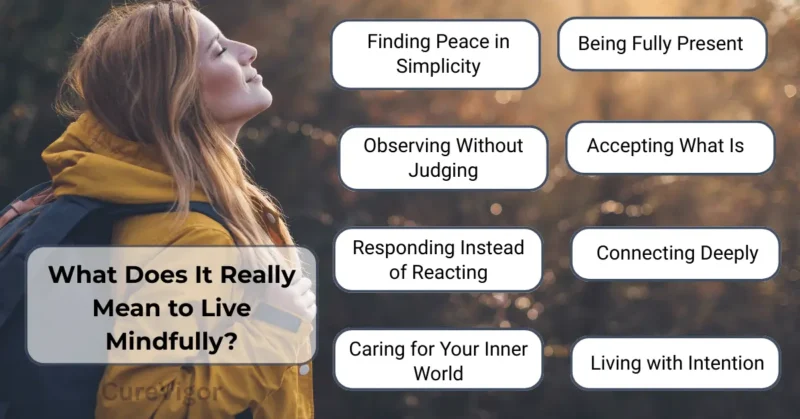
To live mindfully means to live with awareness, intention, and presence. It is about fully experiencing the moment you are in—without constantly replaying the past or worrying about the future.
Mindfulness is not about being perfect. It is about being present.
The concept of mindfulness has deep roots in ancient traditions, especially in the teachings of Siddhartha Gautama, the founder of Buddhism.
However, in modern times, mindfulness has also been widely studied and popularized in the West through programs such as the University of Massachusetts Medical School’s Mindfulness-Based Stress Reduction, developed by Jon Kabat-Zinn.
But beyond history and science, what does mindful living truly mean in everyday life?
1. Being Fully Present
Living mindfully means paying attention to what is happening right now.
When you eat, you taste your food.
When you listen, you truly hear.
When you walk, you feel each step.
You are not distracted by your phone. You are not mentally somewhere else. You are here.
Presence transforms ordinary moments into meaningful experiences.
2. Observing Without Judging
Mindful living does not mean avoiding negative thoughts or emotions. It means noticing them without labeling them as “good” or “bad.”
For example:
- Instead of saying, “I am terrible at this,”
- You say, “I notice I feel frustrated.”
That small shift creates space between you and your reaction. And in that space, you find calm.
3. Responding Instead of Reacting
When you live mindfully, you pause before responding.
Someone criticizes you.
You feel anger rise.
Instead of exploding, you breathe.
This pause changes everything. It allows you to choose your response rather than being controlled by impulse.
Mindfulness builds emotional strength.
4. Living with Intention
Mindful living is not accidental living.
You make conscious choices:
- What you consume (food, media, conversations)
- How you spend your time
- Who you surround yourself with
You stop running on autopilot.
You begin asking:
- “Why am I doing this?”
- “Does this align with my values?”
- “Is this adding peace or stress?”
5. Accepting What Is
Mindfulness teaches acceptance—not resignation, but acknowledgement.
You accept:
- The current moment
- Your feelings
- Imperfections
- Uncertainty
Acceptance reduces unnecessary suffering. Fighting reality creates stress. Observing reality creates clarity.
6. Connecting Deeply
Mindful living strengthens relationships.
When you are present:
- People feel heard.
- Conversations become meaningful.
- You build trust naturally.
You are no longer half-listening while thinking about something else.
You show up fully.
7. Caring for Your Inner World
Living mindfully means becoming aware of your thoughts and patterns.
You begin noticing:
- Negative self-talk
- Habitual stress triggers
- Emotional cycles
And awareness is the first step toward growth.
You cannot change what you do not see.
8. Finding Peace in Simplicity
Mindful living shifts your focus from “more” to “enough.”
You start appreciating:
- A quiet morning
- A simple meal
- A meaningful conversation
- A slow walk
Peace is not found in constant achievement. It is found in awareness.
Mindfulness invites you to participate fully in your life rather than move through it unconsciously.
I noticed this shift when I began practicing awareness during everyday tasks, listening more deeply, observing my thoughts, and responding more gently to challenges. Life did not become easier, but it became clearer.
What Mindful Living Is NOT
It is not:
- Being positive all the time
- Avoiding ambition
- Meditating for hours daily
- Living a perfect, stress-free life
It is simply living awake instead of being distracted.
Why It’s Hard to Live in the Present Moment
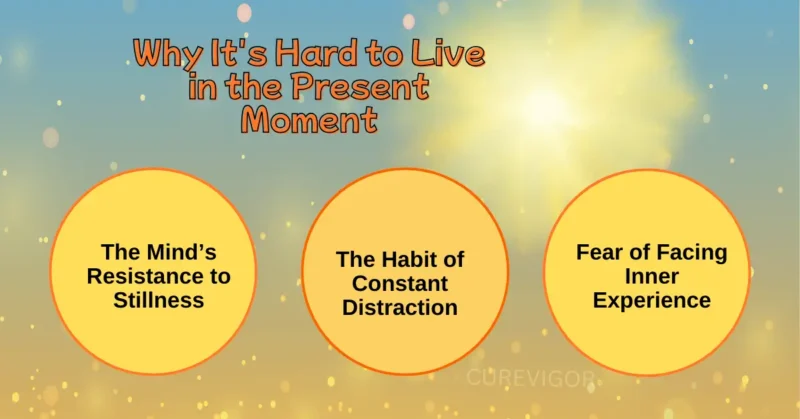
If mindfulness is simple, why does it feel so challenging?
The difficulty comes from our habits. We are conditioned to seek distraction rather than awareness.
The Mind’s Resistance to Stillness
The human mind naturally seeks stimulation. When we attempt to sit quietly, the mind produces thoughts, memories, and worries.
This happens because:
- The brain seeks comfort and certainty
- Silence feels unfamiliar
- awareness exposes hidden emotions
Instead of fighting this resistance, mindfulness teaches us to observe it.
The Habit of Constant Distraction
Modern life rewards busyness. Phones, social media, and entertainment constantly demand attention.
When we try to live mindfully, we notice how strongly we rely on distraction. We may feel restless without stimulation.
Learning to live mindfully requires reducing this dependency.
Fear of Facing Inner Experience
Mindfulness reveals our inner world, including fears, doubts, and unresolved emotions. This can feel uncomfortable.
Yet awareness creates healing. What we observe clearly begins to change naturally.
The Messy Reality of Trying to Live Mindfully
Mindfulness is often described as peaceful and effortless. In reality, the process is often messy.
When you begin practicing mindfulness, you may experience:
- constant wandering thoughts
- emotional discomfort
- frustration with yourself
- inconsistency in practice
- impatience for results
This is normal.
Mindfulness does not remove thoughts; it changes your relationship with them. The mind will wander, and awareness gently brings it back.
The process is imperfect because human experience is imperfect.
As a teacher working with personal growth practices, I have observed that progress rarely follows a straight line. It unfolds gradually through awareness and patience.
Living Mindfully Means Facing Yourself Honestly
To live mindfully is to meet yourself without illusion.
You begin to notice:
- habitual reactions
- fears and insecurities
- emotional patterns
- hidden expectations
- inner criticism
This honesty can feel uncomfortable because it challenges the stories we tell ourselves.
But awareness creates freedom.

When you see your patterns clearly, you can change them. Mindfulness pulls away false comfort and replaces it with clarity.
How Living Mindfully Changes Your Life
Although mindfulness may feel challenging at first, its effects are quietly transformative. The change does not happen suddenly, it unfolds through small moments of awareness that reshape how you think, feel, and respond to life.
When you learn to live mindfully, you begin to notice shifts in many areas of your daily experience. Your reactions soften, your thoughts become clearer, and life feels more meaningful rather than rushed.
Clearer Thinking and Better Decisions
Awareness helps you see situations objectively. You respond thoughtfully rather than impulsively.
When your mind is calm and present, confusion reduces and clarity increases. You notice your options more clearly and make decisions aligned with your values rather than emotions. Over time, this creates confidence in your choices and reduces regret.
Emotional Stability
Mindfulness helps regulate emotions by creating space between feeling and reaction.
Instead of being overwhelmed by anger, stress, or worry, you learn to observe emotions as passing experiences. This gentle pause allows you to respond with balance and understanding. Gradually, emotional ups and downs become easier to manage.
Stronger Relationships
When you live mindfully, you listen more deeply and communicate with greater patience.
You become more present with others, giving them your full attention without distraction. This presence builds trust and understanding.
As a mother, I noticed that responding calmly rather than reacting emotionally improved my relationships and created more harmony at home. Mindfulness helps us respond with empathy rather than impulse.
Reduced Stress
Mindfulness reduces mental overload by focusing attention on the present moment.
When you stop worrying about the past or future, your mind feels lighter and more relaxed. Daily pressures become easier to handle because you approach them one moment at a time. This shift creates a sense of calm even in complicated situations.
A Simpler Way of Living
When you live mindfully, you need less distraction and external stimulation. Life becomes more intentional and peaceful.
You begin to appreciate simple experiences, quiet moments, meaningful conversations, and small daily joys. The constant need for busyness fades, and contentment grows naturally from within. Life feels less complicated because your attention rests on what truly matters.
A Simple Path to Live Mindfully
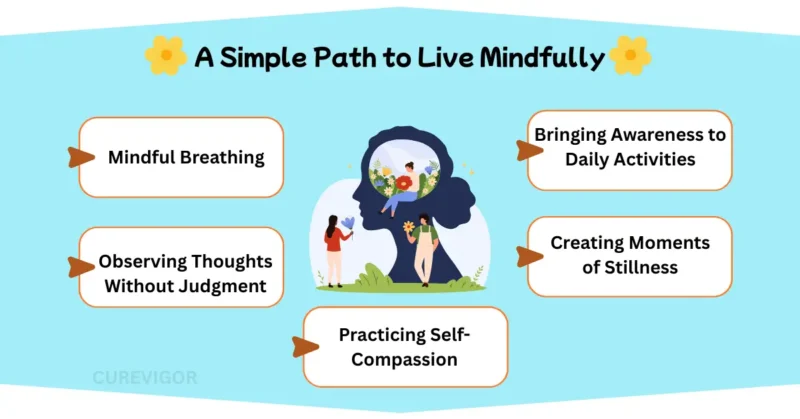
Mindfulness develops through practice. The process does not require complexity — only consistent awareness.
Mindful Breathing
Breathing helps focus attention on the here and now. The nervous system is calmed, and awareness is stabilized by paying attention to each breath.
Even a few minutes of mindful breathing can restore clarity.
Observing Thoughts Without Judgment
Instead of fighting thoughts, notice them. Let them appear and disappear naturally.
This practice reduces emotional reactivity and increases self-awareness.
Bringing Awareness to Daily Activities
You can live mindfully during ordinary moments:
- eating with attention
- walking consciously
- listening fully
- working with focus
Mindfulness transforms routine experiences into meaningful ones.
Creating Moments of Stillness
Set aside time daily for silence and reflection. These moments restore mental balance and deepen awareness.
Practicing Self-Compassion
Mindfulness includes kindness toward yourself. Accept mistakes and imperfections without harsh judgment.
Self-compassion supports emotional healing and growth.
Benefits of Choosing to Live Mindfully
The practice of mindful living delivers lasting benefits that quietly improve your daily experience. These changes may appear gradually, but they deeply influence your thoughts, emotions, and overall well-being.
Emotional Resilience
You respond calmly to challenges and recover more quickly from difficulties.
Mindfulness strengthens your ability to face stressful situations without feeling overwhelmed.
Instead of reacting immediately, you pause, observe, and respond with clarity. This inner steadiness helps you navigate uncertainty and setbacks with greater confidence and strength.
Greater Self-Awareness
You have a deeper understanding of your feelings and thoughts.
Through mindful observation, you begin to notice patterns in your behavior, reactions, and feelings.
This understanding helps you recognize what truly influences your actions. With greater awareness comes the ability to make wiser choices and live more intentionally.
Improved Focus
Mindfulness strengthens attention and reduces distraction. When you train your mind to stay present, your concentration improves naturally.
You become more engaged in what you are doing, whether working, studying, or spending time with others. This deeper focus enhances both productivity and satisfaction in daily activities.
Inner Peace
Awareness creates calm even during uncertainty. Rather than depending on external situations for happiness, you develop a stable sense of peace within yourself.
You learn to remain balanced even when life feels unpredictable. This quiet calm supports emotional well-being and mental clarity.
Life Balance
Mindfulness supports healthier choices and emotional stability.
By becoming more aware of your needs, limits, and priorities, you can better balance work, relationships, and personal care.
You respond to life with intention rather than pressure, leading to a more harmonious and fulfilling lifestyle.

Challenges You May Face When You Try to Live Mindfully
Every meaningful practice brings challenges. These difficulties are not obstacles but opportunities to deepen awareness and strengthen your practice.
Restlessness
The mind resists stillness. Start with short periods of awareness.
When you first practice mindfulness, you may notice constant mental activity or physical discomfort. This restlessness is natural as your mind adjusts to quiet. With patience, these feelings gradually soften.
Impatience
Mindfulness develops gradually. Focus on consistency.
Many people expect immediate results, but mindful awareness grows slowly over time. Allow yourself to learn at your own pace. Small daily efforts create meaningful change.
Emotional Discomfort
Difficult feelings may arise. Observe them gently.
Mindfulness brings hidden emotions to the surface. Instead of avoiding them, treat these feelings with kindness and curiosity. This process supports emotional healing and deeper understanding.
Inconsistency
Daily reminders help maintain practice.
It is natural to skip practice on busy days. What matters is returning again without guilt. Gentle repetition helps mindfulness become a natural habit.
Challenges are part of growth, not signs of failure. Each difficulty teaches patience, awareness, and self-compassion.
Daily Checklist to Help You Live Mindfully
Use this simple daily guide to gently build mindful awareness. You don’t need to complete everything perfectly, consistency and intention matter most.
| Time / Moment | Mindful Practice | What to Do | Why It Helps |
| Morning (After Waking) | Mindful Breathing | Take 3–5 slow, deep breaths before checking your phone. Notice your body and surroundings. | Starts the day with calm awareness instead of stress or distraction. |
| Morning Routine | Intentional Awareness | Pay attention while brushing teeth, bathing, or preparing breakfast. Stay present in each action. | Builds focus and trains your mind to stay in the present moment. |
| During Work or Study | Single-Tasking | Focus on one task at a time. Avoid switching constantly between activities. | Improves concentration and reduces mental overload. |
| Emotional Moments | Pause Before Reacting | When feeling stressed or upset, pause, breathe, and observe your emotions before responding. | Prevents impulsive reactions and builds emotional stability. |
| Midday Pause | Body Awareness | Notice tension in your body. Relax your shoulders, jaw, and breathing for a minute. | Releases stress and restores mental clarity. |
| Daily Interactions | Mindful Listening | Listen fully when someone speaks without interrupting or thinking of a reply. | Strengthens relationships and improves understanding. |
| Meals | Mindful Eating | Eat slowly, noticing taste and texture, and be grateful for the food. Avoid screens while eating. | Enhances awareness and improves connection with daily experiences. |
| Evening Reflection | Quiet Self-Reflection | Spend a few minutes reviewing your day calmly without judgment. Notice thoughts and emotions. | Increases self-awareness and emotional growth. |
| Before Sleep | Gratitude Practice | Reflect on one or two things you are grateful for today. | Creates a positive mindset and emotional balance. |
| Throughout the Day | Return to the Present | When distracted, gently refocus on your breath or surroundings. | Strengthens mindfulness habits and reduces anxiety. |
Summary
Mindfulness without illusion means accepting mindfulness as a real practice rather than a quick solution. To live mindfully is to observe thoughts, emotions, and experiences with awareness and acceptance.
Although mindfulness can feel difficult and messy, consistent practice develops emotional resilience, clarity, and inner peace.
By practicing breathing awareness, observing thoughts, embracing stillness, and responding with compassion, you gradually transform your relationship with life.
Despite challenges such as restlessness or impatience, small daily practices create lasting balance and meaningful growth.
FAQs
Q. What was Jon Kabat-Zinn’s famous quote?
His most iconic quote is: “Mindfulness means paying attention in a particular way: on purpose, in the present moment, and non-judgmentally.”
This definition is the gold standard because it reminds us that mindfulness isn’t about clearing the mind, but about changing how we look at our thoughts.
It teaches beginners that being “present” is a conscious choice we make every single day.
Q. What is the 3 3 3 rule in mindfulness?
The 3-3-3 rule is a grounding technique used to snap out of anxiety or overthinking. You simply name three things you see, three sounds you hear, and move three parts of your body (like your fingers, toes, or shoulders).
This practice works because it shifts your focus from the “internal noise” of your brain back to the physical world around you. It is one of the fastest ways for beginners to find instant calm.
Q. What are the 7 pillars of mindfulness?
The 7 pillars are the foundational attitudes that support your practice: Non-judging, Patience, Beginner’s Mind, Trust, Non-striving, Acceptance, and Letting Go.
Think of these as the “rules of the road” for your mind. Instead of forcing results, these pillars teach you to be kind to yourself as you observe your experiences. They help turn a simple breathing exercise into a life-changing habit.
Q. What are the 5 R’s of mindfulness?
The 5 R’s provide a roadmap for when your mind inevitably wanders: Recognize (notice the thought), Release (let it go), Relax (soften your body), Resmile (stay positive), and Return (go back to your breath).
This sequence is designed to prevent frustration when you lose focus. It reinforces the idea that “getting distracted” is actually a normal and healthy part of the training process.
Q. What are the 3 C’s of mindfulness?
The 3 C’s stand for Clarity, Compassion, and Curiosity. Clarity allows you to see things as they truly are, while Compassion ensures you are kind to yourself during difficult moments.
Curiosity encourages you to explore your feelings with interest instead of fear. Together, these three traits help beginners stay engaged with their practice without becoming overly self-critical.
Q. What are the 4 R’s of mindfulness?
A slightly shorter version of the 5 R’s, this cycle includes: Recognize, Release, Return, and Rest. You Recognize that your mind has wandered, Release the distracting thought without judgment, and Return your attention to your anchor (like the breath).
Finally, you Rest in that moment of awareness. It is a simple “mental loop” that helps build focus and emotional resilience over time.
Q. What religion is Jon Kabat-Zinn?
Jon Kabat-Zinn was born into a Jewish family, but his work is widely recognized as secular (non-religious).
While he studied under various Buddhist teachers and integrated many Zen and Vipassana principles into his teaching, he removed the religious context to create Mindfulness-Based Stress Reduction (MBSR).
This allowed anyone to practice mindfulness, regardless of their personal faith or background.
Q. What are the 5 basics of mindfulness?
The 5 basics for any beginner include: Breathing (using your breath as an anchor), Observation (noticing thoughts without reacting), Awareness (staying in the “now”), Non-judgment (not labeling things as “good” or “bad”), and Consistency (practicing daily).
These fundamentals are the building blocks for inner peace. If you master these five, you can practice mindfulness anywhere—at home, at work, or even while walking.
Q. What are the 9 qualities of mindfulness according to Jon Kabat-Zinn?
In his later work, he expanded the original 7 pillars to include 9: Non-judging, Patience, Beginner’s Mind, Trust, Non-striving, Acceptance, Letting Go, Gratitude, and Generosity.
Adding Gratitude and Generosity emphasizes that mindfulness isn’t just about your own peace; it’s about how you connect with the world. These qualities transform mindfulness from a private mental exercise into a heart-centered way of living.
Conclusion: The Gentle Practice of Living Mindfully
Mindfulness without illusion is simple but profound. It invites you to face life honestly, accept your experiences, and grow through awareness.
To live mindfully is not to escape difficulty—it is to meet life with presence and compassion. Through small daily practices, you cultivate clarity, balance, and inner peace.
The journey is gradual, but each moment of awareness transforms how you live.
A Gentle Invitation
What does living mindfully mean to you today?
What small moment of awareness will you choose to practice?
Share your thoughts in the comments—your reflection may inspire someone else on their journey.
Read more Health Balance articles.
You might like: