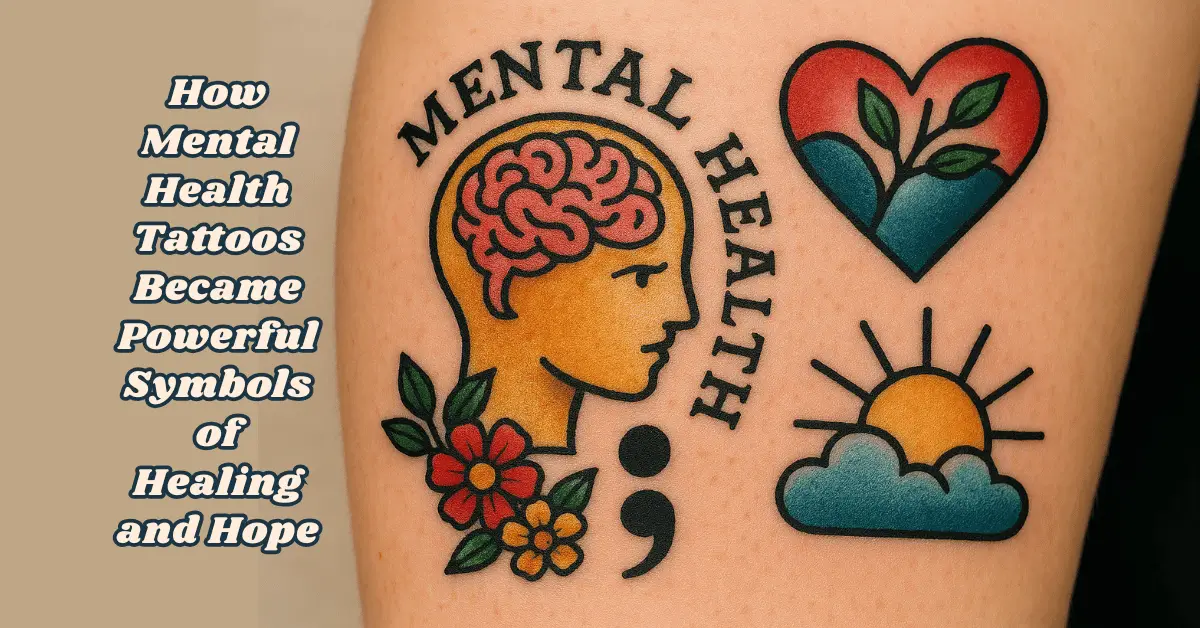
Explore how mental health tattoos can represent hope, resilience, healing, and personal journeys through meaningful symbols and designs.
Mental health tattoos have become permanent, physical symbols of survival, personal transformation, and hope.
Why Tattoos Aid Healing
- Reclaiming Control: Choosing permanent body art lets people take back control of their bodies after feeling helpless during a crisis.
- Visible Reminders: Ink acts as an everyday anchor, offering strength and grounding during difficult emotional waves.
- Community Connection: Shared symbols reduce social stigma, letting wearers signal solidarity and silently recognise fellow survivors.
Common Symbols and Their Meanings
- The Semicolon (;): Popularized by Project Semicolon, it represents a choice to keep going when a sentence (or life) could have stopped.
- The Butterfly: Symbolizes metamorphosis, personal growth, and emerging from dark times into a brighter future.
- The Anchor: Stands for stability, reminding the wearer to stay grounded during turbulent emotional storms.
- The Lotus Flower: Shows resilience, representing how beauty and strength can rise out of muddy, difficult waters.
- The Phoenix: Depicts rebirth and renewal after surviving severe trauma or a major mental health crisis.

Mental health tattoos have moved far beyond trend status. They have become a living, breathing language, one spoken through ink, symbols, and stories etched onto skin by people who refused to let their struggles silently define them.
Whether it is a tiny semicolon tucked behind an ear or a full phoenix blazing across a chest, these designs carry weight that no photograph or caption can fully capture.
In this article, you will explore the meanings behind mental health tattoos, the stories that give them weight, how they support mental health advocacy, and how you might find a symbol of healing if you’re considering that journey.
What Are Mental Health Tattoos?
Mental health tattoos are intentional body art designs chosen to represent personal experiences with mental illness, trauma, recovery, and emotional resilience.
Common symbols include the semicolon, phoenix, lotus flower, anchor, and lion. These tattoos serve as permanent reminders of survival, healing milestones, and the ongoing commitment to mental wellness.
The Power of Mental Health Tattoos
Ask someone about their mental health tattoo, and you will rarely hear them describe it as decoration. You are far more likely to hear words like “reminder,” “milestone,” “armor,” or “proof.”
That shift in language tells you everything about what these tattoos actually are. They are not worn to be seen by others first; they are chosen to be felt by the person who wears them.
Every glance down at a lotus on a wrist or a phoenix across a shoulder becomes a private conversation between a person and their own history.
The cultural climate around mental health has shifted meaningfully in recent years. Conversations about anxiety, depression, trauma, PTSD, and recovery that once happened only behind closed doors are now happening openly in workplaces, on social media, in schools, and in living rooms.
Mental health tattoos sit within that shift, giving form to feelings that words sometimes cannot hold.
What makes this trend genuinely significant is not the art itself, but what it represents. These tattoos mark turning points.
They commemorate the day someone decided to seek therapy, the year they survived something they thought would destroy them, or the quiet daily choice to keep moving forward when every instinct said otherwise.
You may find that this kind of intentional body art resonates with your own story or with someone you love.
Either way, understanding the symbols and the stories behind them can help you decide whether this path feels meaningful to you. With that foundation, it becomes easier to see the range of symbols people choose to carry their stories forward.
Tattoo Designs Embodying Mental Fortitude
Strength-based mental health tattoos tend to feature bold imagery that reflects the enormity of what the wearer has faced and overcome. These are not quiet symbols. They are declarations.
The Phoenix: Born Again from the Wreckage
Few symbols in human mythology carry the phoenix’s raw power. A bird that burns completely and rises whole from its own ashes is an almost impossibly perfect metaphor for what mental health recovery actually feels like.
People who choose phoenix tattoos often describe going through a period of complete collapse before their recovery began. Depression that stripped away identity. Addiction that burned through relationships and purpose. Trauma that dismantled the self piece by piece.
The phoenix does not pretend that the process was painless; it honors exactly how total the destruction was and exactly how extraordinary the rebuilding is.
Your phoenix tattoo does not require you to be fully healed before you can wear it. Many people choose it mid-journey as a commitment to the rebuilding they are actively engaged in and as a reminder of what they are working toward.
The Lion: Facing Fear Without Flinching
The lion has represented courage across cultures for thousands of years, and its presence in mental health tattoo culture makes complete sense.
Living with chronic anxiety, bipolar disorder, PTSD, or depression requires a form of daily bravery that most people never see: the courage to get out of bed, to engage with the world, to reach out for help, and to try again after a setback.
A lion tattoo says, “I face what frightens me.” “I do not always win, but I do not stop.” For many wearers, particularly those managing conditions that make ordinary life feel like a constant battle, the lion is less a boast than an honest self-portrait.
The Anchor: Stability When Everything Feels Like a Storm
An anchor does not stop a storm from arriving. It keeps you from being swept away when it does. That distinction matters enormously to people who have navigated emotional chaos, addiction, crisis, grief, or the grinding unpredictability of certain mental health conditions.
Anchor tattoos often carry additional meaning through accompanying text, dates, or names, dedicated to a person, a moment, or a commitment that grounded the wearer during their hardest seasons.
Your anchor might represent a therapist, a parent, a faith, or simply your own stubborn refusal to drift entirely, helping you remember what keeps you steady.
Ink as a symbol of healing
Where strength tattoos tend toward bold imagery, healing tattoos often carry a quieter, more introspective quality. People choose them to mark not just the battle, but the beautiful, painful, ongoing process of recovery.
The Semicolon: Your Story Is Not Over
The semicolon tattoo is perhaps the most widely recognized mental health symbol in the world, and its origin story is worth knowing.
Project Semicolon, launched by Amy Bleuel in 2013, uses the punctuation mark as a metaphor: in literature, a semicolon is used when an author might have ended a sentence but chose not to. For people who have faced suicidal ideation or attempts, the parallel is profound and unmistakable.
Choosing a semicolon tattoo is an act of reclamation. It says, “I was the author.” I chose to continue. The design’s minimalism is part of its power, a tiny mark that carries an enormous story and can remind you that your story is not over.
The Lotus Flower: Rising Clean from Murky Water
The lotus has deep roots in Eastern spiritual traditions, and its symbolism translates powerfully into imagery of mental health recovery.
The lotus plant grows in muddy, murky water, and yet it produces one of the most pristine, elegant flowers in the natural world. Its beauty is not despite the difficult environment. It is because of it.
For survivors of abuse, neglect, addiction, or prolonged trauma, the lotus speaks to something true: that it is possible to grow toward the light even when everything beneath you is dark and heavy.
Your lotus tattoo does not erase where you came from, it honors what you grew into because of it and what that means for your healing.
Feathers: The Weight You Finally Put Down
Feathers are light by design, and that lightness is exactly what makes them meaningful to people in recovery. Grief is heavy.
Trauma is heavy. Toxic relationships, shame, and suppressed pain are all heavy. A feather tattoo marks the moment, or the ongoing commitment, to set some of that weight down.
Many people choose feather tattoos to represent a specific release: the end of a relationship that was harming them, the decision to leave an unhealthy environment, or the gradual process of working through grief in therapy.
Feathers also carry spiritual significance in many traditions, connecting healing to something larger than individual experience.
Symbols of Hope: Tattoos That Carry Light Forward
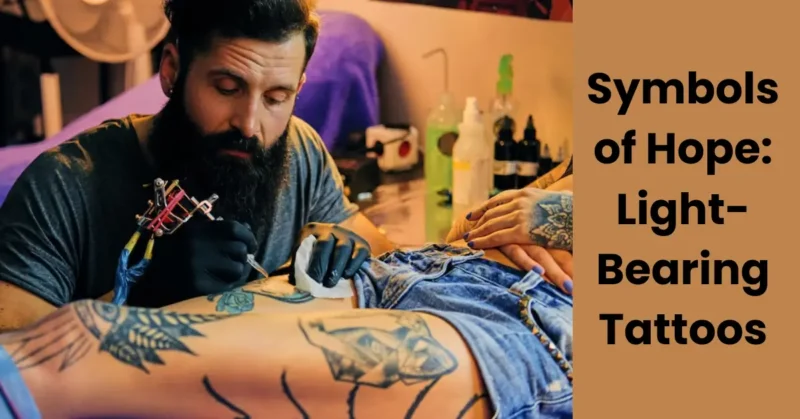
Hope-centered mental health tattoos are chosen by people who want to look at their skin and be reminded that things can and do get better. These designs are forward-facing—they point toward possibility.
The Sun: Proof That Darkness Always Ends
Every night ends. Every winter eventually breaks. The sun rises without fail, and for people who have lived through depressive episodes that felt genuinely endless, that reliability carries enormous comfort.
Sun tattoos chosen in a mental health context often mark a specific emergence, a particular depressive episode that finally lifted, a period of isolation that gave way to reconnection, or a dark season of life that the wearer survived and moved through.
Your sun tattoo can celebrate light found and promise you will find it again, helping you look forward when things feel dark.
Stars: A Fixed Point When You Are Lost
Stars have guided travellers, sailors, and wanderers throughout human history. Their permanence, appearing night after night in the same positions, makes them a natural symbol for hope and direction during periods of profound disorientation.
Star tattoos in mental health contexts often mark a turning point decision: the call to a therapist, the first day of sobriety, or the commitment to a treatment plan.
They represent the moment someone looked up from their darkest point and found a fixed point to navigate toward, giving them clearer direction.
Birds in Flight: The Feeling of Finally Being Free
For people who spent years feeling emotionally trapped by trauma responses, by abusive situations, by the invisible walls that certain mental health conditions build around daily life, birds in flight represent something almost indescribably precious: freedom.
These tattoos are often chosen at points of genuine liberation. They mark the moment the cage opened, even if the flight out was terrifying and uncertain. Birds in flight say, I am moving. I am free. I am not where I was.
Tattoos and Mental Health: Lives with Ink
The symbols are powerful on their own. But the stories behind them are where mental health tattoos truly come alive.
Amanda’s Semicolon: “My Story Isn’t Over”
Amanda is a 28-year-old social worker who spent much of her college years fighting severe depression. She chose a small semicolon tattooed behind her right ear, invisible to most people, always present to her.
She describes looking in the mirror each morning and catching a glimpse of it as a kind of daily calibration.
It does not announce her struggle to the world. It simply reminds her, quietly and consistently, that she chose to stay. For Amanda, that quiet reminder has become one of the most stabilizing forces in her recovery toolkit.
Jamal’s Phoenix: Rebuilt After Shattering
Jamal is a military veteran who returned from deployment with PTSD that dismantled nearly every part of the life he had known before service.
The large phoenix across his chest was not chosen impulsively; it came after two years of intensive therapy, community support, and the gradual, difficult work of rebuilding his identity outside of military service.
He describes the tattoo not as a celebration of where he is now but as an honest testimony to how complete the destruction was and how extraordinary it feels to have risen from it. Every time he catches his reflection, it is a conversation with his own survival.
Emily’s Lotus: Something Beautiful from Something Painful
Emily survived years of childhood abuse and spent a significant portion of her adult life in therapy working through its effects.
She chose her lotus tattoo after a breakthrough therapy session she describes as the moment she genuinely began to believe her past did not disqualify her from a beautiful life.
The lotus, she explains, does not pretend the mud was not real. It simply proves that real, genuine beauty can emerge from it.
Emily now works as a peer support specialist, and she says her tattoo has started more meaningful conversations with the people she supports than almost anything else.
Mental Health Tattoos: A Tool for Advocacy and Awareness

Something remarkable happens when a personal symbol becomes visible in the world. It stops being only private and becomes relational, an invitation to connection, conversation, and sometimes to someone else’s healing.
Mental health tattoos function this way in public spaces. A semicolon on a wrist at a coffee counter invites a question.
A phoenix visible at a support group meeting sparks a shared story. A lotus on a forearm in a waiting room silently signals to another person: I know what hard feels like too.
In digital communities, this effect multiplies.
Hashtags like #SemicolonTattoo, #MentalHealthInk, and #HealingTattoos connect thousands of people across geographic boundaries who share not just similar symbols but similar experiences.
These online communities have developed into real support systems, places where individuals share their designs, stories, and ongoing journeys in ways that lessen feelings of loneliness and reaffirm that recovery is achievable and that no one goes it alone.
For mental health advocates, these tattoos become tools of visibility. Wearing your experience on your skin opens conversations that might never otherwise happen, conversations that sometimes make the difference for someone who needs to see proof that survival is real and possible before they can believe it for themselves.
Key Takeaways
- Mental health tattoos are intentional, deeply personal symbols chosen to mark recovery, resilience, and healing.
- Common symbols include the semicolon, phoenix, lotus, lion, anchor, feather, sun, stars, and birds in flight.
- Each symbol carries a distinct meaning: strength, healing, hope, liberation, or survival.
- Real stories behind these tattoos reveal the profound emotional weight they carry for their wearers.
- These tattoos serve as both private affirmations and public advocacy tools.
- Digital communities focused on mental health can reduce isolation and foster solidarity.
- You do not need to be fully healed to choose a mental health tattoo; many are chosen mid-journey as a commitment to continuing.
How to Plan and Get a Mental Health Tattoo
If you are considering getting a tattoo to commemorate your mental health journey, taking a mindful, structured approach ensures the experience is therapeutic, empowering, and safe.
Step 1: Clarify Your Symbolic Intention
Before booking an appointment, take time to journal about what this tattoo means to you. Are you celebrating a milestone (like one year of sobriety)?
Are you creating a grounding tool for acute anxiety? Or are you paying tribute to your survival? Write down keywords, emotions, and concepts.
Do not rush this phase; allow the right symbol to emerge organically over several weeks.
Step 2: Choose Your Placement with Intentionality
Anatomical placement plays a major role in your tattoo’s psychological function. Consider how visible you want the ink to be:
- For Grounding & Daily Anchoring: Choose areas you can see easily without a mirror—such as your inner wrists, forearms, hands, ankles, or collarbones.
- For Intimacy & Protection: Choose private areas that feel like hidden armor—such as over your heart, behind your ear, along your ribs, or on your upper back.
Step 3: Find a Trauma-Informed Tattoo Artist
The atmosphere of the tattoo studio and the demeanor of your artist are critical, especially if you are processing trauma. Seek out artists who describe themselves as “trauma-informed” or “safe-space studios.” A supportive artist will:
- Respect your physical boundaries and check in with yourself frequently during the session.
- Allow you to take breaks whenever you feel overwhelmed, anxious, or emotionally stimulated.
- Never press you for explicit details about your trauma or scars unless you choose to share them.
- Provide a calm, clean, and non-judgmental environment.
Step 4: Practice Mindful Breathing During the Session
The physical sensation of tattooing releases a rush of endorphins, adrenaline, and dopamine. For some, this can trigger emotional release; it is entirely normal to cry, laugh, or feel a deep sense of relief during a session.
Focus on slow, diaphragmatic breathing (such as box breathing: inhale for 4 seconds, hold for 4, exhale for 4, and hold for 4) to stay present and turn the pain into a transformative somatic ritual.
Step 5: Honor Your Aftercare as Emotional Self-Care
Caring for your new tattoo is an extension of mental health self-care. When you clean, moisturize, and protect your healing skin, treat it as a mindful daily meditation. Remind yourself that you are actively nurturing your body, protecting your art, and honoring the resilience that brought you to this moment.
FAQs on Mental Health Tattoos
Q. What tattoo represents mental strength?
The lion is one of the most universally recognized tattoo symbols of mental strength. It represents the daily courage required to face anxiety, depression, trauma, and fear without retreating. The anchor is another strong choice, symbolizing the ability to remain grounded and stable during emotional storms.
For those who have survived crisis, the semicolon carries its own form of mental strength, the quiet, determined choice to continue.
Each of these designs serves as a wearable affirmation, reminding the wearer during difficult moments that they have already shown the strength to keep going. Your choice of symbol should reflect the specific quality of strength most meaningful to your personal journey.
Q. What tattoo symbolizes hope and strength?
The phoenix is the most powerful combined symbol of hope and strength available in tattoo imagery. It communicates that total destruction was survived and that something stronger emerged from it, which is simultaneously a statement of strength and an act of hope.
The sun tattoo also carries both qualities, representing the strength to endure dark periods and the hope that light reliably returns.
Stars offer a similar dual meaning — guidance through darkness combined with the promise of direction toward something better. Whether you choose a bold design or a minimal one, a tattoo that combines hope and strength tells a complete story of survival and forward movement.
Q. What tattoo symbolizes healing and Recovery?
The lotus flower is arguably the most profound tattoo symbol of healing available, representing the ability to grow beautifully from difficult, murky circumstances.
The semicolon represents recovery, specifically from mental health crises, marking the choice to continue rather than end one’s story. Feathers symbolize the healing process of releasing what has been weighing you down: grief, trauma, or toxic patterns.
Butterflies are also widely chosen to represent transformation and the new self that emerges through recovery. Many people in recovery choose tattoos that include meaningful dates, quotes, or combinations of symbols to create a design that tells their specific healing story rather than a generalized one.
Q. What tattoos represent mental health awareness?
The semicolon is the globally recognized symbol of mental health awareness, originating with Project Semicolon and now worn by millions worldwide as a mark of solidarity with those affected by mental illness.
The green ribbon is the official symbol of mental health awareness and appears in some tattoo designs. Lotus flowers, phoenixes, and other recovery symbols have also become associated with mental health awareness as their meanings become more widely understood.
Many advocates choose these designs specifically because they invite conversation; wearing a symbol that others might ask about creates an opportunity to discuss mental health openly and reduce the stigma that still surrounds it in many communities.
Q. Do you have to be fully recovered to get a mental health tattoo?
Absolutely not, and this is an important point worth addressing directly. Many people choose their mental health tattoo mid-journey, not at the destination.
A semicolon chosen during active recovery is not less valid than one chosen after years of stability. A phoenix tattooed during the rebuilding process is not premature; it is a commitment to the process already underway.
Your tattoo can mark where you are right now, promise yourself where you are heading, or simply remind you daily that your story is worth continuing. There is no right moment to honor your journey with permanent art. The right time is whenever it feels meaningful to you.
Q. Can a mental health tattoo genuinely help with recovery?
While a tattoo is not a clinical treatment and should never replace professional mental health support, many people in recovery report that their mental health tattoos play a meaningful role in their daily emotional lives.
The act of choosing a symbol, having it permanently placed on your body, and seeing it every day creates a form of embodied commitment, a physical reminder that endures even on days when motivation and hope feel distant.
Therapists working in trauma and recovery fields have noted that meaningful rituals and symbols can support the psychological work of healing by providing tangible anchors for abstract concepts like resilience and hope. Think of it as one tool in a broader toolkit, not a standalone solution.
Conclusion on Mental Health Tattoos
Mental health tattoos are not a trend. They are testimony.
Mental health tattoos represent far more than ink pigment embedded in skin—they are sacred narratives of survival, visual armor against psychological darkness, and permanent testaments to the indomitable human spirit.
Whether you wear the triumphant wings of a phoenix across your chest, the serene petals of a lotus flower on your wrist, or the quiet defiance of a semicolon behind your ear, your art stands as undeniable proof that your struggles have not defeated you.
We honor and celebrate every individual who chooses to wear their emotional journey openly. By turning internal pain into external beauty, you not only accelerate your own healing process, but you also help illuminate the path for others who are still navigating the dark.
Your courage reduces stigma, sparks life-saving conversations, and builds a more empathetic world where mental health is treated with the dignity and openness it deserves.
As you move forward on your journey of recovery and growth, let your skin be a canvas of hope. Every mark is a milestone, every scar is a lesson, and every tattoo celebrates the simple, miraculous fact that you are still here, still fighting, and still blooming.
This article is written for informational and inspirational purposes. If you or someone you know is struggling with mental health challenges, please reach out to a qualified mental health professional or a crisis support line in your region.
Read more articles on Health and Wellness Tips.