

From deforestation to urban sprawl: learn how to stop habitat loss with 10 actionable steps that protect wildlife, restore ecosystems, and safeguard our planet.
Every hour, an area of natural habitat the size of 1,200 football fields disappears—fragmented by roads, plowed for agriculture, or paved for cities.
The result? Wildlife populations have plummeted by nearly 70% over the past 50 years. But here’s the good news: habitat loss is not inevitable.
Unlike climate change’s long feedback loops, preserving a forest or rewilding a wetland creates an immediate refuge for endangered species.
In this 10-step guide, you’ll move beyond doom-scrolling and into action, whether you have a balcony, a backyard, or influence in local government.
These are science-backed, scalable strategies to stop habitat loss at its source and start healing our shared home.
How to Stop Habitat Loss and Safeguard Our Planet
In recent decades, habitat loss has become one of our most pressing environmental issues. Species are disappearing at an alarming rate, ecosystems are being destroyed, and our planet’s delicate balance is tipping toward irreversible harm.
Habitat loss isn’t just about the loss of trees or open spaces; it’s about the entire web of life that depends on those spaces.
If we don’t act soon, the effects will be felt for generations. The good news? It’s not too late to make a difference. We can take immediate, actionable steps to safeguard our planet and its precious ecosystems.
Understanding Habitat Loss
Before discussing the actions we can take, it’s crucial to understand habitat loss and its causes.
Habitat loss refers to the destruction, degradation, or fragmentation of natural environments, leaving species without the space they need to thrive. This process can result from several factors, most notably human activity.
What Is Habitat Loss?
In essence, habitat loss occurs when natural spaces, such as forests, wetlands, and grasslands, are altered or destroyed.
This could be through deforestation, urbanization, agricultural expansion, or pollution. When these habitats disappear, so do the species that rely on them, leading to declining biodiversity and a weakened ecosystem.
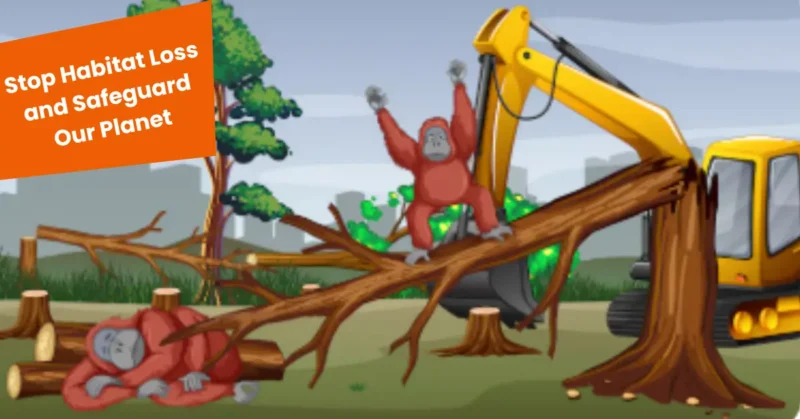
Main Causes of Habitat Loss
The leading causes of habitat loss are tied directly to human activities. Deforestation, agriculture, urban sprawl, and industrialization have dramatically altered landscapes.
As cities expand, natural areas shrink, pushing wildlife out and creating barriers to migration and thriving.
Greenhouse gas emissions from human activities cause climate change. It leads to habitat loss due to changing temperatures and weather patterns. As a result, once livable areas become uninhabitable,
Deforestation: A Major Contributor
Deforestation is one of the most significant contributors to habitat loss. Forests cover about 31% of the Earth’s land area, providing shelter for countless species.
However, millions of acres of forest are cleared yearly for logging, agriculture, and urban development. It eliminates trees and disrupts entire ecosystems, from the soil beneath the forest floor to the canopy above.
The Link Between Deforestation and Habitat Loss
When forests are cut down, the plants, animals, and microorganisms that rely on them lose their homes.
In addition, deforestation contributes to climate change by releasing carbon dioxide stored in trees, exacerbating global warming, and accelerating habitat destruction.
Urgent Need for Forest Protection
To combat this, urgent measures are needed to protect existing forests and promote reforestation.
It’s essential to halt illegal logging, implement stronger regulations, and support sustainable forestry practices. Reforestation efforts are crucial to restoring habitats and maintaining biodiversity.
Urbanization and Its Effects
As populations grow, cities expand, and natural habitats are pushed aside to make room for housing, roads, and infrastructure. While urbanization is inevitable, we must find ways to balance urban growth with environmental preservation.
How Cities Are Expanding
Urbanization has led to significant changes in land use. Wetlands are drained for development, forests are cleared for housing, and agricultural land is turned into sprawling cities.
These developments destroy critical habitats for countless species, forcing them to relocate or face extinction.
Balancing Growth and Nature
Urban planning must integrate green spaces and prioritize sustainable development.
Cities should be designed to coexist with nature rather than compete with it, using strategies like green roofs, urban forests, and wildlife corridors.
10 Solutions to Prevent Habitat Loss
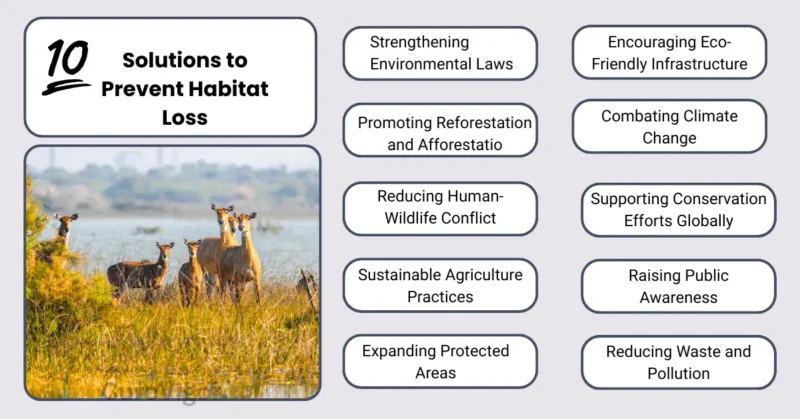
The reality of habitat loss can feel overwhelming, but there are steps we can take to reverse this trend. From stricter laws to reforestation projects, here are ten urgent actions to help stop habitat loss and safeguard our planet.
1. Strengthening Environmental Laws
Environmental laws play a pivotal role in protecting habitats from destructive human activities. Governments must enforce stricter regulations to limit deforestation, overdevelopment, and pollution.
For example, laws restricting harmful land-use practices or mandating environmental impact assessments for new construction projects can help preserve ecosystems.
Legal Frameworks to Protect Natural Habitats
Countries like Costa Rica have made significant strides in environmental protection by implementing comprehensive legal frameworks to safeguard natural habitats.
By setting aside land for conservation and enforcing stricter ecological protections, countries can ensure that ecosystems remain intact for future generations.
How Strong Regulations Can Make a Difference
Stronger environmental laws can also create a framework for sustainable development. With clear conservation guidelines, businesses and governments can work together to balance economic growth with environmental responsibility.
2. Promoting Reforestation and Afforestation
Reforestation (replanting trees in deforested areas) and afforestation (planting trees in regions that weren’t previously forested) are crucial strategies for reversing habitat loss. Trees provide critical ecosystem services, from oxygen production to biodiversity support.
The Role of Trees in the Ecosystem
Trees are essential in stabilizing the climate, maintaining soil health, and providing homes for wildlife. The more trees we plant, the more we can combat habitat loss and mitigate climate change.
Benefits of Planting More Trees
In addition to restoring habitats, planting trees helps absorb carbon dioxide, reducing greenhouse gas emissions that contribute to climate change. Trees also support local water cycles, helping to prevent floods and droughts.
3. Reducing Human-Wildlife Conflict
Conflict between humans and animals is one of the most significant threats to wildlife habitats. Wildlife is increasingly pushed into smaller, fragmented areas as human populations expand, leading to conflicts over resources like food and space.
Creating Safe Spaces for Wildlife
By establishing wildlife corridors and protected areas, we can help ensure that animals have safe spaces to roam and access the resources they need.
These corridors help prevent animals from entering urban areas and reduce human-wildlife conflict.
How to Mitigate Conflicts with Humans
It’s also vital to educate local communities about coexisting with wildlife. From providing alternative water sources to implementing wildlife-friendly farming techniques, there are many ways we can reduce conflicts while preserving habitats.
4. Sustainable Agriculture Practices
Agriculture significantly contributes to habitat loss, as forests and grasslands are often cleared to make way for crops and livestock. However, sustainable farming practices can help reduce the environmental impact of agriculture.
Reducing the Impact of Farming
Agroforestry, crop rotation, and organic farming are just a few techniques that can reduce agriculture’s environmental footprint while maintaining high productivity.
Methods to Promote Sustainable Agriculture
Governments and businesses can support sustainable farming practices by incentivizing farmers to adopt environmentally friendly methods, such as using fewer pesticides and conserving water.
5. Expanding Protected Areas
Protected areas, such as national parks, wildlife reserves, and marine protected areas, are critical for safeguarding habitats. These areas provide a wildlife sanctuary, ensuring species can thrive without the threat of development or exploitation.
The Importance of Wildlife Reserves and National Parks
Protected areas serve as refuges for endangered species and as havens for biodiversity. We can protect ecosystems from destruction by expanding these areas and ensuring their well-managed management.
Expanding Existing Protected Areas
Expanding existing protected areas to include critical habitats that are at risk is also essential. By increasing the size and connectivity of these areas, we can create larger, more viable ecosystems for wildlife.
6. Encouraging Eco-Friendly Infrastructure
As cities grow, new infrastructure projects must incorporate eco-friendly designs that minimize their impact on natural habitats. This includes building green buildings, creating wildlife corridors, and using sustainable construction materials.
Green Building and Sustainable Development
Green buildings are designed to be energy-efficient and environmentally friendly, reducing construction’s carbon footprint. Incorporating more sustainable infrastructure can help reduce habitat loss and mitigate climate change.
Integrating Nature into Urban Planning
Cities should embrace nature-based solutions, such as green roofs, urban parks, and sustainable water management systems, to help integrate nature into urban landscapes.
7. Combating Climate Change
Climate change accelerates habitat loss by altering temperature and weather patterns, making once-habitable areas uninhabitable. Tackling climate change is essential for preserving habitats and protecting biodiversity.
Climate Change as a Driver of Habitat Loss
Rising temperatures, shifting weather patterns, and increasing extreme weather events all contribute to the loss of natural habitats. Addressing climate change through emission reductions, renewable energy adoption, and reforestation efforts is vital to curbing habitat loss.
Immediate Actions to Address Climate Change
Governments, businesses, and individuals must act now to reduce greenhouse gas emissions and adopt climate adaptation strategies that can protect ecosystems from the impacts of global warming.
8. Supporting Conservation Efforts Globally
Conservation organizations play a critical role in protecting habitats and wildlife worldwide. Supporting these organizations through donations, volunteering, and spreading awareness is crucial for their success.
The Role of International Conservation Organizations
Groups like the World Wildlife Fund (WWF) and the Nature Conservancy work tirelessly to protect critical habitats and raise awareness about the importance of conservation. By supporting their work, we can help protect more habitats.
Collaborative Global Efforts to Save Habitats
Habitat protection requires global cooperation. By working together across borders, we can address habitat loss on a larger scale and create sustainable conservation solutions.
9. Raising Public Awareness
One of the most effective ways to combat habitat loss is through public education and advocacy. When people understand the importance of habitats and the consequences of their destruction, they are more likely to take action.
The Power of Education and Advocacy
Educating communities about habitat loss and its impacts on biodiversity can inspire more people to participate in conservation efforts and make environmentally responsible choices in their everyday lives.
How Everyone Can Contribute to Habitat Protection
Everyone can help protect habitats by supporting conservation initiatives, reducing waste, or choosing sustainable products. Small changes in daily life can significantly impact when multiplied across the globe.
10. Reducing Waste and Pollution
Pollution, particularly plastic waste and chemical runoff, contributes to habitat destruction. Toxic chemicals can contaminate water sources, and plastic waste can suffocate marine life.
The Impact of Pollution on Habitats
Pollution harms ecosystems, from poisoning wildlife to disrupting breeding patterns. The destruction of habitats by pollution is often irreversible, making it essential to reduce waste and adopt cleaner practices.
Steps to Minimize Environmental Waste
Individuals and industries can reduce their environmental footprint by recycling, reducing plastic use, and reducing industrial waste. Adopting circular-economy principles, which reuse and recycle materials, can help reduce pressure on ecosystems.
Frequently Asked Questions
Q. What are some ways to stop habitat loss?
Stop habitat loss by protecting existing wild spaces through legal designations like national parks and nature reserves. Restore degraded areas through reforestation, wetland restoration, and invasive species removal.
Promote sustainable agriculture and urban planning that limits sprawl and preserves wildlife corridors. Reduce consumption of products linked to deforestation, such as palm oil and non-certified timber.
Support local conservation groups and land trusts that buy or manage critical habitats.
Q. How can we safeguard the planet?
Safeguard the planet by tackling the five direct drivers of nature loss: habitat destruction, overexploitation, pollution, climate change, and invasive species.
Transition to renewable energy and circular economies that minimize waste and resource extraction. Restore ecosystems at scale, plant native trees, rewild coastlines, and reconnect fragmented landscapes.
Advocate for strong environmental policies and vote for leaders who prioritize biodiversity. Every action, from composting to reducing car travel, collectively reduces human pressure on Earth’s systems.
Q. How can we save our habitat?
Saving our habitat starts locally: plant native species in your yard or community garden to create micro-habitats for pollinators and birds.
Reduce your land footprint by choosing dense housing over sprawl and supporting green infrastructure like rain gardens. Prevent habitat fragmentation by advocating for wildlife overpasses and underpasses at road crossings.
Eliminate pesticide and herbicide use, which degrades soil and water habitats. Finally, educate neighbors and local officials about the value of even small green spaces for connectivity.
Q. What are 5 things you can do to protect biodiversity?
- Create a wildlife-friendly yard with native plants, water sources, and shelter.
- Reduce or eliminate single-use plastics to prevent habitat contamination.
- Choose certified sustainable products (e.g., FSC wood, MSC seafood).
- Support or volunteer with land trusts and conservation organizations.
- Reduce meat and dairy consumption—animal agriculture is a top driver of habitat loss.
Q. What are 10 ways to save Earth?
- Protect and expand forests, grasslands, and wetlands.
- Restore degraded lands through rewilding and tree planting.
- Cut fossil fuel use by walking, biking, or taking public transit.
- Reduce food waste to lower pressure on agricultural land.
- Ban or limit single-use plastics and toxic chemicals.
- Create wildlife corridors to reconnect fragmented habitats.
- Adopt a plant-rich diet to reduce deforestation for livestock.
- Support renewable energy and energy efficiency at home.
- Vote for pro-environment policies and leaders.
- Educate and inspire others to take everyday conservation actions.
Q. What are the 4 ways of protecting the environment?
- Reduce, reuse, recycle – minimize waste and resource extraction.
- Conserve energy and water – lower emissions and preserve freshwater habitats.
- Protect ecosystems – support parks, nature reserves, and habitat restoration.
- Choose sustainable living – buy local, seasonal, and certified eco-friendly products.
Conclusion
We started with a simple question: how to stop habitat loss and safeguard our planet. You now hold a ten-step guide.
Stop waiting for someone else to act. Protect a single patch of nature this week. Plant native species. Support a local land trust. Reduce your consumption footprint. Every small action multiplies.
Your voice matters in town hall meetings. Your choices shape supply chains. Habitat loss is not unstoppable. We safeguard the planet one decision at a time. Start today. The Earth will thank you.
Read more articles on Health and Wellness Tips.
You might like to read: