

Master life balance for remote workers with proven strategies for setting boundaries, boosting productivity, and protecting your well-being while working from home.
The feeling of being “always available” can sneak up fast.
Remote workers often start with freedom in mind—only to end up trapped in constant notifications, blurred boundaries, and quiet burnout.
If you’re feeling stretched thin, you’re not alone.
Quick Summary
- Remote workers struggle with life balance due to blurred work-life boundaries.
- Simple habits like workspace separation, time limits, and self-care protect your well-being.
- Staying connected and organized helps you stay productive without burnout.
What Is Work-Life Balance for Remote Workers?
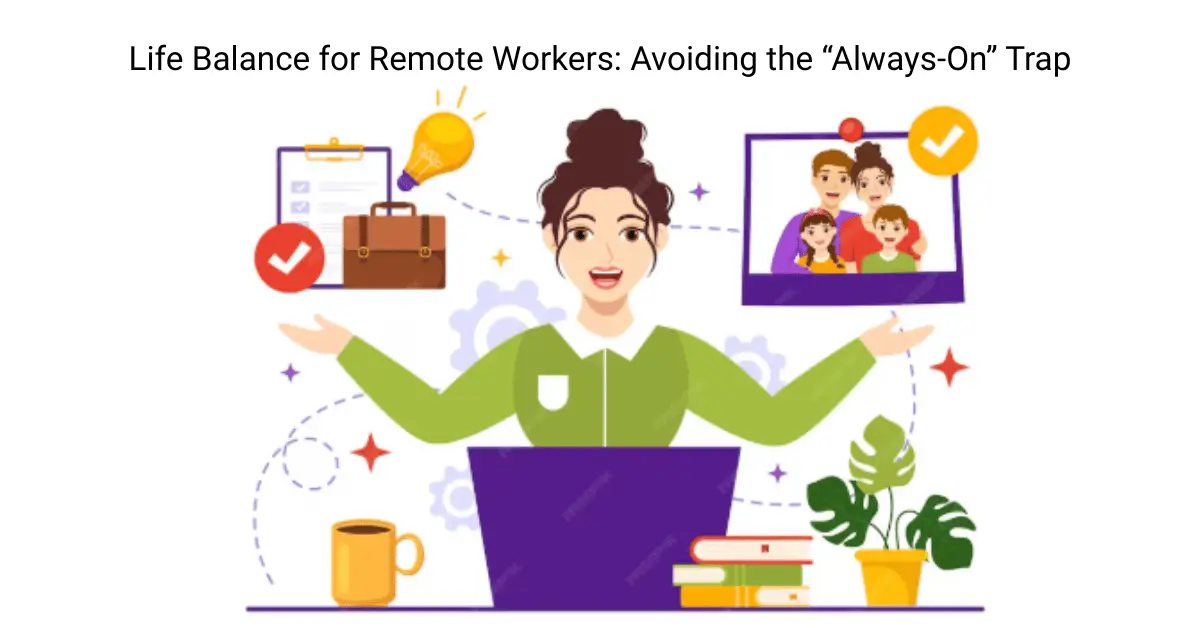
Work-life balance for remote workers means having a clear separation between your job and your personal life—even when both happen under one roof.
It’s the ability to stay productive without feeling chained to work 24/7 and to enjoy life without guilt.
Remote work becomes healthier when you set limits, care for your mental well-being, and stay intentional with your time.
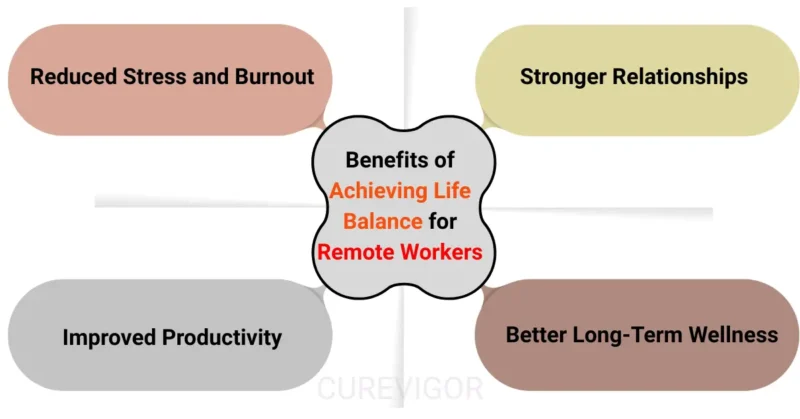
Benefits of Achieving Life Balance for Remote Workers
I truly understand how overwhelming remote work can feel. I’ve been through days where everything felt too much.
Finding the right balance brought me back to myself. First, I understood the awareness of the benefits that I needed:
1. Reduced Stress and Burnout
When remote workers create healthy boundaries, their stress levels naturally drop. A balanced routine helps your mind relax because you know when to work and when to rest.
Without constant pressure or late-night notifications, your body has time to recover. This reduces the emotional load that often builds up quietly during remote work.
Over time, this balance protects you from burnout—a state where motivation drops and everything feels heavy. Balanced days give you space to breathe, think, and feel like yourself again.
Why it matters:
- Less anxiety
- More mental clarity
- Fewer emotional ups and downs
- Healthier work rhythm
2. Improved Productivity
Life balance boosts productivity in surprising ways. When remote workers give themselves real breaks and maintain a structured schedule, they return with sharper focus. The brain performs better when it has clear on/off cycles.
Instead of working long, tired hours, you work shorter, more effective ones. For remote workers, productivity isn’t about doing more—it’s about doing things with energy, intention, and clarity.
Why it matters:
- Higher-quality work
- Better focus during tasks
- Fewer mistakes
- Faster task completion
3. Stronger Relationships
Remote Work often blurs the line between professional and personal time, leaving loved ones feeling ignored. When you establish balance, you create pockets of undistracted quality time.
This allows you to be present—not half-working, half-listening. Your relationships grow stronger because people around you feel seen, heard, and valued.
Clear work hours also prevent unnecessary conflicts and misunderstandings with family members who may not realize you’re still “at work.”
Why it matters:
- More meaningful conversations
- Better connection with children, partners, and friends
- Reduced guilt from missed moments
- Healthier emotional environment at home
4. Better Long-Term Wellness
Long-term health is built through small daily habits. Balanced Remote Workers tend to sleep better, move more, and manage their emotions more easily.
When work pressure doesn’t spill into personal time, your nervous system stays calmer. This stability supports everything from digestion and immunity to mental resilience.
With consistent balance, Remote Workers feel more energized, grounded, and capable—both at work and in life.
Why it matters:
- Improved sleep quality
- Higher daily energy
- More emotional stability
- Healthier habits such as movement, hydration, and mindfulness
Challenges Faced by Remote Workers
1. The Blurred Lines Between Work and Life for Remote Workers
Remote workers often struggle to “switch off.” Your laptop is right there. Your phone keeps buzzing.
Without physical separation, work spills into evenings, weekends, and mental space. This leads to:
- Chronic stress
- Overworking
- Difficulty relaxing
- Decreased productivity
2. Social Isolation and Remote Workers
Remote work can feel quiet—sometimes too quiet.
Without office energy, spontaneous chats, or shared breaks, remote workers may face:
- Loneliness’]
- Emotional disconnect
- Reduced motivation
- Lack of teamwork feeling
Strategies for Achieving Balance as a Remote Worker

1. Create a Dedicated Workspace for Remote Workers
Once, I was collecting information on how to make my home an office without any disturbance. I found on ‘Reddit‘ some useful tips. Then I prepared my own and created a dedicated space for my remote work.
A dedicated workspace doesn’t need to be fancy. It just needs to be yours.
Even a small corner with a chair and a notebook can create the mental divide remote workers desperately need.
When you sit there, your mindset shifts naturally into focus mode. When you walk away, your mind slowly returns to personal life.
I’ve seen many remote workers create small “work pods” using curtains, folding screens, or even simple color themes. These visual cues tell your brain: This is work time.
Extra Actions:
- Use noise-canceling headphones to block home distractions.
- Keep a small ritual like lighting a candle or turning on a desk lamp at the start of the day.
- End your workday by clearing the desk—it signals closure.
2. Set Boundaries with Family and Friends as a Remote Worker
Boundaries are not walls—they are gentle agreements that protect your focus and peace.
It’s easy for loved ones to assume remote workers are “free anytime.” A simple, friendly explanation helps them understand that remote work is still real work.
You can say something like, “When my headphones are on, I’m in work mode. After 6 PM, I’m all yours.”
Clear words avoid future frustration.
Extra Actions:
- Use shared calendars with family.
- Set a rule: quick questions only during break times.
- Create a visual cue, like a desk light that turns red when you’re in deep focus mode.
3. Prioritize Self-Care as a Remote Worker
Remote Workers often forget self-care because they don’t feel the same physical fatigue as office workers. But mental fatigue grows silently.
Small self-care habits done daily build long-term balance.
Even a two-minute stretch can reset your posture. A slow, deep breath can calm your mind. Self-care doesn’t always mean long routines—tiny rituals done often bring huge results.
Extra Actions:
- Schedule “micro-breaks” every 45 minutes
- Drink water before starting each new task.
- Add greenery or natural light to reduce stress.
- Play soft background music to relax your senses.
Staying Productive as a Remote Worker
1. Time Management Tips for Remote Workers
Time feels different when you work remotely. Hours blend. Tasks overlap.
That’s why remote workers need systems that keep their day structured and predictable.
Try starting your day with a “3 priorities list.” It keeps you grounded and prevents overwhelm.
One of the best habits remote workers adopt is working in energy rhythms—you work harder when your mind is fresh and slow down during low-energy periods.

Extra Actions:
- Set a timer for deep work sessions.
- Use a planner for daily and weekly tasks.
- Keep your phone in another room during focus time.
- Review your progress every afternoon.
2. Staying Connected with Colleagues as a Remote Worker
Connection brings warmth into remote work.
Team relationships don’t form naturally online—you must intentionally create them. Even one friendly message in the morning builds a sense of belonging.
Remote Workers often say that a simple “How’s your day going?” message creates a sense of comfort and trust. Virtual coworking sessions, where everyone works silently on video, also increase motivation.
Extra Actions:
- Join team chats with positive energy.
- Celebrate small wins together.
- Share helpful tools or resources.
- Participate in fun team activities or group challenges.
One thing remote work has taught many of us is this: the quality of your day depends less on how much you work and more on how well you manage your energy.
You don’t need perfection—you just need gentle habits that protect your peace. It’s okay to rest. It’s okay to log off on time. Your life outside work matters too.
Real-Life Examples
Example 1:
Jukia, a graphic designer, used to work from her couch. Work hours spilled into late nights. Once she created a desk corner and set a 6 PM shutdown rule, she felt calmer and more productive.
Example 2:
Ali, a remote customer service worker, felt lonely until he started weekly virtual lunches with peers. His motivation and mood improved greatly.
Personal Insight
When I started working remotely, I underestimated how “quiet burnout” feels. You think you’re fine—until you realize you haven’t stepped outside all day.
Creating a small work zone and scheduling daily walks changed everything. Small boundaries create powerful balance.
Remote Worker Balance Checklist
Use this quick guide daily:
- ☐ I worked only in my designated workspace
- ☐ I took scheduled breaks
- ☐ I hydrated and stretched.
- ☐ I ended work at a fixed time
- ☐ I connected with at least one person socially
- ☐ I engaged in one self-care activity
Mistakes Remote Workers Should Avoid
I can relate deeply to the way Remote Workers get tied up in endless responsibilities.
I’ve walked through those stressful days too, and I know how powerful small changes can be. So, I also avoided committing these mistakes to balance my life.
- Working from the bed or couch
- Keeping notifications on 24/7
- Skipping breaks
- Eating meals at the desk
- Not having a clear start and end time.
- Isolating yourself
- Saying yes to every task
5-Step Action Plan for Balanced Remote Work
As I can understand, the pain of juggling work and personal life under the same roof. I struggled too—until I found habits and prepared an action plan that helped me breathe again.
1. Define Your Workspace
Your workspace is your personal boundary line. When you sit there, you’re “at work.” When you leave, your day begins to belong to you again.
A defined workspace trains your mind to stay focused without forcing constant discipline.
Why it matters:
Your brain creates associations. A workspace helps your mind enter “workflow mode,” just like an office environment used to.
Try this:
- Use a desk, a corner, or even a small folding table.
- Add a plant or lamp to make it welcoming.
- Keep it clutter-free to reduce mental noise.
2. Set Daily Work Hours
Remote Work easily turns into “work whenever.” But when everything is flexible, nothing feels truly restful. A fixed schedule helps Remote Workers maintain life balance, energy, and clarity.
Why it matters:
Predictable hours protect your evenings and weekends. They also prevent guilt when you stop working.
Try this:
- Pick a start and stop time and stick to it.
- Block a “hard stop” alarm on your phone.
- Let your team—and family—know your hours.
3. Build a Break Routine
Breaks are not a luxury for Remote Workers—they are fuel. Short pauses help your brain reset, prevent eye strain, and restore emotional calm.
Why it matters:
Studies show productivity increases when you rest before reaching exhaustion.
Try this:
- Take 5 minutes every hour.
- Walk for 10 minutes after lunch.
- Drink water during each break.
- Step outside to breathe fresh air.
Each mini-break acts like a reset button for your mind.
4. Stay Connected
Humans thrive on connection. Remote Workers often forget how much small interactions support motivation. Staying connected makes work feel lighter and more meaningful.
Why it matters:
Virtual or in-person interactions boost mood, reduce loneliness, and help you feel part of something bigger than your laptop screen.
Try this:
- Send a morning “check-in” message to your team.
- Join informal video chats.
- Talk to a friend while walking.
- Participate in internet forums for your industry.
Connection keeps your emotional battery charged.
5. End Your Day with a Shutdown Ritual
Your brain is informed that the workday is over by a shutdown routine. It builds closure, reduces mental load, and prevents late-night overthinking.
Why it matters:
Without a clear end, Remote Workers often mentally replay tasks, leading to stress and poor sleep.
Try this:
- Close tabs and apps
- Write tomorrow’s to-do list.
- Turn off notifications
- Place your laptop out of sight.
- Dim your workspace lights to symbolize “day closed”.
This simple habit gives your mind permission to relax.
Small Daily Habits That Transform Remote Work Life Balance
As someone who has faced these remote work challenges, I know how real the struggle is. But I also know that with the right steps, life becomes easier and more peaceful.
1. A Quick Mental Reset Trick for Remote Workers
If you feel overwhelmed, try the 20-20-20 rule:
- Every 20 minutes
- Look at something 20 feet away.
- For 20 seconds
It relaxes your eyes, your posture, and your nervous system.
2. A Relatable Moment Many Remote Workers Experience
Have you ever sat at your desk at 7 PM thinking, “Just five more minutes…”
Then suddenly, it’s 9 PM?
Remote work blurs time.
That’s why routines and rituals matter—they pull you back into real life before time slips away again.
Personal Observation
One thing I’ve learned watching thousands of Remote Workers:
The ones who thrive aren’t the ones who work the most—they’re the ones who rest with intention.
They take breaks without guilt, set boundaries confidently, and trust that productivity doesn’t come from hours…it comes from clarity.
FAQs About Life Balance for Remote Workers
Q. How can Remote Workers maintain a healthy work-life balance?
Remote Workers should create strong boundaries between work and personal life. This includes having a dedicated workspace, setting clear working hours, and taking regular breaks.
Building a rhythm helps your brain shift between tasks without stress. Add self-care practices and regular social interaction to maintain long-term emotional stability. Consistency is the key to sustainable work-life balance.
Q. Why do Remote Workers often feel they must be “always-on”?
Remote workers feel pressure to respond quickly, stay reachable, and show productivity. Without physical separation, work feels constant.
This creates guilt around rest. The solution is to define availability rules, communicate expectations with your team, and use tools like status indicators. When boundaries are visible, the need to be online 24/7 decreases.
Q. What are simple productivity tips for Remote Workers?
Start by organizing your tasks using time-blocking or Pomodoro sessions. Limit multitasking—it slows you down. Turn off unnecessary notifications to prevent distractions. Work during your peak focus hours.
Review your to-do list at the beginning and end of each day. These small habits significantly improve productivity without adding stress.
Q. How can Remote Workers reduce social isolation?
Building meaningful connections is possible even from home. Schedule virtual coffee chats, join online groups, or participate in team discussions.
Check in with a friend or coworker daily. Working around other people at cafés or coworking spaces can also help. Social interaction boosts mood and motivation.
Q. What self-care activities are best for Remote Workers?
Simple, consistent habits work best. Stretching, walking, yoga, hydration breaks, journaling, and short meditation sessions support mental clarity. Hobbies like reading, painting, or gardening help you unwind.
Choose activities that calm your mind and refill your energy. Self-care doesn’t need to be fancy—just regular.
Q. How can I stop overworking as a Remote Worker?
Set a strict “shutdown time” and stick to it. Use alarms or calendar reminders. Turn off work notifications after hours.
Move your laptop out of sight when your day ends. Communicate boundaries with your team. When you respect your own limits, others will too.
Q. Are Remote Workers more productive with a structured routine?
Yes. A routine creates clarity, reduces decision fatigue, and increases focus. It signals your brain when to work and when to rest. Most Remote Workers with routines get more done in less time and experience less stress.
Final Thoughts
Being a Remote Worker is a gift—but only when balanced well.
With boundaries, self-care, and healthy routines, you can enjoy flexibility without falling into the “always-on” trap. You deserve peace, presence, and productivity—without burnout.
If you found this helpful, explore more articles on creating a healthier, calmer, and more balanced life.
Read more articles on Health and Life-Balance.
You might like: