

Hustle culture isn’t just exhausting—it’s counterproductive. While we often wear “overworked” like a badge of honor, the reality is that relentless grinding damages your health, strains your relationships, and actually kills your output.
Research shows that productivity declines sharply after a 50-hour workweek. By hour 55, output drops so significantly that those extra hours are essentially wasted.
True long-term success isn’t found in the grind; it’s found in focused, sustainable work that leaves room for a balanced life.
If working more hours actually led to more success, the most exhausted people in the world would also be the most successful. Since they aren’t, it’s time to ask: what is the hustle actually costing us?
In today’s fast-paced world, hustle culture has become the norm. It’s glorified on social media, at business conferences, and in motivational speeches: the idea that the key to success is working harder, longer, and faster.
But does working more really lead to more success? Or does it come at the cost of our well-being, mental health, and relationships?
In this post, we explore why hustle culture may be doing more harm than good and why working fewer, more focused hours might be the true path to long-term success.
The Illusion of Hustle Culture
Hustle culture is often portrayed as a badge of honor. The belief is simple: the more hours you put in, the more successful you’ll become.
From the constant bombardment of messages encouraging you to “rise and grind” to the notion that sleep is for the weak, it’s easy to get swept up in the hustle mindset.
However, this way of thinking is a trap. While it may seem like hard work equals progress, the reality is that working too much often leads to burnout, decreased productivity, and strained personal relationships.
The truth is that success is not measured by how many hours you work but by the quality of your work and the balance you strike in life.
The True Cost of Hustle Culture
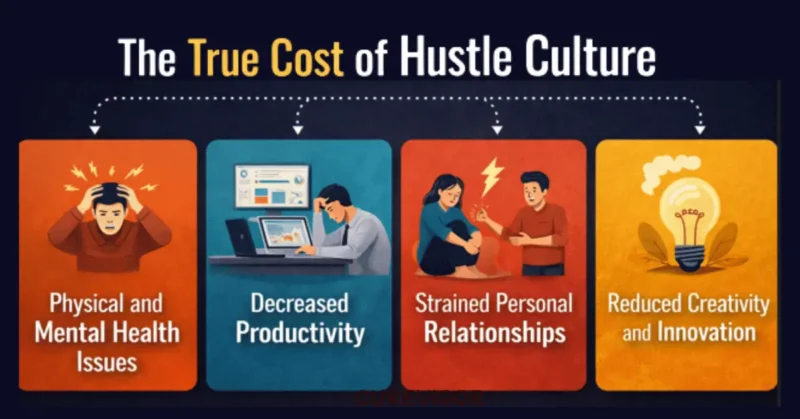
When you push yourself to work beyond healthy limits, you’re not just sacrificing your time.
You’re also sacrificing your health, creativity, and relationships. Here’s a deeper look at what hustle culture really costs:
1. Physical and Mental Health Issues
Chronic overwork is directly linked to numerous health problems. Extended work hours lead to increased levels of stress, anxiety, and depression.
The World Health Organization has highlighted lengthy working hours as a key risk factor for health conditions like heart disease and stroke.
The more you hustle, the less you prioritize your physical and mental health. Sleepless nights, unhealthy eating habits, and constant stress weaken your immune system and increase your risk of burnout.
2. Decreased Productivity
It might seem counterintuitive, but working more hours often leads to less productivity. After a certain point, your brain and body need rest to function optimally.
Exhaustion can cause cognitive decline, making it harder to focus and complete tasks efficiently.
In fact, research shows that employees who work less often produce more high-quality work. This is because short bursts of concentrated effort are far more effective than long, drawn-out hours of fatigue-filled work.
3. Strained Personal Relationships
The cost of hustle culture extends beyond your career and health; it also affects your relationships.
Constantly working long hours leaves little time for personal connections, whether with family, friends, or romantic partners.
The lack of time and attention you give to your relationships can lead to feelings of isolation and resentment from those closest to you.
Maintaining a work-life balance is essential not only for your health but also for nurturing the relationships that bring you joy and fulfillment.
4. Reduced Creativity and Innovation
Creativity thrives in environments where individuals feel rested and inspired. Hustle culture, on the other hand, stifles creativity by fostering exhaustion and mental fatigue.
When you’re constantly focused on doing more, you’re less likely to think creatively or step outside of your comfort zone.
Taking time for reflection, rest, and leisure is crucial to keeping your creative juices flowing. When you get up from your desk, go for a stroll, or do something that calms your mind, creativity frequently emerges.
The Cost of Hustle Culture in Mental Health
While hustle culture may appear to promise growth and success, it comes with significant drawbacks.
As a professional in psychology or any allied health field, the constant push to “do more” can create detrimental effects on your mental, physical, and emotional health.

Burnout and Exhaustion
One of the biggest risks of hustle culture is burnout. Trying to juggle too many clients, projects, and responsibilities can drain your energy and motivation.
When you’re constantly working without taking time to recharge, it becomes harder to offer your best work to your clients, let alone take care of yourself.
Decline in Quality of Care
When you’re focused on taking on more clients and seeing more, the quality of care you provide can suffer. Being spread too thin means you can’t fully invest the time and energy each client deserves.
As psychologists, we know that the relationship we build with our clients is crucial for their healing, and that requires presence, patience, and focus—something that’s impossible to provide when you’re overwhelmed.
Negative Impact on Mental Health
The pressure to constantly hustle also affects your mental health. The fear of not being “enough” can lead to anxiety, self-doubt, and a lack of self-compassion.
As professionals, this is especially troubling because our job is to support others with their mental health, yet we may struggle with our own.
A New Approach: Sustainability Over Speed
After I became a mother, my perspective began to shift. The idea of “doing it all” started to feel like an illusion.
I realized that being constantly busy didn’t equate to success. In fact, it was often the opposite. When I began prioritizing sustainability, I found that my business—and my life—became better aligned with my values.
Focusing on What Matters Most
Instead of saying “yes” to every opportunity, I began evaluating what truly mattered to my clients
I stopped spreading myself thin by chasing every new professional development or business opportunity and instead focused on refining the areas I was most passionate about.
This shift didn’t just make me a better business owner; it made me a better psychologist.
Creating Rituals That Support Balance
One of the most important changes I made was establishing routines and rituals that supported my well-being.
Simple things like taking regular breaks, scheduling time for self-care, and setting boundaries with clients and colleagues have helped me maintain a healthy balance between work and life.
These rituals are not flashy, but they work. They keep me aligned with my purpose and provide the stability I need to grow both personally and professionally.
The Alternative to Hustle Culture: Working Smarter, Not Harder
Instead of sacrificing your health and happiness for success, why not focus on working smarter, not harder?
This approach involves being intentional with your time and energy, prioritizing quality over quantity, and ensuring that your work aligns with your values.
1. Setting Boundaries
One of the most important steps in breaking free from hustle culture is learning how to set boundaries.
This means saying “no” to projects or tasks that don’t align with your priorities, turning off work notifications after hours, and setting aside time for self-care.
When you set clear boundaries, you protect your time and energy. You focus on what matters most, both at work and in your personal life.
2. Prioritizing Rest and Recovery
Success is not achieved by working tirelessly without rest. In fact, recovery and rest are essential for long-term success.
When you take time to recharge, you improve your focus, creativity, and problem-solving abilities.
By taking breaks during the day, ensuring you get adequate sleep, and engaging in relaxing activities, you can incorporate rest into your routine. Rest is not a luxury; it’s a necessity for optimal performance.
3. Focusing on Deep Work
Rather than constantly multitasking or jumping between shallow tasks, focus on deep work. Deep work refers to activities that require full concentration and produce high-quality results.
This includes working on meaningful projects, engaging in strategic thinking, and tackling complex problems that require your full attention.
You’ll discover that you can complete more tasks in less time if you set aside specific time for intense work.
4. Aligning Work with Personal Values
When your work aligns with your personal values, you’re more likely to feel fulfilled and motivated
Instead of chasing every opportunity that comes your way, focus on the projects and tasks that truly matter to you. This sense of purpose fuels your passion and prevents burnout.
The Benefits of Working Smarter, Not Harder
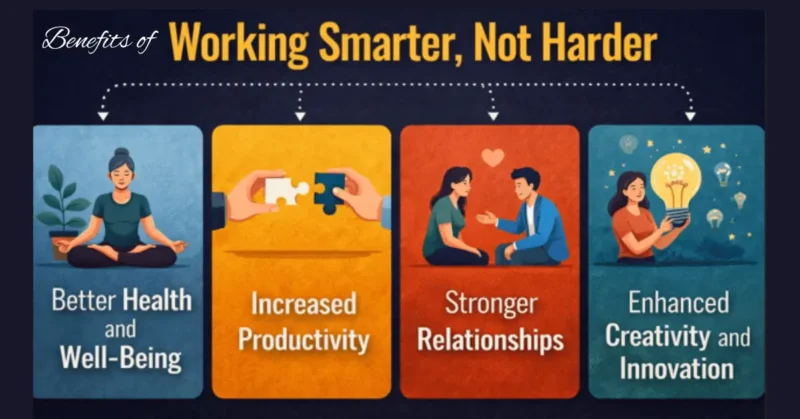
Adopting a mindset of working smarter offers several important benefits, including.
1. Improved Health and Well-Being
By focusing on balance, setting boundaries, and prioritizing rest, you create a healthier, more sustainable lifestyle.
You’ll experience less stress, improved sleep quality, and better overall physical and mental health.
2. Increased Productivity
When you work smarter, you focus on high-priority tasks that drive the most significant results.
By using this method, you can work more productively and with fewer interruptions. As a result, you’ll accomplish more in less time, without sacrificing quality.
3. Stronger Relationships
By making time for family, friends, and self-care, you’ll cultivate stronger, more meaningful relationships.
When you prioritize your personal life, you can show up as a more present, engaged, and supportive partner, friend, or family member.
4. Greater Creativity and Innovation
Taking time for rest and reflection enables your mind to relax and recharge, which is crucial for fostering creativity.
When you’re not constantly in “work mode,” you give yourself the space to come up with fresh ideas and innovative solutions.
5. Sustained Success
A focus on sustainability leads to long-term success. By maintaining balance, setting boundaries, and prioritizing self-care, you build a career that is both fulfilling and sustainable.
Instead of burning out, you’ll continue to grow and succeed over time.
Doubts of Breaking Free from Hustle Culture
While the shift toward a sustainable, balanced life is incredibly rewarding, it does come with its challenges.
1. Fear of Missing Out (FOMO)
As a professional, it’s easy to feel like you’re falling behind if you’re not chasing every opportunity that comes your way.
Anxiety might stem from the fear of losing out, but it’s crucial to remember that genuine growth comes from deliberate effort.
2. Overcoming Old Habits
Breaking free from hustle culture means reprogramming your old habits. It can be difficult to let go of the drive for constant achievement, especially if it’s been ingrained in you for years.
But with patience and consistency, you can change your mindset.
3. Balancing Business and Well-Being
Finding the ideal balance between managing a profitable business and preserving your personal wellbeing is one of the most difficult challenges.
It’s easy to get caught up in the pressure to succeed, but remember that a sustainable approach leads to long-term success, not burnout.
The Challenges of Moving Away from Hustle Culture
While breaking free from hustle culture is empowering, it comes with its own set of challenges. These challenges must be acknowledged and navigated with patience and perseverance.
1. Fear of Falling Behind
The hustle culture often cultivates a sense of urgency and competition. It can be difficult to step away from this mindset because you fear falling behind or being left out.
However, it’s important to remember that working smarter leads to more sustainable success in the long run.
2. Uncertainty Around Prioritization
It’s easy to feel overwhelmed by the number of tasks and responsibilities that come your way. Learning how to prioritize effectively is crucial, but it can take time to develop this skill. Start by identifying your most important tasks and focus on those first.
3. Internalized Pressure to Do More
Many people internalize the pressure to do more, even when it’s unnecessary. Overcoming this mindset requires self-awareness and a commitment to your well-being. Remember, doing less with intention often leads to greater success.
Practical Checklist for Breaking Free from Hustle Culture
Here’s a checklist to help you transition away from hustle culture and embrace a healthier, more balanced approach to work and life:
- Set clear boundaries: Define work hours and personal time. Learn to say “no” when necessary.
- Schedule regular breaks: Throughout the day, take brief pauses to recharge your energy and focus.
- Prioritize rest: Make sleep a priority and practice relaxation techniques like meditation or yoga.
- Focus on deep work: Dedicate time to tasks that require concentration and yield meaningful results.
- Reflect on your values: Align your work with them to increase fulfillment.
- Practice self-compassion: Be kind to yourself and recognize that you don’t have to do it all to be successful.
Breaking Free from Hustle Culture: My Journey Toward Balance and Purpose
Today, hustle culture is everywhere. The pressure to constantly work harder, achieve more, and do it all—often without rest—has become the norm in many industries.
As a freelance psychologist and teacher, I, too, once found myself in the grips of this relentless mindset.
The pressure to attend every professional development session, the belief that I had to work tirelessly to “grow” my business. And the feeling that success was measured by how much I could do, quickly and without pause, all contributed to my struggle.
But after becoming a mother, everything changed. I had to reevaluate how I approached my work, my business, and my life.
I’ve learned that it’s not about doing more but about doing less with intention. It’s not about competing for every opportunity but focusing on what matters most.
In this blog post, I’ll share my personal journey of breaking free from hustle culture. Here’s why finding balance and sustainability is more important than trying to achieve everything all at once.
What is hustle culture, and why is it harmful?
Hustle culture is the belief that working longer hours leads to more success. While it may seem useful, it typically leads to burnout, poor mental health, and reduced productivity, ultimately limiting long-term success.
How can I avoid burnout in a high-pressure job?
To avoid burnout, set boundaries, prioritize self-care, and take breaks throughout the day. Focus on deep work rather than multitasking, and ensure you get enough rest and recovery to stay energized.
How can I be more productive without working longer hours?
Increase productivity by focusing on high-priority tasks, minimizing distractions, and practicing deep work. Taking regular breaks and prioritizing rest will help maintain energy and improve efficiency.
What is the difference between working hard and working smart?
Working hard means putting in long hours, while working smart means being strategic with your time. By prioritizing meaningful tasks and taking care of yourself, you can achieve better results in less time.
How do I balance work and life without feeling guilty?
To balance work and life, set clear boundaries and prioritize time for self-care and relationships. Understand that taking time off actually improves your overall performance and well-being.
Can I succeed without sacrificing my health and relationships?
Yes! Success doesn’t have to come at the expense of your health or relationships. By focusing on working smarter, setting boundaries, and prioritizing balance, you can achieve both professional success and personal fulfillment.
What is hustle culture, and why is it harmful?
Hustle culture is the mindset that prioritizes constant work and achievement over well-being. It can eventually lower people’s quality of life by causing burnout, mental health problems, and a poor work-life balance.
What is the difference between ambition and hustle culture?
Ambition is the drive to achieve goals in a balanced and sustainable way, while hustle culture is the constant pressure to work harder and achieve more at the expense of health and well-being.
How do I stay successful without falling into hustle culture?
Focus on prioritizing what truly matters—quality client care, personal development, and sustainable growth. Set boundaries, manage your time effectively, and practice self-care to maintain long-term success.
What is The Fading Glamour of Hustle Culture?
The shift away from glorifying overwork. After years of rising burnout and stress, professionals are now prioritizing long-term health and efficiency over the hollow promise of constant productivity.
Why Slow Productivity Is Beating the Hustle Culture?
Because “busyness” isn’t the same as “business.” Slow productivity beats the hustle by:
Reducing Burnout: Protecting your mental energy for the long haul.
Enhancing Focus: Allowing for “deep work” that produces higher-quality output.
Prioritizing Value: Focusing on doing a few things exceptionally well rather than many things poorly.
Why Is Hustle Culture Killing Your Success?
Hustle culture kills success by prioritizing performative busyness over actual productivity, leading to chronic burnout and diminishing returns. While it promises faster results, the constant stress reduces cognitive function, stifles creativity, and causes “tunnel vision,” preventing the high-level strategic thinking required for long-term growth.
What is the Dark Side of Productivity, and Why Does Hustle Culture Fail?
The dark side of productivity is “toxic productivity”—the obsession with being constantly “on” at the expense of mental and physical health. Hustle culture fails because it ignores the law of diminishing returns; working excessive hours leads to chronic stress, cognitive fatigue, and burnout, which ultimately decrease the quality and volume of your output.
Read more articles on Life-Balance articles.
You might like: