

Create a family chore chart that works for everyone! Learn step-by-step how to assign tasks, motivate kids, and organize chores efficiently for a balanced home.
Thank you for reading this post, don't forget to subscribe!A family chore chart is more than just a list of tasks — it’s a powerful tool for managing the household without overwhelming anyone.
It’s not just about clean dishes; it’s about reclaiming your weekends and finding balance in a busy life.
For parents, the mental load can feel like a heavy weight: balancing work, chores, kids, and family time. Without a system in place, the mental burden often falls on one person, usually the parents.
The Problem:
Traditional chore charts often focus only on kids, or worse, they’re too rigid, leaving parents exhausted and feeling like they’re doing all the work. The result? Burnout. Frustration.
The family dynamic becomes strained, and instead of harmony, there’s a sense of inequality. A well-organized chore chart, however, can ease this burden, creating a balanced system that works for everyone.
In this guide, we’ll dive into how to create a family chore chart that actually works. From setting up the system, motivating your kids and adults, to using a digital or printable chart.
We’ll cover everything you need to know to make your family’s chores more manageable — and help you reclaim your precious weekends.
Understanding the Mental Load in Family Chores

What is Mental Load?
The mental and emotional strain of managing household duties is known as the mental load.
It’s not just about doing chores but remembering what needs to be done, when, and by whom. For parents, especially mothers, mental load can lead to exhaustion, anxiety, and feeling overwhelmed.
Why It Affects Parents More Than Anyone Else
Parents are often the primary organizers of household tasks, including planning, delegating, and overseeing chores. This responsibility can accumulate over time and feel like an ongoing mental burden.
From remembering when to wash the laundry to planning meals for the week, the mental load often falls disproportionately on one person.
How a Family Chore Chart Helps Alleviate This Burden
By creating a structured chore chart, you can assign specific responsibilities to each family member, reducing the mental load on one person.
The clarity and organization it provides allow parents to let go of the constant mental juggling, ensuring everyone is equally involved in household tasks.

The Problem with Traditional Family Chore Charts
Why Traditional Charts Are Too Rigid
Many traditional chore charts focus on rigid, inflexible systems that only track kids’ chores.
These charts often fail to accommodate family members’ unique schedules, and they can feel like a never-ending cycle of “do this, do that.” Without flexibility, families struggle to keep up, and motivation fades fast.
The Risk of Focusing Only on Kids’ Chores
When chore charts only assign tasks to kids, it puts an unfair strain on parents, who often end up doing the bulk of household work.
This unbalanced workload can lead to resentment and frustration, especially if parents are already juggling jobs, errands, and personal time.

Burnout and Frustration: When Family Members Feel Unbalanced
Family chore charts that don’t account for adults’ and teens’ contributions can lead to burnout. Parents may feel like they’re doing everything, leading to frustration and eventually, burnout.
A good chart balances chores for everyone, allowing each family member to contribute and take responsibility for maintaining the home.
Mistakes to Avoid When Creating a Family Chore Chart
Overloading One Person with Too Many Tasks
One of the most common mistakes is assigning too many tasks to one person, especially if that person is the parent.
This can quickly lead to burnout, especially if that individual has a demanding job or other responsibilities outside the home.
Assigning Chores That Aren’t Age-Appropriate
A chore chart should take into account each family member’s age and capabilities. Assigning difficult tasks to young children or underestimating teenagers’ abilities can lead to frustration on both sides. Make sure tasks match age and skill level.
Lack of Flexibility and Rewards System
Rigid charts that don’t allow for flexibility or changes in task rotation can lead to disinterest. Similarly, failing to reward family members for completing tasks can result in a lack of motivation.
A family chore chart should allow for changes and reward effort, keeping everyone motivated.
Not Considering the Mental Load of Adults
While kids’ chores are important, don’t forget about the mental load on adults. Parents need help too. Your chore chart should include all members, with both kids and adults taking responsibility for different tasks.
A Step-by-Step Guide to Creating an Effective Family Chore Chart
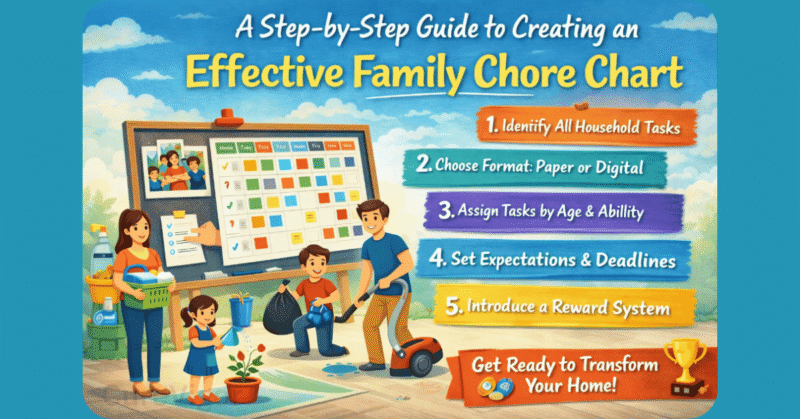
Step 1: Identify All Household Tasks
Making a thorough list of everyday chores is the first step in making a family chore chart.
Everything should be included on this list, from less common chores like grocery shopping, seasonal cleaning, and lawn care to everyday necessities like making beds and washing dishes.
Take the time to divide more complex jobs into smaller, easier-to-manage components. For example, instead of just “clean the kitchen,” break it into “wipe down counters,” “sweep the floor,” and “empty the trash.”
Pro Tip: Don’t forget about tasks that might only come up once a season, such as cleaning windows or deep-cleaningcarpets.
This ensures that no task is forgotten and helps distribute all chores fairly throughout the year.
Step 2: Choose a Format (Paper vs. Digital)
Once you have your list of chores, it’s time to decide on the format of your chart. Will you go paper or digital?
- Paper charts are excellent for visual learners. They’re easy to post on the fridge or bulletin board and act as a constant reminder of everyone’s responsibilities.
Paper charts are also great if your family enjoys physically checking off completed tasks. - For busy families that are constantly on the go, digital apps like Trello, OurHome, or Cozi can be a terrific option. Digital chore charts can be updated in real-time and provide reminders, making it harder to forget tasks.
They’re also useful for families who prefer to manage everything remotely or want to track progress over time.
You can even mix both by using a digital tool for reminders and an old-school paper chart for visual tracking.
Step 3: Assign Tasks Based on Age and Capability
Now it’s time to assign tasks to your family members. This step requires considering the age and capabilities of everyone involved.
It’s important to make sure the tasks are appropriate for each person’s developmental stage.
- Young children (ages 3-6) can take on simple tasks like sorting laundry or putting away toys.
- Older children (ages 7-12) can be assigned more independent tasks, such as vacuuming or setting the table.
- Teens (ages 13 and up) should take on greater responsibilities, such as laundry, dishwashing, or meal preparation. They can also take the lead on organizing family events, such as grocery shopping or deep cleaning the bathroom.
Pro Tip: For each task, be specific. For example, instead of assigning a teen the broad task of “cleaning the kitchen,” you could specify, “Wash the dishes and wipe down the countertops.”
This eliminates confusion and makes it easier to see progress.
Step 4: Set Clear Expectations and Deadlines
To keep everyone accountable, ensure each task includes clear expectations.
- How long should the task take? For example, “Vacuum the living room in 20 minutes.”
- When does it need to be completed? A chore chart should include deadlines, like “Complete this task by Sunday evening” or “Daily tasks must be done by 6 PM.”
- For recurring chores, set a rotation. For example, “This week, Sarah will vacuum, while John will dust. Next week, swap!”
Clear deadlines and time limits help create urgency and reduce procrastination. If necessary, set reminders for specific tasks to be completed on specific days of the week.
Step 5: Introduce a Reward System for Motivation
A reward system is one of the most effective ways to maintain high motivation for both kids and adults.
- For kids, rewards could include stickers, tokens, or even extra screen time or allowance for a job well done. Consider setting a “reward jar” where they can deposit tokens for each task completed. After accumulating enough tokens, they can redeem them for fun rewards.
- For adults, try offering rewards that encourage family bonding. This could be a family movie night, a weekend outing, or an extra hour of relaxation after chores are completed.
A reward system not only motivates but also reinforces positive behavior. Over time, it encourages kids and adults to do their part without reminders.
How to Motivate Kids and Adults to Stick to Their Chores
Incentive-Based Motivation for Kids
Kids thrive when there’s a clear reward system in place. Use things like stickers or small treats when they complete their chores.
Over time, they’ll start to associate doing chores with earning rewards, making it easier to maintain the habit.
Accountability System for Adults
For adults, it’s essential to have regular check-ins and open communication. Consider using a shared family calendar or a chore tracking app to help everyone stay accountable.
Make sure to rotate tasks so no one feels overwhelmed or stuck with the same duties week after week.
The Best Tools to Create and Track Your Family Chore Chart
Digital Tools vs Paper Charts
There are plenty of digital apps available for chore tracking, such as Trello, ChoreMonster, or OurHome.
It is easy to assign tasks, set reminders, and track progress. On the other hand, paper charts like those from Canva or Twinkl are great for families who prefer a physical copy.
Recommended Apps and Printable Templates
- Trello: A free tool where you can create boards for different family members.
- ChoreMonster: An app designed to make chores fun for kids.
- Canva: Provides free printable templates for creating customized chore charts.
How to Integrate a Family Chore Chart Into Your Weekly Routine
Set Regular Family Meetings to Review Progress
To keep the system running smoothly, hold a weekly family meeting. Use this time to review what’s working and what isn’t. Adjust chores as needed and give everyone a chance to voice their opinions.
How to Adjust the Chart as Tasks Change
As the family grows or the seasons change, you may need to update the chart. Rotate tasks or assign new ones as needed. Be flexible and willing to change.
Weekly Check-Ins to Keep Everyone Accountable
Use weekly check-ins to track progress. Whether it’s a family dinner or a Sunday review, make sure everyone knows their responsibilities and feels motivated to follow through.
Benefits of a Family Chore Chart
Improved Family Bonding
A family chore chart is more than just a tool for organizing tasks—it’s a great way to bring the family closer together. When everyone participates in household chores, it fosters a sense of teamwork.
Working side by side on common goals helps strengthen relationships, whether it’s parents teaching kids how to fold laundry or siblings working together to tidy up the living room.
This shared responsibility promotes mutual respect and cooperation, and creates opportunities for meaningful moments that make everyone feel valued.
Less Stress and Conflict
Parenting often comes with the added mental burden of managing daily tasks and schedules. A family chore chart takes away the stress of constant reminders and nagging.
By clearly dividing responsibilities, it eliminates confusion about who’s doing what and reduces conflicts between family members.
It also relieves parents from carrying the entire workload, making it easier for them to balance work, personal life, and household duties.
With fewer chores on their plate, parents can focus more on enjoying family time and less on micromanaging.
Better Time Management
A well-structured family chore chart is an excellent way to efficiently organize tasks. By assigning tasks with specific deadlines, you ensure that everything is completed on time.
This allows you to free up more time for things that matter, such as family bonding, relaxation, or pursuing personal hobbies.
With less chaos at home, your family can focus on spending quality time together, whether it’s movie nights, outdoor activities, or simply enjoying a meal without rushing through chores.
Teaches Responsibility
One of the most significant benefits of a family chore chart is that it teaches children the value of responsibility.
By contributing to household duties, kids learn time management, accountability, and the importance of doing their part in the family unit.
These abilities will help children become more self-sufficient and responsible as they get older, going far beyond simple home chores.
It’s a life lesson that goes beyond cleaning dishes and making beds; it’s about fostering a strong work ethic and personal pride in contributing to the family’s well-being.
More Organized Home
A family chore chart brings structure to your home, ensuring nothing gets overlooked. Tasks are assigned and tracked, so you’ll always know what’s done and what needs attention.
This organized approach leads to less clutter and more order, creating a more pleasant living environment.
When everyone knows their roles, there’s less last-minute rushing to finish tasks, and household chores become a routine, not a burden.
With a more organized home, everyone can feel at ease, knowing that the work is divided and manageable.
Action Plan: How to Get Started
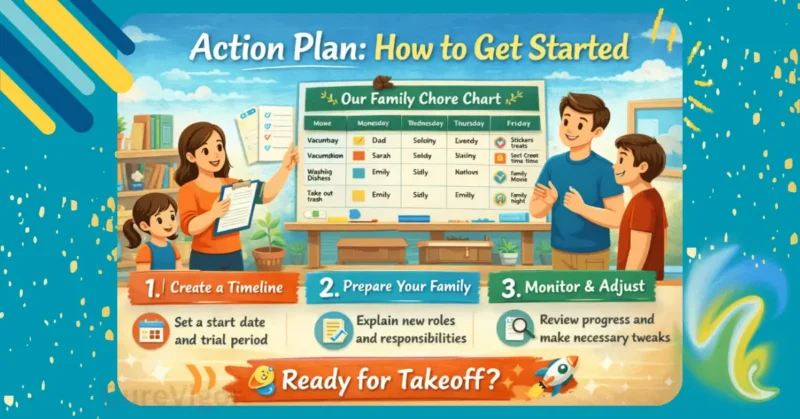
Create a Timeline for Launching Your Family Chore Chart
The first step in implementing a successful family chore chart is setting a clear timeline. Sit down as a family and decide when to start.
You can begin by setting a trial period, such as 1 or 2 weeks, to see how well the system works. Having a timeline helps everyone prepare mentally and physically for the changes.
It also keeps you on track for revisiting the chart’s effectiveness at the end of the trial period.
Prepare Your Family for Changes in Responsibilities
Changing the way chores are handled at home may feel like a big shift, especially if your family is used to a certain routine. It’s important to communicate openly with everyone about the new system.
Explain how the chore chart will benefit the family as a whole, reduce stress, and promote fairness. Give everyone the opportunity to voice their opinions and worries.
This ensures that everyone is on the same page and ready to contribute. Adjust the system based on feedback to make it practical for all family members.
Monitor Progress and Tweak the System as Needed
Once your family chore chart is up and running, it’s essential to monitor progress and make adjustments as needed. After the first few weeks, check in with your family to see how the system is working.
Are tasks being completed on time? Are some chores harder than others? Are family members feeling overwhelmed or frustrated? This is the time to tweak the chart, reassign tasks, or add more rewards if necessary.
Keep in mind that the objective is to design a system that benefits everyone, so don’t be scared to make adjustments as you go.
Ready-to-Use Family Chore Chart Template
| Task | Assigned Family Member | Frequency | Deadline | Completion (Check-off) | Reward |
| Vacuum Living Room | John (Teenager) | Weekly | Every Sunday evening | [ ] | 30 minutes of screen time |
| Wash Dishes | Sarah (Child) | Daily | Every evening | [ ] | Extra playtime (30 mins) |
| Fold Laundry | Dad | Weekly | Every Saturday | [ ] | Movie night |
| Clean Bathroom | Mom | Bi-weekly | 2nd & 4th Sunday | [ ] | Weekend outing |
| Take Out Trash | Emily (Child) | Weekly | Every Friday night | [ ] | Stickers |
| Mop Kitchen Floor | Sarah (Child) | Weekly | Every Saturday | [ ] | Favorite snack |
| Grocery Shopping | Dad & Mom | Weekly | Every Sunday | [ ] | Family lunch at a favorite restaurant |
| Tidy up bedrooms. | John & Emily | Daily | Every morning | [ ] | 15 mins extra screen time |
| Water Plants | Sarah (Child) | Weekly | Every Wednesday | [ ] | Extra allowance |
| Pet Care | John | Daily | Every morning | [ ] | Allowance increase |
Instructions for Using This Template:
- Task: List the household chores that need to be completed.
- Assigned Family Member: Name the family member responsible for the task.
- Frequency: Specify how often the task needs to be completed (e.g., daily, weekly, or biweekly).
- Deadline: Set a specific time or day for completion.
- Completion (Check-off): After the task is completed, the assigned member can check it off.
- Reward: Implement a fun, motivating reward system for task completion, such as extra screen time, a treat, or a family outing.
How to Customize This Template:
- Adjust tasks based on your family’s needs: add or remove tasks as needed.
- Modify frequency and deadlines: Some tasks may need to be completed more or less frequently, so adjust the timing to fit your family’s routine.
- Include family preferences: Tailor the rewards to motivate your family members based on what they enjoy!
This table is a simple way to visualize your family’s chores and responsibilities. It encourages accountability while also creating a balanced system that reduces the burden on any single family member.
You can print this template, hang it on the wall, or use a digital version for easy tracking.
FAQs
Q. How to make a chore chart for the whole family?
Listing all home chores is the first step in creating a chore chart for the entire family. Assign assignments based on age and skill level, and choose between a digital tool and a paper chart.
Establish clear guidelines, set due dates, and provide incentives to spur enthusiasm. Make sure the chart works for everyone by regularly reviewing and adjusting it.
Q. How to get ADHD kids to do chores?
To help ADHD kids do chores, break tasks into small, manageable steps. Use visual reminders, such as a chart or a timer, and offer immediate rewards for completed tasks.
Make chores fun by incorporating games or challenges, and provide consistent praise for their efforts to help keep them motivated.
Q. How to keep track of household chores?
Keep track of household chores by creating a visual system, such as a chart or app, that lists all tasks and assigns each to the responsible person. Use reminders for deadlines and regularly check progress.
Digital apps like Cozi or OurHome can help track chores and send reminders to family members.
Q. How to divide household chores in your family?
Divide household chores based on each family member’s age, capabilities, and preferences. Assign simple tasks to younger children and more complex ones to older kids or adults.
Rotate chores regularly to ensure fairness, and balance tasks among all family members to prevent burnout.
Q. What is the 5-5-5 rule for decluttering?
The 5-5-5 rule for decluttering involves choosing 5 items to get rid of in each of the following categories: things you no longer use, things that are broken or damaged, and things you have too many of. This rule helps break the decluttering process into manageable chunks.
Q. What is the 6/10 rule?
The 6-10 rule is a strategy for organizing spaces and time. It suggests spending 6 minutes decluttering or tidying up one area and then moving to another area or task after 10 minutes.
This rule encourages short bursts of organization to make it more achievable and less overwhelming.
Conclusion: Reclaim Your Family’s Weekends with a Balanced Chore System
Creating a family chore chart that works is all about making chores feel less like a burden and more like a shared responsibility.
By following these steps and tailoring the chart to your family’s needs, you’ll improve cooperation, reduce stress, and ultimately create a more organized and balanced home.
Remember, consistency is key. To ensure the system functions well for everyone, stay adaptable, monitor developments, and make adjustments as needed.
And above all, make sure to celebrate the small wins along the way—because when every family member contributes, the home runs more harmoniously.
Read more articles on Life-Balance and Productivity.
You might like: