
Feel stuck or disconnected? Learn how intentional living helps you design a life that feels right. Simple steps, real clarity, and lasting change.
Thank you for reading this post, don't forget to subscribe!Stop living on autopilot. This guide to intentional living helps you move from reactive routines to conscious choices. Learn how to define your values, set boundaries, and design a life that truly feels right.

How to Design a Life That Feels Right
Intentional living isn’t a “one and done” task; it’s a practice.
You move through your day doing what needs to be done. You complete tasks, meet expectations, and stay busy.
Yet somewhere inside, a quiet question remains. Is this really the life you want, or just the life you ended up with?
That feeling is more common than you think. It does not mean something is wrong with you.
It means something is missing in how you are choosing your life. When your days are filled with automatic actions instead of conscious decisions, life starts to feel distant, even when everything looks fine on the outside.
Intentional living offers a different way forward. It helps you slow down, notice your choices, and design your life with purpose.
You do not need a perfect plan or a dramatic reset. You only need to become aware of how you live and begin making small, meaningful shifts.
The “Autopilot” Trap: Why You Feel Disconnected
Feeling disconnected often happens when you live on autopilot instead of making conscious choices. You follow routines, meet expectations, and react to situations without thinking.
Over time, this creates a gap between what you do and what you truly want, making life feel unfulfilling.
Living by “Should” Instead of “Want”
Many of your choices are shaped by what you think you should do. You follow paths that seem acceptable, safe, or expected.
Over time, these decisions build a life that looks right but does not feel right.
You stop asking what you truly want, because the habit of “should” becomes stronger than your own voice.
This creates a quiet gap between who you are and how you live. You may achieve goals, but they do not bring satisfaction.
You may stay busy, but you feel disconnected. Living by “should” slowly replaces your personal direction with external pressure, and that is where disconnection begins.
The Cost of Excessive People-Pleasing
You want to be kind. You want to be helpful. So you say yes, even when your energy is low. You adjust your needs to make others comfortable.
At first, this feels like the right thing to do. But over time, it becomes heavy.
When you constantly prioritize others, you lose awareness of your own needs. Your time becomes crowded with commitments that do not serve you.
Your energy drains faster, and your sense of control weakens. People-pleasing may protect relationships, but it often damages your connection with yourself.
Chasing External Validation
It is easy to measure your worth through outside approval. You look for recognition, praise, or acceptance to feel confident. When others validate you, it feels good. But that feeling does not last.
External validation changes often. It depends on people, situations, and trends. When your direction depends on something unstable, your life loses consistency.
You begin to chase approval instead of purpose. This creates a cycle in which you are always moving but never fully grounded.
What Is Intentional Living
Intentional living means making conscious choices that align with your values and priorities. Instead of reacting automatically, you act with purpose and awareness.
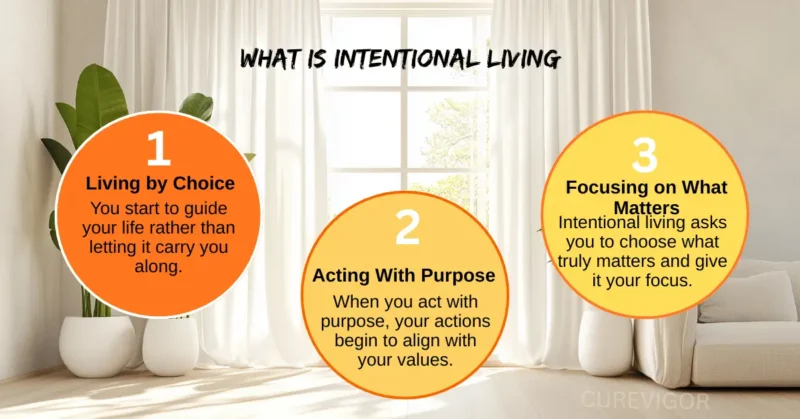
It allows you to build a life that feels balanced and meaningful by focusing on what’s really important.
Living by Choice
Intentional living begins with awareness. You pause before acting. You notice your habits. You question your decisions. Instead of reacting automatically, you choose consciously.
This does not mean you control everything. It means you become present in your actions.
You start to guide your life rather than letting it carry you along. Even small choices, when made with awareness, create a sense of ownership over your life.
Acting With Purpose
Every action has direction. When you act without thinking, that direction is random. When you act with purpose, your actions begin to align with your values.
Purpose does not need to be big or dramatic. It can exist in simple moments. Choosing how you spend your morning. Choosing how you respond in a conversation.
These small decisions shape your experience of life. Over time, they build a life that feels meaningful.
Focusing on What Matters
You cannot give equal attention to everything. When you try, you end up scattered and overwhelmed. Intentional living asks you to choose what truly matters and give it your focus.
This often means letting go of distractions. It means saying no to things that do not align with who you are. It means simplifying your priorities. When you focus on what matters, your life becomes clearer and more manageable.
Signs You Need a Change
You may need intentional living if you feel overwhelmed, lack direction, or feel out of control. These signs often mean your daily actions are not aligned with your values.
Recognizing them is the first step toward creating a more focused and meaningful life.
You Feel Overwhelmed
You may feel busy all the time, yet unsure about your progress. Your mind feels crowded, and your schedule feels full. This often happens when your actions are not aligned with your priorities.
Overwhelm is not just about having too much to do. It is about doing things that do not feel meaningful. When your effort lacks direction, even small tasks feel heavy.
You Lack Direction
You move forward, but without clarity. Days pass quickly, but you do not feel connected to what you are building. This creates a sense of drifting.
Lack of direction is not a failure. It is a signal. It tells you that it is time to pause, reflect, and realign your choices with your values.
You Feel Out of Control
Your time feels scattered. Your attention moves from one thing to another. You react to situations instead of guiding them. This creates a sense that life is happening to you, rather than being shaped by you.
When you feel out of control, it often means your decisions are driven by external factors rather than internal clarity.
Key Benefits
Intentional living improves both your inner and outer life by bringing clarity, reducing stress, and helping you use your time wisely.
It leads to better relationships, stronger boundaries, and a more balanced lifestyle that reflects what truly matters to you.
Inner Peace and Mental Clarity
When your actions align with your values, your mind becomes quieter. You stop second-guessing every decision. You begin to trust yourself.
This creates a sense of calm. Not because life is easy, but because your choices feel right. Clarity replaces confusion, and your thoughts become more focused.
Reduced Stress and Emotional Stability
When you stop forcing yourself into situations that do not fit, your stress levels decrease. You begin to make choices that support your well-being.
This creates emotional balance. You respond more thoughtfully. You feel less reactive. Your inner state becomes more stable over time.
Better Use of Time
Time becomes more valuable when you use it intentionally. You start to notice where it goes. You become more selective about how you spend it.
This does not mean doing more. It means doing what matters. As a result, your days feel more productive and less rushed.
Stronger Relationships
Intentional living improves how you connect with others. You listen with attention. You communicate with clarity. You show up fully.
This creates deeper connections. Your relationships become more meaningful because you are present, not distracted.
Aligned Career and Life Direction
When you understand your values, your decisions about work become clearer. You stop chasing paths that only look successful. You begin to choose paths that feel right.
This creates a sense of alignment. Your effort feels meaningful. Your work becomes a reflection of who you are.
Shift Your Mindset
To live intentionally, you need to shift from reacting to choosing. Focus on progress instead of perfection, and let go of what no longer serves you. This mindset helps you make better decisions and stay aligned with your values.
Choose, Don’t React
A small pause can change your entire day. Before making a decision, take a moment to think. Ask yourself if it aligns with your values.
This simple habit moves you from reacting to choosing. It gives you control over your actions.
Progress Over Perfection
You do not need perfect choices. You need consistent ones. Waiting for the perfect moment often leads to inaction.
Small, steady steps create real change. Progress builds confidence. Perfection creates pressure.
Let Things Go
Not everything deserves your attention. Some habits, commitments, or thoughts need to be released.
Letting go creates space. It allows new, better choices to enter your life.
The 5-Step Intentionality Roadmap
You can live intentionally by following a simple five-step process: identify your values, create a clear vision, align your daily actions, set strong boundaries, and simplify your life.
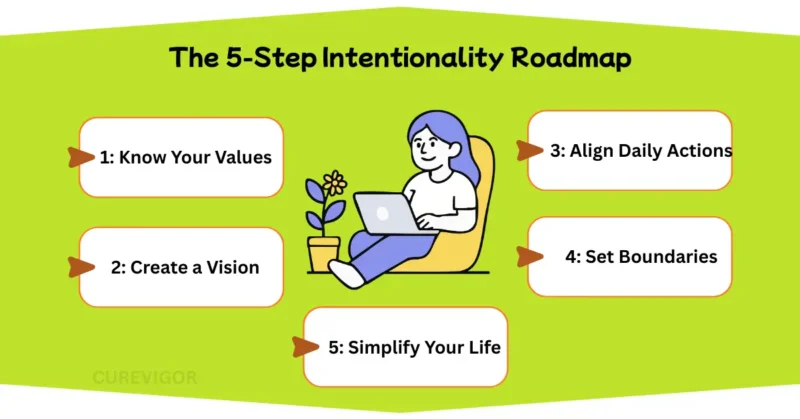
These steps help you move from confusion to clarity and build a life that feels right.
Step 1: Know Your Values
Your values guide your decisions. Without them, your choices become random.
Take time to reflect on what matters most to you. Notice when you feel fulfilled. Notice when you feel drained. These patterns reveal your values.
Step 2: Create a Vision
A clear vision gives direction to your life. It does not need to be perfect. It only needs to feel meaningful.
Imagine your ideal day. Think about how you spend your time. This vision becomes a guide for your actions.
Step 3: Align Daily Actions
Your life is shaped by daily choices. Small actions, repeated over time, create big results.
Start adjusting your habits. Make small changes that reflect your values. Alignment grows step by step.
Step 4: Set Boundaries
Boundaries protect your time and energy. They help you stay focused on what matters.
Saying no is not negative. It is necessary. It allows you to say yes to the right things.
Step 5: Simplify Your Life
A complex life creates confusion. A simple life creates clarity.
Remove what does not serve you. Keep what adds value. Simplifying your life makes it easier to follow your priorities.
What to Focus On Daily
To live intentionally every day, focus on how you use your time, manage your relationships, and care for your mindset and well-being.
Small daily choices in these areas shape your overall life experience.
Your Time
Time shapes your life. How you spend it matters.
Be aware of where your time goes. Small changes can make a big difference.
Your Relationships
Connection requires attention. Be present with the people who matter.
Quality matters more than quantity.
Your Mindset
Your thoughts influence your actions. Choose thoughts that support your growth.
Awareness helps you shift negative patterns.
Your Well-being
Your energy affects everything you do. Take care of your body and mind.
Rest, movement, and balance support intentional living.
Common Mistakes
Common mistakes in intentional living include waiting for the perfect time, trying to change everything at once, and comparing yourself to others.
These habits create pressure and delay progress, making it harder to stay consistent.
Waiting Too Long
You may wait for the perfect time to start. But waiting often leads to inaction.
Start now, even if it is small.
Doing Too Much
Trying to change everything at once creates pressure.
Focus on one change at a time. Build slowly.
Comparing Yourself
Comparing your life to others creates doubt.
Your path is unique. Stay focused on your own progress.
Daily Habits
Simple daily habits like setting one intention, reflecting on your day, and taking mindful pauses can help you stay intentional. These small actions build awareness and keep you aligned with your goals.
Set One Intention
Start your day with one clear focus. Keep it simple.
This intention guides your actions.
Reflect Daily
Take a moment at the end of your day to reflect.
Notice what worked and what did not.
Pause Often
Small pauses help you stay present.
They give you space to reset and refocus.
Start Today
You can start intentional living by taking one small step today. Focus on consistency rather than perfection, and trust your ability to make better choices. Small actions, repeated daily, lead to lasting change.
Take One Step
You do not need a complete plan. Start with one small action.
That step creates momentum.
Stay Consistent
Consistency builds results. Keep going, even when progress feels slow.
Small efforts add up over time.
Trust Yourself
You already have the ability to choose your path.
Intentional living helps you reconnect with that ability.
FAQs
Q. What does living with intention mean?
Living with intention means making conscious choices that align with your values and goals rather than acting on autopilot.
It directs your everyday activities and helps you concentrate on what really matters.
When you live intentionally, you pause before decisions. You choose purpose over habit. This creates a life that feels meaningful, not random.
Q. Why is intentional living important?
Living intentionally helps you focus on what really matters, alleviate stress, and bring clarity. It allows you to use your time and energy wisely, rather than feeling overwhelmed.
Without intention, life feels scattered. With it, your actions align with your values, creating balance and long-term fulfillment.
Q. Is intentional living always comfortable and calming?
Intentional living is not always comfortable because it often requires difficult choices and letting go of habits that no longer serve you. However, it leads to long-term peace and clarity.
You may experience discomfort at first. But over time, your life becomes calmer as your choices become more aligned and purposeful.
Q. How to identify your core values?
You can discover your basic values by considering what gives you energy, pride, or fulfillment and seeing what depletes or irritates you. These patterns reveal what truly matters to you.
Write down meaningful moments. Look for repeated themes. Your values become clearer when you observe your real-life experiences.
Q. Is intentional living like minimalism?
Intentional living is not the same as minimalism, but they are connected. Intentional living emphasises conscious choices, while minimalism focuses on reducing unnecessary possessions.
You can practice intentional living without owning less. The goal is not fewer things, but better, more meaningful choices.
Q. Does intentional living take time?
Yes, intentional living takes time because it involves changing habits and becoming more aware of your choices. It is a gradual process, not an instant transformation.
Small, consistent steps create lasting change. Over time, intentional decisions become natural and easier to maintain.
Q. Why can you start small in intentional living?
Small adjustments are easier to sustain, so you can start small and gradually increase consistency in your intentional living. They reduce overwhelm and create steady progress.
Simple actions, repeated daily, lead to bigger results. Starting small helps you stay consistent without feeling pressured or stuck.
Final Thoughts
Intentional living is an ongoing practice, not a one-time decision. Your priorities may change over time, and that is normal.
The key is to stay aware, adjust your choices, and continue building a life that feels right for you.
Start Where You Are
You do not need to wait for a better situation. Your current life is your starting point.
Awareness is enough to begin.
The Seasonality of Intentions
Your priorities will change over time. What matters today may not matter in the same way in the future.
This is normal. Intentional living is flexible. It grows with you.
Choose Your Life
Your life is shaped by your choices. Each decision, no matter how small, has direction.
You do not need to change everything at once. You only need to start choosing with awareness.
A life that feels right is not something you find. It is something you build, one intentional choice at a time.
Take the first step today. > Intentionality starts with awareness. Use this simple Values Discovery Worksheet to gain clarity on what matters most to you right now.
Read more articles on Life Balance.
You might like: