
Maintaining weight and staying fit can feel harder than losing weight in the first place. You try to do everything right. You eat better. You move more. Yet somehow, old habits slowly return, and progress slips away.
It is a practical, no-pressure guide to sustainable health.
Most people treat weight like a finish line. You hit a number on the scale, you celebrate, and then life happens. Slowly, the old habits creep back in, and before you know it, you’re starting over again.
That cycle is exhausting and very common. The problem isn’t willpower. The problem is a misunderstanding of what maintaining weight actually requires.
Maintaining weight means keeping your body in a stable, healthy range without constant restriction or obsessive tracking.
It means your habits are sustainable enough that you don’t need to rely on short bursts of extreme effort. It’s not a sprint. It’s a rhythm.
Getting fit, on the other hand, isn’t just about weight. It’s about how your body functions.
Your strength, energy levels, sleep quality, and mood are all part of the picture. A person can lose twenty pounds and still feel weak, tired, and unwell if they do it the wrong way.
The two goals, maintaining weight and getting fit, actually support each other when approached correctly.
Building muscle preserves your metabolism. Eating well fuels your workouts. Managing stress keeps your hormones stable. It all connects.
What Does Maintaining Weight and Getting Fit Actually Mean?

Understanding how to maintain weight after losing it, or how to stop the slow creep that happens over the years, starts with this foundational truth: your body responds to consistent habits, not heroic efforts.
Maintaining weight is not about staying at a fixed number forever. It means keeping your body within a healthy range while feeling strong, active, and balanced.
Getting fit is not just about appearance. It is about how your body functions. When you are fit, you have more energy, better focus, and improved overall well-being.
Healthy Weight Maintenance vs Crash Dieting
Crash diets promise quick results, but they often create more problems than solutions. You may lose weight fast, but it usually comes back just as quickly.
Healthy weight maintenance works differently. It focuses on:
- Eating balanced meals
- Moving your body regularly
- Building habits you can keep long-term
Instead of forcing your body, you support it.
The Link Between Fitness and Sustainable Weight
Fitness helps your body stay strong and efficient. When you build muscle and stay active, your body uses energy better. This makes it easier to maintain your weight without strict rules.
You don’t have to choose between fitness and weight management. They work together.
5 Common Mistakes That Lead to Weight Regain
Before getting into what works, it helps to understand what doesn’t. These are the habits that quietly undermine weight maintenance for most people.
1. Diets You Can’t Maintain
Restrictive eating has a ceiling. You can white-knuckle a strict diet for weeks, sometimes months, but it’s not sustainable.
But the human body is designed to survive, and it responds to extreme calorie cuts by slowing down your metabolism, increasing hunger signals, and making food feel more rewarding than ever.
Signs your diet is too strict to maintain long-term include constantly thinking about food, feeling irritable or foggy, losing social enjoyment around meals, and the inevitable ‘cheat day’ that turns into a cheat week.
A diet that improves your life is one you can actually live. If you wouldn’t eat this way in five years, it’s a temporary fix, not a real solution.
2. Skipping Meals and Undereating
Skipping breakfast or lunch to ‘save calories’ sounds logical, but often backfires. When your body goes too long without food, hunger hormones spike, willpower drops, and you end up eating more later, usually in the form of fast food, snacks, or late-night eating.
Undereating also slows your metabolism over time. The body adapts to fewer calories by burning fewer calories.
This is one of the main reasons people who lose weight through severe restriction hit a wall and often regain it quickly once eating returns to normal.
Consuming regular, well-balanced meals throughout the day lowers cravings, maintains blood sugar levels, and encourages the kind of calm, regulated eating that makes sustaining weight reduction seem doable.
3. Cardio only and no strength training
Cardio burns calories in the moment. Strength training changes the number of calories your body burns at rest.
Because muscle tissue is metabolically active, it uses energy even when you’re not working out. The more lean muscle you carry, the higher your resting metabolic rate.
This is why two people who weigh the same can have very different experiences maintaining their weight: the one with more muscle burns more calories just by existing.
Running, cycling, and walking are valuable, but a fitness routine that skips resistance training is leaving one of the most powerful tools for weight maintenance on the table.
4. Not Tracking Habits or Progress
Gradual weight creep, gaining a pound or two over several months, is almost invisible until it isn’t. People often don’t notice until their clothes fit differently or a routine doctor visit surprises them.
The solution isn’t obsessive daily weigh-ins. It’s awareness. Even a brief weekly check-in with your habits: Did I move enough this week? Did I sleep well? Am I eating roughly the way I intend to? Can I catch drift before it becomes a problem?
Simple tracking doesn’t have to mean calorie-counting apps. A food journal, a fitness log, or even a photo every few weeks gives you data without turning health into a full-time job.
5. Fitness Mindset: All-or-Nothing
This is probably the most common trap of all. You miss one workout and think you’ve ruined your week. You eat a pizza and decide the whole diet is over. You feel behind, so you give up.
Perfectionism is the enemy of consistency. One off day means nothing if you get back on track the next morning.
One good workout doesn’t offset months of inactivity, and one bad meal doesn’t erase weeks of clean eating. Progress is built on averages, not individual moments.
Shifting to a ‘something is better than nothing’ mindset is one of the most powerful things you can do for long-term fitness.
A ten-minute walk still counts. A smaller portion still matters. Showing up imperfectly is infinitely better than not showing up at all.
10 Simple Tips for Maintaining Weight and Getting Fit
1. Make every meal a protein-rich one
Protein is the most filling macronutrient. It keeps hunger at bay longer than carbs or fat, and it plays a critical role in preserving muscle mass, especially important as you age or if you’re in a calorie deficit.
For most adults, aiming for 25–40 grams of protein per meal is a reasonable starting point.
This doesn’t require supplements or complicated meal plans. Eggs, Greek yogurt, cottage cheese, chicken, fish, lentils, and tofu are all protein-dense foods that fit easily into most diets.
A practical swap: replace a carb-heavy breakfast like toast with jam with eggs and vegetables.
Not because bread is evil, but because protein early in the day helps regulate appetite through the afternoon, when most people struggle most with cravings.
2. Walk More Every Day
Non-exercise activity thermogenesis—NEAT—refers to all the calories you burn outside of formal workouts: walking to your car, doing chores, standing at your desk, and fidgeting.
For many people, NEAT accounts for more daily calorie burn than any gym session.
Walking is the most underrated tool for maintaining weight. It’s low impact, requires no equipment, fits into almost any schedule, and compounds significantly over time.
An extra 2,000 steps a day, roughly fifteen to twenty minutes of walking, adds up to burning an additional 100–150 calories daily.
Ways to add steps without much effort: park further away, take stairs, walk while on phone calls, and take a short walk after dinner.
These small choices don’t feel like exercise, but their effect on the best way to keep weight off is real.
3. Every 2–3 days, strength train
You don’t need a gym membership or heavy weights to benefit from strength training.
Bodyweight exercises, squats, push-ups, lunges, planks, and glute bridges build real, functional strength and require nothing but floor space.
For beginners, two sessions per week are enough to start seeing results in muscle tone and metabolism. Three sessions are ideal for most people balancing fitness with a full life.
A simple starter routine: three sets of squats, push-ups, and a plank hold, three times per week. That’s it. Simple, consistent, and effective. Over months, small progressions in difficulty pay enormous dividends.
4. Practice the 80/20 Rule With Food
If you eat in line with your health goals 80% of the time, there is meaningful room to enjoy the other 20% without guilt or regret.
This isn’t permission to eat carelessly; it’s a realistic framework for maintaining weight over a lifetime.
The 80/20 rule dismantles the all-or-nothing trap. You can have a birthday cake at a party. You can enjoy takeout on a Friday.
You can have a glass of wine with dinner. These moments don’t derail a healthy lifestyle when the overall pattern is solid.
The goal isn’t a perfect diet. It’s a reliable one.

5. Prioritize Sleep for Weight Maintenance
Sleep is directly tied to the hormones that regulate hunger and metabolism. When you’re sleep-deprived, levels of ghrelin (the hunger hormone) rise, and levels of leptin (the satiety hormone) fall.
You wake up hungrier, less satisfied by food, and more likely to reach for high-calorie, high-sugar options.
Research consistently links poor sleep to weight gain. Even one or two nights of bad sleep can disrupt appetite regulation for days afterwards.
Consistent bedtime and wake-up times, avoiding heavy meals or caffeine in the evening, keeping the bedroom cool and dark, and limiting electronics in the hour before bed are all easy practices that promote better sleep.
6. Stay Hydrated Throughout the Day
Often, thirst is mistaken for hunger. Drinking a glass of water and waiting ten minutes is an incredibly powerful reset if you’ve recently eaten yet still feel the need to nibble.
Water also supports metabolism, aids digestion, and helps the body process and flush out waste more efficiently. Even mild dehydration can slow the efficiency with which your body burns calories.
For people who struggle to drink enough water, simple strategies help: keep a water bottle at your desk, drink a glass first thing in the morning, and add a slice of lemon or cucumber if plain water feels boring.
If you’re someone who tends to drink more when the taste is better, sparkling water works just as well.
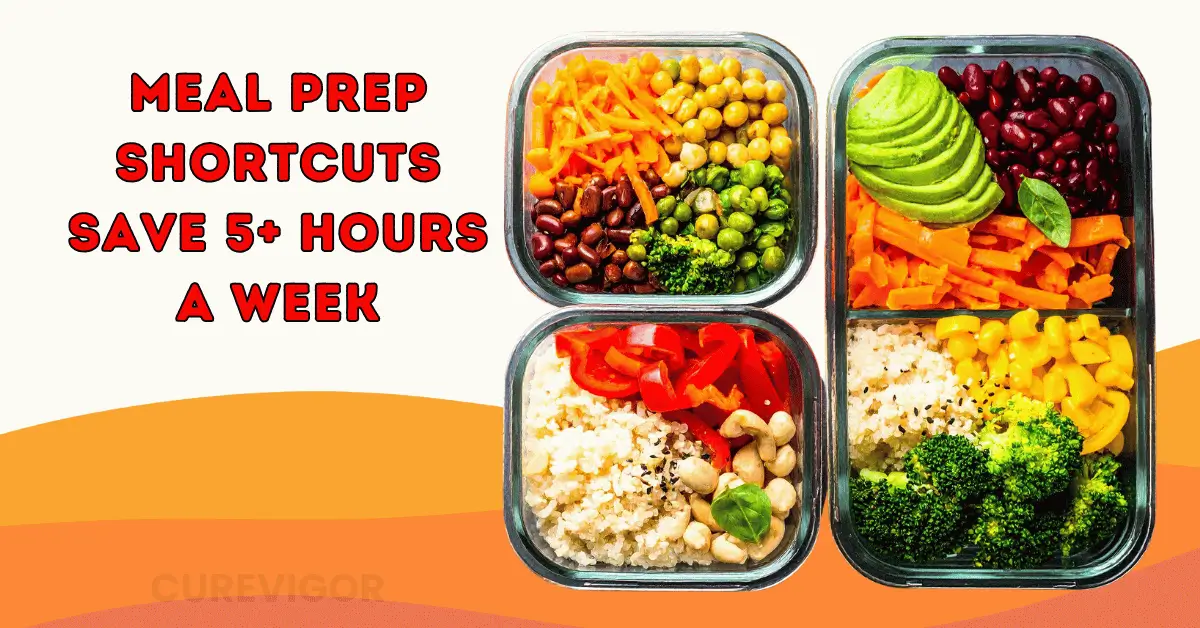
7. Meal Prep to Avoid Last-Minute Choices
Most impulsive food choices happen when you’re hungry, tired, and unprepared. The easiest way to prevent that is to make at least some of your decisions in advance.
Meal prep doesn’t have to mean cooking twelve identical containers of chicken and rice.
It can be as easy as preparing a few protein alternatives ahead of time, cooking grains like rice or quinoa in bulk, and washing and chopping vegetables on Sunday.
With those basics available, building a reasonable meal takes only five minutes, rather than a full cooking session.
Planning even two or three dinners per week significantly reduces the chance of defaulting to fast food. On busy weeks, that planning is the difference between staying on track and feeling like you’ve fallen behind.
8. Manage Stress to Avoid Emotional Eating
Cortisol, the body’s primary stress hormone, is strongly associated with increased appetite, particularly for sweet and fatty foods.
Chronic stress doesn’t just make you feel bad. It actively works against maintaining weight by promoting fat storage, especially around the abdomen.
Emotional eating isn’t a character flaw. It’s a coping mechanism. But it helps to have other mechanisms ready when stress hits.
Quick, effective stress relief habits that don’t involve food: five minutes of deep breathing, a short walk outside, calling a friend, journaling for ten minutes, or even just sitting quietly with a cup of tea.
These aren’t dramatic interventions. They’re micro-breaks that interrupt the stress-eating loop before it takes over.
9. Weigh Yourself Less, Measure Progress More
Daily weigh-ins can be misleading and emotionally exhausting. Weight naturally fluctuates by 1 to 3 pounds day to day due to water retention, food volume, salt intake, and hormonal shifts.
Seeing a higher number on a random Tuesday says nothing meaningful about your actual progress.
Better ways to track how to maintain your weight without losing or gaining momentum: progress photos taken monthly, how your clothes fit, improvements in strength (heavier weights, more reps), better sleep, more energy, and lower resting heart rate.
If you choose to weigh yourself, do so once a week at the same time, ideally in the morning before eating, to get a more reliable trend than daily measurements. Look at the direction of the trend over weeks, not the number on any given day.

10. Build an Exercise Routine You Actually Enjoy
Discipline gets you started. Enjoyment keeps you going.
The best exercise routine is the one you’ll actually do. If you hate running, you won’t run consistently, no matter how effective it is for weight maintenance.
But if you love dancing, hiking, playing tennis, swimming, or doing home yoga videos, you’ll do that consistently. And consistency is what actually matters.
If you haven’t found a movement you enjoy yet, that’s the first experiment worth trying. Take a group fitness class, join a recreational sports league, try rock climbing, or go for a nature walk with a friend.
The right option exists for you. Fitness doesn’t have to feel like punishment to work.
How to Get Fit While Maintaining Weight
Set Performance Goals Instead of Weight Goals
Weight goals are outcome-based and often outside your direct control. Performance goals are process-based and entirely within the process.
Instead of ‘I want to lose ten pounds,’ try: ‘I want to do my first push-up.’ ‘I want to walk a 5K without stopping.’ ‘I want to hold a plank for sixty seconds.’ ‘I want to add five pounds to my deadlift every two weeks.’
These goals keep you focused on what you’re gaining: strength, endurance, capability, rather than what you’re losing. And hitting them feels genuinely good, which fuels the motivation to keep going.
Mix Cardio and Strength for Best Results
A simple weekly structure that balances both without burnout: two to three days of strength training, two days of moderate cardio (a brisk walk, bike ride, or swim), and one to two rest or active recovery days (stretching, yoga, an easy walk).
This approach builds muscle, supports cardiovascular health, and helps save the body from adapting too quickly to a single type of stimulus. It also allows for adequate recovery when actual progress occurs.
You don’t need to train every day. You need to train consistently for months and years.
Use Habit Stacking to Stay Consistent
Attaching a new behavior to an old one is known as habit stacking. The new habit has a dependable trigger because the old one is already automatic.
Ten squats as you wait for your coffee to brew, a one-minute plank after brushing your teeth at night, a five-minute walk right after lunch, and shoulder stretches each time you sit down at your desk are all examples of exercises that take less than five minutes.
These micro-habits may seem trivial, but over time, they build a consistent relationship with movement that doesn’t depend on motivation or scheduling. They just happen because the other thing always happens first.
Staying Fit for Life: Long-Term Maintenance Habits
The tips in this article aren’t a six-week plan. They’re a framework for maintaining weight loss and fitness across different life seasons, including busy periods at work, travel, illness, ageing, and family changes.
Some weeks you’ll eat perfectly and train four times. Some weeks, you’ll order takeout every night and skip every workout. Neither week defines you. What matters is the average over months.
The habits with the highest long-term return are simple: eat mostly whole foods, walk daily, lift something heavy a few times a week, sleep well, manage stress, and drink enough water.
None of these is exciting. None of them went viral. But they work, every time, for people who do them consistently.
How to maintain weight during pregnancy, through menopause, during a career change, or after an injury, the specifics shift, but the foundation stays the same. Move in ways your body can handle.
Eat in a way that feels like care, not punishment. Build habits you’d be happy living with forever.
The goal isn’t a perfect body. It’s a healthy, capable one that feels good to live in. And that is fully within your reach, not through some dramatic transformation, but through simple choices, made consistently, over time.
Long-term success comes from simple, repeatable actions.
Focus on:
- Eating balanced meals
- Moving daily
- Sleeping well
- Managing stress
Life will change. Some weeks will be easier than others. That is normal.
Adjust your routine when needed. Stay flexible, not rigid.
FAQs on Maintaining Weight and Getting Fit
Q. Why does maintaining a healthy weight matter?
Carrying extra weight puts ongoing strain on your heart, joints, and major organs — long before any obvious symptoms appear.
A healthy weight lowers your risk of type 2 diabetes, high blood pressure, sleep apnea, and several cancers. It also affects energy and mood in ways people don’t always connect to weight until they feel the difference.
Maintaining a healthy weight isn’t about appearance; it’s about giving your body a fair chance to function well for decades.
Q. How important is it to keep a healthy weight?
Maintaining a healthy weight is one of the most direct ways to protect your long-term quality of life.
Excess weight strains the cardiovascular system, increases insulin resistance, puts pressure on joints, and raises the risk of conditions like type 2 diabetes, fatty liver disease, and certain cancers, many of which develop slowly and silently over the years.
Beyond the physical, a stable, healthy weight supports better sleep, steadier energy, and improved mental well-being.
It isn’t about reaching an ideal number; it’s about keeping your body in a range where it can function, heal, and keep up with the life you want to live.
Q. How can drinking water help you maintain weight?
Water plays a quieter but surprisingly powerful role in weight maintenance.
Drinking a glass before meals naturally reduces portion size by creating a sense of fullness, and staying hydrated helps the body distinguish real hunger from thirst, a signal many people misread and respond to with food instead.
Additionally, water supports kidney and liver health, which directly affects your body’s ability to metabolise fat.
Without making any additional dietary adjustments, you can cut hundreds of hidden daily calories by simply switching from sugary drinks to water.
Q. Why is it important to maintain your weight?
Weight maintenance matters because the body doesn’t stand still; it either drifts toward health or away from it over time.
Repeated weight loss and regain, often called yo-yo dieting, can negatively affect metabolism, muscle mass, and cardiovascular health.
Holding a stable, healthy weight reduces the cumulative wear on your joints, keeps hormone levels more balanced, and makes it easier to stay active as you age. Stability itself is a health outcome worth pursuing.
Q. What are 5 signs of a fatty liver?
It is often silent that fatty liver develops, but there are several warning signs: persistent fatigue, dull aches or heaviness in the upper right side of your abdomen, unexplained weight gain, particularly around the midsection, elevated liver enzymes on a routine blood test, and feeling full or bloated after eating.
Because these signs are easy to dismiss or attribute to other causes, routine blood work is the most reliable way to catch fatty liver early, before it progresses.
Q. What are the first signs your liver is struggling?
The liver rarely sends dramatic warning signals early on, which is part of what makes liver disease so easy to overlook.
Early signs can include unusual fatigue, mild nausea, loss of appetite, and a general sense of not feeling well without an obvious cause.
Some people notice their skin or eyes taking on a slightly yellow tinge, a sign of jaundice, or that bruises appear more easily than before.
Dark urine and pale stools are also early indicators that liver function may be compromised. If several of these appear together, a doctor’s visit is worth prioritizing.
Final Thoughts on Maintaining Weight and Getting Fit
Maintaining weight and getting fit is not about strict rules or perfect routines. It is about building a lifestyle that supports you, even during stressful times.
You don’t have to do everything at once. Start small. Stay consistent. Be patient with yourself.
Progress may feel slow, but it is still progress.
And over time, those small steps create lasting change.
Read more articles on Health and Wellness.
You might like: