

Find out the 7 scientifically proven ways to prioritize sleep and create a dream bedroom for better health and happiness. Learn how to enhance your well-being through restorative sleep and optimal bedroom design.
Sleep is easy to postpone when life gets busy. You may stay up to finish work, scroll a little longer, or tell yourself you will catch up on sleep later.
But better sleep is not simply about spending more time in bed. Your sleep schedule, bedroom environment, daily habits, stress levels, and light exposure can all affect how well you sleep.
The good news is that improving your sleep does not require a complicated routine. A few consistent changes can make bedtime easier and help you protect the rest your body needs.
Quick Summary
- Keep your sleep and wake times as consistent as possible.
- Make your bedroom cool, dark, quiet, and comfortable.
- Use light exposure to support your natural body clock.
- Create a relaxing routine before bed.
- Be mindful of caffeine, alcohol, and late meals.
- Stay physically active during the day.
- Give your mind time to slow down before sleep.
- Night shift workers need to adapt these habits around their work schedule.
Read time: 10–12 minutes.
Why Quality Sleep Matters for Your Health
Sleep is an active biological process, not simply a period when your body switches off.
During sleep, your body carries out important processes that support physical health, brain function, mood, memory, and everyday performance.
Adults generally need at least 7 hours of sleep per night, although individual needs can vary.
Regularly getting too little sleep can leave you tired and less focused during the day. Over time, consistently poor sleep is also associated with several health problems.
That makes sleep something worth protecting rather than treating as leftover time after everything else is finished.
7 Scientifically Proven Ways to Prioritize Better Sleep
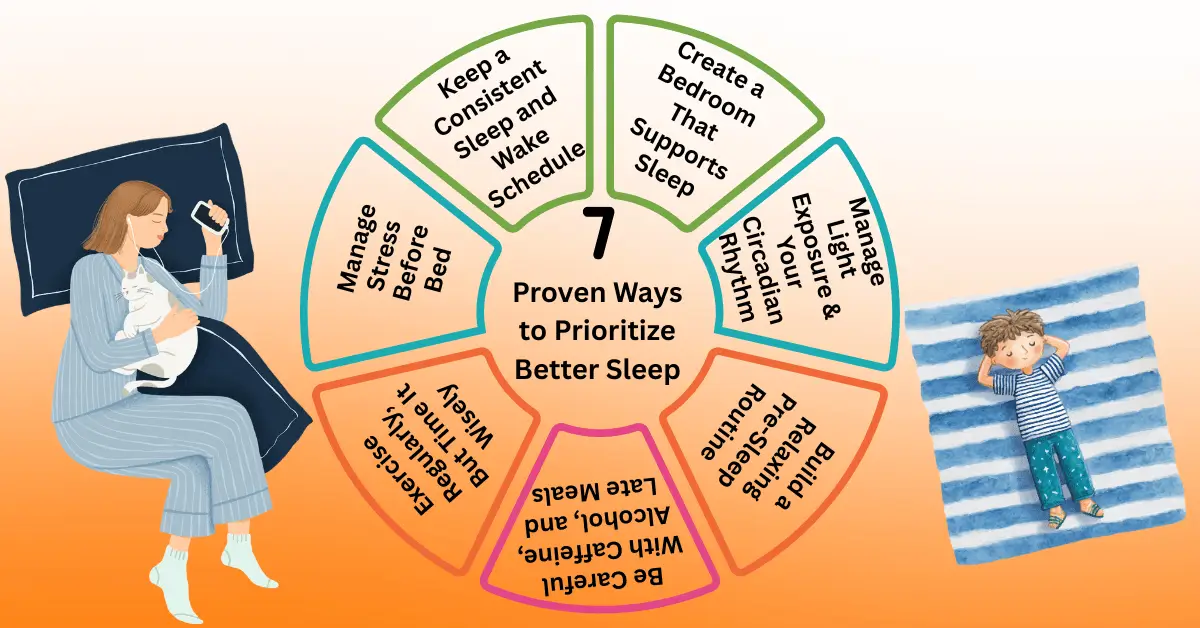
1. Keep a Consistent Sleep and Wake Schedule
Your body has an internal timing system known as the circadian rhythm. It helps coordinate sleep and wakefulness across roughly a 24-hour cycle.
Going to bed and waking up around the same time each day can give your body a more predictable rhythm.
You do not need to follow an identical schedule every day. Life happens.
But large swings between your weekday and weekend sleep times can make it harder for some people to maintain a stable sleep pattern.
Try choosing a realistic bedtime and wake-up time that you can follow most days.

2. Create a Bedroom That Supports Sleep
Your bedroom can either encourage sleep or keep your brain alert.
A comfortable sleep environment is generally cool, dark, quiet, and comfortable.
If outside light enters your room, consider blackout curtains or an eye mask. If noise is a problem, earplugs or consistent background noise may help.
Your mattress and pillow should also feel comfortable for your body.
You do not need to create an expensive “dream bedroom.”
A simple room with fewer distractions may be more useful than a beautiful room filled with things that keep you awake.
3. Manage Light Exposure and Your Circadian Rhythm
Light is one of the strongest signals influencing your circadian rhythm.
Getting natural daylight during your waking period can help reinforce your body’s day-night timing.
As bedtime approaches, reducing exposure to bright light can help create a clearer transition toward sleep.
You do not need to sit in complete darkness for hours before bed. Instead, gradually make your environment calmer and less stimulating.
If you work night shifts, this becomes more complicated because your schedule runs against the usual light-dark cycle. You may need to use light strategically during your waking period and keep your sleeping environment particularly dark.
4. Build a Relaxing Pre-Sleep Routine
Going directly from work, household chores, or an intense conversation into bed may leave your mind feeling wide awake.
A short wind-down routine can create a transition.
You might:
- Take a warm shower
- Read a relaxing book
- Stretch gently
- Listen to quiet music
- Practice slow breathing
- Write tomorrow’s tasks on paper
- Spend a few quiet minutes without your phone
Your routine does not need to last an hour.
Even 20–30 minutes of predictable, calming activities can help signal that the day is coming to an end.

5. Be Careful With Caffeine, Alcohol, and Late Meals
What you consume can affect your sleep.
Caffeine can remain active in the body for several hours, so drinking coffee, energy drinks, or other caffeinated beverages late in your waking period may make it harder to fall asleep.
Alcohol can make some people feel sleepy initially, but it can interfere with sleep quality later in the night.
Large or heavy meals close to bedtime may also cause discomfort for some people.
You do not necessarily need to eliminate these things.
Instead, pay attention to timing, quantity, and how your own body responds.
6. Exercise Regularly, But Time It Wisely
Regular physical activity can support better sleep and overall health.
Walking, cycling, swimming, strength training, and other forms of exercise can all fit into a healthy routine.
You do not need to exercise intensely every day.
If vigorous exercise close to bedtime makes you feel energized rather than relaxed, move your workout earlier.
For busy people, even short periods of movement can help.
The goal is to make physical activity a regular part of your life, not another task you constantly postpone.
7. Manage Stress Before Bed
Sometimes your body is tired, but your mind refuses to slow down.
You may replay conversations, worry about tomorrow, think about unfinished work, or mentally create a long list of problems.
Try giving your thoughts somewhere to go.
Write down tomorrow’s responsibilities before getting into bed—practice slow breathing. Try a brief mindfulness exercise. Talk with someone you trust during the day rather than carrying every concern into your bedroom.
If worry regularly prevents you from sleeping, don’t simply blame yourself for having a “busy mind.”
Persistent insomnia may need a more structured approach.
How to Prioritize Sleep in a Busy Schedule

When your day is packed with work, family responsibilities, errands, and personal commitments, sleep can easily become the task you keep pushing to tomorrow.
The problem is that regularly cutting sleep short can leave you tired, unfocused, and less able to handle the next day’s demands.
Prioritizing sleep does not mean having a perfect routine. It means making enough time for rest before your schedule fills every available hour.
Set a Realistic Sleep Schedule
Choose a bedtime and wake-up time that fit your real life. Try to keep them reasonably consistent, including on days off when possible.
A realistic schedule is more useful than a strict bedtime you cannot maintain.
Treat Sleep Like an Important Appointment
Treat your sleep time like other important commitments. If you wouldn’t casually cancel a doctor’s appointment or work meeting, don’t repeatedly sacrifice your planned sleep time for low-priority tasks.
Protecting your bedtime can make it easier to build a consistent sleep pattern.
Finish Tomorrow’s Tasks Before Your Wind-Down Time
Late-night planning can keep your mind active when you should be relaxing.
Prepare your clothes, work bag, meals, school items, or other essentials earlier in the evening. Write down anything you still need to do tomorrow so you do not have to keep remembering it while lying in bed.
Stop Trying to Finish Everything
A busy life rarely comes with an empty to-do list.
Ask yourself which tasks truly need to be completed tonight and which can safely wait. Leaving a few chores unfinished is often better than repeatedly borrowing time from your sleep.
Create a Short Wind-Down Routine
You do not need an elaborate one-hour routine.
Spend the final 20–30 minutes doing calming activities such as reading, gentle stretching, slow breathing, or preparing your bedroom for sleep. Reduce stressful work and stimulating entertainment as bedtime approaches.
Make Your Bedroom a Sleep-Only Space
If possible, keep work, difficult conversations, and unnecessary screen use outside the bedroom.
A cool, dark, quiet, and comfortable environment can make it easier to settle down. If you share your bedroom, agree on simple ways to reduce unnecessary disturbances.
Protect Sleep When Your Schedule Changes
Parents, caregivers, travelers, and shift workers may not be able to follow the same sleep schedule every day.
In these situations, protect your main sleep period whenever possible. Make your sleep environment dark and quiet, plan caffeine around your intended sleep time, and avoid sacrificing sleep simply to maintain a conventional morning routine.
Remember That Sleep Is Part of Productivity
It can feel productive to stay awake and finish one more task. But sleep supports attention, mood, decision-making, and physical recovery.
Instead of asking, “What else can I finish tonight? ” Sometimes I ask, ‘What can I wait until tomorrow so I can rest?”
That small change in thinking can make prioritizing sleep much easier.
How to Design Your Bedroom for Better Sleep
You don’t need to spend a lot of money to make your bedroom more sleep-friendly.
Start with the basics.
Keep Your Bedroom Cool, Dark, and Quiet
A room that is too warm, bright, or noisy can make sleep uncomfortable.
Use curtains, an eye mask, earplugs, a fan, or other simple solutions if they work for you.
If you share your bedroom with someone who has a different schedule, discuss ways to reduce disturbances.
Choose Comfortable Bedding
Your mattress, pillow, sheets, and blankets should help you feel physically comfortable.
No single mattress or pillow is best for everyone.
Focus on what supports your preferred sleeping position and keeps you comfortable throughout the night.
Remove Unnecessary Distractions
A bedroom full of work materials, bright lights, notifications, and entertainment can make it harder to associate the room with rest.
Where possible, keep work outside the bedroom.
If that is not possible because you live in a small space, create a clear boundary between your work area and your sleep area.
What About Phones and Screens Before Bed?
Phones are not automatically responsible for every sleep problem.
The bigger issue is often what you do on the device and when you do it.
An exciting video, stressful news story, work email, or endless social media scrolling can keep your brain engaged when you are trying to wind down.
Bright light in the evening can also affect circadian timing.
Try setting a personal cutoff for stimulating screen activity before bed.
If you need your phone for an alarm, keep it away from your pillow so checking notifications doesn’t become part of your nighttime routine.
How Night Shift Workers Can Prioritize Better Sleep
Night shift workers cannot always follow traditional sleep advice.
Your “night” may be your working hours, while your main sleep period may happen during the day.
The priority is to protect your sleep opportunity and make your routine as consistent as your schedule allows.
After a night shift, limit unnecessary activities that delay your sleep. Make your bedroom dark and quiet, reduce disturbances, and communicate your sleep hours to people in your household.
Light management can also help. Bright light during appropriate working periods may support alertness, while reducing unnecessary light when preparing for daytime sleep can help create a more sleep-friendly environment.
Caffeine can help you stay alert during a shift, but avoid taking it too close to your intended sleep period if it keeps you awake.
And remember: do not sacrifice sleep just to maintain a traditional exercise or morning routine.
For shift workers, good sleep habits need to fit the schedule you actually have.
A Simple Nighttime Routine for Better Sleep
You don’t need a complicated checklist.
Try this simple pattern:
60 minutes before bed: Finish demanding work and begin reducing stimulation.
30 minutes before bed: Dim the lights, put away stressful tasks, and choose a calming activity.
10 minutes before bed: Try slow breathing, gentle stretching, or quiet reading.
At bedtime: Keep the bedroom dark, comfortable, and quiet.
If you work nights, simply move this routine to the period before your main sleep.
Common Sleep Mistakes That Can Keep You Awake
Even good intentions can sometimes create poor sleep habits.
Trying Too Hard to Fall Asleep
Watching the clock and worrying about every minute can increase frustration.
Sleeping In Too Much After a Poor Night
An occasional extra hour may feel helpful, but repeatedly changing your schedule can make your sleep rhythm less predictable.
Using Your Bed as an Office
Working, answering emails, or handling stressful tasks in bed can make it harder to associate your bedroom with sleep.
Exercising Too Hard When Exhausted
Exercise is beneficial, but your body also needs time to recover.
Ignoring Persistent Sleep Problems
Poor sleep that continues for weeks or months deserves attention, not endless experimentation with bedtime hacks.
When Poor Sleep May Need Professional Help
Occasional sleepless nights are normal.
But persistent sleep problems shouldn’t be accepted as part of being busy.
Consider speaking with a healthcare professional if you regularly struggle to fall asleep, wake repeatedly during the night, wake too early, or remain exhausted despite getting enough sleep.
Loud snoring, gasping during sleep, or significant daytime sleepiness can also signal an underlying sleep disorder that needs evaluation.
For ongoing insomnia, cognitive behavioral therapy for insomnia (CBT-I) is an evidence-based treatment that can be more appropriate than relying on sleeping pills or random internet sleep hacks.
FAQs About Prioritizing Better Sleep
Q. How can I prioritize sleep when I am busy?
Treat sleep as a scheduled health need, not leftover time. Set a realistic bedtime, protect your sleep period, reduce unnecessary late-night tasks, and create a short wind-down routine.
Q. What is the 10-3-2-1-0 sleep rule?
It is a popular sleep-habit framework suggesting no caffeine 10 hours before bed, no food or alcohol 3 hours before, no work 2 hours before, no screens 1 hour before, and no snoozing when the alarm rings. This routine can help some people, but it isn’t a scientifically established rule that everyone must follow exactly.
Q. How can I fall asleep faster naturally?
Keep your sleep schedule consistent, make your bedroom comfortable, reduce stimulating activities before bed, manage caffeine timing, and use a relaxing wind-down routine. If you regularly cannot fall asleep, consider discussing the problem with a healthcare professional.
Q. How many hours of sleep do adults need?
Most adults need at least 7 hours of sleep per night. Individual needs vary, but regularly getting less sleep than your body needs can affect health and daytime functioning.
Q. Is it better to sleep at the same time every night?
A consistent sleep and wake schedule can help support your circadian rhythm. It doesn’t have to be identical every day, but avoiding large, frequent changes can make a regular sleep pattern easier to maintain.
Q. Can stress cause poor sleep?
Yes. Stress and worry can make it harder to fall asleep or stay asleep. A wind-down routine, writing down worries, relaxation techniques, and addressing ongoing sources of stress can help.
The Bottom Line
Better sleep does not begin when your head touches the pillow.
It begins with the choices you make throughout the day—when you wake, how much light you receive, how active you are, what you consume, how you manage stress, and whether you give yourself enough time to wind down.
You don’t need to change everything tonight.
Start with one realistic habit. Keep your sleep schedule a little more consistent. Make your bedroom darker. Put your phone away earlier. Take a short walk. Give your mind five quiet minutes before bed.
Small changes become powerful when you repeat them consistently.
And if your sleep problems continue despite your efforts, don’t assume you simply need more discipline. Persistent sleep difficulties can have underlying causes that deserve proper attention.
Read more articles on night shift workers’ health.
You might like to read: