

Mobility vs. flexibility explained: learn the genuine difference, the science of stretching, and how to train both for pain-free movement.
Disclaimer: The information below is not intended to be medical or physical therapy advice; rather, it is for informative and educational purposes only. Before beginning a new fitness regimen, always speak with a certified healthcare provider, particularly if you have hypermobility, joint pain, or a recent injury.
Mobility vs. Flexibility:

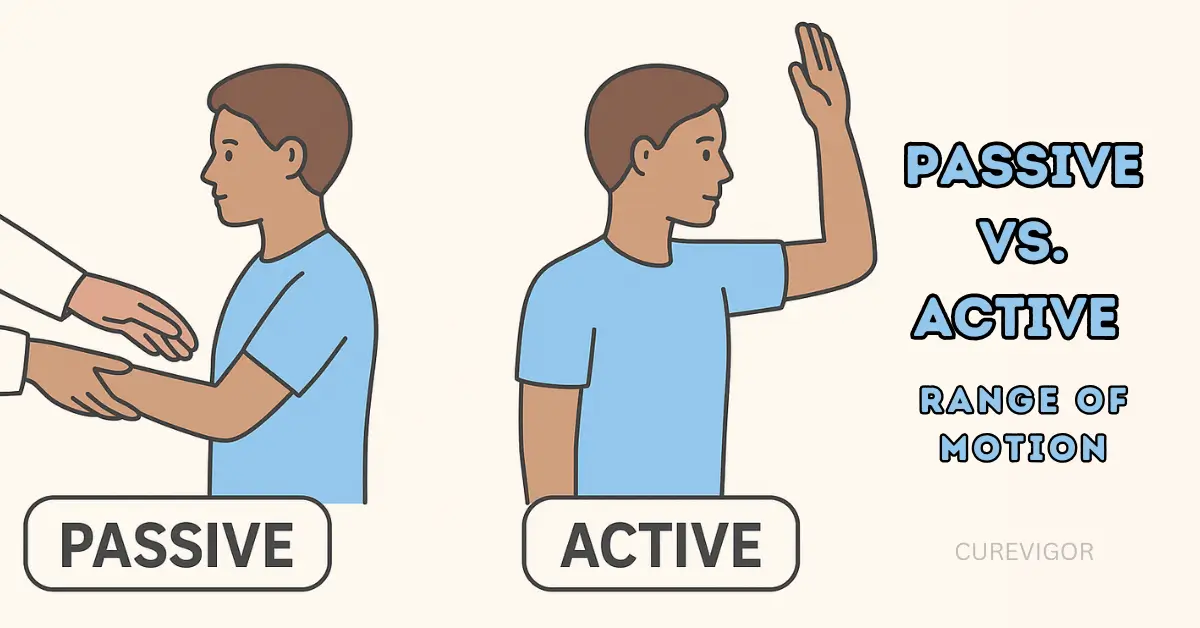
Flexibility is a muscle or muscle group’s ability to passively extend across a range of motion. Mobility, on the other hand, refers to a joint’s capacity to move actively across its whole range of motion with strength and control.
Briefly, mobility is about joint control, whereas flexibility is about muscle length.
| Feature | Flexibility | Mobility |
| Core Focus | Soft tissue (muscles, tendons, fascia) | Joints, joint capsules, and neuromuscular control |
| Type of Force | Passive (gravity, hands, a strap, or a partner) | Active (your own muscular strength and nervous system) |
| Real-World Example | Pulling your knee to your chest with your hands while lying down | Lifting your knee to your chest while standing without using your hands |
| Primary Training Method | Static stretching (holding a stretch for 20–45 seconds) | Dynamic stretching, controlled joint rotations, and end-range strength |
| Best Time to Practice | Post-workout or in the evening to unwind | Pre-workout warm-ups, morning routines, and desk breaks |
What Is Flexibility? (Passive Muscle Length)
Flexibility refers strictly to the pliability of your soft tissues—specifically how far a muscle and its surrounding connective tissue can stretch when an external force is applied.
When you sit on the floor and reach forward to touch your toes, or use a yoga strap to pull your leg upward, you are testing your flexibility. Your muscles relax and lengthen under gentle tension, without needing to generate force at the end of the stretch actively.
While good flexibility prevents muscles from feeling chronically tight and restricted, flexibility alone doesn’t guar
What Is Mobility? (Active Joint Control)
Mobility combines flexibility, joint mechanics, and muscular strength. It measures how far—and how smoothly—you can move a joint using only the muscles around it.
Think of mobility as usable range of motion. For example, a gymnast or martial artist who can kick their leg high into the air and hold it there without support demonstrates high hip mobility.
They don’t just have long hamstrings (flexibility); they also have strong hip flexors and a nervous system trained to stabilize the hip socket at extreme angles.
If you want a step-by-step daily joint routine to build this active control from scratch, check out our Guide to Mobility101.
How Mobility and Flexibility Work Together in Everyday Movement
Flexibility and mobility are not competing qualities—they are partners. Flexibility creates the potential for movement, while mobility turns that potential into safe, coordinated action.
- High Flexibility + Low Mobility = Instability: If you can passively bend your joints very far (for instance, touching your palms to the floor easily) but lack the strength to control those end ranges, your joints rely heavily on ligaments for stability. Over time, this unguarded range increases the risk of strains and joint irritation.
- Low Flexibility + High Strength = Stiffness: If your muscles are strong but chronically shortened from hours of sitting or heavy lifting without full-range movement, your joints get pulled out of optimal alignment, forcing nearby areas (like your lower back or neck) to compensate.
When you train both, your muscles lengthen freely, and your nervous system supports every inch of that motion—making everyday tasks like squatting, reaching overhead, or turning your head while driving feel effortless.
What Determines Your Range of Motion? Key Factors
Two people can follow the same stretching routine and experience completely different results because flexibility and mobility are shaped by distinct biological factors.
Factors That Influence Flexibility
- Muscle and Fascia Elasticity: The natural collagen and elastin makeup of your connective tissues determines how easily muscles yield to a stretch.
- Body Temperature: Warm muscles stretch more easily than cold ones. Tissue pliability naturally increases after light movement or a warm shower.
- Hydration and Recovery: Well-hydrated fascia glides smoothly over muscle fibers, whereas dehydration and chronic fatigue increase tissue stiffness.
- Age and Activity Habits: Prolonged sitting keeps hip flexors and hamstrings in shortened positions for hours, gradually reducing resting muscle length.
Factors That Influence Mobility
- Joint Capsule & Bone Structure: The physical shape of your hip sockets, shoulder joints, and spinal vertebrae sets your anatomical blueprint for movement.
- Neuromuscular Control: Your brain acts as the ultimate gatekeeper of mobility. If your nervous system senses weakness at a specific joint angle, it will intentionally tighten muscles to “lock” the joint and protect you from injury.
- End-Range Muscle Strength: Having strength at the very beginning and very end of a movement—not just the middle—is what allows you to own your full range of motion.
For a closer look at how active muscle engagement differs from assisted joint movement during recovery or desk breaks, read our breakdown on Passive and Active Range of Motion (PROM and AROM).
The Science Behind Stretching: How Sensory Receptors Control Range
Your muscles aren’t simple rubber bands that permanently lengthen the harder you pull them. Instead, two microscopic sensory receptors, called proprioceptors, regulate your range of motion in real time and communicate constantly with your brain and spinal cord.
Muscle Spindles: Protecting Against Overstretching
Muscle spindles are sensory fibers woven directly into the belly of your muscles. They detect how fast and how far a muscle is stretching.
If you bounce aggressively into a stretch or force a cold muscle too far too quickly, muscle spindles trigger the stretch reflex, sending an immediate signal for the muscle to contract and tighten to prevent tearing.
This is why jerky, rushed stretching backfires and leaves you feeling even tighter.
Golgi Tendon Organs (GTOs): Triggering the Relaxation Response
Golgi tendon organs (GTOs) sit near the junction where your muscles attach to tendons and sense tension, not length.
When you hold a gentle, steady stretch for 20 to 30 seconds while breathing slowly, the GTOs sense sustained, non-threatening tension and override the muscle spindles.
They trigger autogenic inhibition—a neurological relaxation response that signals the muscle to release its protective guard and safely lengthen.
Static vs. Dynamic Stretching: Which Trains Flexibility vs. Mobility?
The right training method depends on whether you want to relax tight muscles or prepare joints for active work.
Static Stretching for Flexibility
Static stretching involves easing into a position where a muscle feels a mild, comfortable pull and holding it still for 20 to 45 seconds.
- Best exercises: Seated hamstring stretch, standing quadriceps stretch, doorway chest stretch, and figure-four glute stretch.
- Why it works: Gives Golgi tendon organs enough time to calm the nervous system and gradually increase passive muscle length.
- When to avoid it: Avoid long, intense static holds right before heavy weightlifting or sprinting, as temporarily relaxing a muscle can slightly reduce peak power output for 15–30 minutes afterward.
Dynamic Stretching & Controlled Rotations for Mobility
Dynamic mobility work moves your joints through their full, pain-free range of motion using smooth, continuous movement rather than static holds.
- Best exercises: Controlled shoulder circles, hip openers (leg swings or hip circles), thoracic spine twists, and deep bodyweight squat holds with gentle shifting.
- Why it works: Increases blood flow, lubricates joints with synovial fluid, and teaches your nervous system to control the movement actively.
How to Combine Flexibility and Mobility in a Weekly Routine
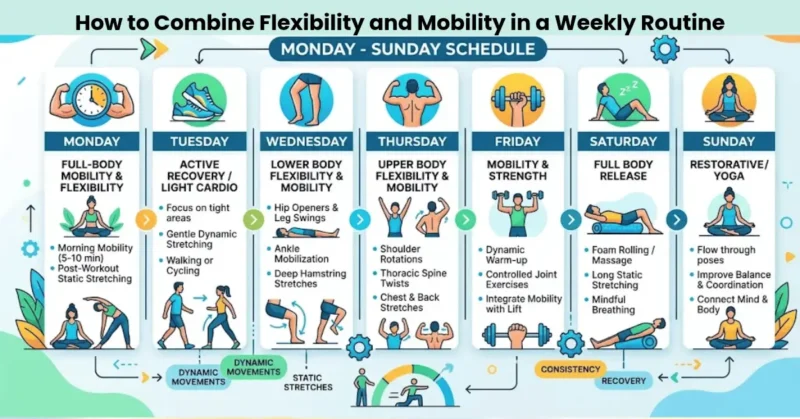
You don’t need an extra hour to train both qualities. Place each method where it serves your body best:
1. Pre-Workout or Morning Warm-Up (5 Minutes of Mobility)
Use active movement to wake up stiff joints and prime your nervous system for the day ahead:
- Neck & Shoulder Circles: 8 slow circles in each direction.
- Cat-Cow Spinal Waves: 8–10 slow breaths on hands and knees (or seated).
- World’s Greatest Stretch (Lunge with Thoracic Twist): 5 reps per side.
- Deep Squat Pry: Hold a supported squat for 20 seconds, gently shifting weight side to side.
2. Post-Workout or Evening Wind-Down (5 Minutes of Flexibility)
Once your body is warm, or right before bed to shift into recovery mode, use slow static stretches paired with deep exhales:
- Half-Kneeling Hip Flexor Stretch: Hold 30 seconds per side to undo hours of sitting.
- Seated Forward Fold or Supine Strap Hamstring Stretch: Hold 30–45 seconds per side.
- Doorway Pec Stretch: Hold 30 seconds per side to open rounded shoulders.
- Child’s Pose with Deep Belly Breathing: Hold 45–60 seconds.
FAQs on Mobility vs. Flexibility: Move Better Every Day
Q. Which should I work on first: mobility or flexibility?
Start with mobility before physical activity to warm up joints and build active control, and use flexibility (static stretching) afterward to release lingering muscle tightness.
If you are extremely stiff, gentle flexibility work can help unlock enough range so you can then strengthen with mobility exercises.
Q. Can you be flexible without being mobile?
Yes. Many naturally flexible or hypermobile people can easily bend into deep stretches yet struggle to lift or stabilize their limbs using pure muscle strength.
Without mobility training to strengthen those end ranges, hyperflexible joints are more prone to aches and instability.
Q. Is yoga better for mobility or flexibility?
Yoga trains both, depending on the style. Slow, passive styles like Yin Yoga or Restorative Yoga primarily target flexibility through long static holds.
In contrast, active, strength-based styles like Vinyasa or Ashtanga build mobility by requiring you to control transitions with your own body weight.
Q. Should I do static stretching before lifting weights or running?
No. Save long static stretches for after your workout. Before running or lifting, use 5 to 10 minutes of dynamic mobility exercises so your joints are lubricated and your muscles stay springy, responsive, and ready to generate force.
Q. How long does it take to improve both mobility and flexibility?
You will notice an immediate, temporary improvement in range of motion right after a single 5-minute session due to nervous system relaxation and increased blood flow.
Lasting structural changes in muscle length and joint control typically take 3 to 6 weeks of practicing 4 to 5 days per week.
Q. What is the difference between mobility and flexibility for runners?
For runners, flexibility refers to how well the muscles can stretch, especially in hamstrings, calves, and hip flexors. Good flexibility helps these muscles lengthen appropriately during a run, reducing the risk of injury.
Mobility, however, is more about how well the joints, such as the hips, knees, and ankles, move through their full range of motion. Runners need good joint mobility to achieve efficient strides and maintain balance.
While flexibility helps avoid muscle tightness, mobility is critical for smooth, unrestricted running movements. Both matter, but mobility helps runners perform optimally without compensating for limited joint movement.
Conclusion on the difference between mobility and flexibility
Understanding mobility vs. flexibility takes the guesswork out of stretching. Flexibility lets your muscles lengthen, while mobility gives your joints the strength and neurological control to move safely through that space.
Pairing five minutes of active mobility before you move with five minutes of slow static stretching when you wind down builds a body that feels loose, stable, and resilient at every age.
Ready to put both into practice? Try the 5-minute mobility warm-up before your next workout or workday, and save the 5-minute flexibility wind-down for tonight—then bookmark this guide to keep your routine balanced and pain-free.
Read more articles on optimal health.