
Unlock your body’s potential with Mobility101! Discover essential exercises to boost flexibility, prevent injuries, and move through life with ease. Start your journey today!
Thank you for reading this post, don't forget to subscribe!Mobility101 is more than a workout fad; it’s the gateway to a healthier, more energetic lifestyle.
If one understands the principles of movement and practices specific exercises, their body capabilities will transform, leading to improved daily experiences.
Introduction: Unlock Your Full Potential with Mobility101
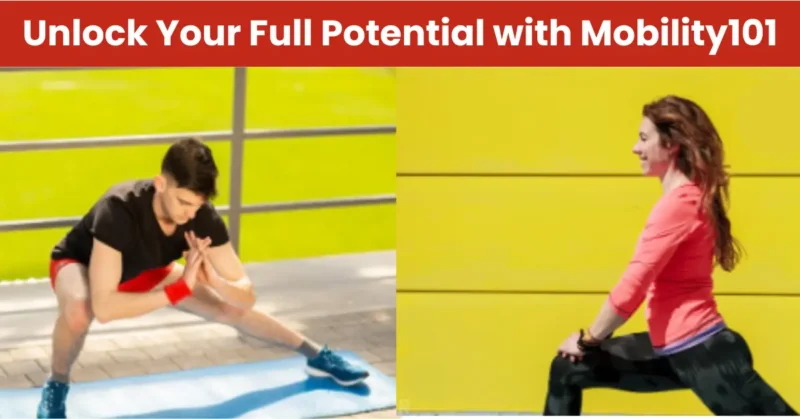
Mobility101 is less about any particular exercise or stretch and more about a philosophy of movement.
Its objective is to develop active control over your range of motion to create a body that moves well, moves without pain, and moves with confidence.
Whether you’re an athlete, office worker, or simply someone who wants to move better through life, the principles of Mobility101 can help you unlock your physical potential.
In this comprehensive guide, we’ll explore why mobility matters and how to assess your current mobility level, and offer the best exercises to improve your range of motion.
We’ll also cover common mistakes to avoid and advanced techniques to enhance your practice. Let’s begin this journey toward better movement and improved quality of life.
Why Mobility101 Matters: The Benefits of Mobility101
Improve Your Flexibility, Balance, and Overall Quality of Life
Mobility101 is the foundation of functional movement that extends far beyond the gym. When you improve your mobility, you’re investing in your ability to perform everyday tasks with ease and confidence.
Improved mobility makes life easier and more pleasurable, whether you’re reaching for things on high shelves or stooping to tie your shoes.
Good mobility is regularly linked to improved joint health, decreased risk of falls, and greater balance, according to research. Maintaining mobility is crucial for sustaining our independence and quality of life as we get older.
You’re essentially providing your body with the resources it needs to move effectively and painlessly for years to come by implementing Mobility101 principles into your daily routine.
Personal Insight: After implementing a consistent Mobility101 routine for just three weeks, I noticed significant improvements in my daily movements.
Simple tasks like picking up my toddler or carrying groceries became noticeably easier, and I experienced less stiffness after long periods of sitting.
The Difference Between Mobility and Flexibility
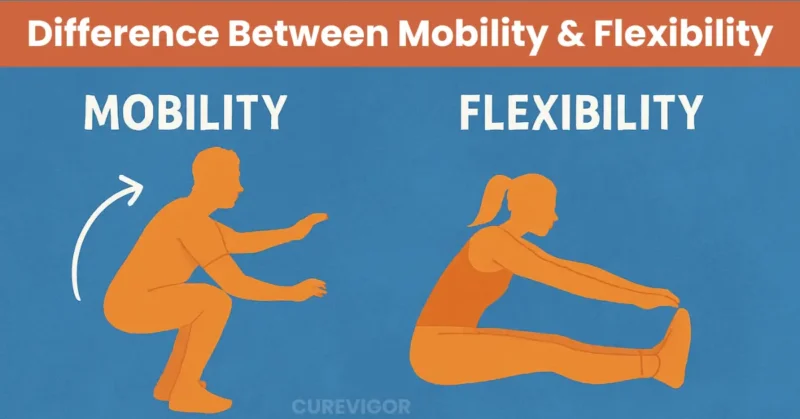
Understanding the distinction between mobility and flexibility is crucial for effective Mobility101 practice:
- Mobility: It refers to your ability to actively control a limb or joint through its full range of motion. It’s about strength and control within your movement capacity.
- Flexibility: The passive capacity to extend a muscle or joint beyond its typical range of motion without conscious control is known as flexibility.
While flexibility is important, true mobility requires both range of motion and the strength to control that movement. This is why Mobility101 focuses on active movements rather than just passive stretching.
For example, actively raising your arm overhead with control (mobility) is different from having someone lift your arm while you relax (flexibility).
Common Mobility Mistakes to Avoid
It’s easy to fall into common pitfalls when starting your Mobility101 adventure, which can impede progress or even cause damage. Being aware of these mistakes can help you build a safer, more effective practice:
- Bouncing during stretches: This ballistic movement can strain muscles and connective tissues. Instead, focus on controlled, deliberate movements.
- Ignoring pain: While some discomfort is normal during mobility work, sharp or shooting pain is a warning sign. Always listen to your body and modify movements as needed.
- Rushing through movements: Quality over quantity is essential in Mobility101. Each movement should be performed with awareness and control.
- Neglecting proper form: Incorrect technique can reinforce poor movement patterns and potentially cause injury. Consider working with a qualified professional initially to ensure proper form.
- Inconsistency: Like any fitness practice, Mobility101 requires regular practice to see benefits. Aim for consistency rather than occasional intense sessions.
Getting Started with Mobility101
Assessing Your Current Mobility Level
Before beginning your Mobility101 journey, it’s helpful to assess your current mobility levels. This will help you set realistic goals and track your progress over time. Here are a few easy tests you can run:
- Overhead Reach Test: Stand with your feet shoulder-width apart and raise both arms overhead. Note how high you can reach and whether you can keep your back flat.
Most people should be able to raise their arms completely overhead without arching their lower back. - Deep Squat Test: Without weights, attempt to squat as low as possible while keeping your heels on the floor and your chest upright. Note how deep you can go and whether you maintain good form.
- Shoulder Rotation Test: Lie on your side and attempt to rotate your top shoulder backward while keeping your elbow bent at 90 degrees. Note the range of motion and any discomfort.
- Hip Hinge Test: Maintaining a straight back and slightly bent knees, stand with your feet hip-width apart and bend at the hips. Note how far you can hinge forward while maintaining good form.
- Ankle Dorsiflexion Test: In a half-kneeling position, place one foot forward and press the knee forward over the ankle. Note how far forward the knee can travel without the heel lifting.
Real-life Example: When I first performed these tests, I discovered significant limitations in my shoulder rotation and ankle dorsiflexion.
This assessment helped me prioritize these areas in my Mobility101 routine and set specific goals for improvement.
Creating a Mobility101 Routine
Incorporating Mobility101 into your daily life doesn’t require hours of dedicated time. Even 10-15 minutes per day can yield significant benefits. Here’s how to create an effective routine:
- Timing: Many people find it beneficial to perform mobility work in the morning to prepare their bodies for the day’s activities. Others prefer it as a warm-up before exercise or as a cooldown afterward. Experiment to find what works best for your schedule and body.
- Frequency: For best results, aim for at least 3 to 5 workouts per week. Duration is not as crucial as consistency.
- Duration: As you get more comfortable, progressively extend your workouts from 10 to 15 minutes. Movement’s quality is more significant than its quantity.
- Structure: Begin with general warm-up movements, then focus on specific areas that need attention, and finish with cooldown stretches.
- Progression: As you improve, gradually increase the range of motion, add resistance with bands or weights, or introduce more challenging variations.
Practical Checklist for Creating Your Mobility101 Routine:
- Choose a consistent time of day for your practice.
- Start with 3-5 sessions per week.
- Begin each session with 2-3 minutes of general movement (like walking or arm circles)
- Focus on 1-2 specific areas each session.
- Perform each movement for 30-60 seconds per side.۔
- End with deep breathing and relaxation
Best Exercises for Mobility101
Upper Body Mobility101 Exercises
Shoulder Rotations (Easing Tension in the Upper Body)
Shoulder rotations are fundamental for maintaining healthy shoulder function and reducing tension in the upper back and neck.
How to perform:
- Stand or sit with good posture
- Raise your arms shoulder-high to the sides.
- Gradually increase the size of your arms by rotating them in small circles.
- Perform 10-15 rotations in each direction
- Focus on keeping movement smooth and controlled
Benefits:
- Improves shoulder joint mobility
- Reduces upper back and neck tension
- Enhances blood flow to the shoulders
- Prepares shoulders for more complex movements
Personal Insight: I used to experience significant shoulder stiffness after long hours at my desk. Adding shoulder rotations to my morning Mobility101 routine helped alleviate this tension and improved my posture throughout the day.
Thoracic Rotations (Unlocking the Upper Back)
Thoracic spine mobility is crucial for proper movement patterns and reducing stress on the lower back. This exercise specifically targets the mid-back area.
How to perform:
- Begin on all fours in a tabletop position
- Place one hand behind your head
- Rotate your upper body, bringing the elbow of the top arm toward the ceiling
- Return to the starting position and repeat
- Perform 8-10 rotations on each side
Benefits:
- Improves thoracic spine rotation
- Reduces the risk of lower back compensation
- Enhances overall spinal health
- Improves posture and reduces upper back pain
Lower Body Mobility101 Exercises
Hip Circles (Lubricating Hip Joints)
Hip circles are excellent for improving hip joint mobility and reducing stiffness in the hips and lower back.
How to perform:
- Bend your knee slightly while standing on one leg.
- Extend the other leg slightly off the ground
- Draw circles with your knee in the air
- Perform 10-15 circles in each direction
- Switch legs and repeat
Benefits:
- Improves hip joint range of motion
- Enhances hip muscle coordination
- Reduces lower back stiffness
- Prepares the hips for more complex movements
Real-life Example: After incorporating hip circles into my Mobility101 routine, I noticed significant improvements in my ability to move through yoga poses that previously felt restrictive. My hips felt more “open” and less tight during everyday activities.
Glute Bridges (Strength and Mobility in One)
Glute bridges combine strength and mobility benefits, making them an excellent addition to any Mobility101 routine.
How to perform:
- Bend your knees and place your feet flat on the ground while lying on your back.
- Place your arms by your sides with palms down.۔
- Raise your hips toward the ceiling while contracting your glutes.
- Hold at the top for two to three seconds.
- Repeat 10–15 times after lowering yourself back down.
Benefits:
- Strengthens glute muscles
- Improves hip extension mobility
- Reduces lower back strain
- Enhances core stability
Ankle Circles (Keeping Your Ankles Strong)
Although it is often overlooked, ankle mobility is essential for healthy movement patterns and injury prevention.
How to perform:
- Stretch one leg out while sitting on the floor.
- Bend the other knee and place the foot on the thigh of the extended leg
- Rotate the ankle of the bent leg in circles
- Perform 10-15 circles in each direction
- Switch legs and repeat
Benefits:
- Improves ankle joint range of motion
- Enhances balance and stability
- Reduces risk of ankle injuries
- Improves overall movement efficiency
Core Mobility101 Exercises
Cat-Cow Stretch (Classic for Spine Mobility)
The cat-cow stretch is a fundamental movement for improving spinal mobility and warming up the core.
How to perform:
- Begin on all fours in a tabletop position
- Take a breath and raise your chest and tailbone while lowering your belly toward the ground (cow position).
- Tuck your chin into your chest (cat position) and exhale as you turn your spine toward the ceiling.
- Flow between poses for 10-15 repetitions
- Focus on connecting movement with breath
Benefits:
- Improves spinal flexibility
- Enhances core awareness
- Reduces back stiffness
- Promotes relaxation
Personal Insight: I used to experience significantly less lower back stiffness in the morning. Adding cat-cow stretches to my Mobility101 routine helped alleviate this and improved my overall spinal mobility throughout the day.
Spiderman Stretch (Full-Body Dynamic Movement)
The Spiderman stretch is a dynamic movement that improves hip mobility while engaging the core and upper body.
How to perform:
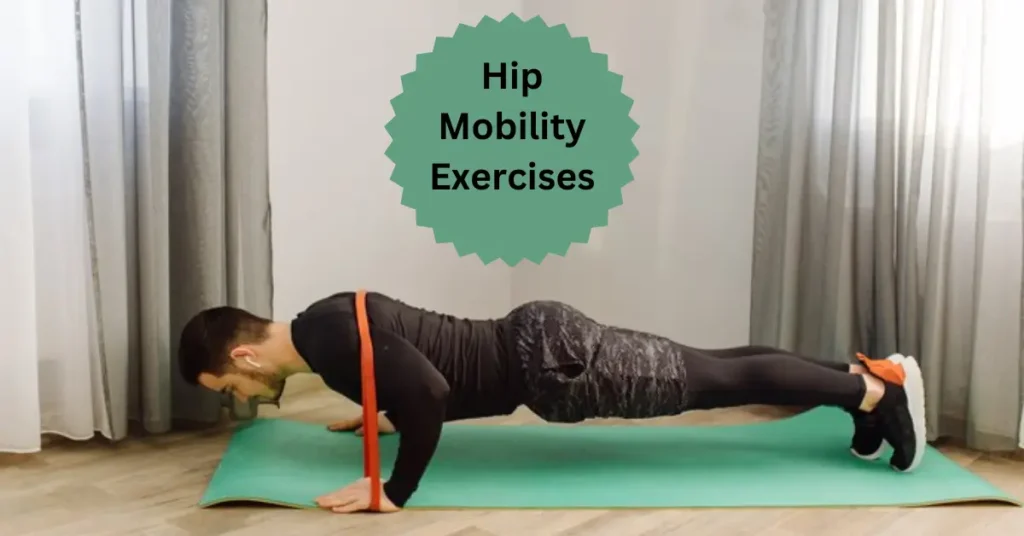
- Begin in a high plank position
- Step one foot forward outside your hand, keeping your hips square
- Hold for 2-3 seconds, feeling the stretch in the hip of the back leg
- Return to the starting position and repeat on the other side
- Perform 5-8 repetitions on each side
Benefits:
- Improves hip mobility and flexibility
- Enhances core stability
- Increases thoracic spine rotation
- Prepares the body for more complex movements
Advanced Mobility101 Techniques
Using Props in Mobility101
As you advance in your Mobility101 practice, incorporating props can enhance your results and provide new challenges. Here are some effective tools to consider:
- Foam Roller: A foam roller can enhance tissue quality and relieve tense muscles.
- Technique: Lie on the foam roller and slowly roll along the muscle, pausing on tender spots. Breathe deeply and allow the tissue to release.
- Benefits: Reduces muscle adhesions, improves blood flow, and enhances tissue elasticity.
- Caution: Avoid rolling directly over bones or joints, and stop if you experience sharp pain.
- Resistance Bands: Bands can add resistance to mobility exercises, making them more challenging.
- Technique: Use bands to assist difficult movements or to add resistance during easier ones.
- Benefits: Improves strength within the available range of motion, enhances muscle activation.
- Example: Use a band around your thighs during squats to improve hip activation.
- Mobility Ball: Small, firm balls can target specific areas of tension.
- Technique: Place the ball on a tender area and apply gentle pressure while moving the surrounding tissue.
- Benefits: Releases localized tension, improves tissue quality, enhances proprioception.
- Caution: Start with gentle pressure and gradually increase as tolerated.
Real-life Example: After incorporating foam rolling into my Mobility101 routine, I noticed significant improvements in tissue quality and reduced muscle soreness after workouts.
The targeted release of tension in my quads and hamstrings allowed for deeper movement in subsequent mobility exercises.
Mobility101 for Injury Prevention
One of the most valuable aspects of Mobility101 is its ability to prevent common injuries. Here’s how incorporating mobility work can protect your body:
Lower Back Pain Prevention
- How it helps: Improves hip mobility, reducing the need for the lower back to compensate during movement.
- Key exercises: hip circles, glute bridges, and cat-cow stretches.
- Real-world impact: Many people experience reduced back pain after just a few weeks of consistent Mobility101 practice.
Knee Injury Prevention
- How it helps: Enhances hip and ankle mobility, enabling correct alignment and lowering knee joint tension.
- Key exercises: ankle circles, hip circles, and spiderman stretches.
- Real-world impact: Better knee mechanics during activities like walking, running, and squatting.
Shoulder Injury Prevention
- How it helps: Enhances shoulder joint mobility and control, reducing the risk of impingement and other common shoulder issues.
- Key exercises: shoulder rotations, thoracic rotations, and band pull-aparts.
- Real-world impact: Improved shoulder function during overhead activities and reduced risk of strain.
Personal Insight: After incorporating Mobility101 into my routine, I noticed fewer nagging injuries and quicker recovery times between workouts. My body felt stronger and better able to withstand the rigors of regular activities and physical exertion.
Final Thoughts: Unlocking Your Potential
Summary of Benefits
Several advantages of Mobility101 go well beyond just increasing flexibility. By using these ideas in your day-to-day activities, you can:
- Improve joint health and movement quality to lower your chance of injury.
- Boost your performance in daily activities and sports.
- Feel less stiffness and more mobility.
- Develop better body awareness and posture.
- Develop a stronger mind-body connection.
- Increase your overall quality of life and functional independence.
Practical Checklist for Implementing Mobility101:
- Assess your current mobility levels.
- Create a consistent practice schedule.
- Focus on quality, not quantity, in each movement.
- Incorporate both upper- and lower-body exercises.
- Use props to enhance your practice as you advance.
- Listen to your body and adjust as needed.
- Track your progress over time.
Final Encouragement on Simplicity and Accessibility
One of the most beautiful aspects of Mobility101 is its simplicity and accessibility. You don’t need expensive equipment or hours of dedicated time to experience the benefits.
Even a few minutes of focused movement each day can create significant positive changes in your body and mind.
Remember that mobility is a journey, not a destination. Be patient with yourself and celebrate small victories along the way.
The goal isn’t to achieve perfect mobility overnight but to build sustainable habits that support your body’s natural movement capabilities for years to come.
5-Step Action Plan for Starting Your Mobility101 Journey
- Assess your current mobility levels using the simple tests provided
- Establish a regular plan that fits your lifestyle (start with three to five sessions per week).
- Begin with the fundamental exercises outlined in this guide.
- Track your progress and celebrate improvements.
- Gradually incorporate advanced techniques and props as you improve.
Frequently Asked Questions
Q. How long does it take to see results from Mobility101?
Most people begin noticing improvements in their mobility and movement quality within 2-4 weeks of consistent practice. However, significant changes typically occur after 8-12 weeks of dedicated practice.
Your beginning point, consistency, and unique physical attributes all affect the chronology. Remember that mobility is a journey, not a destination, and the benefits accumulate over time.
Q. Can Mobility101 help with chronic pain conditions?
Yes, Mobility101 can be beneficial for many chronic pain conditions, particularly those related to movement limitations and compensatory patterns. By improving joint mobility and movement quality, you can often reduce pain and enhance function.
However, it’s important to work with a healthcare provider if you have a specific diagnosed condition, as some movements may need to be modified or avoided. Always listen to your body and stop any movement that increases pain.
Q. Is Mobility101 suitable for older adults?
Absolutely! Mobility101 is particularly beneficial for older adults, as it helps maintain functional independence and reduces the risk of falls.
Any physical restrictions can be accommodated in the exercises, and even modest increases in mobility can greatly improve quality of life.
Many of the exercises can be performed seated or with support if needed. It’s never too late to improve your mobility and movement capabilities.
Q. How does Mobility101 differ from traditional stretching?
Mobility101 focuses on active control within your range of motion, rather than passive stretching. While traditional stretching often involves holding positions for extended periods, Mobility101 emphasizes movement, control, and strength within your available range of motion.
This approach builds functional mobility that translates to real-world movement. Additionally, Mobility101 often incorporates multiple joints and movement patterns, rather than isolating individual muscles.
Q. Can I do Mobility101 if I have an injury?
It depends on the type and severity of your injury. For acute injuries, it’s best to consult with a healthcare provider before beginning any mobility work.
In chronic or rehabilitative situations, specific Mobility101 exercises can often be beneficial, but they should be carefully selected and, if needed, modified.
Always work within pain-free ranges and avoid movements that aggravate your condition. When in doubt, seek professional guidance.
Q. How often should I practice Mobility101 for the best results?
Plan for three to five workouts a week for best results. Even 10 to 15 minutes of concentrated practice most days can have a significant impact, as consistency is more important than duration.
You can use longer sessions when you have more time and shorter sessions on hectic days. Making Mobility101 a regular part of your routine instead of an infrequent activity is crucial.
Q. What’s the best time of day to practice Mobility101?
The best time to practice Mobility101 depends on your personal schedule and goals. Many people find it beneficial to prepare their bodies for the day’s activities in the morning.
Others prefer it as a warm-up before exercise or as a cooldown afterward. Experiment with different times to see what works best for your body and schedule. The most important factor is consistency, so choose a time that you can maintain regularly.
Final Thoughts
Mobility101 represents a fundamental shift in how we approach movement and body awareness.
You can unleash your body’s full potential and navigate life with greater comfort and confidence by understanding the fundamentals of mobility and incorporating targeted exercises into your daily routine.
Remember that mobility is not about achieving perfect form or maximum range of motion overnight. It’s about building sustainable habits that support your body’s natural movement capabilities over time.
Be patient with yourself, celebrate small victories, and enjoy the journey toward greater freedom of movement.
The benefits of Mobility101 extend far beyond the physical realm. As you develop greater awareness of your body and its capabilities, you’ll likely notice improvements in other areas of your life as well.
Mobility practice can enhance your overall well-being and quality of life by cultivating discipline and mindfulness.
Whether you’re attempting to improve your performance as an athlete, healing from an injury, or simply having greater freedom to go about your everyday activities.
Mobility101 offers informative knowledge and practical strategies to help you achieve your goals.
Begin your Mobility101 journey now and transform how you move!
Read more articles on Health and Balance.
You might like to read: