

Are parenting mistakes ruining your child’s sleep? Learn 10 common kids’ sleep mistakes and simple fixes for healthier, more restful nights.
Many parents unknowingly develop bedtime habits that make it harder for their children to fall asleep and stay asleep. It is also one of the big parenting mistakes.
Since quality sleep is essential for healthy growth, learning, and emotional well-being, recognizing these common parenting mistakes can help you build better sleep routines and give your child the rest they need.
10 Common Kids Sleep Mistakes Parents Make (& How to Fix)
Sleep is one of the most important building blocks of a child’s physical, mental, and emotional health. Yet many parents unknowingly make small bedtime mistakes that can affect how well their children sleep.
From inconsistent routines to too much screen time before bed, these habits can lead to restless nights and tired mornings.

The good news is that most sleep problems can be improved with simple changes. Understanding how much sleep children need and recognizing common sleep mistakes can help your child wake up happier, healthier, and ready to learn.
Understanding Kids’ Sleep Needs
Children’s sleep needs change as they grow. Babies require long periods of sleep to support rapid brain and body development, while older children and teenagers still need enough rest to stay healthy, focused, and emotionally balanced.
Sleep recommendations are based on a full 24-hour period, meaning naps count for infants and younger children. Instead of comparing your child to others, focus on whether they consistently get enough quality sleep for their age.
Recommended Sleep by Age
| Newborn (0–3 months) | 14–17 hours (varies) |
| Infants (4–12 months) | 12–16 hours (including naps) |
| Toddlers (1–2 years) | 11–14 hours (including naps) |
| Preschoolers (3–5 years) | 10–13 hours |
| School-age Children (6–12 years) | 9–12 hours |
| Teenagers (13–18 years) | 8–10 hours |
Quick Tip: Count backwards from your child’s wake-up time to determine an appropriate bedtime.
Importance of Sleep by Age Group
Each stage of childhood has unique sleep requirements because different parts of the body and brain are developing rapidly. Meeting these needs helps children perform better during the day and reduces the risk of behavioral and health problems.
| Babies | Brain development, feeding, growth |
| Toddlers | Language learning, movement, memory |
| Preschoolers | Emotional control, social skills |
| School-age Kids | Learning, concentration, immunity |
| Teens | Hormonal balance, mental health, academic performance |
How Sleep Impacts Growth and Development
Sleep is much more than resting. During sleep, your child’s body repairs tissues, strengthens the immune system, stores memories, and releases important growth hormones.
Consistently getting enough sleep supports healthy development from infancy through adolescence.
Brain Development and Learning
Children process what they learn while sleeping. Their brains organize new information, strengthen memories, and improve problem-solving skills.
Well-rested children are more likely to:
- Remember lessons better
- Focus on school
- Learn new skills faster.
- Think creatively
- Make better decisions
Physical Growth
Deep sleep is when the body releases most of its growth hormone. This hormone supports bone growth, muscle repair, and overall development.
Healthy sleep also helps:
- Build strong muscles
- Repair body tissues
- Support a healthy weight.
- Improve coordination
- Increase physical endurance
Emotional Regulation
Sleep helps children manage their emotions. Without enough rest, they may become irritable, anxious, impatient, or overly emotional.
Good sleep supports:
- Better mood
- Less frustration
- Improved self-control
- Positive behavior
- Healthier relationships
Immune System Support
During sleep, the immune system produces protective proteins that help fight infections.
Children who sleep well may
- Recover faster from illness.
- Get sick less often
- Respond better to vaccinations.
- Have stronger natural defences.
Energy Restoration
Children use enormous amounts of energy throughout the day while learning, playing, and growing.
Sleep helps restore:
- Physical energy
- Mental alertness
- Attention span
- Motivation
- Daily performance
The Risks of Poor Sleep Habits
Even small bedtime mistakes can become long-term sleep problems if they continue for months or years.
Poor sleep may lead to the following:
- Difficulty paying attention
- Poor academic performance
- Mood swings
- Increased anxiety
- Frequent illness
- Low energy
- Behavioral issues
- Weight gain
- Slower growth
- Increased accident risk
Common Sleep Challenges Parents Face
Many families struggle with bedtime at different stages of childhood. These challenges are common and often manageable with patience and consistency.
Some typical problems include:
- Bedtime resistance
- Night waking
- Fear of the dark
- Nightmares
- Early morning waking
- Excessive screen time
- Skipping naps too early
- Busy evening schedules
- Homework overload
- Weekend sleep schedule changes
Understanding these challenges helps parents choose solutions that match their child’s age and needs.
10 Common Parenting Mistakes with Kids’ Sleep and How to Fix
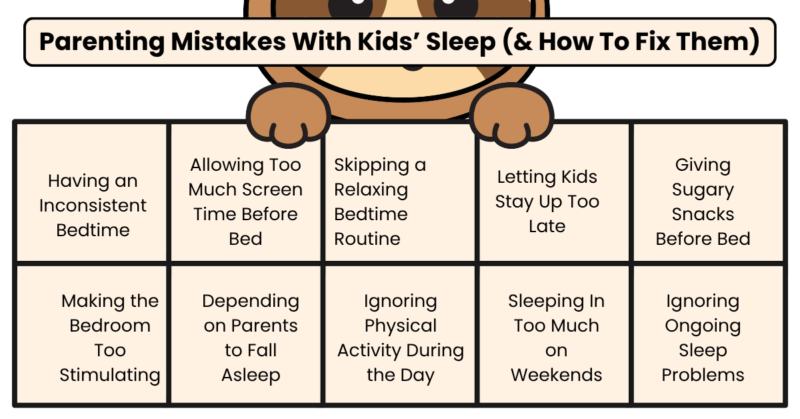
1. Having an Inconsistent Bedtime
Putting children to bed at different times each night confuses their internal body clock. As a result, falling asleep becomes harder, and they may wake up feeling tired.
How to Fix It
- Keep bedtime within the same 30-minute window daily.
- Follow the same routine on weekends.
- Set reminders for bedtime.
2. Allowing Too Much Screen Time Before Bed
Phones, tablets, TVs, and gaming devices emit blue light that delays the release of melatonin, the hormone that signals sleep.
How to Fix It
- Turn off screens at least one hour before bedtime.
- Replace screens with books or storytelling.
- Keep electronic devices outside the bedroom.
3. Skipping a Relaxing Bedtime Routine
Children often need time to transition from active play to sleep. Without a calming routine, bedtime can become stressful.
How to Fix It
Create a predictable routine, such as:
- Bath
- Brush teeth
- Pajamas
- Storytime
- Hugs
- Lights out
Repeating the same sequence every night signals that sleep is coming.
4. Letting Kids Stay Up Too Late
Many parents assume children will sleep later if they stay awake longer. Instead, overtired children often become more restless and harder to settle.
How to Fix It
Watch for sleep cues, like:
- Eye rubbing
- Yawning
- Slower movements
- Fussiness
- Loss of attention
Move bedtime earlier when these signs appear regularly.
5. Giving Sugary Snacks Before Bed
Chocolate, candy, desserts, and sugary drinks can increase energy and delay sleep.
Better Evening Snack Choices
| Candy | Banana slices |
| Chocolate | Plain yogurt |
| Soda | Warm milk |
| Ice cream | Oatmeal |
| Cookies | Whole-grain crackers with cheese |
6. Making the Bedroom Too Stimulating
Bright lights, loud sounds, toys, or warm temperatures can prevent quality sleep.
How to Fix It
Create a sleep-friendly room by:
- Keeping it dark
- Reducing noise
- Maintaining a cool temperature
- Removing distractions
- Using comfortable bedding
7. Depending on Parents to Fall Asleep
Some children only fall asleep while being rocked, fed, or lying next to a parent. They may struggle to return to sleep independently after waking during the night.
How to Fix It
Gradually encourage self-soothing by:
- Putting your child in bed while drowsy but awake.
- Offering reassurance without creating new sleep habits.
- Staying consistent with bedtime expectations.
8. Ignoring Physical Activity During the Day
Children who spend little time moving may have excess energy at bedtime.
How to Fix It
Encourage:
- Outdoor play
- Bike riding
- Running
- Dancing
- Sports
- Playground activities
Avoid vigorous exercise immediately before bedtime.
9. Sleeping In Too Much on Weekends
Large differences between weekday and weekend sleep schedules can disrupt the body’s internal clock.
How to Fix It
Try to keep wake-up times within one hour of the weekday schedule.
Consistency helps children fall asleep more easily on school nights.
10. Ignoring Ongoing Sleep Problems
Occasional sleep difficulties are normal. However, persistent snoring, breathing pauses, frequent nightmares, or constant daytime sleepiness may indicate an underlying sleep disorder.
How to Fix It
Talk with your child’s healthcare provider if sleep problems continue for several weeks or interfere with daily life.
What to Avoid to Overcome Parenting Mistakes
Parents can improve their child’s sleep simply by avoiding habits that interfere with healthy rest.
| Late bedtimes | Consistent bedtime |
| Screens before sleep | Reading together |
| Sugary evening snacks | Light healthy snack |
| Bright bedroom lights | Dim lighting |
| Loud evening activities | Quiet family time |
| Caffeine | Water or milk |
| Sleeping in every weekend | Regular wake-up time |
| Inconsistent routines | Predictable bedtime routine |
Healthy Bedtime Habits for Better Sleep
Small daily habits often make the biggest difference.
- Keep a consistent bedtime and wake-up time.
- Follow a calming bedtime routine.
- Encourage active play during the day.
- Limit caffeine and sugary foods in the evening.
- Keep bedrooms cool, quiet, and dark.
- Turn off screens at least one hour before bed.
- Offer comfort while encouraging independent sleep.
- Make sleep a family priority.
Key Takeaways in Fixing Parenting Mistakes
- Children need different amounts of sleep as they grow.
- Consistent bedtimes help regulate your child’s body clock.
- Avoid screens and sugary snacks before bedtime.
- Create a calm, predictable bedtime routine every night.
- A quiet, dark, and comfortable bedroom improves sleep quality.
- Encourage daily physical activity but avoid vigorous exercise before bed.
- Teach children to fall asleep independently whenever possible.
- Keep weekend sleep schedules close to weekday routines.
- Watch for ongoing sleep problems that may need medical advice.
- Small parenting changes can lead to healthier sleep and happier kids.
FAQs on Avoiding Parenting Mistakes
Q. Can Parenting Mistakes Cause Sleep Problems in Children?
Yes, certain parenting mistakes can unintentionally create poor sleep habits. Irregular bedtimes, allowing excessive screen time, or relying on sleep associations like rocking every night may make it harder for children to fall asleep independently.
Identifying these habits early and making consistent changes can improve your child’s sleep quality over time.
Q. How Long Does It Take to Fix a Child’s Sleep Routine?
Most children begin adjusting to a new sleep routine within one to two weeks if parents stay consistent.
Small parenting changes, such as setting a regular bedtime and following the same bedtime routine every night, help reset the body’s internal clock.
Patience is important, as lasting sleep habits develop gradually rather than overnight.
Q. How Can Parents Build Healthy Sleep Habits for Kids?
Parents can build healthy sleep habits by creating a calming bedtime routine, maintaining consistent sleep and wake times, and limiting stimulating activities before bed.
Encouraging independent sleep, offering a comfortable sleep environment, and modeling healthy sleep behaviors also make a positive difference. Consistency is the key to long-term success.
Q. How to Make Children Sleep Easily?
Establishing a regular bedtime routine is the first step in helping kids fall asleep. Take a warm bath, read a tale, or listen to calming music before turning in for the night. Keep the bedroom cold, dark, and quiet at night, and avoid electronics and sugary snacks.
Children who have a regular schedule are better able to unwind and fall asleep.
Q. What Is the Biggest Parenting Mistake?
One of the biggest parenting mistakes is being inconsistent with rules and routines. Children feel more secure when expectations are clear and predictable, especially around bedtime.
Constantly changing bedtime rules or giving in to requests for “just five more minutes” can create unhealthy sleep habits. Consistency builds trust and supports better behavior.
Q. What Is the 7-7-7 Rule for Parenting?
The 7-7-7 rule is a parenting concept that highlights different stages of a child’s development. The first seven years focus on building love, security, and strong emotional bonds.
The next seven years emphasize teaching responsibility, values, and life skills. The final seven years encourage guidance, independence, and prepare teens for adulthood.
Q. What Is the 3-3-3 Rule for Sleep?
The 3-3-3 sleep rule is a simple bedtime guideline often used to improve sleep quality. It suggests avoiding large meals about 3 hours before bed, stopping caffeine at least 3 hours before bedtime, and limiting screen use during the final 3 hours of the evening whenever possible.
These habits can help the body prepare for restful sleep.
Q. What Drinks Help Kids Sleep?
The best bedtime drinks for children are caffeine-free and soothing. Warm milk is a popular choice because it contains nutrients that support relaxation.
Herbal drinks suitable for children, such as mild chamomile tea (with your pediatrician’s approval), may also help. Water is always a healthy option, while sugary drinks, soda, and caffeinated beverages should be avoided before bed.
Q. What Is the 15-Minute Sleep Trick?
The 15-minute sleep trick suggests leaving the bed if a child cannot fall asleep after about 15 to 20 minutes. Instead of becoming frustrated, encourage a quiet activity, such as reading a book under dim light, until they feel sleepy again.
The brain associates the bed with sleep rather than wakefulness if you only go back to bed when you’re feeling sleepy.
Q. What Foods Help Kids Fall Asleep Faster?
A light bedtime snack can help children feel satisfied without making them overly full. Good choices include bananas, oatmeal, yogurt, whole-grain crackers with cheese, or kiwi. These foods provide nutrients that support relaxation and steady energy overnight. Avoid chocolate, candy, and heavy meals close to bedtime.
Q. How to Sleep Fast in 5 Minutes for Kids?
While no method guarantees sleep in exactly five minutes, calming techniques can help children relax quickly.
Encourage slow, deep breathing, gentle stretching, or imagining a peaceful place while lying comfortably in bed. It is also simpler to fall asleep naturally if lights are kept low and stimulating activities are avoided before bed.
Final Thoughts on Fixing Parenting Mistakes with Kids’ Sleep
Healthy sleep doesn’t happen by accident. It develops through consistent routines, age-appropriate bedtimes, and healthy daily habits. While every child occasionally has restless nights, avoiding common sleep mistakes can greatly improve both sleep quality and overall well-being.
By understanding your child’s changing sleep needs and making small, practical adjustments, you can help them sleep more soundly, grow more healthily, and wake up ready to learn, play, and thrive every day.
Avoiding common parenting mistakes can make a big difference in your child’s sleep, health, and happiness.
Start by changing one bedtime habit at a time and stay consistent with your routine. If you found this guide helpful, share it with other parents, leave a comment with your biggest bedtime challenge, and explore our other parenting and child wellness articles for more practical tips.
Read more about Health and Wellness Tips.