
Ultimate Shift Nurse Guide to Decompressing After a Night Shift. Learn easy routines to let go of unit stress and sleep better.
To decompress after a 12-hour night shift, nurses need a structured transition ritual that separates clinical duty from home life.
Start with two minutes of quiet breathing before leaving the hospital, drive home without high-stress audio, remove scrubs immediately at the front door, take a warm-to-cool shower, elevate tired legs for ten minutes, and do a quick five-minute brain dump before entering a pitch-dark bedroom.

Clocking out at 7:00 AM after a 12-hour night shift feels different from finishing any other job. While the rest of the world grabs morning coffee and starts their day.
You walk out into bright sunlight with aching feet, dry eyes, and a brain still replaying medication passes, call bells, and shift handoffs.
For nurses, coming home is rarely as simple as unlocking the front door and falling asleep. You carry sensory overload, emotional weight, and physical tension straight into your living room.

Without a deliberate decompression routine, that lingering hospital stress steals hours of daytime rest and leads straight to burnout.
This guide gives you a practical, step-by-step transition system built specifically for night shift nurses, helping you leave the ward behind, soothe your body, and shift into restorative rest.
Why Shift Nurses Struggle to Clock Out Mentally
Unlike desk jobs, where work stops when you close a laptop, nursing demands continuous vigilance, rapid clinical decision-making, and deep emotional presence.
When your shift ends, your nervous system does not automatically switch off just because you handed over your report.
Alarm Fatigue and Sensory Overload
Hospital units are loud, bright environments even at 3:00 AM. Continuous telemetry beeps, IV pump alerts, overhead pages, and harsh fluorescent hallway lights keep your brain hyper-alert.
Research highlighted by the American Association of Critical-Care Nurses (AACN) shows that persistent exposure to clinical alarms causes sensory overload and cognitive exhaustion. Even when you are sitting quietly in your car, your brain continues scanning for urgent sounds, making it hard to feel calm.

Charting Anxiety and Compassion Fatigue
Many nurses lie awake after a shift wondering if they forgot to document a vital sign, double-check an order, or mention a detail during bedside handoff.
Combine that mental replay with compassion fatigue, absorbing the fear, pain, and grief of patients and families all night, and your mind stays locked in caregiving mode long after your badge comes off.
Note: If your heart is still racing and you feel physically jittery hours after clocking out, pair these mental decompression habits with our physiological guide on lowering cortisol after a 12-hour night shift.
5 steps for a shift nurse to decompress after a night shift
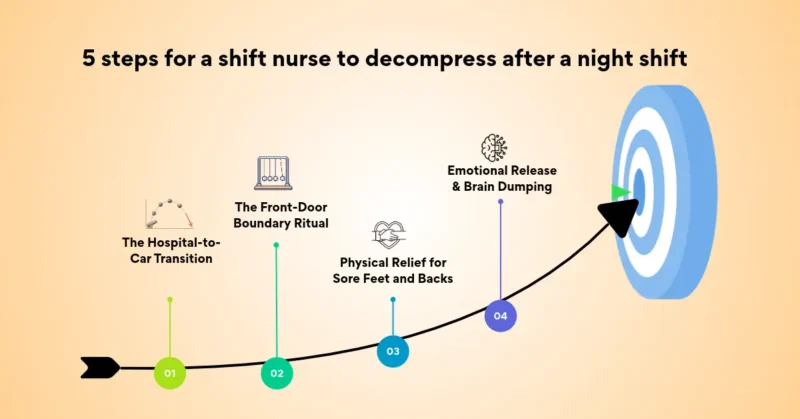
Step 1: The Hospital-to-Car Transition
Decompression starts the moment you finish giving the report, not when your head hits the pillow. Creating a buffer zone between the unit and your commute keeps shift tension from coming home.
The Two-Minute Locker Room Reset
Before walking out to the parking garage, take two uninterrupted minutes in the locker room or break area.
- Unclip Your Badge: Physically removing your hospital ID and placing it in your bag serves as a visual cue that your clinical responsibility is over.
- Drop Your Shoulders: Nurses unconsciously hold tension in their upper trapezius muscles all night. Roll your shoulders back three times, unclench your jaw, and take five slow breaths, making your exhale longer than your inhale.
- Put on Dark Sunglasses: Slip on wraparound or polarized sunglasses before stepping outside. Morning sunlight triggers daytime alertness signals in the brain, making it harder to wind down once you get home.
Silent Commutes vs. Mindless Audio
Your drive home is a golden opportunity to let your brain coast. Avoid listening to news broadcasts, intense true-crime podcasts, or work-related nursing podcasts during the morning commute.
Instead, choose one of two options:
- Complete Silence: After twelve hours of alarms and call lights, a quiet car gives your auditory system much-needed relief.
- Low-Stakes Comfort Audio: Play familiar instrumental music, rain sounds, or a lighthearted audiobook you have already heard so your brain doesn’t have to work to follow a plot.
Step 2: The Front-Door Boundary Ritual
Crossing the threshold into your home should feel like entering a sanctuary, not an extension of the hospital floor. Establishing a strict physical boundary protects both your peace of mind and your household hygiene.
Scrubs Off, Hospital Left Behind
Never sit on your couch or climb into bed wearing the scrubs you wore on the unit. Beyond infection control and hygiene, staying in scrubs keeps you psychologically tethered to your shift.
- Create a Drop Zone: Keep a dedicated laundry hamper or washable canvas bag right inside your entryway, mudroom, or laundry area.
- Shoes Stay at the Door: Leave your nursing clogs or sneakers on a mat by the entrance so floor contaminants and shift energy stay outside your living space.
- Change Immediately: Strip out of your scrubs and compression socks right away and put on soft, breathable loungewear.
The Hot-to-Cool Decompression Shower
A post-shift shower is more than a hygiene habit; it is a psychological reset button that washes away the physical heaviness of a 12-hour shift.
- Start Warm (3 to 4 Minutes): Let warm water run over your neck, shoulders, and lower back to loosen muscles tightened by lifting, turning patients, and standing on hard hospital floors.
- Finish Cool (30 Seconds): Gradually turn the water to lukewarm or cool for the final thirty seconds. As the Sleep Foundation notes, a slight drop in core body temperature mimics your body’s natural readiness for sleep and signals your nervous system to slow down.
Step 3: Physical Relief for Sore Feet and Backs
Twelve hours on tiled hospital corridors takes a heavy toll on your lower body. Addressing physical aches before you lie down can prevent restlessness and leg cramps from waking you mid-morning.
Legs-Up-the-Wall Circulation Reset
Before bed, spend five to ten minutes lying on the floor or bed with your legs resting vertically against the wall.
- Why It Works: Gravity helps drain pooled fluid from your feet, ankles, and calves back toward your core, easing swelling and lower-back pressure.
- How to Do It: Sit sideways next to a wall, swing your legs up as you lie back, and rest your arms loosely at your sides with palms facing up. Close your eyes and breathe naturally.

Compression Sock Removal and Foot Care
Removing tight compression socks after a long shift can trigger sudden itching or throbbing as blood flow returns to the skin.
- Moisturize Immediately: Apply a thick, unscented lotion or magnesium foot cream right after your shower to soothe dry, tight skin.
- Roll Out Your Arches: Spend 60 seconds rolling each bare foot over a tennis ball or frozen water bottle while sitting on the edge of your bed to release tight plantar fascia muscles.
Post-Shift Stretches and Epsom Salt Soaks
If your lower back, hips, or calves feel locked up after twelve hours on hard hospital floors, add five minutes of gentle movement or warm water therapy before bed.
- Doorframe Chest Opener: Stand in a doorway with your forearms resting on the frame at shoulder height and lean gently forward for 30 seconds. This reverses the rounded posture from charting at computers and leaning over hospital beds.
- Seated Figure-Four Stretch: Sit on the edge of your bed, cross your right ankle over your left knee, and hinge slightly forward at the hips for 30 seconds per side to release tight glutes and lower-back tension.
- Warm Epsom Salt Foot Soak: If you do not have time for a full bath, soak your feet in a basin of warm water with half a cup of magnesium sulfate (Epsom salt) for 10 minutes. It eases localized foot soreness and helps your nervous system downshift.

Step 4: Emotional Release and Brain Dumping
If your body is exhausted but your brain won’t stop reviewing patient care, you need an outlet to clear your working memory before bed.
The Five-Minute Worry List
Keep a small notebook and pen on your nightstand; never use your phone for this step, as screen light disrupts sleep readiness.
- Write Down Lingering Thoughts: Jot down anything still bouncing around your head, whether it is a charting worry, an errand for tomorrow, or a tough patient interaction.
- Close the Notebook: Once it’s on paper, permit yourself to stop holding it in your head. If you have a genuine clinical concern that needs follow-up, set a reminder to call the charge nurse at 6:30 PM before your next shift, then let it go for the day.
Processing Patient Loss, Codes, and Heavy Shifts
Some shifts carry weight that a simple to-do list cannot clear. When you experience a rapid response, a code blue, or patient loss, your mind naturally replays every clinical step.
- Name the Emotion Without Judging It: Acknowledge out loud or on paper that the shift was heavy. Suppressing grief or shock keeps your nervous system stuck in survival mode.
- Use a Symbolic Closing Ritual: Before you leave the hospital or step into the shower, take one slow breath and consciously separate your clinical care from the outcome—remind yourself that you showed up with skill and compassion during a critical moment.
- Reach Out to a Trusted Colleague: If a difficult case stays with you for days, debrief briefly with a fellow nurse who understands hospital reality rather than carrying it silently alone.
Setting Boundaries With Awake Family Members
One of the hardest parts of night shift decompression is coming home to a household that is wide awake, noisy, and ready to talk.
- Use a Visual Signal: Hang a simple sign on your bedroom door or wear over-ear headphones during your wind-down hour so family members know you are transitioning to sleep.
- Schedule Catch-Up Time: Let partners, roommates, or kids know you need 45 uninterrupted minutes to shower, eat a light snack, and unwind, and set a specific time in the late afternoon to connect properly.

What Not to Do After a Night Shift
Even a solid wind-down routine can be undone by common post-shift habits that trick your brain into staying alert. Avoid these traps during your first hour home:
- Doomscrolling in Bed: Bright phone screens suppress daytime melatonin production, while alarming news or social media arguments keep your brain stimulated.
- Venting About Shift Drama for Hours: Replaying frustrating encounters with doctors, management, or difficult patients over and over keeps your body flooded with stress energy. Set a 10-minute timer if you need to vent, then change the subject.
- Using Alcohol to Knock Yourself Out: A morning drink might make you feel drowsy initially, but alcohol fragments deep restorative sleep and causes rebound awakenings a few hours later.
- Doing Heavy High-Intensity Workouts: Intense cardio or heavy lifting right after a 12-hour shift spikes your heart rate and body temperature when you need them dropping. Save heavy workouts for after you wake up.
- Drinking Caffeine After 3:00 AM: Even if you feel exhausted at 7:00 AM, late-shift coffee or energy drinks stay in your system for hours and block deep sleep.
Decompression by Nurse Type: Tailoring Your Reset
Different hospital units drain your energy in different ways. Adjust your wind-down ritual to match your shift:
- ER Nurses: High-adrenaline shifts leave you physically restless. Focus on slow breathing in your parked car, a cool-finish shower, and five minutes of floor stretching before bed.
- ICU and Med-Surg Nurses: Constant monitoring, call lights, and heavy patient loads cause deep mental fatigue. Drive home in silence, do a five-minute paper brain dump, and silence work notifications.
- Labor & Delivery Nurses: Shifting from intense emotions to calm takes a buffer. Spend 15 quiet minutes with warm herbal tea before tackling home chores.
- New vs. Experienced Nurses: New grads often deal with “replay anxiety” after handoff—use a structured end-of-shift checklist so you leave confident everything is done. Experienced nurses face cumulative fatigue, making strict off-duty boundaries essential.
Long-Term Habits to Prevent Nurse Burnout
A good morning wind-down protects today’s sleep, while simple weekly habits protect your career:
- Protect Your First Day Off: Keep errands minimal, get afternoon outdoor sunlight to reset your mood, and skip heavy social plans so your body can genuinely recover.
- Lean on Peer Support: According to the American Nurses Association (ANA), ongoing shift fatigue requires proactive self-care and workplace support. Talk openly with fellow nurses who understand night-shift life, and use your hospital’s Employee Assistance Program (EAP) or a counselor if exhaustion starts carrying over into your days off.
Disclaimer: This article is for general wellness and informational purposes only and is not a substitute for professional medical or mental health advice. If you continue to feel tired or anxious, or have trouble sleeping, please see a healthcare provider.
Shift Nurse Decompression Checklist
| Decompression Phase | Nurse Action | Primary Recovery Benefit |
| 1. Locker Room & Car | Unclip your badge, put on polarized sunglasses, and drive in silence. | Cuts sensory overload and blocks morning light cues |
| 2. Front Door | Remove shoes and scrubs immediately into a drop-zone hamper. | Separates the clinical environment from the home sanctuary |
| 3. Bathroom | Warm shower for muscle tension, ending with 30 seconds of cool water | Washes off shift fatigue and lowers core body temperature |
| 4. Bedroom Floor | 5–10 minutes of legs-up-the-wall pose + light foot stretch | Relieves lower-leg swelling and lower-back tightness |
| 5. Nightstand | 5-minute paper brain dump + dark, cool room setup | Clears charting anxiety and protects daytime sleep quality |
Final Takeaway
Decompressing after a night shift requires a structured bridge between high-alert clinical work and restorative sleep.
1. The Safe Commute Home
- Block Morning Light: Put on wrap-around sunglasses or amber-tinted, blue-light-blocking glasses before stepping out into the morning sun to protect melatonin production.
- Minimize Screens: Avoid checking your phone or bright screens as soon as you get into your car or arrive home.
- Honor the Critical Window: Aim to go to sleep within 30 to 90 minutes of your shift ending, before your natural circadian alerting mechanism kicks in and makes falling asleep much harder.
2. The Transition Ritual (The Mental Changing Room)
- Wash Off the Shift: Take a warm shower or bath. The warm water lowers your core body temperature afterward, physically and symbolically signaling to your nervous system that work is over.
- Eat a Light Snack: Skip heavy or greasy meals at 8:00 AM. Choose a light, protein-rich option like Greek yogurt with berries, cottage cheese, or overnight oats.
- Unload the Day: Spend 10–15 minutes journaling or letting yourself mentally process any hard moments from the day before you lie down, so you aren’t replaying them while you try to sleep.

3. Creating the Ideal Sleep Environment
- Blackout & Cool: Use heavy blackout curtains or a comfortable sleep mask, and keep your room cool (around 65–68°F or 18–20°C).
- Block the Noise: Turn on white noise or use earplugs, and set your phone to Do Not Disturb.
- Target 7 to 8 Hours: Aim for a full rest cycle before your day begins.

4. Waking Up and Resetting
- Allow a Buffer: Give yourself 20–30 minutes after waking up before rushing into full activity.
- First Real Meal: Eat a balanced meal featuring complex carbohydrates, healthy fats, and clean protein.
- Light Movement: Do gentle stretching, yoga, or a short outdoor walk in the late afternoon to help regulate your body clock, and avoid heavy or vigorous workouts within three hours of your next shift.
FAQs on the Shift Nurse Guide to Decompressing
Q. How does a shift nurse unwind after a 12-hour night shift?
The most effective way to unwind is to follow a repeatable 30-to-45-minute transition ritual: wear sunglasses on the drive home, take off your scrubs at the front door, take a warm-to-cool shower, eat a light protein-and-carb snack, and do a quick five-minute paper brain dump before sleeping in a dark room.
Q. How do I stop thinking about patients after my shift?
Give yourself a defined mental cutoff ritual.
Unclipping your hospital badge in the locker room and writing down any lingering clinical thoughts in a bedside notebook tells your brain the shift is officially handed over.
Remind yourself that nursing is a 24-hour team effort and the oncoming nurse has taken the wheel.
Q. Should the shift nurse shower right after a night shift?
Yes. The shift nurse should shower right after a night shift.
Showering as soon as you get home removes hospital pathogens from your skin and hair, relaxes stiff neck and shoulder muscles, and creates a strong psychological break between work and rest.
Finishing with 30 seconds of cool water also helps your body cool down for sleep.
Q. What is the best post-shift snack for a shift nurse?
Choose a light, easy-to-digest snack that combines complex carbohydrates with a small amount of protein, such as oatmeal with almond butter, whole-grain toast with turkey, or Greek yogurt with a banana.
Avoid heavy, greasy fast food or sugary pastries, which can cause acid reflux and blood sugar spikes that wake you up early.
Q. How do nurses transition back to a normal schedule on days off?
According to guidance from the National Institute for Occupational Safety and Health (NIOSH), gradual anchor sleep works best.
After your last night shift, sleep for three to four hours in the morning (e.g., from 8:30 AM to 12:30 PM), and wake up to enjoy midday sunlight, stay active during the day, and go to bed at a regular evening time, such as 10:30 or 11:00 PM.
Q. How do you deal with alarm fatigue after work?
Combat post-shift alarm fatigue by giving your ears deliberate quiet time. Drive home with the radio off, avoid scrolling through loud short-form videos on your phone, and use a continuous white noise machine or box fan in your bedroom to mask sudden household sounds while you sleep.
Final Takeaway: Leaving the Ward at the Door
Nursing requires extraordinary physical stamina and emotional generosity, especially during overnight shifts. You spend twelve hours caring for everyone else; your post-shift routine is the one window when your only patient is yourself.
By building a simple, repeatable decompression ritual from the locker room to your bedroom door, you teach your body and mind that it is safe to let go.
After your next shift, start with just two or three items from this checklist, and treat your rest with the same vigor you give your patients.
What is the very first thing you do when you walk through the door after a 12-hour shift?
Share your go-to wind-down habit in the comments below, or save this checklist to try after your next clock-out!
Read more about night shift workers’ health.