
Feeling constantly drained? Learn how to prevent burnout with ultra-short, powerful pauses. Our guide reveals 5 easy micro-breaks you can do in 5 minutes or less to reset your mind and reclaim your energy today.
Thank you for reading this post, don't forget to subscribe!You’re scrolling, typing, and thinking so fast that your mind feels like a browser with 100 tabs open. One of them always seems to play an annoying, looping jingle of stress.
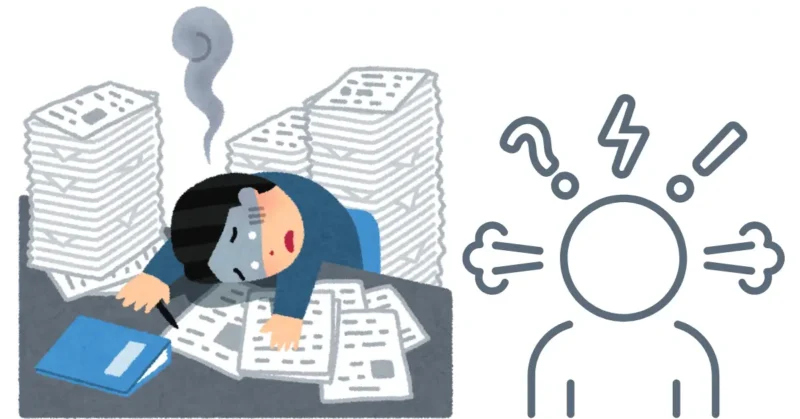
Your to-do list keeps growing, your focus slips away, and a dull sense of exhaustion becomes your new normal.
This isn’t just a busy day; it’s the slow creep of burnout. But what if the way out isn’t a two-week vacation? The answer lies in the small, often-overlooked moments between your tasks.
Preventing burnout isn’t about making huge changes. It’s about taking small, regular breaks from constant pressure, each one lasting less time than it takes to make a cup of coffee.
Short Summary Box
- What this is: A guide to using ultra-short, intentional breaks (micro-breaks) to disrupt stress cycles, recharge your mental energy, and build resilience against burnout.
- Core Problem: Burnout stems from chronic, unmanaged stress and cognitive overload.
- Simple Solution: Strategic 30-second to 5-minute pauses, repeated throughout the day, to reset your nervous system.
- Key Outcome: You learn to integrate these simple practices seamlessly into your routine to prevent burnout, boost focus, and protect your well-being without needing extra hours in the day.
Understanding Burnout and Its Warning Signs
Before we can fix something, we need to recognize it. Burnout is a real and overwhelming state of emotional, physical, and mental exhaustion caused by long-term or intense stress.
It’s not a medical diagnosis. It’s like when your car’s “gas” light has been on for so long that you forget what a full tank feels like.
What is Burnout and How Does it Happen?
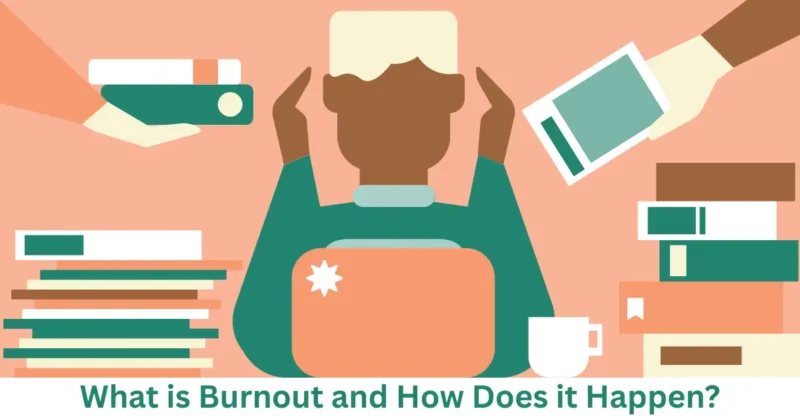
Burnout is more than fatigue. According to the World Health Organization, it is an occupational phenomenon with three dimensions:
1. A sense of tiredness or low energy.
2. Increased mental detachment from one’s employment, or emotions of negativism or cynicism relating to one’s job.
3. Diminished effectiveness as a professional.
Burnout develops gradually, not all at once. It’s the result of ongoing pressure without enough time to recover. Our bodies and minds are built to handle short bursts of stress, followed by rest.
Today’s work and life culture, with its constant demands, disrupts this natural rhythm. You go from one task to another, one notification to the next, without ever pausing.
Your stress response stays active, your cortisol levels stay high, and your mental and emotional energy runs low. It’s like running an engine on empty.
Recognizing the Warning Signs of Burnout
Burnout starts with subtle signs before it becomes overwhelming. Learning to notice these early signals is the first step to prevent burnout. Ask yourself:
- Emotional Signs: Do you feel cynical, detached, or irritable over small things? Have you lost motivation for projects you once cared about? Do you feel a sense of dread about your daily responsibilities?
- Physical Signs: Are you constantly tired, no matter how much you sleep? Do you have frequent headaches, muscle tension, or changes in your appetite or sleep patterns?
- Cognitive Signs: Do you struggle with concentration, memory lapses (“brain fog”), or indecisiveness? Is your productivity plummeting even though you’re working longer hours?
- Behavioral Signs: Are you withdrawing from social connections? Procrastinating more than usual? Using food, alcohol, or screens to numb out?
If several of these signs sound familiar, it doesn’t mean you’re failing. Your body and mind are warning you that your current pace can’t last. This is when micro-breaks can help the most.
The Power of Micro-Breaks to Prevent Burnout
Think about driving from New York to Los Angeles without stopping for gas, oil, or even a quick stretch.
The trip would be miserable, and the car would probably break down. Your mind and body work the same way. Micro-breaks are those necessary pit stops.
What are Micro-Breaks and How Can They Help Prevent Burnout?
A micro-break is a short, intentional pause lasting 30 seconds to 5 minutes. It’s a chance to step away from a task and reset your mind.
This isn’t the same as scrolling through social media, which can add more mental clutter, or grabbing another coffee, which only gives a quick jolt. Instead, it’s a mindful way to recover.
Research shows that our brains work in natural cycles of focus, usually lasting 90 to 120 minutes, followed by a need for about 20 minutes of rest. Micro-breaks fit into these cycles, prevent burnout, and give your mind a quick reset that:
- Lowers Cortisol: Interrupts the stress hormone cycle.
- Restores Focus: Gives the prefrontal cortex (your “thinking brain”) a chance to recharge.
- Reduces Physical Strain: Relieves tension from prolonged sitting or screen-staring.
- Boosts Creativity: Allows your default mode network—where ideas connect—to activate.
- Builds Resilience: Creates tiny moments of agency and self-care, reinforcing that your well-being matters.
In short, micro-breaks are a way to take care of yourself before problems start. They don’t just fix issues; they help prevent burnout by stopping stress from building up in the first place.
5 Simple Micro-Breaks to Prevent Burnout in 5 Minutes or Less
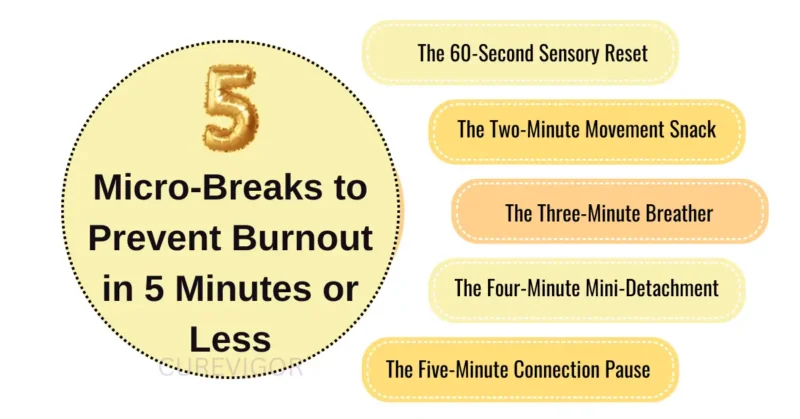
These aren’t extra tasks for your to-do list. Instead, they help lighten your stress. Pick one and give it a try now.
The 60-Second Sensory Reset
- What it is: A quick grounding exercise using your five senses.
- Why it works: It helps you stop worrying about the future or dwelling on the past and brings you back to the present moment.
- Action: Stop. Breathe. Name to yourself: You can see five things, feel four, hear three, smell two, and taste one (or one item you are grateful for).
The Two-Minute Movement Snack
- What it is: Any tiny burst of physical movement.
- Why it works: Moving your body releases endorphins, improves blood flow, and helps break up both physical and mental sluggishness.
- Action: Stand up. Stretch your arms to the ceiling, then touch your toes (gently!).
Do 10 gentle torso twists. Walk to the farthest window in your office or home and look out for 30 seconds. Shake out your limbs like a wet dog.
The Three-Minute Breather
- What it is: Intentional, paced breathing.
- Why it works: This type of breathing activates your body’s relaxation system, letting you know it’s safe to relax.
- Action: Sit comfortably. Take a slow, four-count breath through your nose. Hold your breath for seven counts.
For eight counts, gently exhale through your mouth. Repeat 4-5 times. This is the 4-7-8 breath, a powerful anxiety reducer.
The Four-Minute Mini-Detachment
- What it is: A complete mental shift away from work.
- Why it works: It gives your mind a break from work, helping you step back and clear your thoughts.
- Action: Listen to one full song you love. Read a few pages of a physical book (not on a screen). Do a quick, simple doodle. Water a plant and really look at it. Do not check emails or messages.
The Five-Minute Connection Pause
- What it is: A brief, positive social interaction.
- Why it works: Burnout can make you feel alone. Positive social moments release oxytocin, which helps protect you from stress.
- Action: Send a “thinking of you” text to a friend (not work-related). Have a genuine, non-work chat with a colleague or family member.
Pet your dog or cat mindfully for a few minutes.
Incorporating Micro-Breaks into Your Daily Routine
Knowing what to do is only part of the solution. The real challenge is remembering to take breaks, especially when your day feels overwhelming.
Tips for Remembering to Take Micro-Breaks
We often forget to take breaks because we’re overwhelmed. Try using reminders or cues to help make it a habit.
- Pair it with a Habit: Use an existing habit as a trigger (e.g., “After I send an email, I will take three deep breaths before starting the next task”).
- Tech to Your Advantage: Set gentle, recurring alarms or calendar reminders labeled “Breathe” or “Reset.” Use apps like Stretchly or Time Out for mandatory break notifications.
- Place Visual Cues: Put a sticky note on your monitor with the word “PAUSE” or a symbol that reminds you to break. A small plant or a particular picture can serve as a trigger.
- The Pomodoro Champion: Use the Pomodoro Technique (25 minutes of work, 5-minute break) religiously. The timer becomes your accountability partner.
Making Micro-Breaks a Sustainable Habit
Sustainability is about removing friction and adding reward.
Take one 60-second micro-break per day for a week. Success breeds motivation.
- Non-Negotiable, Not Guilty: Think of these breaks as necessary care, not a luxury. You’re not wasting time—you’re making sure you can keep performing well.
- Track It Loosely: Simply putting a checkmark on your calendar each day you take a break can be surprisingly satisfying and reinforcing.
- Be Kind to Yourself: If you miss a day or forget to take a break, just start again when you can. Don’t be hard on yourself. This is about being gentle, not perfect.
Additional Strategies to Prevent Burnout
Micro-breaks are your daily defense. Pair them with these broader strategies for a comprehensive shield.
Prioritizing Self-Care to Prevent Burnout
Self-care is the base that makes micro-breaks work. It’s the bigger picture that supports your small daily actions.
- Protect Sleep: This is non-negotiable. Sleep is when your brain cleans metabolic waste and processes emotions. No amount of micro-breaks can compensate for chronic sleep deprivation.
- Nourish Your Body: Eating regular, balanced meals stabilizes your blood sugar and energy, preventing crashes that fuel irritability and exhaustion.
- Move Regularly: Beyond micro-movements, aim for longer bouts of exercise you enjoy. It’s a master stress regulator.
Setting Boundaries to Prevent Burnout
Taking breaks alone won’t help if you keep giving too much of yourself. Setting boundaries is what helps you keep your energy.
- Communicate Limits: It’s okay to say, “I can’t take that on right now,” or “My workday ends at 6 PM. I’ll respond first thing tomorrow.”
- Tech Boundaries: Turn off non-essential notifications. Have phone-free zones (like the dinner table) and phone-free times (the last hour before bed).
- Emotional Boundaries: Permit yourself not to absorb every problem around you. You can be empathetic without being a sponge for others’ stress.
A Personal Insight: The Kettle That Taught Me to Whistle
For years, I thought breaks were a reward for finishing work. But the work never ended. My burnout showed up as constant, low-level anxiety and a short temper.
The turning point was simple: my electric kettle. While making tea, I used to check my phone during the 90 seconds it took to boil.
One day, I just stared out the window instead. I watched a bird on a fence and let my mind rest. When the kettle clicked, I felt a small but real sense of reset. That short break was more refreshing than the tea.
It taught me that recovery isn’t something you do—it’s something you allow by stopping. Now, I look for these “kettle moments” throughout my day.
Your Micro-Break Starter Checklist
Print this or save it to your phone. Try to check off 3-4 each day.
- Performed one 60-Second Sensory Reset (5-4-3-2-1).
- Took a Two-Minute Movement Snack (stretch, walk, shake).
- Completed a Three-Minute Breather (4-7-8 breathing).
- Enjoyed a Four-Minute Mini-Detachment (music, book, doodle).
- Initiated a Five-Minute Connection Pause (positive social chat).
- Drank a full glass of water mindfully.
- Stepped outside for 60 seconds of fresh air.
- Laughed at something (a meme, a video, a memory).
Common Mistakes to Avoid
- Thinking You Don’t Have Time: This is the most common mistake. In reality, you can’t afford to take breaks. Five minutes of prevention can save you hours lost to brain fog.
- Using Screens as Your Break: Scrolling through social media, news, or emails usually adds more mental strain and stress. It’s a change of activity, not a real break.
- Feeling Guilty: If you feel bad about taking two minutes for yourself, that’s a sign of burnout. Remind yourself it’s okay to take a break.
- Waiting Until You’re Exhausted: Plan your breaks ahead of time, like you would schedule an appointment, instead of waiting until you’re worn out.
- Being Inconsistent: Taking one long break at the end of the week won’t make up for skipping breaks all week. Taking regular, short breaks is what matters most.
Your 5-Step Action Plan to Prevent Burnout Starting Today
- Audit: Over the next 24 hours, notice when your energy and focus dip. At what times do you typically crash or get irritable? (e.g., 11 AM, 3 PM).
- Choose: Pick one micro-break from the list above that feels easiest or most appealing to you.
- Schedule: Block two times in your calendar tomorrow (align them with your typical dip times from Step 1) for this 5-minute break. Set an alarm.
- Execute: When the alarm goes off, stop what you are doing and take your chosen micro-break. Do not negotiate with yourself.
- Reflect: At the end of the day, jot down one sentence on how you felt after the break. Did it change the next hour? Use this as fuel to do it again tomorrow.
Frequently Asked Questions on How to Prevent Burnout in 5 Minutes or Less
Q. I’m in back-to-back meetings all day. How can I possibly take a micro-break?
This is a huge challenge. Your strategy here is to claim the “in-between” moments. Use the 1-2 minutes before a meeting starts to close your eyes and breathe, instead of checking emails.
If you have a 5-minute gap, walk around your chair or building instead of sitting down.
Even during a meeting, if you’re not on video, you can stand up and stretch gently out of frame. The most powerful tool is the 60-second bathroom break: step away, splash water on your face, and take three deep breaths. It’s about reclaiming the margins of your schedule.
Q. Don’t micro-breaks just disrupt flow state and make you less productive?
This is a common misconception. Studies show that taking planned breaks actually helps you stay focused and productive. The “flow state” usually lasts about 90 minutes, and after that, your attention drops.
A micro-break is like a quick reset, helping you return to work with a clear mind. It’s like sharpening your axe—working with a tired brain is much less effective than taking a short break to recharge.
Q. What’s the difference between a micro-break and just procrastinating?
It comes down to intent and outcome. Procrastination is avoiding work because of anxiety. It’s unplanned, often makes you feel guilty, and usually leaves you more stressed.
A micro-break is a planned, mindful pause for renewal. It lasts 1 to 5 minutes and involves a positive action like breathing, moving, or stepping away. You come back to your task feeling a bit refreshed, not guilty or further behind.
Q. I work from home with young kids. My whole life feels like interrupted chaos. How do micro-breaks apply here?
For parents, especially those working from home, taking a break can seem impossible. Micro-breaks might look different in this situation. It could take 30 seconds to really enjoy the smell of your coffee before the day starts.
Maybe it’s locking the bathroom door for a minute to take a few deep breaths while the kids are safe. Or it’s listening to one song with headphones to create a little space for yourself.
These micro-breaks are about finding small moments of calm in a busy day. The goal isn’t perfect quiet, just a brief shift of your attention inward.
Q. Can micro-breaks really help with severe, existing burnout?
Micro-breaks are a strong way to prevent burnout and can help with early warning signs. But if you’re dealing with severe burnout—like deep depression, extreme exhaustion, or trouble functioning, they are helpful but not enough on their own.
Severe burnout needs bigger steps, like seeing a doctor or therapist, taking medical leave, or making major changes at work or home. Still, even in tough cases, a gentle breathing micro-break can be a small, manageable first step toward feeling better.
Q. How many micro-breaks should I take in a day?
There’s no perfect number, but a good guideline is to take a 5-minute break every 60 to 90 minutes of focused work. That usually means 4 to 6 micro-breaks in an 8-hour day. Pay attention to your body.
If your focus drops, your eyes feel tired, or you get irritated, that’s your sign to take a break. It’s better to take several short, planned breaks than to push through and end up needing a long recovery.
Q. I get bored or restless just sitting and breathing. What are more active micro-breaks?
Absolutely! Micro-breaks should fit your style. If you don’t like sitting still, make your breaks active.
Try 20 jumping jacks, a quick dance to a favorite song, speed-cleaning your desk for three minutes, doing a few yoga stretches, or taking a brisk walk outside. The main idea is to change what you’re doing and thinking for a short, set time.
Final Thoughts on How to Prevent Burnout in 5 Minutes or Less
Preventing burnout isn’t about making one big change. It’s about the small, daily habit of respecting your own limits. Taking a pause, even when everything feels busy, is an act of self-care.
These five-minute micro-breaks show you value yourself beyond just your work. Each break is like adding a thread to a safety net that supports you throughout the day. You don’t have to change everything at once.
Just look away from your screen, take a deep breath, and remember you are more than your productivity. Start with 60 seconds. Your future self will appreciate it.
Ready to build your burnout resistance? Pick one micro-break from this article and try it now.
Set a timer for five minutes and breathe, stretch, or look out the window. Notice how you feel afterward. Save this page, and come back tomorrow to try another. Your path to lasting energy and calm begins with this small step.
Read more write-ups on Health and Balance.
You might like: