
The best one-day diet for night shift workers focuses on high-protein, low-glycemic meals that keep energy steady and support digestion. Eat a light, protein-rich meal before your shift, a balanced meal during the night, and a small, sleep-promoting meal before daytime rest.
Working all night can make eating feel completely backward.
You finish dinner when everyone else is asleep, feel hungry at 2 AM, and crave something sweet around 4 AM, and then you’re expected to go home and sleep while your body is still processing food.
If you’ve ever reached for a sugary snack or another coffee because your energy suddenly disappeared halfway through your shift, you’re not alone.
Medical Disclaimer: This article is for general informational purposes only and is not a substitute for professional medical or nutritional advice. Night shift workers with existing health conditions, diabetes, or on medication should consult a doctor or registered dietitian before changing their eating schedule.
The problem may not simply be what you eat. It can also be when you eat it.
A structured one-day diet for night shift workers can make your eating schedule easier to manage. Instead of eating randomly whenever hunger strikes, you can plan meals around your shift so you get enough protein, fiber, complex carbohydrates, healthy fats, and fluids without turning the middle of the night into your biggest eating window.
This guide gives you a practical one-day meal plan for a typical overnight shift. I’ll also explain why the timing matters, which foods can support steady energy and digestion, and how to adjust the plan for weight loss, better focus, or post-shift sleep.
Important: A one-day meal plan isn’t a cure for the effects of night work, and there isn’t one diet that works for everyone. Think of this as a practical framework you can adjust according to your schedule, hunger, activity level, and dietary needs.
Why You Need a One-Day Diet for Night Shift Workers
A night shift can easily turn eating into a series of disconnected decisions.
You might eat a large meal before work, skip your break, grab a pastry at 3 AM, drink coffee to stay awake, and then eat again when you get home because you’re starving.
That pattern can make it difficult to recognize when you’re actually hungry.
A planned one-day meal plan for night shift workers gives your day some structure. You know roughly when your main meal, smaller meal, and snacks are coming, so you’re less likely to make every food decision while exhausted.
The goal isn’t to eat perfectly.
The goal is to make the healthy choice the easy choice.
How Circadian Rhythm and Food Affect Energy and Sleep
Your body has an internal timing system called the circadian rhythm. It helps coordinate sleep, wakefulness, hormones, body temperature, and other processes over roughly a 24-hour cycle.
Food timing also interacts with this system.
During the biological night, your body isn’t operating in exactly the same way it does during the day. This is one reason why a huge meal at 3 AM may feel very different from the same meal eaten at lunchtime.
For night shift workers, this creates an important distinction:
You may be awake at night, but your body still has biological signals associated with nighttime.
That doesn’t mean you should avoid eating throughout your entire shift. You still need adequate nutrition, particularly if your work is physically or mentally demanding.
Instead, it makes sense to place more of your substantial food intake around the beginning of your waking period and keep later meals lighter when that feels better for your digestion and sleep.
What Happens When You Eat Randomly During a Night Shift?
Random eating doesn’t automatically make your diet unhealthy. However, it can make healthy eating much harder.
You may notice a pattern like this:
Before work: Not hungry, so you skip dinner.
Midnight: Extremely hungry, so you eat a large meal.
3 AM: Tired and craving sugar.
5 AM: Hungry again, so you grab another snack.
After work, you eat a heavy meal because you haven’t had a proper meal.
This can create a cycle of hunger, overeating, and poor food choices.
Blood Sugar Stability and Night Shift Fatigue
A meal dominated by refined carbohydrates or added sugars can provide quick energy, but it may not keep you satisfied for long.
For a night shift, combining carbohydrates with protein, fiber, and healthy fats is a more practical approach.
For example, instead of eating a pastry by itself, you could have Greek yogurt with berries and a small handful of nuts.
Instead of relying on candy at 3 AM, you could prepare an apple with peanut butter or a small portion of your chicken-and-rice meal.
The goal is not to eliminate carbohydrates.
It’s to build more balanced meals.
Benefits of a Structured One-Day Meal Plan for Night Shift Workers
A simple eating schedule can help you:
- Reduce last-minute food choices.
- Prepare meals before your shift.
- Avoid going several hours without eating.
- Reduce dependence on sugary snacks.
- Stay hydrated.
- Control portions more easily.
- Choose lighter foods as bedtime approaches.
- Make meal timing more consistent.
Most importantly, planning gives you something to follow when you’re tired.
That’s valuable because decision-making becomes harder after many hours awake.
The Rules of the Best One-Day Diet for Night Shift Workers
There isn’t a single perfect diet for everyone. But a few principles make a night shift diet plan much more practical.
Make Your Pre-Shift Meal the Main Meal
Your meal before work is an opportunity to eat a substantial, balanced plate.
Aim for:
- Protein
- High-fiber carbohydrates
- Vegetables or fruit
- A moderate amount of healthy fat
This gives you a nutritional foundation before the long overnight period begins.
Keep Middle-of-the-Night Meals Moderate
You don’t need to starve yourself during the shift.
If you’re hungry, eat.
But instead of making 2 or 3 AM your biggest meal of the day, try a moderate portion that satisfies you without leaving you uncomfortably full.
Keep the Later Meal Lighter
As your shift approaches its end, consider choosing something easier to digest if you’re hungry.
This can be especially useful if you plan to sleep soon after getting home.
Don’t Confuse Tiredness With Hunger
At 4 AM, you may feel exhausted and automatically assume you need food.
Sometimes you need sleep, water, movement, or a short break rather than another snack.
Before eating, ask yourself:
“Am I physically hungry, or am I trying to fight fatigue?”
If you’re genuinely hungry, eat. If you’re simply exhausted, another sugary snack may not solve the underlying problem.
Meal Timing for Sleep: When Should You Eat?
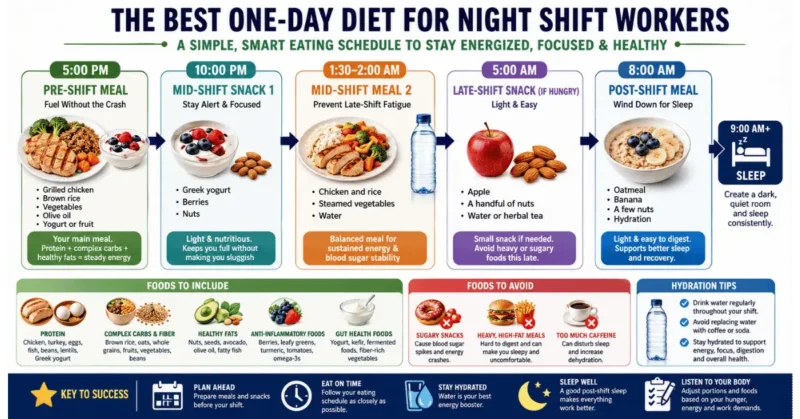
Your schedule will depend on your shift, but here’s a practical example for someone working approximately 7 PM to 7 AM.
| 5:00 PM | Main pre-shift meal |
| 10:00 PM | Light snack or small meal |
| 1:30–2:00 AM | Mid-shift meal |
| 5:00 AM | Optional light snack if hungry |
| 8:00 AM | Small post-shift meal if needed |
| 9:00 AM onward | Sleep |
You don’t have to follow these exact times.
Think of them as a framework.
If your shift begins at 9 PM, move everything later. If you work 11 PM to 7 AM, move the schedule accordingly.
Your eating schedule for night shift work should fit your actual working hours rather than forcing your life into someone else’s timetable.
Hydration for Shift Workers and Gut Health
It’s surprisingly easy to confuse thirst with hunger during a busy shift.
You may spend several hours answering calls, caring for patients, driving, monitoring equipment, or working on a production line without drinking enough.
Keep water available and sip regularly throughout your waking period.
Water should be your main drink.
You can also include unsweetened tea or other low-calorie beverages if they work for you.
Don’t Wait Until You’re Extremely Thirsty
Make hydration part of your routine, not something you remember only when your mouth feels dry.
A reusable water bottle beside you can make this much easier.
And remember that hydration isn’t only about energy. Adequate fluid intake also supports normal digestion and helps your body function properly throughout a long shift.
Anti-Inflammatory Foods That Fit a Night Shift Diet
You don’t need a complicated “detox” diet to include anti-inflammatory foods.
Simple choices can provide plenty of beneficial nutrients.
Consider adding:
- Berries
- Leafy greens
- Broccoli
- Tomatoes
- Olive oil
- Nuts and seeds
- Fatty fish such as salmon
- Turmeric and other herbs and spices
You don’t have to eat all of them in one day.
Think variety over perfection.
A bowl of oatmeal with berries, a chicken-and-vegetable meal, or salmon with vegetables can all contribute useful nutrients to your overall diet.
The Best One-Day Diet: Full Meal Plan for Night Shift
Now let’s put everything together.
This sample one-day diet for night shift workers is designed around a typical 7 PM–7 AM shift.
It prioritizes a substantial meal before work, balanced food during the shift, and a lighter approach toward the end.
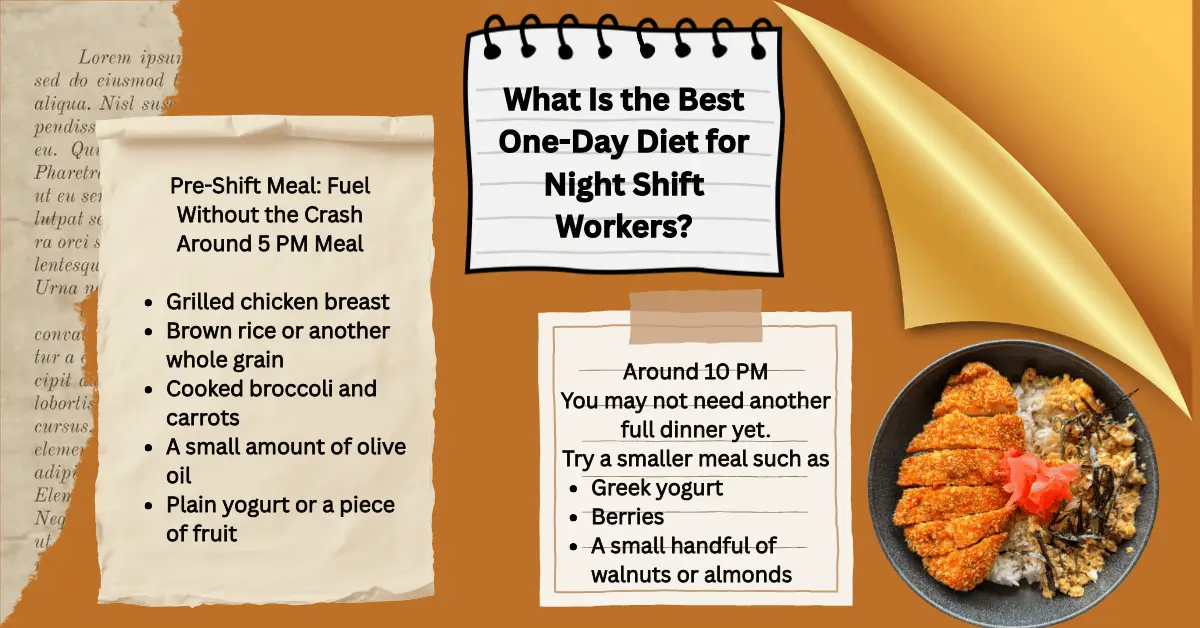
Pre-Shift Meal: Fuel Without the Crash
Around 5 PM
Meal
- Grilled chicken breast
- Brown rice or another whole grain
- Cooked broccoli and carrots
- A small amount of olive oil
- Plain yogurt or a piece of fruit
This is the meal I’d put the most emphasis on.
You’re about to spend the next 12 hours awake and working, so this isn’t the time to survive on a handful of crackers.
The chicken provides protein, the rice supplies carbohydrates, and the vegetables add fiber and micronutrients.
If brown rice feels too heavy before work, use white rice instead. Your digestive comfort matters too.
Why This Combination Works
The combination of protein, fiber-rich foods, carbohydrates, and moderate fat can make the meal more satisfying than a meal based mainly on refined carbohydrates.
You also have time to digest before the busiest part of your shift.
Mid-Shift Meal 1: Stay Alert and Focused
Around 10 PM
You may not need another full dinner yet.
Try a smaller meal or snack such as
- Greek yogurt
- Berries
- A small handful of walnuts or almonds
Or:
- Apple
- One tablespoon of peanut butter
This gives you something substantial without turning your break into another huge meal.
If your job is physically demanding, you may need more food than this. Listen to your hunger rather than forcing yourself to eat a tiny portion simply because it’s nighttime.
Mid-Shift Meal 2: Prevent Late-Shift Fatigue
Around 1:30–2 AM
This is where many night workers make their biggest eating mistake.
They wait until they’re exhausted and then grab whatever is available.
Instead, prepare your meal in advance.
Option
- A small serving of chicken and rice
- Steamed vegetables
- Water
You can also use a whole-grain wrap filled with chicken, vegetables, and a small amount of avocado.
The portion doesn’t need to be huge.
You’re aiming for enough food to satisfy hunger and provide energy without leaving your stomach feeling overloaded.
What to Drink During the Shift
Keep water nearby throughout the night.
If you use caffeine, be strategic with it rather than drinking coffee continuously from the beginning to the end of your shift.
Caffeine can remain in your system for hours, so consuming it too close to your planned bedtime may interfere with sleep.
If you need something besides water, unsweetened tea can be an option depending on its caffeine content.
The goal is for caffeine-free energy to become the entire strategy.
Post-Shift Meal: Wind Down for Sleep
Around 8 AM
This meal depends heavily on your hunger.
If you’re not hungry, you don’t need to force yourself to eat a large breakfast simply because it’s morning.
If you are hungry, choose something relatively light.
For example:
- Plain Greek yogurt with oats and berries
- Oatmeal with banana and a small amount of nuts
- Whole-grain toast with an egg and some fruit
Avoid turning your post-shift meal into a giant feast.
You’re preparing to sleep, not preparing for another 12-hour work period.
Foods That May Fit Better Before Daytime Sleep
Simple, familiar foods that you tolerate well are often the safest choice.
Oats, yogurt, banana, whole-grain toast, and other light options can work well for many people.
There is no need to force a specific “sleep food” if it doesn’t agree with your stomach.
What to Avoid Before Sleeping
Try to avoid:
- Very large meals
- Very spicy meals if they trigger reflux
- Excessive caffeine
- Large amounts of sugary foods
- Heavy fried foods
- Alcohol
If you regularly experience reflux or digestive discomfort after your shift, keeping the final meal smaller may be particularly helpful.
Foods to Include in Your One-Day Diet
A strong night shift diet plan doesn’t need exotic ingredients.
Start with foods you can realistically buy, prepare, and carry to work.
Protein-Rich Foods
Choose from:
- Chicken
- Turkey
- Eggs
- Fish
- Greek yogurt
- Cottage cheese
- Beans
- Lentils
- Tofu
Protein can help make meals more satisfying and supports normal muscle maintenance.
Fiber-Rich Foods
Include:
- Oats
- Brown rice
- Whole-grain bread
- Beans
- Lentils
- Vegetables
- Berries
- Apples
- Pears
- Seeds
Increase fiber gradually if your current diet is low in it, especially if you experience bloating.
Complex Carbohydrates
Good options include:
- Oats
- Potatoes
- Sweet potatoes
- Brown rice
- Whole grains
- Quinoa
You don’t need to eliminate carbohydrates to eat well during night shifts.
The amount and timing matter more than treating carbohydrates as the enemy.
Anti-Inflammatory Foods
Build variety into your meals with:
- Berries
- Leafy greens
- Fatty fish
- Olive oil
- Nuts
- Seeds
- Colorful vegetables
- Herbs and spices such as turmeric
These foods provide nutrients that support overall health rather than acting as a quick fix for the effects of shift work.
Gut Health Foods for Night Shift Workers
Your digestive system may appreciate consistency.
Foods that can support a healthy gut include:
- Yogurt with live cultures
- Kefir
- Fermented vegetables
- Oats
- Beans
- Lentils
- Fruits
- Vegetables
If you’re not used to eating lots of fiber or fermented foods, introduce them gradually.
The last thing you want on a hectic overnight shift is gas or bloating, which can result from a rapid rise in blood sugar.
Foods to Avoid in Your One-Day Diet
A good night-shift diet isn’t just about adding healthy foods. It also helps to know which foods can make the overnight hours harder.
You don’t need to completely ban these foods. The goal is to avoid making them the foundation of your night shift eating routine.
Sugary Snacks and Blood Sugar Spikes
Candy, pastries, cookies, sweetened coffee, and soft drinks are easy to grab when you’re tired.
The problem is that they provide plenty of sugar without much protein or fiber. You may feel a quick lift, but it usually isn’t a satisfying meal.
Instead of making sweets your main source of overnight energy, combine naturally sweet foods with protein or healthy fat.
For example:
- Apple + peanut butter
- Berries + Greek yogurt
- Banana + a small handful of nuts
You can still enjoy a treat occasionally. Just don’t depend on it to get you through every shift.
Heavy, High-Fat Meals
A large fried meal might sound perfect after several hours of work, but it can leave you feeling uncomfortably full.
This is particularly inconvenient when you’re trying to stay alert or planning to sleep after your shift.
Fried chicken, greasy burgers, large portions of fries, and very rich, creamy meals are better kept as occasional choices rather than your standard overnight meal.
Too Much Caffeine
Caffeine can be useful for some night workers, but more isn’t necessarily better.
If you keep drinking coffee or energy drinks toward the end of your shift, the caffeine may still be active when you’re trying to sleep later.
That can create an unpleasant cycle:
Tired → caffeine → poor sleep → more tiredness → more caffeine.
Try to use caffeine strategically and give yourself enough time between your last caffeinated drink and your planned sleep period.
Don’t Forget Hydration
Another common mistake is replacing water with coffee, soda, or energy drinks.
Keep water with you throughout your shift.
If you sweat heavily or work in a hot environment, your fluid needs may be higher, but individual needs vary.
3 Variations of the One-Day Diet for Night Shift Workers
The basic meal plan isn’t supposed to fit everyone perfectly.
Your goals, work demands, body size, appetite, and schedule all influence how much you need to eat.
Here are three practical ways to adjust the same basic structure.
Weight Loss Version: A Calorie-Controlled One-Day Meal Plan
If weight loss is your goal, don’t simply skip meals during your shift.
Instead, focus on foods that provide plenty of nutrition and help you feel satisfied without relying heavily on calorie-dense snacks.
A sample day could look like:
Pre-shift:
Grilled chicken, vegetables, and a moderate portion of brown rice.
Mid-shift snack:
Greek yogurt and berries.
Mid-shift meal:
Chicken or tuna whole-grain wrap with vegetables.
Late-shift snack:
Apple with a small amount of peanut butter.
Post-shift:
Small bowl of oatmeal with banana.
The important part is portion control.
You don’t need to eliminate rice, bread, fruit, or other carbohydrates simply because you’re trying to lose weight.
A sustainable calorie deficit matters more than an unnecessarily restrictive night-shift diet.
Energy & Focus Version: High-Protein Night Shift Diet Plan
If your priority is staying satisfied and supporting demanding work, increase the emphasis on protein and balanced meals.
For example:
Pre-shift:
Eggs, whole-grain toast, avocado, and fruit.
Mid-shift snack:
Greek yogurt, berries, and walnuts.
Mid-shift meal:
Chicken, rice, and mixed vegetables.
Late-shift snack:
Boiled eggs with fruit or hummus with vegetables.
Post-shift:
Oatmeal with milk and a small amount of nuts.
This approach gives you several opportunities to consume protein rather than trying to get most of it from one meal.
Sleep Recovery Version: Lighter Meals
If your biggest problem is feeling uncomfortable when you get home, make the final part of your eating schedule lighter.
Pre-shift:
Chicken, rice, and vegetables.
Mid-shift:
Greek yogurt with berries.
Mid-shift meal:
A small chicken and vegetable wrap.
Late shift:
Fruit and a small handful of nuts if hungry.
Post-shift:
Light oatmeal or yogurt with banana.
The idea is simple: eat enough during your waking period so that you don’t arrive home extremely hungry, then keep your final meal modest.
Tips to Make the One-Day Diet Work Long-Term
A meal plan only works if you can actually maintain it.
You don’t need to prepare elaborate recipes every day. A few simple habits can make your night shift nutrition much easier.
Meal Prep in 15 Minutes
You don’t always need a Sunday afternoon dedicated entirely to meal preparation.
Keep a few basic foods ready:
- Cooked chicken
- Boiled eggs
- Cooked rice
- Washed fruit
- Chopped vegetables
- Greek yogurt
- Nuts
- Whole-grain wraps
When these foods are already available, putting together a balanced meal can take only a few minutes.
You can also prepare your creamy chicken and rice recipe from the previous article in several portions and use it during your shifts.
Adjust Your Eating Schedule for Rotating Shifts
Permanent night workers may find consistency easier than people who switch between day and night schedules.
If your shifts rotate, don’t worry about following the exact same clock times every day.
Instead, use relative timing.
Think:
Wake up → main meal → start work → mid-shift meal → lighter late-shift food → sleep.
This is much more practical than saying you must eat at exactly 5 PM, 10 PM, and 2 AM regardless of your schedule.
Listen to Your Hunger
A meal plan is a guide, not a rulebook.
If you’re genuinely hungry, eat.
If you aren’t hungry, you don’t have to force down a meal just because the clock says it’s time.
At the same time, don’t let yourself become extremely hungry if you know it leads to overeating later.
Finding that middle ground takes some experimentation.
Track Energy, Hunger, and Sleep
For one or two weeks, make a simple note after your shifts.
Record:
- What time did you eat
- What you ate
- How hungry you felt
- Your energy level
- Caffeine intake
- How easily you fell asleep
- How you felt after waking
You may start noticing patterns.
Perhaps a large meal at 3 AM makes you uncomfortable, while a smaller meal works better.
Maybe caffeine after 2 AM affects your sleep.
Or perhaps you discover that skipping your pre-shift meal leaves you ravenous by midnight.
These observations can help you personalize your one-day diet rather than blindly following someone else’s schedule.
What If You’re Still Hungry During Your Shift?
Don’t assume hunger means your diet has failed.
Your food requirements depend on factors such as your body size, activity level, work demands, and overall diet.
If you’re consistently hungry, your meals may simply be too small.
Try adding a little more:
- Protein
- Vegetables
- Whole grains
- Fruit
- Healthy fats
For example, add an extra egg to breakfast, increase your chicken portion, or include fruit with your yogurt.
The goal is to find an amount that keeps you satisfied without leaving you uncomfortably full.
What If You Don’t Feel Hungry at Night?
That’s also common.
Some night workers find that their appetite changes when they switch schedules.
You don’t have to force yourself to eat a large meal simply because it’s traditionally “dinner time.”
Instead, make your pre-shift meal substantial enough to sustain you through your workday, then use smaller meals or snacks as needed later.
A Simple Night Shift Eating Schedule to Remember
If you don’t want to memorize an entire meal plan, remember this pattern:
Before the Shift (Wake-up / Evening)
- Eat a larger meal with complex carbs and lean protein.
- Try grilled chicken breast with quinoa and steamed broccoli.
- Drink water to stay hydrated early.
During the Shift (Middle of the Night)
- Eat a moderate, protein-packed meal to stay alert.
- Try a turkey wrap on whole wheat with a side of mixed berries.
- Avoid heavy, greasy foods that cause sluggishness.
After the Shift (Before Daytime Sleep)
- Eat a small, light snack with tryptophan and magnesium.
- Try a small bowl of oatmeal with warm milk or a handful of almonds.
- Avoid heavy meals that disrupt daytime sleep quality.
Shift Diet Tips
Throughout the day, stay hydrated. Drink a lot of water.
- Limit Caffeine: Stop caffeine intake at least six hours before your shift ends.
- Control Portions: Eat smaller, frequent meals instead of one large meal to help digestion.
Throughout your waking period:
Drink water regularly.
This simple structure is easier to maintain than a complicated diet with dozens of rules.
Final Thoughts: Your Best One-Day Diet Is One You Can Repeat
There isn’t one magical one-day diet that will make every night shift easier.
What matters is building an eating pattern that fits your work schedule and provides your body with adequate nutrition without making your overnight hours unnecessarily difficult.
Start with the basics:
- Eat a balanced meal before your shift.
- Combine protein, fiber, and carbohydrates.
- Don’t wait until you’re starving to eat.
- Keep middle-of-the-night portions moderate.
- Choose lighter foods as you approach bedtime.
- Drink water regularly.
- Use caffeine carefully.
- Limit sugary snacks and heavy fried meals.
- Pay attention to how different foods affect your digestion, energy, hunger, and sleep.
And remember: you don’t have to change everything overnight.
Start by preparing one meal before your next shift. Then improve your snacks. Then work on your hydration and meal timing.
Small changes are much easier to maintain than an extreme diet.
If you’re working nights regularly, your food routine deserves the same attention as your sleep routine. Once you have a few reliable meals ready to go, eating well during a 10- or 12-hour shift becomes much less complicated—and you can spend less of your shift wondering what to eat next.
Read more about night shift workers’ health.
You might like: