

Lose 10 kg in just 10 days.
That promise sounds tempting, especially when you want fast results for an upcoming event, feel uncomfortable with your current weight, or have tried several diets without achieving the progress you hoped for.
You may also have seen a simple diet chart built around boiled eggs, apples, oatmeal, and green tea.
But before you follow it, there is an important question:
Can you really lose 10 kg of body fat in only 10 days?

No—not realistically or safely for most people. Rapid changes on the scale can include water, stored carbohydrate, food in the digestive system, and some body fat. It does not mean that 10 kg of fat has disappeared.
If you want to use 10 days to make progress, a better approach is to use those days as a healthy weight-loss reset rather than a crash diet.
What Does “10 kg in 10 Days” Actually Mean?
The first thing to understand is the difference between losing weight and losing body fat.
Your body weight is made up of several things, including:
- Body fat
- Muscle and other lean tissue
- Water
- Glycogen, which is stored carbohydrate
- Food and waste in your digestive system
When you suddenly eat much less food, your weight can fall quickly.
However, some of that early change can come from water and glycogen, not just fat.
This is why someone may see a dramatic change on the scale during the first few days of a restrictive diet without actually losing an equivalent amount of body fat.
Can 10 kg of fat disappear in 10 days?
For most people, no.
Losing that much actual body fat in such a short period would require an extreme energy deficit. That is very different from following a balanced weight-loss plan.
The NIH’s Body Weight Planner also shows why weight loss isn’t simply a matter of applying a single fixed-calorie formula. Your body’s energy needs change as your weight, food intake, and activity change.
So if a diet promises 10 kg of fat loss in 10 days, treat that claim with serious caution.
Why the Viral Egg, Apple, and Green Tea Diet Gets Attention
The diet chart that often circulates online looks extremely simple.
Breakfast
- 3 boiled eggs
- Green tea
Lunch
- 3 apples
- 3 boiled eggs
- Green tea
Evening
- 1 cup oatmeal
- Green tea
Dinner
- Green tea
It’s easy to understand.
There are no complicated recipes, expensive ingredients, or elaborate meal-prep instructions.
And because the food intake is so restricted, the scale may fall quickly.
But a diet can produce a quick change on the scale without being a good weight-loss plan.
That distinction matters.
Is the Egg and Apple Diet a Balanced Weight-Loss Plan?
No.
Eggs, apples, and oatmeal can all fit into a healthy eating pattern. The problem is the overall combination and extreme restriction.
Instead of relying on a small number of foods, a balanced diet should provide a wide range of foods and nutrients.
For weight management, the NIH recommends an eating pattern that includes vegetables, fruits, whole grains, and a variety of protein sources.
The viral plan falls short in several ways.
It has very little food variety.
You repeatedly get eggs, several apples, oatmeal, and green tea.
There is almost no variety of vegetables, protein sources, or healthy fats.
It has no proper dinner.
Green tea isn’t a meal.
Your body still needs nourishment in the evening, even when you’re trying to lose weight.
It can become unnecessarily restrictive.
When a plan removes large parts of your normal diet, hunger and fatigue can become difficult to manage.
And a plan that you cannot maintain is unlikely to produce lasting results.
Why Six Eggs a Day Isn’t a Weight-Loss Strategy
Eggs are nutritious and can absolutely be part of a healthy diet.
They provide protein and several important nutrients.
But eating eggs repeatedly throughout the day doesn’t make them a special fat-burning food.
Instead, vary your protein sources.
You could include:
- Eggs
- Chicken
- Fish
- Lentils
- Beans
- Yogurt
- Cottage cheese
- Tofu
- Nuts and seeds
Variety makes a healthy diet easier to maintain.
Additionally, you can obtain a greater variety of nutrients instead of being overly dependent on one item.
What About Eating Three Apples at Lunch?
Apples are a nutritious fruit.
The issue isn’t that apples are unhealthy.
The issue is using three apples as a major part of an extremely restricted meal while leaving out other important foods.
A more balanced lunch might look like this:
Grilled chicken + vegetables + whole-wheat roti + one apple
Now you have:
- Protein from chicken
- Fiber and micronutrients from vegetables
- Carbohydrates from roti
- Fruit from the apple
That is a much more complete meal.

Is Green Tea a Fat-Burning Shortcut?
No.
Green tea can be a perfectly reasonable unsweetened drink for many people, but it shouldn’t be treated as a magic weight-loss solution.
There is another reason to pay attention to it: green tea contains caffeine.
If you’re sensitive to caffeine, drinking it later in the day may interfere with sleep.
That matters because sleep is part of a healthy lifestyle, and poor sleep can make it harder to maintain good eating and activity habits.
So drink green tea because you enjoy it—not because you expect it to replace a balanced diet.
In ten days, how much weight can you actually lose?
There isn’t one exact number that applies to everyone.
Your rate of weight change depends on factors such as
- Starting body weight
- Food intake
- Physical activity
- Age
- Sex
- Sleep
- Existing health conditions
- Medications
- Individual metabolism
You may see the scale move noticeably during 10 days, particularly if you previously consumed a lot of salty or highly processed foods.
But a change in scale is not the same as losing the same amount of body fat.
A better approach is to look at the trend over time rather than expecting a dramatic transformation in 10 days.
Maintaining a healthy weight usually takes time. The CDC states that modest weight loss of 1 to 2 pounds per week is more likely to be sustained than rapid weight loss.
A Better 10-Day Weight-Loss Reset
Instead of trying to force your body to lose 10 kg, use the next 10 days to establish habits that can continue beyond day 10.
Days 1–3: Build regular meals
Start with three balanced meals rather than skipping meals to create an extreme calorie deficit.
At each meal, include a source of protein.
Add vegetables or fruit and choose a reasonable portion of carbohydrates.
Days 4–6: Improve food quality
Look for easy swaps.
Replace:
- Sugary drinks → water or unsweetened drinks
- Highly processed snacks → fruit, yogurt or nuts
- Oversized portions → moderate portions
- Refined grains → more whole-grain choices where practical
You don’t have to change everything at once.
Days 7–10: Add consistent movement
Choose an activity you can repeat.
A brisk walk is a good starting point.
You could walk for 20–30 minutes or divide your activity into shorter sessions if that works better for your schedule.
The NIH recommends incorporating physical activity into everyday life and notes that even short periods of activity can contribute to overall health.
The goal isn’t to exhaust yourself.
The goal is to become more consistently active.
What Should a Balanced Weight-Loss Day Look Like?
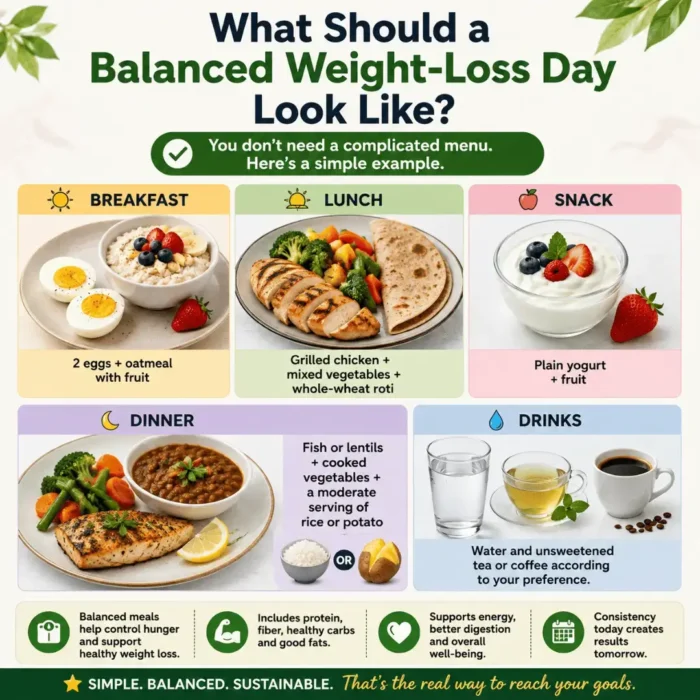
You don’t need a complicated menu.
Here’s a simple example.
Breakfast
2 eggs + oatmeal with fruit
Lunch
Grilled chicken + mixed vegetables + whole-wheat roti
Snack
Plain yogurt + fruit
Dinner
Fish or lentils + cooked vegetables + a moderate serving of rice or potato
Drinks
Water and unsweetened tea or coffee according to your preference
This isn’t a personalized calorie prescription.
Your individual needs depend on your body, activity, health, and other factors. The purpose is to demonstrate the structure of a balanced day, not to set the same calorie target for everyone.
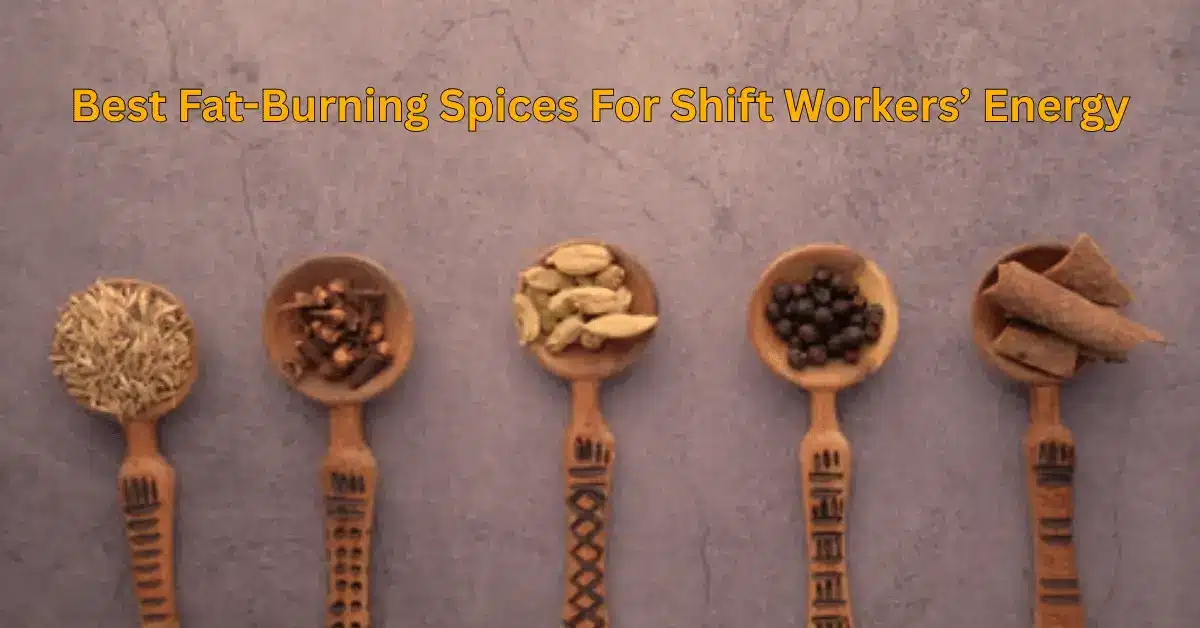
Night Shift Workers and Weight-Loss Efforts
If you work night shifts, trying to lose weight can feel especially difficult.
Your eating schedule may not match the usual breakfast-lunch-dinner routine. Long shifts can also make convenience foods, vending-machine snacks, and sugary drinks more tempting.
That doesn’t mean you need an extreme diet.
Instead, plan your meals around your actual shift schedule.
For example:
- Eat a balanced meal before your shift.
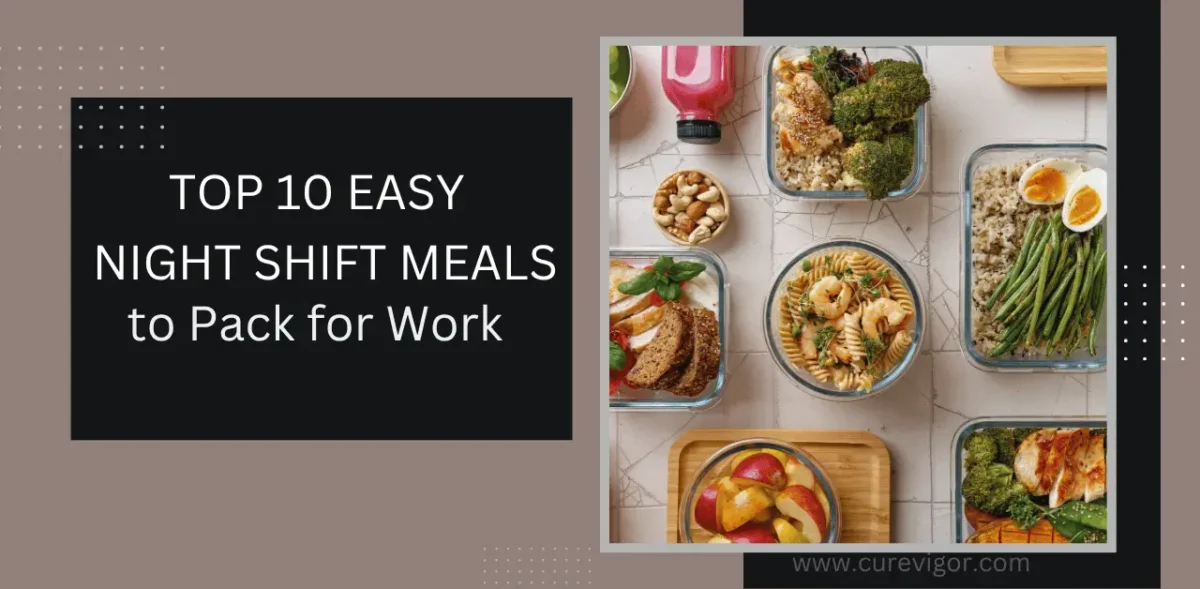
- Bring a protein-rich meal or snack with you.
- Keep fruit, yogurt, nuts, or another practical snack available.
- Avoid relying on sugary drinks for energy.
- Be careful with caffeine close to your planned sleep time.
- Try to maintain a consistent sleep schedule.
For night-shift workers, weight-loss efforts should not come at the expense of adequate food or sleep.
A sustainable routine is much more useful than trying to survive a 10-day crash diet.
Who Should Avoid Rapid Weight-Loss Diets?
Extreme dieting isn’t appropriate for everyone.
You should seek individualized advice from a qualified healthcare professional before making major dietary changes if you:
- Are pregnant or breastfeeding
- Are under 18
- Have a history of an eating disorder.
- Have a medical condition that affects nutrition or weight.
- Take medications that may be affected by major changes in food intake.
- Have been advised to follow a medically supervised diet
Very low-calorie diets can require professional supervision. The NHS notes that diets providing fewer than 800 calories per day are not suitable or safe for everyone and are generally used only in specific circumstances with appropriate support.
Don’t turn a weight-loss goal into a competition with your health.
Why Extreme Diets Can Backfire
The biggest problem with a crash diet isn’t simply that it is difficult.
It’s that you may struggle to continue it.
A severely restrictive plan can leave you feeling:
- Very hungry
- Tired
- Weak
- Irritable
- Unable to concentrate
- Less interested in physical activity
And when the diet becomes unbearable, you may return to your previous eating habits.
That’s why the better question isn’t
“How little can I eat for 10 days?”
It’s:
“What eating pattern can I realistically continue after 10 days?”
That change in perspective can have a significant impact.
Don’t Let the Scale Decide Whether You Succeeded
Your weight can change from one day to another.
A higher number doesn’t automatically mean you’ve gained body fat.
Changes in:
- Water retention
- Sodium intake
- Carbohydrate intake
- Digestion
- Food volume
- Hormonal changes
- Exercise
can all affect your weight.
Instead of judging yourself by one morning’s number, look at the longer-term trend.
Also pay attention to habits:
- Did you eat more vegetables?
- Did you drink more water?
- Did you walk consistently?
- Did you reduce sugary drinks?
- Did you build more regular meals?
Those changes matter.
Your Real 10-Day Goal
Forget the pressure to lose exactly 10 kg.
For the next 10 days, aim to:
- Eat balanced meals
- Include protein regularly
- Eat more vegetables and whole foods.
- Choose fruit instead of highly processed snacks more often.
- Drink more water
- Reduce sugary drinks
- Move every day
- Protect your sleep
- Track your progress without obsessing over the scale.
These goals may not create a dramatic “before and after” picture in 10 days.
But they can give you something more valuable:
a routine you can continue.
FAQs on the 10 kg in 10 Days Diet Plan: Can You Really Lose That Much Weight?
Q. Can I really lose 10 kg in 10 days?
Losing 10 kg of body fat in 10 days is neither realistic nor safe for most people. A rapid decrease on the scale can include water and other changes in body mass, not just fat.
Q. Is the boiled egg and apple diet safe?
It is not a balanced long-term eating pattern. Although eggs, apples, and oatmeal can all be nutritious foods, this particular plan provides very little variety and can be extremely restrictive.
Q. Can I eat eggs while trying to lose weight?
Yes. Eggs can be included in a healthy weight-loss diet. What matters is your overall eating pattern, portion sizes, nutritional variety, and energy intake.
Does green tea burn belly fat?
Green tea should not be treated as a magic solution for belly fat. It can be included as an unsweetened beverage, but sustainable weight loss depends on your overall diet, activity, and lifestyle.
Q. If I want to reduce weight more quickly, should I skip dinner?
Not necessarily. Skipping dinner isn’t required for weight loss and can make some people excessively hungry later. A balanced dinner with protein, vegetables, and an appropriate portion of carbohydrates can fit into a weight-loss plan.
Q. What is the quickest, healthiest method of weight loss?
Rather than seeking the fastest possible weight loss, aim for a sustainable calorie deficit alongside nutritious food, regular physical activity, and healthy habits.
Q. What should I do after the 10 days?
Don’t immediately return to old habits.
Keep the changes that worked for you and gradually build a longer-term eating and activity routine.
Ready to Start Your 10-Day Reset?
Don’t make “lose 10 kg” your only measure of success.
Start today with three simple actions:
1. Plan your next balanced meal.
2. Replace your next sugary drink with water or an unsweetened option.
3. Take a 20–30 minute walk, or choose another activity you can comfortably repeat.
Then do it again tomorrow.
Ten days can be a beginning, not a deadline.
If you’re trying to lose weight, the most valuable result isn’t seeing the biggest possible drop on the scale. It’s building habits that still work when day 10 is over.
Important note
This article provides general health and nutrition information and is not an individualized diet plan or medical advice. Weight-loss needs differ between individuals.
If you have a medical condition, take medication, are pregnant or breastfeeding, are under 18, or have a history of an eating disorder, speak with an appropriately qualified healthcare professional before making major changes to your diet.
Read more about night shift workers’ health.
You might like: