Learn how to prevent heart attacks with expert tips on lifestyle changes, managing risk factors, and recognizing symptoms. Discover proactive steps to protect your heart health and reduce your risk of cardiovascular events.
Can You Prevent a Heart Attack?
You can significantly reduce your risk of a heart attack by controlling blood pressure, managing cholesterol, not smoking, eating a heart-healthy diet, staying physically active, keeping a healthy weight, sleeping well, and managing stress.
For night shift workers, protecting your circadian rhythm and timing meals carefully matters even more.
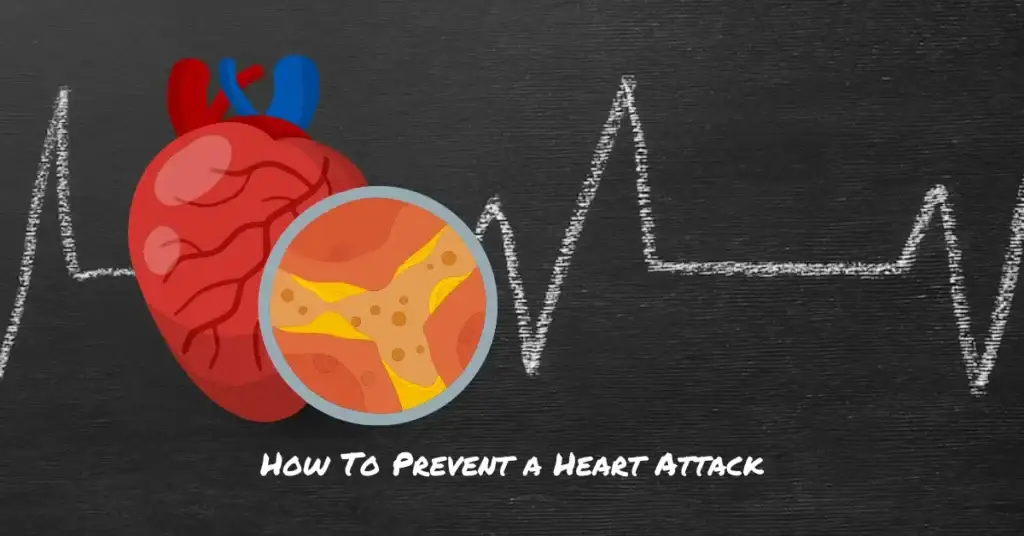
A heart attack is rarely random. It usually develops over years from a combination of risk factors. The good news is that most of those risk factors are modifiable.
This guide explains what causes a heart attack, gives you 10 evidence-based prevention strategies, includes specific advice for night shift workers, and tells you exactly what to do if symptoms ever appear.
What Causes a Heart Attack?
When blood flow to a portion of the heart muscle is cut off long enough to cause damage to that muscle, a heart attack occurs.
The most common reason is coronary artery disease. This disorder is characterized by fatty deposits, or plaque, that accumulate inside the artery walls that supply your heart with blood.
We call this process atherosclerosis.
Plaque takes time to form. Over time, a number of factors come into play:
High blood pressure damages the inner lining of arterial walls, making them more susceptible to plaque.
Sometimes called “bad” cholesterol, elevated LDL cholesterol carries cholesterol into artery walls, where it accumulates.
- Inflammation plays a central role. Chronic inflammation irritates the artery wall and makes plaque more likely to rupture.
- Smoking directly damages blood vessels and accelerates plaque formation.
- High blood sugar and insulin resistance injure arteries and promote inflammation.
- Stress hormones like cortisol raise blood pressure and can increase inflammation.
A heart attack usually occurs when a plaque ruptures. At the rupture site, the body reacts by forming a blood clot. The heart muscle starts to lose oxygen if that clot obstructs an artery.
Understanding this process is important because each prevention strategy targets one part of it.
10 Ways to Prevent a Heart Attack Naturally
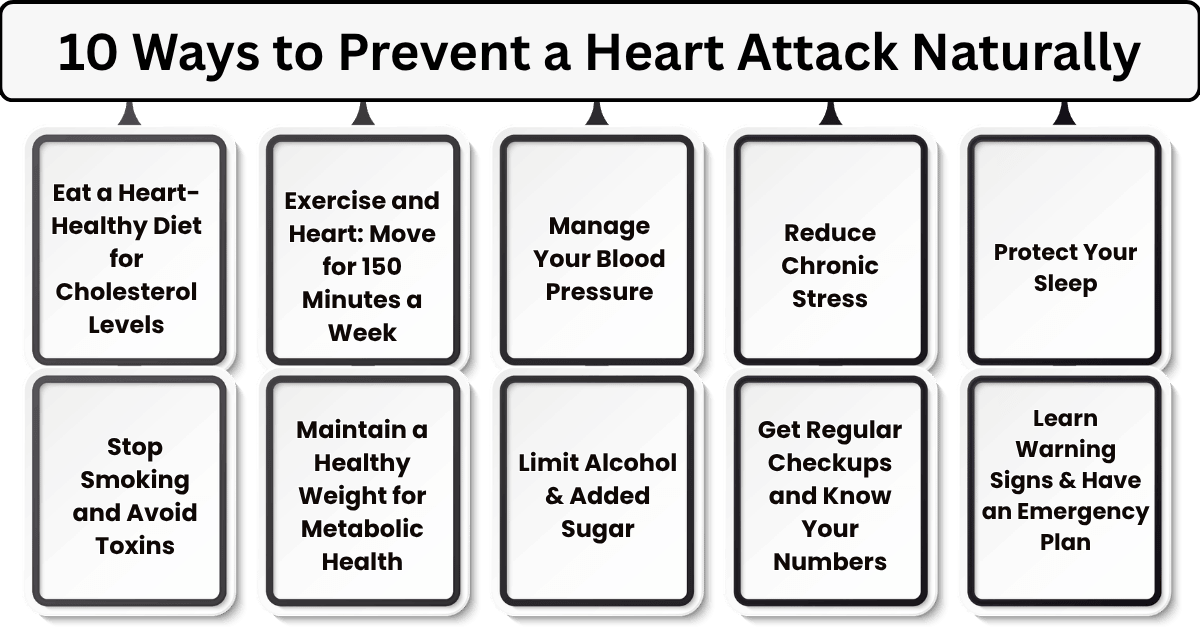
Major health organizations, including the World Health Organization, the American Heart Association, and the CDC, support these strategies.
1. Eat a Heart-Healthy Diet for Cholesterol Levels & Arterial Health
Your diet is your most powerful daily tool.
What works best:
- Vegetables and fruits at most meals; they provide fiber, antioxidants, and potassium.
- Whole grains like oats, brown rice, quinoa, and whole-grain bread.
- Nuts, seeds, avocados, and olive oil provide healthy fats.
- Fatty fish like salmon, mackerel, and sardines for omega-3s.
- Legumes, beans, lentils, and chickpeas provide plant protein and soluble fiber.
What to reduce:
- Some processed baked goods and fried foods contain trans fats from partially hydrogenated oils.
- Processed meats like bacon, sausages, and deli meats
- Sugary drinks and sweets
- Excess salt, especially from packaged foods
A Mediterranean-style eating pattern has the strongest evidence for heart attack prevention.
2. Exercise and Heart: Move for 150 Minutes a Week
Exercise decreases cholesterol, lowers blood pressure, strengthens the heart, helps regulate blood sugar, and lessens inflammation.
The standard recommendation from the American Heart Association and WHO:
- At least 150 minutes a week of moderate-intensity aerobic exercise (swimming, cycling, brisk walking), 75 minutes a week of strenuous exercise (rapid cycling, jogging), or a mix of the two
- Also, do muscle-building exercises at least twice a week.
Do not let perfect be the enemy of good. Three 10-minute walks a day still count. Consistency matters more than intensity.
3. Manage Your Blood Pressure
The biggest modifiable risk factor for heart attack and stroke is high blood pressure.
Why it matters: High blood pressure pushes harder against artery walls. Over time, this damages the inner lining and accelerates plaque buildup.
What to do:
- Understand your numbers. Generally speaking, a good blood pressure is less than 120/80 mmHg.
- Reduce sodium intake. Most people consume too much from processed food, not the salt shaker.
- Eat potassium-rich foods like bananas, leafy greens, potatoes, and beans.
- Move regularly and maintain a healthy weight.
- Take your blood pressure medicine as your doctor directs.
Do not wait for symptoms. High blood pressure typically has no warning signs.
4. Reduce Chronic Stress
For most people, stress does not immediately result in a heart attack. But chronic stress raises blood pressure, increases inflammation, disrupts sleep, and often leads to unhealthy coping behaviors like overeating, drinking alcohol, or smoking.
What works:
- Regular physical activity
- Deep breathing or breathwork
- Setting boundaries around work
- Building recovery time into your day
- Talking to someone instead of bottling things up
Stress reduction is not a replacement for medical treatment, but it is a meaningful part of the overall prevention picture.
5. Protect Your Sleep
Sleep is not optional for heart health.
During deep sleep, blood pressure drops and the body repairs blood vessels. Increased inflammation, weight gain, elevated blood pressure, and an increased risk of heart disease have all been associated with poor sleep.
The target: 7 to 9 hours of quality sleep per night for most adults.
If you work nights, this becomes harder but even more important. Protect your daytime sleep like a medical appointment: blackout curtains, a consistent sleep schedule, and a cool, quiet room.
6. Stop Smoking and Avoid Toxins
Smoking elevates blood pressure, causes inflammation, destroys blood vessels, and boosts the risk of blood clots. It is one of the strongest preventable causes of heart attack.
The good news: quitting reduces risk quickly. Your heart rate and blood pressure improve within days, and long-term risk continues to drop over time.
What helps:
- Set a quit date
- Use nicotine replacement therapy or prescribed quit aids
- Get support from a quitline or counselor
- Avoid triggers, including alcohol and other smokers
Smoking cessation is one of the highest-impact decisions you can make for your heart.
7. Maintain a Healthy Weight for Metabolic Health
Extra weight, especially around the abdomen, increases blood pressure, raises cholesterol, contributes to insulin resistance, and increases inflammation.
The goal is not perfection. Consistently losing 5–10% of body weight can improve blood pressure, blood sugar, and cholesterol.
How to approach it:
- Focus on food quality first, not restrictive dieting
- Increase movement throughout the day
- Prioritize protein and fiber for satiety
- Improve sleep, because poor sleep increases hunger hormones
8. Limit Alcohol and Added Sugar
Alcohol adds extra calories and increases blood pressure. If you do drink, keep it to one standard drink for women and two for men per day. However, cutting back on alcohol consumption is beneficial for your heart.
Added sugar can increase inflammation, elevate triglycerides, and contribute to weight gain. In most diets, sugar-filled beverages are the main source of added sugar.
Practical swap: replace sugary drinks with water, sparkling water, or unsweetened tea.
9. Get Regular Checkups and Know Your Numbers
Many heart attack risk factors are silent.
At minimum, know these numbers:
- Blood pressure: healthy is below 120/80 mmHg
- LDL cholesterol: ask what your target should be based on your risk
- Blood sugar: fasting glucose or HbA1c
- Body mass index or waist circumference
- Your overall heart attack risk score: your doctor can estimate this using a risk calculator
If you work night shifts, tell your doctor. Shift work itself is a risk factor, and your numbers may need more frequent monitoring.
10. Learn Warning Signs and Have an Emergency Plan
Prevention also means being prepared. A heart attack is a medical emergency. Quick action saves heart muscle and lives.
Know the warning signs and teach them to your family. (See the full section below.)
Your emergency plan:
- Save emergency numbers in your phone
- Find the quickest way to the closest hospital.
- Tell family or coworkers what to do if you collapse
- Learn hands-only CPR
- If you have a defibrillator (AED) at work, know where it is
How Night Shift Workers Can Prevent a Heart Attack
Night shift work is more than an inconvenience. It is a recognized occupational health factor that can increase the risk of cardiovascular disease.
Why night shifts increase risk:
- Circadian rhythm disruption: your internal clock expects rest at night and activity during the day
- Higher inflammation due to misaligned sleep and eating
- Increased blood pressure: blood pressure normally dips at night; night work flips this pattern
- Poor food choices because healthy options are often unavailable at 3 a.m.
- Reduced sleep quality and duration during daytime
- Less time and energy for exercise
Does this mean night workers are doomed? No. It means the prevention habits above matter even more, and some need to be adapted.
Blood Pressure Management for Shift Workers
- Check your blood pressure regularly, and ask your doctor whether to take readings at a specific time of day. Night workers’ blood pressure rhythms differ from day workers.
- Avoid heavy meals at night, because large nighttime meals can raise blood pressure and blood sugar more than the same meal would during the day.
- Limit caffeine after the midpoint of your shift. Caffeine raises blood pressure and ruins daytime sleep.
Heart-Healthy Diet on Night Shift
- Eat a balanced meal before your shift, like a chicken-and-rice bowl with vegetables.
- Eat small snacks with protein and fiber during the night: yogurt, boiled eggs, hummus, and fruit.
- Avoid the 3 a.m. vending-machine trap by packing food before work.
- Keep a water bottle at your workstation and finish at least one liter during your shift.
For a full week of specific meals, see our Night Shift Meal Plan: A Full Week of Easy Meals for Overnight Workers.
Sleep and Heart Health for Shift Workers
- Protect your daytime sleep as the most important part of heart attack prevention.
- Use blackout curtains, earplugs, and a consistent sleep schedule even on days off.
- Avoid alcohol before bed. It may help you fall asleep, but it fragments sleep and raises inflammation.
- Keep your bedroom cool and dark.
Exercise and Heart for Rotating Schedules
- Do not try to exercise at the same time every day unless that works for you.
- Fit movement into your shift, take stairs, walk during breaks, and do a 15-minute bodyweight routine before your shift.
- On days off, prioritize longer workouts or outdoor activity for daylight exposure.
Stress Reduction Tools for Shift Workers
- Set strict boundaries around schedule changes and extra shifts when possible.
- Use breathwork during breaks: inhale for 4 seconds, exhale for 6 seconds, and repeat for 2 minutes.
- Build recovery routines after night blocks, light meals, quiet time, dark rooms, and slow activities.
Foods That Support Heart Health
Eat more of these:
| Fatty fish | Salmon, mackerel, sardines | Omega-3s reduce inflammation and support healthy cholesterol. |
| Whole grains | Oats, barley, quinoa, brown rice | Soluble fiber lowers LDL cholesterol |
| Legumes | Lentils, chickpeas, beans | Plant protein and fiber improve metabolic health. |
| Nuts and seeds | Walnuts, almonds, flaxseed, chia | Healthy fats and fiber |
| Vegetables | Leafy greens, broccoli, carrots | Potassium, fiber, antioxidants |
| Fruits | Berries, apples, citrus, bananas | Fiber and anti-inflammatory compounds |
| Olive oil | Extra-virgin olive oil | Monounsaturated fats reduce inflammation. |
Eat less of these:
| Processed meats (bacon, sausages, deli meat) | High sodium, saturated fat, and preservatives linked to heart disease |
| Sugary drinks | Rapid blood sugar spikes, weight gain, inflammation |
| Trans fats and hydrogenated oils | Raise LDL and lower HDL cholesterol. |
| Fried fast food | Excess calories, unhealthy fats, and high sodium |
| Highly processed snacks | Added sugar, refined starch, and salt |
The Best Exercise for Heart Health
Cardio for blood pressure management
- Brisk walking
- Cycling
- Swimming
- Jogging
- Rowing
- Dancing
Any activity that raises your heart rate and makes your breathing more labored counts.
Strength training for metabolic health
- Bodyweight exercises: squats, push-ups, lunges
- Resistance bands
- Weight machines or free weights
Strength training builds muscle, which helps control blood sugar and supports a healthy metabolism.
Daily movement to reduce inflammation
Sitting for long hours is bad for the heart, even if you exercise. Break up sitting time every 30 minutes with 2–3 minutes of standing, stretching, or walking.
For night shift workers
10-minute movement breaks during your shift can reduce fatigue and support blood sugar control. Don’t save all movement for after work—spread it throughout the day.
Lifestyle Habits That Lower Heart Disease Risk
Smoking Cessation Strategies That Work
- Nicotine replacement therapy (patches, gum, lozenges)
- Prescription medications
- Counseling or quitlines
- Avoiding alcohol and other triggers during the first weeks
- Reminding yourself that cardiovascular risk drops quickly after quitting
Alcohol Moderation and Heart Health
- If you drink, keep it to one standard drink or less per day for women and two or less per day for men.
- Choose alcohol-free days during the week.
- Do not use alcohol to sleep after a night shift; it worsens sleep quality and raises blood pressure.
Managing Stress to Protect the Heart
- Schedule daily recovery time, even just 10 minutes.
- Use a simple breathing exercise when stress spikes.
- Move your body; walking is a proven stress reducer.
- Ask for help when stress feels overwhelming.
Warning Signs of a Heart Attack You Should Never Ignore
Common heart attack symptoms include:
- Chest pain, pressure, fullness, or squeezing, often lasting more than a few minutes
- Pain radiating to the arm, jaw, neck, back, or stomach
- Breathlessness, either with or without chest pain
- Cold sweat
- Nausea or vomiting
- Lightheadedness or sudden dizziness
- Unexplained extreme fatigue
Women may also experience:
- Pain in the back, jaw, or neck
- Nausea and vomiting
- Shortness of breath
- Unusual fatigue
Women often have subtler symptoms than men, and the classic “elephant sitting on the chest” symptom is less common.
If you or someone else has these symptoms
- Call emergency services immediately. Do not drive yourself.
- Sit down and rest. Do not try to “walk it off.”
- Tell the dispatcher exactly what you feel.
- Perform hands-only CPR if the victim collapses and is not breathing normally. Apply forceful, quick compressions in the middle of the chest at a rate of 100–120 per minute.
- Use an AED if one is available.
When in doubt, call. It is better to be checked and sent home than to delay life-saving care.
Heart Attack Prevention Checklist
Daily Habits
- Eat at least 5 servings of vegetables and fruits today
- Choose a protein source with fiber at each meal
- Limit salt, sugary drinks, and processed snacks
- Move your body; even 10 minutes counts
- Drink enough water
- Practice stress control, even for 2 minutes
- Get your planned sleep hours
Weekly Habits
- Total 150 minutes of moderate aerobic activity
- 2 sessions of strength training
- Meal prep for at least 3 shifts or workdays
- Review your caffeine and alcohol intake
- Plan no-alcohol days
Monthly and Yearly Habits
- Check your blood pressure if you have a home monitor
- Track your weight
- Schedule an annual checkup
- Ask your doctor for your heart attack risk score
- Review your emergency plan with family or roommates
Questions to Ask Your Doctor
- What is my blood pressure target, and is my current level healthy?
- What are my LDL cholesterol and blood sugar numbers?
- What is my 10-year risk of a heart attack?
- Do I need medication, or can lifestyle changes alone get me to target?
- Given my night shift schedule, when is the best time to take medication and measure blood pressure?
FAQ: How to Prevent a Heart Attack
Q. Can you reverse plaque and improve arterial health?
Aggressive risk factor control, especially lowering LDL cholesterol and blood pressure, can slow plaque growth and sometimes shrink plaque slightly. More importantly, treatment makes plaque more stable, which means it is less likely to rupture. The goal is not always “reversal”; it is preventing the plaque from causing a heart attack.
Q. Is heart attack prevention different for women?
The core prevention strategies are the same: diet, exercise, no smoking, blood pressure control, cholesterol management, sleep, and stress control. However, women may have subtler heart attack symptoms, and certain conditions, like pregnancy complications, autoimmune disease, and early menopause, can increase risk. Women should discuss these factors with their doctor.
Q. How much does stress reduction really help prevent a heart attack?
Chronic stress contributes to heart risk by raising blood pressure, increasing inflammation, disrupting sleep, and driving unhealthy behaviors. Stress reduction alone is not enough if other risk factors are ignored, but it is a meaningful treatment target. The most powerful effect is often indirect: less stress tends to improve eating, sleep, exercise, and medication adherence.
Q. Can I prevent a heart attack if heart disease runs in my family?
Genetics increase your risk, but they do not determine your fate. Lifestyle changes and, when needed, medication can dramatically reduce risk even in people with a strong family history. The key is knowing your numbers and working earlier and harder on modifiable risk factors.
Q. Should I take aspirin every day to prevent a heart attack?
Do not start daily aspirin without talking to your doctor. Aspirin can reduce clot-related heart attack risk, but it also increases bleeding risk. Whether it is right for you depends on your age, risk factors, and medical history.
Start Today: Your Next Step
Preventing a heart attack does not require a perfect life. It requires small, consistent actions repeated for years.
This week, choose one thing:
- If you have not had a checkup in over a year, schedule one. Get your blood pressure and cholesterol checked.
- If you smoke, set a quit date and ask your doctor about support.
- If you work nights, pack one heart-healthy meal and one snack for your next shift using the Night Shift Meal Plan.
- If you live with others, teach them the warning signs and practice your emergency plan.
The best time to prevent a heart attack is before you ever need emergency care. Start today.
General Health Disclaimer: This article provides general education and is not personalized medical advice. Consult your physician before making any dietary, exercise, or pharmaceutical changes if you have high blood pressure, diabetes, a heart ailment, or other health issues.
Read more articles on night shift workers’ health.
You might like to read: