You think multitasking makes you productive. Science disagrees. Discover why monotasking delivers better work, less stress, and sharper focus — and how to actually practice it starting today.
You open your laptop to finish one important task. Thirty minutes later, you’ve replied to four emails, scrolled through Slack, checked the news, and somehow ended up watching a YouTube video about coffee brewing. The original task? Still untouched.
If that feels familiar, you’re not lazy or undisciplined. Your brain is just doing exactly what a distracted environment trained it to do: jump, switch, react, repeat.
I used to wear multitasking like a badge of honor. I thought handling five things at once meant I was sharp, fast, and capable.
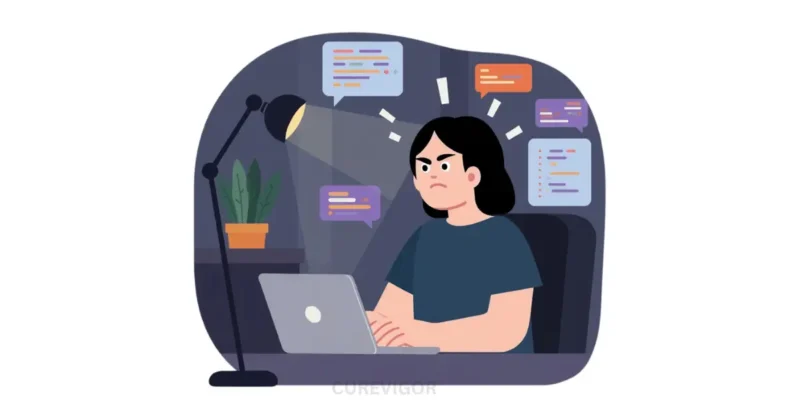
But I later realized I was producing mediocre work at a slower pace, and by noon, I was exhausted.
That changed when I discovered monotasking, a concept supported by compelling research that permanently shifted how I work.
Quick Summary Box
Estimated Read Time: 12–14 minutes
Audience: Professionals, students, and anyone who feels overwhelmed, distracted, or mentally drained by modern work culture
Tone: Calm, honest, research-backed, and practical
What you will find in this article:
- Why multitasking is costing you up to 40% of your productive time without you realizing it
- What monotasking actually means and why it goes deeper than just doing one thing at a time
- The science behind attention residue, IQ drop, and cognitive switching costs
- A direct comparison between monotasking and multitasking across key performance factors
- Real benefits backed by research and personal experience
- The honest challenges of building a focus habit in a distraction-first world
- Practical strategies, including the Pomodoro Technique, time-blocking, and the One Tab Rule
- A ready-to-use daily checklist to start monotasking today
- Nine FAQs answered in plain, straightforward language
- A full recap for readers who skim
The Myth of Multitasking and Why It’s Costing You More Than You Think
Here’s the uncomfortable truth: multitasking, as most people practice it, doesn’t exist. Not in the way the brain works, anyway.
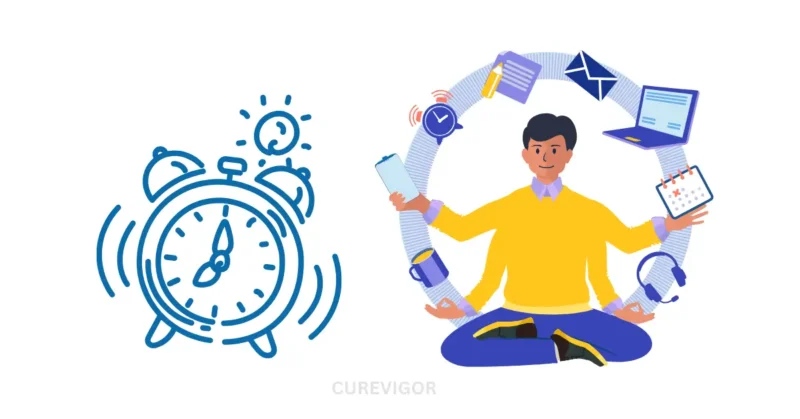
What people call “multitasking” is actually rapid task-switching, the brain bouncing between two or more things in quick succession. And every single switch comes with a cost.
What the Research Actually Says About Multitasking
The American Psychological Association published findings showing that switching between tasks, even briefly, can cost up to 40% of productive time.
That’s not a rounding error. That’s nearly half your workday gone to the friction of mental gear-shifting.
Gloria Mark, a researcher at the University of California, Irvine, found something even more striking.
After a single interruption, the average person takes about 23 minutes to fully return to their original task. Not two minutes. Not five. Twenty-three.
After reading that statistic, I realized three distractions in a morning could cost over an hour of focus without my noticing.
The illusion of efficiency is powerful. When I’m switching between tasks rapidly, it feels like I’m being productive.
Things are moving. I’m responding, creating, and managing. But the output quality tells a different story. Errors increase. Decisions become shallower. The work lacks depth.
What Happens Inside Your Brain When You Switch Tasks
In 2009, Sophie Leroy at the University of Washington introduced the concept of attention residue.
The idea is simple but important: when you shift from Task A to Task B, some of your cognitive attention remains on Task A.
You carry mental “leftovers” into whatever you do next, and those leftovers reduce your effectiveness on the new task.
I noticed that when I jumped from writing an article to answering a complex email and then back, my writing suffered. My brain hadn’t fully let go of the email yet.
Beyond attention residue, there’s a measurable impact on IQ.
A study conducted at the London Psychiatry Center found that constant task-switching and distraction produced a temporary drop in functional IQ comparable to missing a full night of sleep.
The participants weren’t doing anything dramatic; they were just handling everyday digital interruptions.
And then there’s cortisol, the stress hormone. Multitasking keeps the brain in a low-level state of alert, which means cortisol stays elevated.
Over time, that contributes to mental fatigue, irritability, and difficulty concentrating even when you want to focus.
The problem isn’t willpower. The problem is a way of working that was never designed to match how the brain actually functions.
What Is Monotasking, and Why It’s Not What You Think It Is
When I first heard the word “monotasking,” I assumed it just meant doing one thing at a time, simply focusing on a single task.
That sounded boring, slow, even naive. But in reality, monotasking is not just about a singular activity.
It is the intentional act of directing your full attention exclusively to one task, without mental distractions or divided focus. The more I explored it, the more I realized it’s something deeper.
The Real Definition of Single-Tasking in a Distracted World
Monotasking means focusing your whole attention on one task, bringing your complete mental presence to it for a set period, and intentionally blocking out both internal and external distractions.
It’s more than just working on one thing—it’s consciously choosing to stay engaged with it, avoiding mental leakage toward other activities.
That distinction matters. I can technically “do one thing” while mentally planning tomorrow’s meeting, worrying about an unanswered message, and half-listening to a podcast.
That’s not monotasking. That’s fragmented focus wearing the single-tasking costume.
Real monotasking means the browser has one tab open. The phone is face down. The task is defined. And the mind, as much as possible, is here, not elsewhere.
This connects directly to what psychologist Mihaly Csikszentmihalyi called the “flow state,” a state of deep engagement in which time seems to compress, performance rises, and the work itself becomes rewarding.
Flow doesn’t happen accidentally. It requires a period of unbroken focus to build, usually around 15–20 minutes of undistracted work before it kicks in.
Multitasking makes flow structurally impossible because every switch resets the clock.
How Monotasking Connects to Deep Work
Cal Newport, in his book Deep Work, argues that the ability to focus without distraction is becoming increasingly rare and increasingly valuable.
He describes deep work as a professional activity performed in a state of distraction-free concentration that pushes cognitive capability to its limit.
I started applying this idea practically. Instead of working in scattered two-minute bursts, I began working in 90-minute blocks, focusing on exactly one meaningful task. The output quality shifted noticeably within two weeks.
Newport argues, and the evidence supports, that knowledge workers who can consistently enter this state produce results that are not just quantitatively more but qualitatively different.
The thinking is cleaner. The writing is stronger. The problem-solving goes deeper.
Monotasking is not just a preference; it is the practical gateway to consistently deeper, higher-impact work in a world that thrives on distraction.
The Core Benefits of Monotasking
This isn’t theory. These are outcomes I’ve experienced, and that research consistently supports.
- Higher quality output. When I give one task my full attention, the result is better. Fewer errors, stronger decisions, more complete thinking. The work holds up under scrutiny in a way that rushed, fragmented work rarely does.
- Faster task completion. Counterintuitively, monotasking usually gets things done faster. Without switching costs and attention residue dragging at every step, tasks move cleanly from start to finish.
- Reduced stress. The low-grade anxiety of having too many open loops, tasks half-started, and thoughts half-finished drops significantly when I commit to one thing. The brain feels less cluttered.
- Stronger memory retention. Divided attention weakens the encoding of new information. When I’m fully present with what I’m learning or doing, I retain it better. Research supports this: the depth of processing affects how well memories form.
- More creative problem-solving. Creative thinking needs space. When the mind is constantly reactive, creativity gets squeezed out. Single-tasking creates the mental breathing room where novel connections happen.
- Greater sense of accomplishment. Finishing one thing completely, really finishing it, produces a satisfaction that crossing off five half-done tasks never does. That sense of completion is motivating in a way that sustained scattered productivity never is.
Monotasking vs. Multitasking: A Direct Performance Comparison
| Factor | Monotasking | Multitasking |
| Output quality | High—deep, thorough work | Lower-surface-level, error-prone |
| Time to completion | Faster overall | Up to 40% slower due to switching costs |
| Mental energy used | Efficient—focused burn | Wasteful—constant re-orientation |
| Stress level | Lower clear focus reduces anxiety | Higher — multiple open loops create tension |
| Error rate | Lower | Significantly higher |
| Creative capacity | Strong — space for deeper thinking | A weak reactive mode limits creativity |
This table isn’t abstract. These differences show up in real workplaces, real careers, and real lives.
Consider how elite performers structure their time. LeBron James doesn’t practice three sports simultaneously during training.
Serena Williams doesn’t split her court time with piano lessons mid-match. Olympic athletes practice extreme specificity of focus: one drill, one skill, one mental objective at a time.
The same pattern holds in business. Warren Buffett has said that the difference between successful people and very successful people is that very successful people say no to almost everything.
Bill Gates holds “Think Weeks,” isolated periods during which he reads and thinks about a single domain. Jeff Bezos structures his mornings around one high-priority decision before the day’s noise begins.
These aren’t coincidences. They’re intentional systems built around the same core principle: full attention to one thing produces results that divided attention never can.
The Real Challenges of Monotasking
I want to be honest here. Monotasking isn’t something I mastered in a weekend. There are real obstacles, and ignoring them would make this article less useful.
Why Your Brain Resists Single-Tasking
The modern digital environment is, in many ways, engineered against focus. Notifications, infinite scroll, and algorithmic content are deliberately designed to interrupt and re-engage attention.
Every ping delivers a small dopamine hit, a reward for responding, checking, and reacting.
Over time, the brain adapts to this pattern. It begins to crave stimulation and task-switching. Sitting with one task, especially a difficult one, starts to feel uncomfortable, almost wrong.
I noticed this when I first tried working without my phone nearby. The discomfort was real. My hand literally reached for the phone out of habit during the first few focus sessions, even when nothing had buzzed.
This is sometimes called “distraction addiction,” not a clinical term, but an accurate description of how the brain learns to prefer fragmented stimulation over sustained effort.
Workplace Barriers to Deep Focus
Beyond personal habits, the work environment itself creates structural obstacles. Open-plan offices make uninterrupted work difficult by design.
Slack, Teams, and email create social expectations of rapid response. Meeting culture fragments the workday into strips too narrow for deep focus.
There’s also a subtler pressure: the appearance of busyness. Responding quickly, attending every meeting, and always being “available” can read as productive in many workplace cultures, even when they actively prevent real work from happening.
I’ve had to learn to communicate my focus boundaries clearly, and that wasn’t always comfortable. But it was necessary.
How to Practice Monotasking: A Practical Guide
Proven Focus Strategies That Work
- The Pomodoro Technique. Developed by Francesco Cirillo, this method involves working in 25-minute focused blocks followed by a 5-minute break. After four blocks, take a longer break.
The structure gives the brain a clear contract: focus hard for a defined period, then rest. I found it particularly useful early on when my attention span was still rebuilding.
- Time-blocking. Instead of working from a to-do list, I schedule specific tasks into specific time slots. The 9:00–10:30 block is for writing.
The 2:00–3:00 block is for email. Nothing bleeds into another slot. This creates an architecture of focus rather than relying on willpower in the moment.
- The One Tab Rule. I work with a single browser tab open at a time. This sounds extreme until you try it and realize how much tab-switching is just avoidance dressed as productivity.
Building a Focused Environment
- Physical workspace. A clean, uncluttered desk reduces visual noise that competes for attention. I keep only what’s needed for the current task on the desk. Everything else is out of sight.
- Digital minimalism. I turn off all non-essential notifications during focus blocks. This includes email, Slack, social media, and news apps. The world will not end in 90 minutes without my response.
- Communicating boundaries. I let colleagues know when I’m in a deep focus block and when I’ll be available.
Most people respond better to this than expected. Clear communication about focus time is more respectful, not less, than constant reactive availability.
Monotasking Practical Checklist
Use this daily to build the habit:
- Define exactly one primary task before starting the workday.
- Set a timer for a focused block (25–90 minutes, depending on capacity)
- Close all browser tabs except the one you need
- Put your phone face down or in another room.
- Turn off all notifications for the duration of the block.
- Write down any intrusive thoughts or to-dos on paper, then return to the task.
- Take a real break when the timer ends (away from screens)
- Review what you completed before moving to the next task.
- Gradually extend the focus block length as your attention span strengthens.
- End the day by identifying tomorrow’s primary task.
Training Your Attention for the Long Term
Building the capacity for sustained focus is a practice, not a switch. I didn’t go from scattered to deeply focused overnight. It took deliberate, repeated effort and still requires maintenance.
Mindfulness and Attention Exercises
Mindfulness isn’t about emptying the mind. It’s about noticing when the mind has wandered and choosing to return, without judgment. That skill is exactly what monotasking requires.
A simple daily practice: sit quietly for 10 minutes and follow your breath. When a thought arises (and it will), notice it, and gently bring your attention back. This trains the “noticing and returning” reflex that’s essential for sustained work focus.
Research published in Psychological Science found that even brief mindfulness training improved working memory capacity and reduced mind-wandering, two factors that contribute to better single-task focus.
Attention residue also decreases with mindfulness practice. When I regularly practice returning my attention to a single anchor, I become better at fully leaving the previous task behind when I move to a new one.
Building the Habit Over Time
I started with 20-minute focus blocks. That was genuinely difficult at first. Over six weeks, I worked up to 90-minute blocks comfortably.
The key shift was tracking focus quality rather than just task completion. Did I stay on task? Did I resist the urge to check email?
Did I finish the block without breaking? That feedback loop was more useful than any productivity app.
Small, consistent practice compounds. A month of daily 20-minute focused sessions builds more real capacity than one intense “productivity weekend” ever will.
Frequently Asked Questions
Q. Why Is Monotasking Better Than Multitasking?
When I focus on one task completely, my brain processes it at a deeper level. Research shows that task-switching can burn up to 40% of productive time due to cognitive switching costs.
The work I produce in a single, focused session is consistently more accurate and thorough than anything I create while juggling multiple tasks. Monotasking also leaves me less mentally drained at the end of the day.
Q. Do People With ADHD Focus Better While Multitasking?
This is a common belief, but research does not fully support it. Some people with ADHD report feeling more stimulated when handling multiple inputs, but studies show their accuracy and output quality still decline under divided attention.
What often helps ADHD brains is novelty and interest level, not multitasking itself. A highly engaging single task tends to produce better results than scattered stimulation across several.
Q. Which Is Better, Mindfulness or Multitasking?
Mindfulness and multitasking are not really competing strategies; they sit at opposite ends of how attention works.
Mindfulness trains the brain to stay with one thing and return when it wanders, which directly improves focus, memory, and decision quality. Multitasking fragments that same attention repeatedly.
Research published in Psychological Science found that even short mindfulness training improved working memory and reduced mind-wandering, two things multitasking actively damages.
Q. What Is the Power of Monotasking?
The real power of monotasking is that it lets the brain work the way it was built to. When I give one task my full attention, I enter a deeper level of processing where thinking is clearer, errors are fewer, and creative connections happen more naturally.
It also creates a sense of completion that scattered work rarely produces. That feeling of finishing something properly is more motivating than any productivity hack I have tried.
Q. Is Multitasking a Sign of High IQ?
The short answer is no, and the evidence is fairly consistent on this. A study from Stanford University found that heavy multitaskers actually performed worse on tests of attention, memory, and task-switching than people who multitasked less frequently.
High cognitive ability helps with many things, but it does not protect the brain from the switching costs of multitasking. In fact, some research suggests that people who believe they are good at multitasking are often the least accurate judges of their own performance.
Q. What Is the 3-3-3 Rule in Mindfulness?
The 3-3-3 rule is a simple grounding technique used to bring attention back to the present moment. You name three things you can see, three sounds you can hear, and then move three parts of your body deliberately.
It works because it forces the senses to engage with the immediate environment, which interrupts anxious or scattered thinking.
I have used it between focus blocks to clear mental residue before starting a new task, and it takes less than a minute.
Q. Is Multitasking Lowering IQ?
Research from the London Psychiatry Center found that constant task-switching and digital distraction produced a temporary drop in functional IQ of around 10 points, comparable to missing a full night of sleep.
This is not a permanent change, but it is significant enough to affect the quality of decisions and work produced during that period.
Over time, habitual multitasking may also weaken the brain’s ability to filter irrelevant information, making deep focus harder to achieve even when you want it.
Q. What Kills Brain Cells the Most?
Chronic stress is among the most well-documented contributors to neuronal damage, particularly in the hippocampus, which supports memory and learning.
Prolonged alcohol use, severe sleep deprivation, and traumatic brain injury also cause measurable cell loss.
From a daily habits perspective, sustained high cortisol levels, which multitasking and constant distraction contribute to, create a low-grade stress state that is harmful over time.
The brain is resilient, but it needs rest, sleep, and periods of calm to repair and function well.
Q. Which Gender Is Better at Multitasking?
Several studies have suggested that women tend to perform better on certain multitasking measures, with a widely cited 2019 study from the University of Glasgow finding a modest female advantage in task-switching speed and accuracy.
However, researchers caution against overstating this finding. The differences are small, context-dependent, and do not appear across all types of multitasking. More importantly, both groups show the same fundamental cost.
Everyone loses efficiency and accuracy when attention is divided, regardless of how well they handle the switching itself.
Quick Recap
Here’s what this article covered, distilled for those who skim:
- Multitasking is a myth. The brain task-switches, not truly multitasking, loses up to 40% of productive time in the process.
- Attention residue and temporary IQ drops are measurable consequences of constant task-switching
- Monotasking means being fully present with one task, not just physically doing one thing.
- Flow State and Deep Work both require uninterrupted focus, which multitasking structurally prevents.
- Benefits include higher quality work, lower stress, faster completion, and stronger memory.
- The main obstacles are dopamine-driven distraction habits and workplace cultures that reward busyness over depth.
- Practical tools: Pomodoro Technique, time-blocking, the One Tab Rule, notification-free focus blocks
- Mindfulness practice directly supports attention training.
- The habit builds gradually; start with 20 minutes and extend over weeks.
Conclusion
I started this article by describing a morning lost to email, Slack, and coffee videos. That wasn’t a character flaw. It was the natural result of an environment and a set of habits that treated distraction as normal.
Monotasking doesn’t ask for perfection. It asks for intention. It asks you to decide once what matters right now and to stay with it long enough to actually do it well.
The research is detailed. The performance gap between focused work and scattered work is real, measurable, and significant.
And the people who learn to protect their attention, not as a luxury but as a professional and personal discipline, produce work that stands apart.
I’m not there every day. Some mornings, the tabs multiply, and the notifications win. But I know what it feels like to finish a deep work block and look at what I created in 90 minutes of real focus.
It’s different. It feels different. And that difference is worth protecting.
The future won’t belong to the busiest people. It will belong to the ones who can actually pay attention.
Now I’d love to hear from you.
Have you tried monotasking for even a single day? Did it feel uncomfortably slow at first, or did something click?
Drop your experience in the comments below. Whether you’re just starting out or you’ve been practicing deep focus for years, your perspective adds something real to this conversation. Let’s talk about it.
Read more Health and Wellness articles.
You might like: