Feeling wired but exhausted at 7 AM? Learn how to lower cortisol after a 12-hour night shift with a science-backed 30-minute reset, foods, and sleep tips.
You clocked out. Your body did not. After a 12-hour night shift, it is common to feel wired, hungry, puffy, and strangely unable to sleep—even when you are exhausted. That mix is often sleep debt plus a stress-hormone rhythm that is running on the wrong clock.
You do not need a “cortisol detox.” You need a short, repeatable landing routine so your nervous system can leave work mode and your next sleep can actually restore you.

If this sounds painfully familiar, nothing is “broken” in you. You are experiencing a biological collision between occupational stress and morning daylight.
Learning how to lower cortisol after a 12-hour night shift isn’t about trendy wellness perfection—it is about gently convincing an overworked nervous system that the emergency is over and it is finally safe to rest.
Whether you work in an ICU, an emergency department, law enforcement, aviation, or a 24-hour warehouse, this science-backed guide walks you through a realistic, compassionate night shift cortisol reset designed for real life.
How to Lower Cortisol After a 12-Hour Night Shift?
To lower cortisol fast after a night shift, block bright morning sunlight with dark sunglasses, stop drinking caffeine five hours before clocking out, practice five minutes of slow box breathing to stimulate your vagus nerve, eat a light, magnesium-rich snack, and rest in a cool, pitch-black bedroom.
Why Cortisol Is High After a 12-Hour Night Shift: HPA Axis and Sleep Deprivation
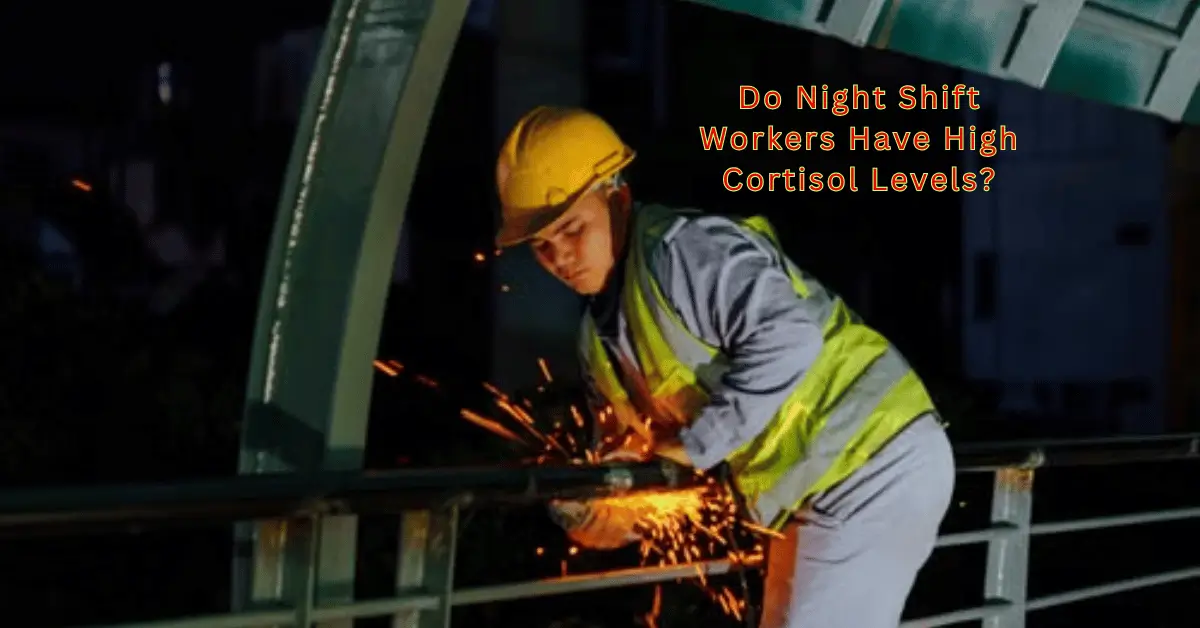
To understand why cortisol is high after night shift work, look at your body’s built-in stress command center: the HPA axis (hypothalamic-pituitary-adrenal axis).
Cortisol, your main stress hormone, should have a regular 24-hour circadian rhythm, according to research from the Endocrine Society and the National Institutes of Health (NIH). In day workers, cortisol peaks shortly after waking to provide alertness and drops to its lowest point around midnight, when melatonin can usher in deep sleep.
When you work a 7:00 PM to 7:00 AM shift, two powerful forces push your cortisol after a 12-hour shift into overdrive:
- Acute Sleep Deprivation & On-Shift Stress: Staying awake under bright overhead lights while managing alarms, physical labor, or critical decisions forces your HPA axis to pump out extra adrenaline and cortisol to keep you upright at 3:00 AM.
- Morning Light Exposure: As soon as you walk outside into morning sunlight, specialized photoreceptors in your eyes signal your brain that daytime has begun, triggering a fresh surge of cortisol right when you need to go to bed.
The link between cortisol and sleep deprivation quickly becomes a two-way street: working through the night elevates cortisol, and elevated cortisol blocks the deep daytime sleep you need to recover.

Signs Your Cortisol Is Too High After a Night Shift
Recognizing high-cortisol symptoms after night shifts early helps you step in before temporary exhaustion hardens into chronic burnout. While a single rough shift makes anyone tired, chronically elevated cortisol with night-shift schedules leaves distinct clues across your body and mood.
Cortisol Face, Cortisol Belly, Wired but Tired, Anxiety, and Inflammation
When your stress response stays switched on day after day, your body shifts into conservation and defense mode. Common signs include:
- Feeling “Wired but Tired”: Bone-deep physical exhaustion paired with a racing mind, restless legs, or an inability to stay asleep past 11:00 AM or noon.
- “Cortisol Belly” and Blood Sugar Swings: Chronically elevated cortisol prompts your liver to release glucose for quick “fight-or-flight” energy. Over time, NIH circadian studies show that night-shift misalignment contributes to insulin resistance, intense carb cravings, and visceral fat storage around the midsection—often called a cortisol belly.
- “Cortisol Face” and Fluid Retention: High cortisol alters fluid and sodium balance while increasing systemic inflammation, which can show up as morning facial puffiness (commonly referred to online as cortisol face).
- Post-Shift Anxiety and Irritability: Snapping at loved ones, feeling emotionally raw, or feeling dread before your next shift.
- What About “Adrenal Fatigue”? Many exhausted shift workers identify with the term adrenal fatigue. While the Endocrine Society notes that “adrenal fatigue” is not a formal medical diagnosis, the symptoms behind it—HPA axis dysregulation, flattened energy curves, brain fog, and shift-work burnout—are 100% real and physiologically valid.
High Cortisol vs. Normal Morning Cortisol Spike: What’s Different?
Every human experiences a natural cortisol spike between roughly 6:00 AM and 8:00 AM called the Cortisol Awakening Response (CAR). For someone who slept all night, this spike feels crisp and energizing.
For a night shift worker, however, that morning circadian wave stacks on top of 12 hours of accumulated occupational stress hormones.
Instead of feeling refreshed, this double-layered cortisol surge suppresses melatonin, raises your core body temperature, and leaves your heart pounding against your ribs when you lie down.
The 30-Minute Post-Shift Cortisol Reset Protocol
If you have been searching for how to calm down after night-shift chaos without spending two hours on an unrealistic wellness routine, this 30-minute nervous system reset is for you. You don’t need perfection—you need consistent biological cues that tell your brain the shift is over.
Post-Shift 30-Minute Wind-Down Table (Do vs. Don’t)
| Commute Home (Min 0–10) | Wear dark wraparound or blue-light-blocking glasses; listen to calm audio or silence. | Stare into bright morning sun; blast high-tempo music or stressful talk radio. | Prevents morning light from shutting down melatonin and triggering the HPA axis. |
| Arrival Home (Min 10–18) | Keep indoor lights dim; take a brief warm-to-cool shower; do 2 minutes of gentle stretching. | Turn on bright kitchen overheads; jump into a high-intensity workout. | Drops core body temperature and releases trapped muscular tension. |
| Refuel (Min 18–25) | Eat a small protein + magnesium snack and sip water or herbal tea. | Go to bed starving, eat heavy sugary fast food, or drink alcohol (“nightcap”). | Prevents a daytime blood sugar crash that triggers a mid-sleep cortisol spike. |
| In Bed (Min 25–30) | Do 5 minutes of slow box breathwork in a 65°F (18°C) pitch-dark room. | Doomscroll social media, check work emails, or watch the morning news. | Activates the vagus nerve and shifts you into the parasympathetic nervous system. |
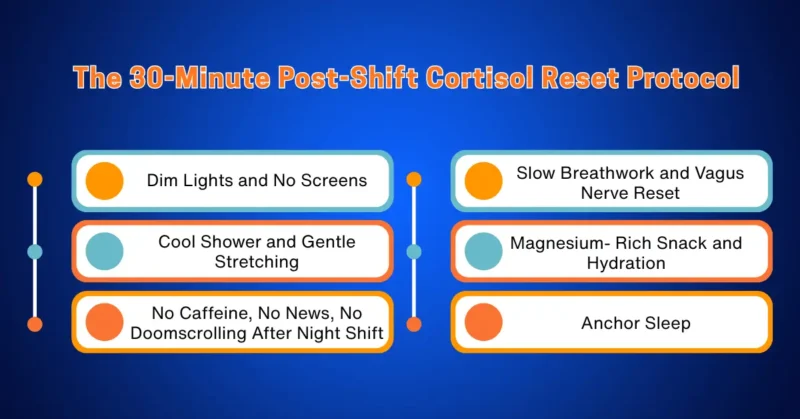
1. Dim Lights and No Screens: Signal Melatonin and Lower Cortisol
Your night shift cortisol reset starts before you walk out the exit doors. Put on dark, wraparound sunglasses (or amber-blue-light-blocking glasses) before stepping into morning daylight.
Light entering your retina travels directly to your brain’s master clock, halting melatonin production within minutes. Once you get home, keep overhead lights off, close your curtains immediately, and put your phone on Do Not Disturb.
2. Slow Breathwork and Vagus Nerve Reset: Box Breathing for the Parasympathetic Nervous System
You cannot think your way out of high cortisol, because stress hormones bypass logical thought—you have to breathe your way out. Slow breathwork is one of the fastest, science-backed tools to lower cortisol.
By extending your exhale, you mechanically stimulate the vagus nerve, which slows your heart rate and flips your body from sympathetic “fight-or-flight” into the parasympathetic nervous system (“rest-and-digest”). Try 4 rounds of gentle Box Breathing or Extended-Exhale Breathing:
- Take a four-second, gentle breath through your nose. Gently hold for four seconds.
- Breathe out slowly through your mouth for six to eight seconds.
- Pause for 2 seconds, letting your shoulders drop away from your ears.
3. Cool Shower and Gentle Stretching: Lower Body Temperature and Stress Hormone
Twelve hours of lifting, charting, patrolling, or standing leaves physical armor locked in your traps, hips, and lower back. Step into a warm-to-cool 5-minute shower to wash off the shift—both literally and mentally.
As your skin cools afterward, your core body temperature drops, mimicking the natural thermal dip that lowers your stress hormone at night. Follow with two minutes of gentle forward folds or legs-up-the-wall pose to help drain lower-leg fluid buildup.

4. Magnesium- Rich Snack and Hydration: Stabilize Blood Sugar and Nervous System
Going to sleep ravenous is a hidden trap: if your blood sugar dips too low at 11:30 AM, your brain releases a surge of cortisol and adrenaline to free up stored glucose—jolting you wide awake after just three hours of sleep.
On the flip side, a heavy, greasy meal forces your digestive tract to work overtime. Aim for 8 ounces of water and a light 150–250 calorie snack pairing complex carbs, protein, and magnesium (like plain Greek yogurt with pumpkin seeds and berries).
5. No Caffeine, No News, No Doomscrolling After Night Shift
Caffeine’s half-life is typically 5 to 7 hours. That 4:00 AM energy drink is still 50% active in your bloodstream at 9:30 AM, blocking adenosine (sleep pressure) and keeping cortisol elevated.
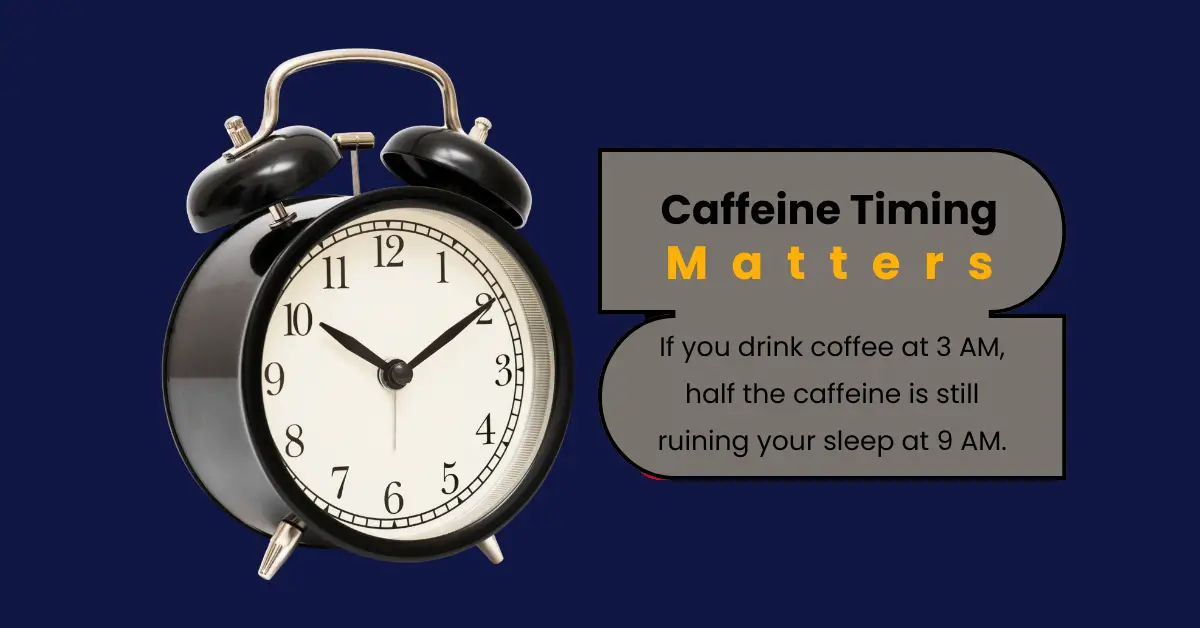
Set a compassionate caffeine cutoff 4 to 6 hours before clocking out. Equally important: stay off group chats, hospital/work emails, and breaking news after your shift. Your brain cannot tell the difference between an alarming headline on your phone and a real-world threat.
Night Shift Caffeine Strategy Guide
6. Anchor Sleep: Dark Room and Cool Temperature for Cortisol Drop and Recovery Sleep
Daytime sleep is naturally lighter and more fragmented than nighttime sleep, so your bedroom environment has to do heavy lifting to protect your recovery sleep:
- Total Darkness: Use true blackout curtains (or blackout window film) plus a soft contoured eye mask. Even slivers of daylight through blinds can elevate heart rate and suppress deep sleep.
- Cool Air: Keep your room between 60°F and 67°F (15.5°C–19.4°C).
- Sound Masking: Use a continuous white- or brown-noise machine to buffer lawnmowers, deliveries, and daytime traffic.
Best Foods and Drinks: How to Lower Cortisol After Night Shift
No food deletes cortisol. Food can steady blood sugar, support sleep, and break the crash-and-crave loop that can feel like a cortisol spike.
Social media loves promoting extreme cleanses as a “cortisol detox.” From a medical standpoint, your liver and kidneys already clear metabolized cortisol naturally.
What your body actually needs after night shift work is steady blood sugar, hydration, and anti-inflammatory micronutrients.
If you want to lower cortisol naturally through your kitchen, focus on calming, nutrient-dense choices.
Magnesium foods, chamomile tea, tart cherry juice for sleep and cortisol
| Pumpkin seeds, almonds, beans, leafy greens, yogurt | Magnesium-rich foods; magnesium is involved in nerve and muscle calm | Food first; a snack beats a megadose |
| Chamomile or other caffeine-free herbal tea | A warm, no-caffeine ritual that replaces the energy drink | Skip if you have ragweed-type allergies and chamomile bothers you |
| Tart cherry juice (small glass) | Some sleep studies link it with better sleep; it is not a sedative drug | Watch sugar; a small serving, not a bottle |
| Protein + fiber snack | Steadier blood sugar and fewer 3 a.m.-style rebounds (even at 9 a.m) | Keep it small so you are not digesting a feast in bed |
| Water or an electrolyte drink without stimulants | Dehydration mimics fatigue and headache | Go easy on sugar-sweetened sports drinks |
Foods that raise cortisol – sugar, caffeine, alcohol, processed snacks
- Refined Sugar & Vending Machine Pastries: Cause a sharp glucose spike followed by a crash, worsening insulin resistance and triggering a rebound cortisol release while you sleep.
- Post-Shift Alcohol (“Morning Mimosas” or Beer): While alcohol feels sedating initially, it fragments REM sleep, raises resting heart rate, and causes a rebound surge of cortisol a few hours later.
- Late-Shift Energy Drinks: Loaded with high-dose synthetic caffeine and stimulants that keep your HPA axis revved long after you clock out.
Supplements That May Help Lower Cortisol – What Research Says
Supplements are optional, unevenly studied, and not a substitute for sleep. “Cortisol detox” products are marketing. Your liver and HPA axis already clear and regulate cortisol.
Talk with a clinician or pharmacist before you start anything, especially if you are pregnant, nursing, on medication, or have thyroid, liver, autoimmune, or blood-pressure conditions.
Magnesium, ashwagandha, L-theanine for stress hormone and sleep
| Magnesium (often glycinate or citrate in studies and products) | May modestly support sleep quality and muscle relaxation in people who are low | Diarrhea with some forms; kidney disease needs medical guidance |
| Ashwagandha | Some trials show lower perceived stress and, in certain studies, lower cortisol | Not for everyone; can affect thyroid tests and interact with sedatives, thyroid meds, and immunosuppressants; rare liver injury reports—stop and seek care if you feel unwell |
| L-theanine | May take the edge off alertness without strong sedation | Can add to other calming products; still not a treatment for anxiety disorders |
If you try one thing, most occupational-health-minded clinicians start with sleep, light, caffeine timing, and food—not a stack.
What to Avoid: Overusing Cortisol Supplements Without Testing
Do not stack five “hormone” products because a reel said your stress hormone is broken. High-dose supplements can interact with blood pressure meds, antidepressants, diabetes drugs, and thyroid hormone. More is not a faster night-shift cortisol reset.
Skip products that promise to “flush cortisol” or treat adrenal fatigue. If someone offers a saliva-kit diagnosis and a $200 bundle in the same breath, that is sales, not endocrinology.
Habits That Keep Cortisol High After 12-Hour Night Shifts
Bright Light, Heavy Workouts, and Phone Use After Shift
- Sunglasses can help on the drive home if the sun feels like a second sunrise you do not want—only if you can still drive safely.
- A bright gym session immediately after nights raises temperature and adrenaline.
- The phone is a portable day shift. Blue-white light plus outrage is a reliable way to stay wired but tired.
Skipping Sleep, Irregular Meals, and the Burnout Cycle
The burnout loop is simple: short sleep → more caffeine → worse sleep → skipped meals → sugar → shorter fuse → another short sleep. Insulin resistance risk rises with years of circadian disruption and poor sleep, which is another reason this routine is health care, not a luxury.
You will not fix a rotating roster in one morning. You can refuse to add three extra stressors after the shift ends.
Long-Term Plan to Keep Cortisol Low as a Night Shift Worker
Consistent sleep hygiene, circadian rhythm, and recovery days
- Anchor sleep: same start time on workdays when you can.
- Protect a dark, cool cave. Eye mask by the door, not “somewhere.”
- On days off, shift only as far as you must. Wild flips (full daytime party schedule, then straight back to nights) keep the HPA axis confused.
- Cluster nights if your roster allows, so recovery days are real blocks, not single exhausted afternoons.
- Nap strategy: a short pre-shift nap can help performance; a long random nap that destroys your main sleep does not.
Movement, sunlight, and stress management for HPA axis balance
- Get outdoor light on the days you are supposed to be awake. Light at the right time is medicine for circadian rhythm.
- Move most days—walks count—but not as punishment after a 12-hour shift.
- Keep one small off-switch that is not alcohol: breathing, a shower, a show you have already seen, a call with someone calm.
- Eat on a loose schedule during the shift so you don’t crash at hour 11.
- If the job is grinding you down, that is an occupational health problem. Staffing, violence risk, and mandatory overtime are not personal hormone failures.
What Experts Say About Night Shift Cortisol
Endocrinology View on Cortisol, Sleep Deprivation, and Inflammation
Medical research from the NIH and the Endocrine Society emphasizes that cortisol itself isn’t the enemy; it keeps your blood pressure stable, controls inflammation, and helps you save lives or solve problems at 2:00 AM.
The health challenge for shift workers is chronodisruption: cortisol is high when it should be low, and blunted when it should be active.
From an occupational health and integrative medicine perspective, we can’t eliminate the night shift. Society depends on night workers, so clinical care focuses on minimizing modifiable stressors: shielding morning light exposure, stabilizing glycemic load to prevent insulin resistance, supporting parasympathetic nervous system recovery, and screening early for sleep disorders.
When High Cortisol Needs a Doctor: Cushing’s, Anxiety, and Sleep Disorder Warning Signs
See a clinician—not a supplement page—if you have:
- Thin arms and rapid weight gain, particularly in the face and trunk
- Purple stretch marks, easy bruising, or new muscle weakness
- High blood pressure or high blood sugar that is new or hard to control
- Periods that stopped, or unusual hair growth
- Depression, panic, or insomnia that is not improving with basic sleep care
- Loud snoring, gasping, or unrefreshing sleep (possible sleep apnea)
- Falling asleep while driving
These can point to Cushing’s syndrome, another endocrine issue, a sleep disorder, or a mental-health condition that deserves real care. Most post-shift wired-tired feelings are not Cushing’s. They still deserve help if they run your life.
If you are in crisis or feel unsafe, contact local emergency services or a crisis line. In the U.S., you can call or text 988.
FAQ – How to Lower Cortisol After a 12-Hour Night Shift
Q. How to lower cortisol fast after a night shift?
Dim the lights, stop caffeine and scrolling, breathe slowly for a few minutes, eat a small, balanced snack and get into a cool, dark bed. The fast part is the nervous-system off-ramp. The real drop comes with sleep.
Q. What is the fastest way to calm the nervous system after a night shift?
A longer exhale than inhale, or four minutes of box breathing, in a dim room with the phone in another room. Pair it with a cooler space. That is a direct parasympathetic cue. It will not erase a traumatic shift, but it can stop the spiral.
Q. Does sleep lower cortisol after night shift?
Yes. Consolidated sleep is the most reliable way to let cortisol follow a lower, more nighttime pattern. Broken sleep in a bright room does much less. Protect the block even if it is not a perfect eight hours.
Q. Can ashwagandha lower cortisol for night shift workers?
Some studies suggest ashwagandha may reduce stress and cortisol in certain adults. It is not proven as a night-shift treatment, and it is not risk-free. Ask a clinician before using it. Sleep, light, and caffeine timing still do more for most people.
Q. Why do I feel wired but tired after a 12-hour night shift?
Your sleep pressure is high, but light, stress, caffeine, and an HPA axis still on duty keep arousal high. That mismatch is the wired-but-tired feeling. It is a rhythm problem, not a character flaw.
Q. How long does it take for cortisol to normalize after night shift?
Many people feel clearer after one solid recovery sleep, but a single day off does not fully reset a week of nights. Rhythm and mood often need several consistent sleep windows.
If you feel unwell for weeks despite a real wind-down, get checked rather than adding more supplements.
Final Takeaway – You Can’t Stop the Shift, But You Can Calm the Stress
You cannot resign from nights in the parking lot. You can stop feeding the stress response after you badge out.
How to lower cortisol after a 12-hour night shift: dim the world, breathe slower, skip the second wind of caffeine and news, eat something steady, and treat sleep like part of the job.
Do that often enough and the cortisol spike after nights gets less sharp. You will still be tired sometimes. Tired and safe in a dark room is a win. Wired, scrolling, and calling it recovery is not.
Be as decent to the person who just worked 12 hours as you are to everyone you cared for on the shift. That person is you.
Try the 30-minute post-shift reset tonight, and share this guide with a coworker who is working 12-hour nights. If your fatigue or stress doesn’t improve after a few weeks, book a visit with your doctor.
This is general education, not medical advice, a diagnosis, or a treatment plan. Discuss cortisol testing and supplements with a licensed clinician, especially if your symptoms persist.
Read more about night shift workers’ health. Visit our STORE.