
African Mango Seed for Weight Loss: Explore its potential benefits, limitations, and safety considerations for weight management.
Weight loss challenges millions of people worldwide. Fad diets come and go. Hard workouts feel exhausting. Many turn to supplements for help.
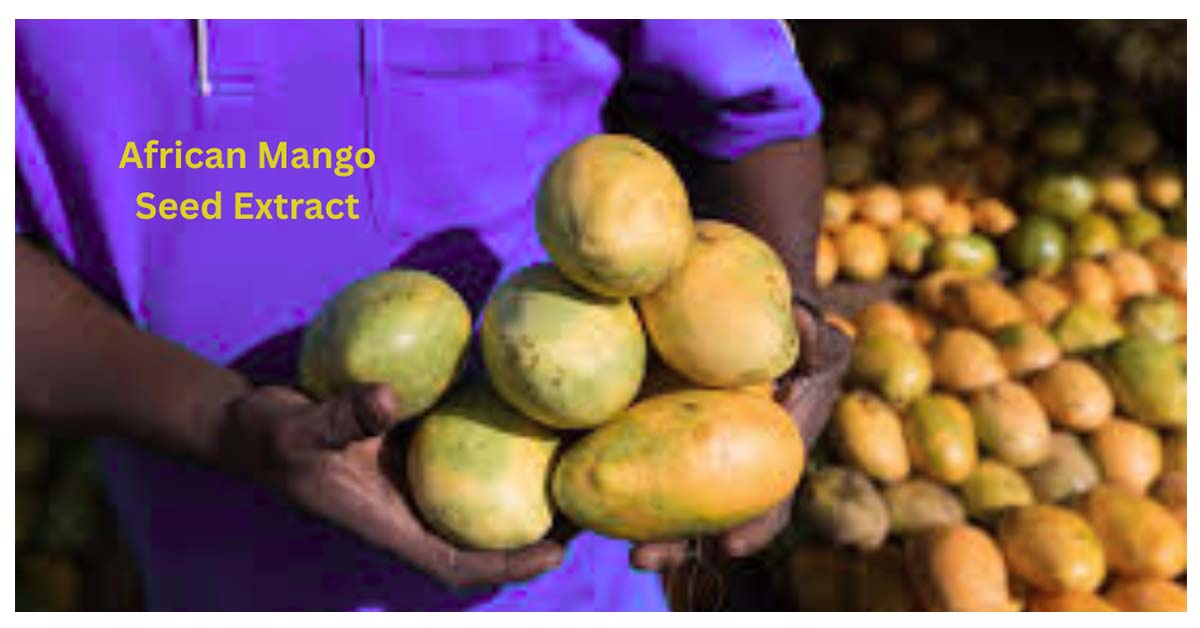
One natural option gaining attention for weight loss is African mango seed. This seed comes from the Irvingia gabonensis tree. It grows in West Africa.
Locals have used it for centuries. Now, science is taking a closer look. Does it really work? Is it safe? Let’s explore.

What Is African Mango Seed?
The African mango is not the same as the mango you find in grocery stores. It is a different fruit entirely. The tree grows in tropical regions of Africa.
Its seeds are rich in fiber, healthy fats, and active compounds. People often call it “wild mango” or “bush mango.”
People dry the seeds and grind them into powder. They also make capsules and extracts. This is the form used for weight loss.
How Does It Work for Weight Loss?
The African mango is not the same as the mango you find in grocery stores. It is a different fruit entirely.
The tree grows in tropical regions of Africa. Its seeds are rich in fiber, healthy fats, and active compounds.
People often call it “wild mango” or “bush mango.” People dry the seeds and grind them into powder. They also make capsules and extracts. This is the form used for weight loss.
Why African Mango Seed Stands Out
Many weight loss supplements focus on one thing. African mango seed for weight loss targets several at once. It curbs appetite.
It supports metabolism. It helps balance blood sugar. It also aids fat loss. This multi-action approach makes it unique. It is also plant-based.
That appeals to people who want natural options. It is generally gentle on the stomach when taken as directed. It fits easily into daily routines. It does not require drastic lifestyle changes. It works best with a healthy diet and exercise.
African mango seed for weight loss stands out because it targets multiple aspects of weight management at once, rather than relying on a single mechanism.
Unlike many supplements that work only as appetite suppressants or fat burners, this seed offers a combination of benefits that address both metabolism and eating behavior.
Its unique fiber content, known as Irvingia gabonensis extract, forms a thick gel in the stomach that naturally promotes fullness and reduces calorie intake.
Additionally, the seed contains compounds that may support healthy blood sugar levels, which matters because stable glucose can curb cravings and prevent energy crashes that lead to overeating.
What truly sets African mango seed for weight loss apart is its dual action on fat metabolism and appetite regulation.
Some studies suggest it may influence enzymes involved in fat storage, potentially reducing how much fat the body holds onto.
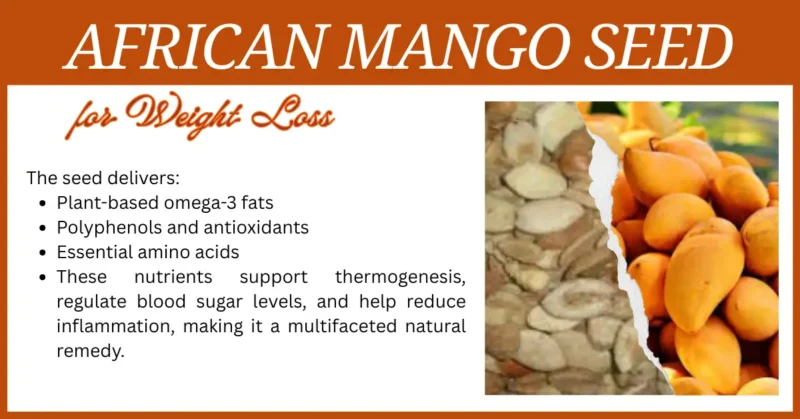
At the same time, it supports leptin sensitivity, a hormone that signals fullness to the brain. This may mean you feel satisfied with smaller portions and have fewer urges to snack between meals.
Another reason it stands out is its natural origin and long history of traditional use. Unlike synthetic diet pills that often come with harsh side effects, African mango seed is plant-based and generally well tolerated when taken as directed.
It fits easily into most daily routines and does not require drastic lifestyle changes to show potential benefits.
Finally, African mango seed for weight loss is appealing because it works best alongside healthy habits rather than replacing them.
It is not a magic bullet but a supportive tool that can enhance the results of a balanced diet and regular exercise.
For those seeking a gentle, natural ally in their weight loss journey, African mango seed offers a promising and distinctive option worth considering.
Potential Benefits Beyond Weight Loss
African mango seed may offer other benefits. Some users report better digestion due to its fiber content. Others notice more stable energy levels.

It may support healthy blood sugar levels and reduce afternoon crashes. Less crashing means fewer unhealthy snacks. Some studies suggest it may support heart health by improving cholesterol levels.
It may also have anti-inflammatory properties. More research is needed to fully confirm these benefits.
What Does Science Say?
Research on African mango seed for weight loss is promising but limited. Some small studies show positive results.
Participants lost weight and inches off their waist. They also showed improved metabolic markers. However, these studies were short-term.
Larger, long-term studies are still needed. Scientists do not yet fully understand all the mechanisms. This does not mean it is ineffective. It simply means more research is required. Always approach claims with a balanced view.
How African Mango Seed for Weight Loss Works
Boosts Metabolism Naturally
One of the most talked-about benefits of African mango seed is how it may help the body burn calories more efficiently.
In one study, participants who took 150 mg of the extract twice daily for 10 weeks lost an average of 28 pounds without making big changes to their diet.
Researchers believe the seed helps raise a natural hormone that supports fat burning and energy use. When this hormone is higher, your body may burn calories more easily, even at rest.
Reduces Appetite and Cravings
African mango seed is rich in fiber. Fiber takes up space in the stomach and creates a feeling of fullness. This can help you eat smaller portions without feeling deprived. It may also help with emotional eating and random snacking.
It supports the hormones that control hunger and fullness. In the same study, participants reported eating less and losing more than 6 inches from their waist.
Supports Blood Sugar and Cholesterol Balance
Blood sugar swings can make weight loss harder. African mango seed may help slow down how quickly the body absorbs carbs from food. This means fewer sharp spikes in blood sugar, which are often linked to stubborn belly fat.
In clinical trials, participants also saw a 26% drop in bad cholesterol. Their good cholesterol went up. This suggests African mango seed may support weight loss and heart health.
How to Use African Mango Seed
African mango seed for weight loss comes in several forms. Capsules are the most common. You can add powder to smoothies or drinks. A typical dose ranges from 150 mg to 300 mg. Take it about 30 minutes before meals.
This helps maximize appetite suppression. Always follow the product label instructions. Start with a lower dose to see how your body responds. Do not exceed the recommended amount. Consistency matters more than taking large doses.
Safety and Side Effects
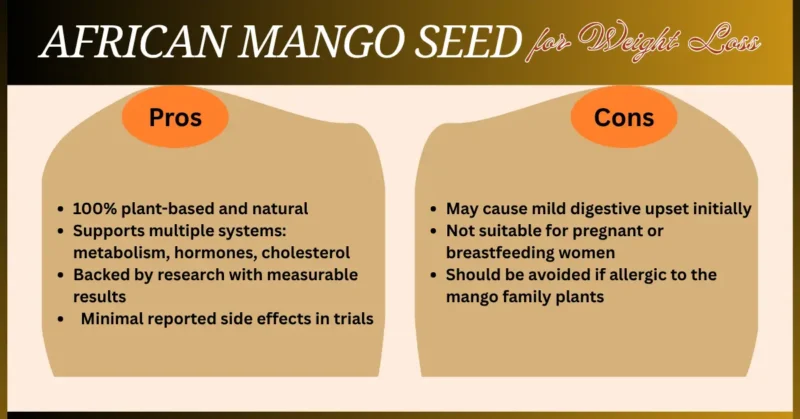
African mango seed is generally well tolerated. Some users report mild side effects. These include gas, bloating, or headaches. These usually fade as the body adjusts.
However, it is not for everyone. Pregnant or nursing women should avoid it. People with medical conditions should consult a doctor first. It may interact with certain medications.
These include diabetes drugs and blood thinners. Always speak to a healthcare provider before starting any supplement.
Tips for Best Results
African mango seed for weight loss works best as part of a healthy lifestyle. Follow these tips for better results.
Eat a balanced diet rich in vegetables and lean protein. Drink plenty of water throughout the day. Exercise regularly, even if it is just walking.
Get enough sleep each night. Manage stress through meditation or deep breathing. Track your progress to stay motivated. Be patient. Results take time. Do not expect overnight changes.
Common Mistakes to Avoid

Many people make mistakes when using African mango seed for weight loss. Avoid these common errors. Do not rely on the supplement alone. It is not a magic pill.
Do not skip meals to speed up results. This can backfire. Do not take more than the recommended dose. More is not better. Do not ignore side effects if they persist.
Do not expect results without effort. Healthy habits are still essential. Stay realistic and consistent.
Is It Worth Trying?
African mango seed for weight loss offers a natural option for those seeking support. It is not a cure-all. It will not replace good habits.
But it may give you an edge. It can reduce cravings and support metabolism. It is plant-based and generally safe.
If you struggle with appetite control, it may help. If you want a gentle supplement, it is worth considering. Talk to your doctor first. Then decide if it fits your journey.
FAQs on African mango seed for weight loss
Q. Does African mango work for weight loss?
African mango seed may support weight loss by curbing appetite, supporting metabolism, and helping balance blood sugar.
Many users report feeling fuller and eating less when taking it regularly. However, results vary from person to person. It works best alongside a healthy diet and regular exercise, not as a standalone solution.
Q. What is the most powerful herb for weight loss?
No single herb is a magic bullet for weight loss. Herbs like green tea, ginger, turmeric, and African mango seed may offer modest support.
Their effectiveness depends on your lifestyle, diet, and how consistently you take them. No herb can replace healthy eating and regular physical activity.
Q. Does mango help burn belly fat?
Regular mangoes do not directly burn belly fat. They are naturally high in sugar, so eating too many may work against weight loss goals.
However, African mango seed is different from regular mango. It may help reduce belly fat by controlling appetite and supporting metabolism. Portion control still matters.
Q. How long does it take for African mango to work?
Some users notice changes within a few weeks, while others take longer. Most people who see results report feeling fuller and eating less within the first month.
Visible weight loss often takes two to three months of consistent use. Results depend on your diet, activity level, and overall lifestyle habits.
Q. What drink burns the most belly fat?
No drink directly burns belly fat. However, some drinks support weight loss better than others. Water is the best choice for hydration and appetite control.
Green tea and black coffee may slightly boost metabolism. Avoid sugary sodas and sweetened juices, as they add empty calories.
Q. What is the best time to eat mango to lose weight?
If you enjoy regular mangoes, eat them in moderation. Morning or midday is often recommended because your body has more time to burn off the natural sugars.
Avoid eating large amounts at night. Remember, African mango seed for weight loss is different from the fruit itself and is usually taken before meals.
Conclusion about African mango seed for weight loss

African mango seed for weight loss is gaining popularity for good reason. It supports appetite control, blood sugar balance, and fat metabolism. It is natural and generally well tolerated.
The science shows promise, but more research is needed. It works best alongside a healthy diet and regular exercise. It is not a quick fix. It is a supportive tool.
If you are looking for a natural ally in your weight loss journey, African mango seed may be worth exploring. Stay consistent, stay patient, and make smart choices.
This article is for informational purposes only. It does not constitute medical advice. Always consult your healthcare provider before starting any new supplement.
References
- Ngondi JL, et al. “IGOB131, a novel seed extract of Irvingia gabonensis, significantly reduces body weight.” Lipids in Health and Disease, 2009.
- Oben JE, et al. “Irvingia gabonensis significantly reduces body weight and improves metabolic parameters.” Lipids in Health and Disease, 2008.
- Ross SM. “African mango (Irvingia gabonensis) seed extract: effects on weight loss and metabolic parameters.” Holistic Nursing Practice, 2012.
- Ngondi JL, et al. “The effect of Irvingia gabonensis seeds on body weight and blood lipids.” Lipids in Health and Disease, 2005.
Read more health and wellness tips.