
Find out the best sleeping positions for better rest after a long shift. Improve recovery, reduce pain, and wake up refreshed with science-backed sleep tips.
Working long shifts challenges your body in ways you may not notice immediately. Whether you spend hours standing, walking hospital corridors, driving, lifting heavy equipment, or sitting at a desk throughout the night, your muscles, joints, and nervous system experience continuous stress.
Simply sleeping for seven or eight hours is not always enough if your body cannot fully recover during that time.
One often-overlooked factor is your sleeping position. The way you position your spine, neck, hips, and legs while sleeping directly affects muscle relaxation, circulation, breathing, and overnight healing.
A poor sleeping posture can leave you waking up stiff, sore, and exhausted, even after spending enough hours in bed.
Fortunately, small adjustments to your sleep posture can significantly improve how rested you feel. Choosing the right sleeping position can reduce pressure on your spine, ease muscle tension, improve blood flow, and help your body recover from demanding workdays.
In this guide, you will discover science-backed sleep positions, practical recovery tips, and simple strategies designed especially for shift workers who want to wake up energized rather than exhausted.
What Is the Best Sleeping Position After a Long Shift?
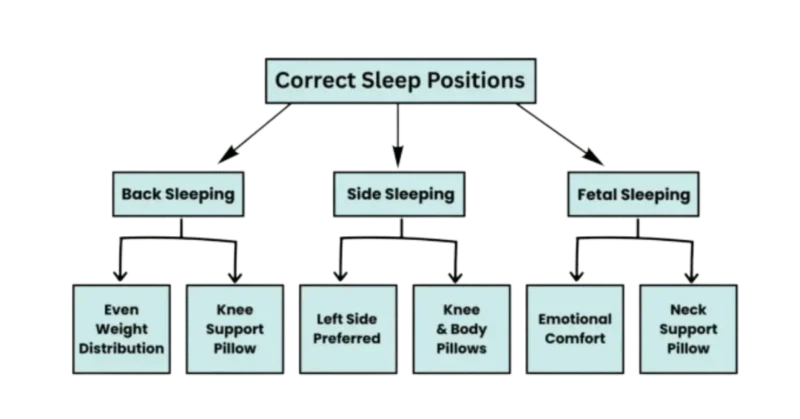
For most shift workers, sleeping on your side with proper pillow support provides the best balance of spinal alignment, muscle recovery, circulation, and breathing.
Back sleeping is another excellent option for people experiencing lower back discomfort, while stomach sleeping is generally the least supportive position because it places unnecessary strain on the neck and spine.
Quick Recovery Checklist
- Sleep on your side or back.
- Support your neck with a quality pillow.
- Keep your spine aligned.
- Place a pillow between your knees when sleeping on your side.
- Keep your bedroom cool, dark, and quiet.
Key Points
- Side sleeping promotes healthy circulation.
- Back sleeping reduces spinal pressure.
- Pillow placement matters as much as sleep position.
- Proper posture improves recovery overnight.
Why Your Sleeping Position Matters After a Long Shift
Many people believe recovery depends only on how long they sleep. In reality, sleep quality is often more important than sleep duration. If your muscles remain in tension all night because your spine is twisted or unsupported, your body spends valuable recovery time correcting poor posture rather than repairing tissues.
During deep sleep, your body performs several essential recovery processes:
- Repairs muscle fibers
- Reduces inflammation
- Releases growth hormone
- Strengthens immune function
- Restores mental alertness
- Consolidates memory
- Rebalances stress hormones
These processes work more efficiently when your body remains properly aligned.
Imagine spending twelve hours stocking shelves, treating patients, operating machinery, or driving long distances.
Your shoulders tighten, your hips stiffen, and your lower back absorbs repeated stress. Sleeping in a poor position prolongs these problems, while a supportive position allows muscles to relax naturally.
Your goal should be to create conditions that allow your body to recover, rather than compensating for poor posture.
Sleep Quality After a Long Shift vs. Sleep Duration
Many shift workers proudly say they slept for eight hours but still feel exhausted. This usually happens because sleep quantity does not guarantee sleep quality.
| Sleep Duration Only | High-Quality Recovery Sleep |
| Eight hours of restless sleep | Seven hours of uninterrupted deep sleep |
| Frequent tossing and turning | Stable body alignment |
| Muscle stiffness | Relaxed muscles |
| Neck pain | Comfortable neck support |
| Poor circulation | Healthy blood flow |
| Morning fatigue | Better energy levels |
A well-supported body enters deeper stages of restorative sleep more consistently. That means you recover more effectively, even if your total sleep time is slightly shorter.

Definition: Spinal Alignment Sleep
Spinal alignment sleep means keeping your head, neck, shoulders, and hips in a natural, straight position while sleeping. Proper alignment minimizes stress on muscles, joints, ligaments, and nerves, allowing your body to heal efficiently throughout the night.
Maintaining spinal alignment is particularly important if your job requires repetitive movements, prolonged standing, heavy lifting, or extended sitting.
How Proper Sleep Posture Supports Muscle Recovery
Recovery begins long before you wake up.
When your muscles remain relaxed overnight, blood carries oxygen and nutrients more effectively to damaged tissues. This supports normal repair processes that occur naturally during deep sleep.
Poor posture, however, compresses muscles and joints, reducing comfort and interrupting sleep cycles.
Good sleeping posture helps the following:
- Reduce muscle tension
- Improve circulation
- Minimize pressure points
- Support healthy breathing
- Decrease morning stiffness
- Lower stress on the spine
You may notice that simply changing your pillow placement makes a dramatic difference in how your back and shoulders feel the next morning.
Best Sleeping Positions for Better Rest After Night Shifts
Not every sleeping position offers the same recovery benefits. Some positions reduce strain, while others increase pressure on sensitive joints and muscles.
Let’s explore the most effective options.
Side Sleeping: The Best Choice for Most Shift Workers
For many people, side sleeping provides the ideal combination of comfort and recovery.
When you sleep on your side with proper support, your spine remains relatively neutral, allowing muscles to relax naturally. This position also promotes better breathing and healthy circulation, making it especially helpful after physically demanding work.
Benefits of Side Sleeping
- Supports natural spinal alignment
- Improves blood circulation
- Reduces pressure on the lower back
- Helps decrease snoring
- May reduce mild sleep apnea symptoms
- Supports lymphatic drainage
- Comfortable for pregnancy
Healthcare workers, warehouse employees, retail staff, emergency responders, and factory workers often experience relief when switching to a properly supported side sleeping position.
How to Sleep Correctly on Your Side
- Keep your head aligned with your spine.
- Use a supportive pillow under your neck.
- Place a pillow between your knees.
- Keep your hips stacked.
- Avoid curling too tightly.
Between your knees, prevents hip rotation and reduces stress on your lower back.
Is Side Sleeping Better After a Long Shift?
Yes. Side sleeping is generally the best sleeping position after a long shift because it supports spinal alignment, improves circulation, reduces pressure on joints, and helps muscles relax naturally. Adding a pillow between your knees further improves body alignment and reduces lower back strain.
Quick Summary
- Better circulation
- Less spinal pressure
- Reduced muscle tension
- Improved breathing
- Comfortable for extended recovery
Back Sleeping: Excellent for Spinal Alignment
Back sleeping is another outstanding option, particularly if you experience lower back discomfort after work.
Sleeping flat on your back distributes body weight evenly across the mattress. Instead of concentrating pressure on one shoulder or hip, your body receives balanced support.
Many physical therapists recommend sleeping on your back for people recovering from repetitive workplace strain.
Benefits of Back Sleeping
- Keeps the spine neutral
- Reduces pressure on joints
- Supports even weight distribution
- Helps relax neck muscles
- Minimizes facial pressure
- Can reduce morning stiffness
For even better support, place a small pillow beneath your knees. This simple adjustment slightly bends your legs, reducing stress on your lumbar spine.
Best Pillow Setup
| Body Area | Recommended Support |
| Head | Medium-height pillow |
| Neck | Natural curve maintained |
| Knees | Small pillow underneath |
| Arms | Rest naturally beside body |
Is Back Sleeping Good for Recovery?
Back sleeping is one of the best recovery sleep positions because it evenly distributes body weight, supports natural spinal alignment, reduces pressure points, and helps muscles relax overnight. Adding a pillow beneath your knees further reduces lower back strain and improves comfort.
Recovery Advantages
- Better spinal support
- Less muscle tension
- Reduced joint pressure
- Improved overnight recovery
- Comfortable for many people with back discomfort
Fetal Position: Helpful When Used Correctly
The fetal position is one of the world’s most common sleeping postures. While it can provide excellent comfort, the key is avoiding excessive curling.
A gentle fetal position relaxes the lower back and reduces spinal pressure without restricting breathing.
People recovering from physically demanding jobs often find this position soothing because it naturally eases muscle tension around the hips and pelvis.
However, curling into a tight ball can create unnecessary strain on your neck, shoulders, and chest while limiting deep breathing.
The ideal fetal position keeps your knees comfortably bent while maintaining a relatively straight spine. Maintaining proper hip alignment and relieving pressure on your lower back are two benefits of placing a supportive pillow between your knees.
By keeping your body relaxed rather than tightly curled, you can enjoy the comfort of this position while maximizing overnight recovery.
Sleeping Positions to Avoid After a Long Shift
Not every sleeping position supports recovery. While comfort is important, certain positions place unnecessary stress on your spine, neck, shoulders, and hips. Over time, poor sleep posture can contribute to chronic pain, interrupted sleep, and slower physical recovery.
If you regularly wake up with stiffness or soreness despite getting enough sleep, your sleeping position may be part of the problem.
Stomach Sleeping and Neck Pain After a Shift
For most adults, especially those recuperating from extended work shifts, sleeping on your stomach is generally not advised.
When you sleep face down, your neck must rotate to one side for several hours. This twists the cervical spine and places continuous strain on the muscles supporting your head and shoulders.
Additionally, because the mattress does not sufficiently support your spine’s natural curve, your lower back tends to arch abnormally.
This additional pressure may make recovery more challenging for shift workers who already experience muscle fatigue.
Common problems associated with stomach sleeping include:
- Neck stiffness
- Shoulder pain
- Lower back discomfort
- Facial pressure and skin irritation
- Increased tossing and turning
- Reduced spinal alignment
If stomach sleeping is your preferred position, try placing a thin pillow beneath your hips and pelvis, and use a low-profile pillow or no pillow under your head if comfortable.
These adjustments may reduce some spinal stress, although gradually transitioning to sleeping on your side or back usually provides greater long-term benefits.
Positions That Restrict Circulation and Delay Recovery
Recovery depends on healthy blood circulation. During deep sleep, oxygen-rich blood delivers nutrients to muscles while helping remove metabolic waste produced during physical activity.
Certain sleeping positions can restrict this natural process.
Examples include:
- Sleeping with your arms trapped beneath your body.
- Curling into an extremely tight fetal position.
- Twisting your spine while one leg remains straight and the other bends sharply.
- Using pillows that force your neck too far forward or backward.
These positions may cause numbness, tingling, shoulder discomfort, or stiffness when you wake.
Instead, aim for a relaxed posture where your joints remain supported without excessive bending or twisting.
How Poor Sleep Posture Increases Back Pain After a Shift
After standing, lifting, walking, or sitting for 10 to 12 hours, the muscles surrounding your spine are already under stress. Sleeping in poor alignment exacerbates that stress rather than relieving it.
Poor posture while sleeping can lead to:
- Uneven pressure on spinal discs
- Tight hip flexors
- Muscle spasms
- Compressed nerves
- Increased morning stiffness
- Reduced mobility throughout the day
Good sleeping posture allows your muscles to relax rather than work overnight to compensate for misalignment.
Which Sleeping Position Should You Avoid?
For most people, stomach sleeping is the least supportive sleeping position because it twists the neck, increases pressure on the lower back, and makes spinal alignment difficult. Side sleeping or back sleeping generally provides better support and promotes more effective recovery after a long shift.
Quick Summary
- Avoid stomach sleeping whenever possible.
- Prevent excessive twisting of your spine.
- Keep your neck in a neutral position.
- Use supportive pillows to maintain alignment.
- Wake up with less pain and stiffness.
Best Sleep Position for Shift Workers With Common Shift Ailments
Long shifts affect every worker differently. Nurses may develop sore shoulders from lifting patients, warehouse employees often experience lower back fatigue, and office workers can struggle with neck tension from prolonged computer use.
Matching your sleeping position to your symptoms can significantly improve overnight recovery.
Best Sleep Position for Lower Back Pain After a Long Shift
Lower back discomfort is one of the most common complaints among shift workers.
If your lower back feels sore after work, sleeping on your back with a pillow under your knees often provides excellent relief. This position reduces pressure on the lumbar spine while helping your muscles relax.
Lying on your side with a pillow between your knees is a great option if lying on your back is uncomfortable. The pillow keeps your hips aligned and prevents unnecessary twisting of the lower spine.
Step-by-Step Relief
- Lie on your back.
- Place a pillow beneath your knees.
- Keep your neck supported with a medium-height pillow.
- Relax your shoulders.
- Avoid sleeping with one leg bent and the other straight.
Many people notice less stiffness after only a few nights of improved positioning.
Best Sleeping Positions for Neck and Shoulder Tension
Healthcare workers, dentists, cashiers, drivers, office employees, and factory workers frequently develop neck and shoulder tightness due to repetitive movements or prolonged postures.
To reduce tension:
- Sleep on your side using a pillow that fills the space between your head and shoulder.
- Keep your neck straight instead of tilted upward.
- Avoid sleeping with your arm beneath your pillow.
- Keep both shoulders comfortably aligned.
A pillow that is too high or too flat often contributes to neck discomfort, even if your sleeping position is otherwise correct.
Sleeping Positions After Night Shift for Swollen Legs and Poor Circulation
Long periods of standing can cause fluid to collect in the legs and feet.
You can improve circulation by:
- Lying on your back with your legs slightly raised.
- Place a pillow beneath your calves.
- Sleep on your left side if it feels comfortable.
- Avoid positions that excessively compress your hips or knees.
Leg elevation encourages fluid to return toward the heart, reducing swelling by morning.
Comparison Table: Choosing the Best Sleeping Position
| Recovery Goal | Recommended Position | Extra Support |
| Lower back pain | Back sleeping | Pillow under knees |
| Neck pain | Side sleeping | Supportive neck pillow |
| Shoulder tension | Side sleeping | Hug a body pillow |
| Swollen legs | Back sleeping | Elevate legs slightly |
| Better circulation | Side sleeping | Pillow between knees |
| Snoring | Side sleeping | Keep the head slightly elevated |
| Muscle recovery | Side or back | Neutral spinal alignment |
How to Set Up Your Bed to Support Recovery Sleep Positions
Even the best sleeping position cannot compensate for an unsupportive sleep environment.
Your mattress, pillow, room temperature, and lighting all influence the quality of your recovery.
Pillow Placement for Better Side Sleeping
Pillows are more than head support—they help maintain proper body alignment throughout the night.
If you sleep on your side:
- Use one pillow to support your head and neck.
- Place another pillow between your knees.
- Hug a body pillow if your shoulders feel strained.
This setup minimizes rotation through the hips and spine.
Mattress Tips for Healthy Spinal Alignment
A mattress should support your body’s natural curves without allowing you to sink excessively.
Generally:
- Medium-firm mattresses suit many adults.
- Replace sagging mattresses when they no longer provide even support.
- When selecting firmness, take your body weight and sleeping position into account.
Your hips and shoulders should be able to drop slightly while the rest of your body is supported equally by your mattress.
Sleep Hygiene for Shift Workers: Create the Ideal Recovery Environment
A sleeping position works best when combined with healthy sleep habits.
If you work rotating or overnight shifts, your goal should be to create an environment that encourages uninterrupted restorative sleep.
A recovery-friendly bedroom should include:
- Blackout curtains to block daylight.
- A cool room temperature between 60°F and 67°F (16–19°C).
- Minimal noise using earplugs or white noise if needed.
- Comfortable, breathable bedding.
- Limited screen exposure before bedtime.
- Consistent sleep and wake times whenever possible.
Small improvements to your sleep environment can enhance the benefits of proper sleeping posture and help you fall asleep more quickly after demanding shifts.
How Can You Improve Recovery Sleep After a Long Shift?
You can improve recovery sleep by combining a supportive sleeping position with good sleep hygiene. Sleep on your side or back, use proper pillow support, keep your bedroom cool, dark, and quiet, and maintain a consistent sleep schedule whenever your work routine allows.
Quick Recovery Checklist
- Choose a supportive sleeping position.
- Align your spine with proper pillows.
- Keep your room dark and cool.
- Reduce noise and distractions.
- Follow a consistent post-shift bedtime routine.
How to Choose the Best Sleeping Position for Your Shift Type
The ideal sleeping position depends not only on your comfort but also on the type of work you perform. A position that supports one worker may not provide the same benefits for someone with different physical demands.
By matching your sleeping posture to your job, you can reduce muscle strain, improve recovery, and wake up feeling more refreshed.
Sleeping Positions After a Night Shift
Night shift workers often struggle with disrupted circadian rhythms because they sleep during daylight hours. In addition to creating a dark, quiet bedroom, choosing the right sleeping position can help improve sleep quality.
Side sleeping is generally the best option because it promotes healthy breathing, supports circulation, and reduces pressure on the spine.
Place a pillow between your knees to maintain proper hip alignment if you experience lower back pain after standing or walking during your shift.
If you prefer sleeping on your back, place a pillow beneath your knees to reduce strain on your lower back and encourage muscle relaxation.
Best Practices
- Sleep in a completely dark room.
- Wear an eye mask if daylight enters your bedroom.
- Keep electronic devices out of reach.
- Follow a consistent sleep schedule, even on days off when possible.
- Choose a supportive sleeping position before you fall asleep rather than changing positions repeatedly during the night.
Sleeping Positions for Evening Shift Workers
Evening shifts usually end later than traditional work schedules, leaving less time for your body to unwind before bedtime.
If you work evenings:
- Allow 30–60 minutes to relax before sleeping.
- Side sleeping can help you settle comfortably after mentally demanding work.
- Back sleeping may reduce pressure if your job involves prolonged sitting.
Avoid eating heavy meals immediately before going to bed, as this can contribute to discomfort and acid reflux.
Best Sleep Positions for Physically Demanding Jobs
Workers in healthcare, construction, manufacturing, warehousing, emergency services, and hospitality often experience muscle fatigue after long shifts.
Your recovery should focus on reducing pressure on tired joints while maintaining healthy spinal alignment.
Recommended positions include:
- Side sleeping with a pillow between your knees.
- Sleep on your back with a pillow under your knees.
- Slight leg elevation if swelling develops after prolonged standing.
Body pillows can also help support the shoulders and hips, especially if you frequently change positions during sleep.
Rest After a 12-Hour Shift: Position + Timing Strategy
Sleeping position is only one part of recovery. When you sleep also influences how well your body heals.
After completing a 12-hour shift, your nervous system may still be highly alert. Going straight to bed without winding down can make it more difficult to fall asleep.
A Simple Recovery Strategy:
Step 1: Cool Down
Before going to bed, unwind for 20 to 30 minutes. Your body can enter sleep mode with the aid of deep breathing, reading, or gentle stretching.
Step 2: Choose Your Sleep Position
Settle into your preferred side- or back-sleeping position with proper pillow support before you become overly tired.
Step 3: Protect Your Sleep
Reduce interruptions by silencing notifications, keeping your room cool, and minimizing noise.
This combination of proper timing and healthy sleep posture often results in deeper, more restorative sleep.
Adjusting Sleeping Positions for Rotating Shift Recovery
Rotating shifts challenge your body’s internal clock because your sleep schedule changes frequently.
While your work hours may vary, your sleeping position should remain consistent.
Maintaining the same supportive posture each night helps your muscles and joints recover predictably, even when your schedule changes.
Tips for Rotating Shift Workers
- Keep the same pillow arrangement.
- Maintain a consistent bedroom environment.
- Avoid sleeping on your stomach after physically demanding shifts.
- Stretch tight muscles before bed.
- Prioritize uninterrupted sleep over frequent naps whenever possible.
Consistency helps your body adapt more easily to changing work schedules.
3-Step Routine to Fall Asleep Faster Post-Shift
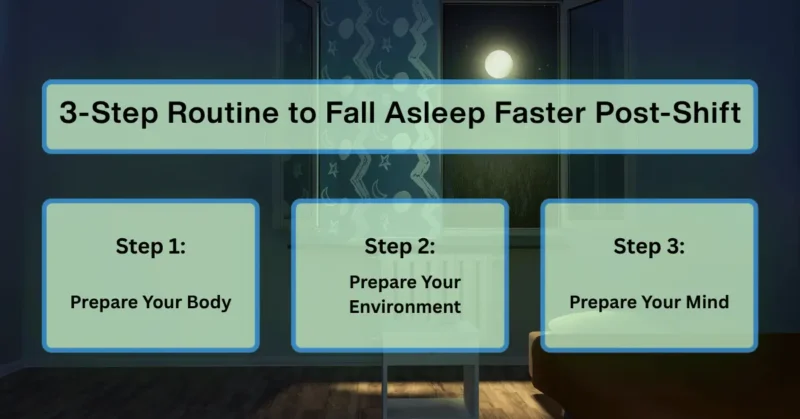
Many shift workers struggle to “switch off” after work. Following a simple routine each day signals to your brain that it is time to rest.
Step 1: Prepare Your Body
- Take a warm shower.
- Perform gentle stretching.
- Drink water to replace fluids lost during your shift.
- Avoid intense exercise immediately before bedtime.
Step 2: Prepare Your Environment
- Close blackout curtains.
- Reduce room temperature.
- Turn off bright lights.
- Silence electronic devices.
Step 3: Prepare Your Mind
- Practice slow breathing for five minutes.
- Read a book instead of scrolling on your phone.
- Avoid work-related conversations before bed.
Small habits repeated consistently often improve sleep quality more than dramatic changes.
Signs Your Current Sleep Position Isn’t Working
Your body usually provides clear signals when your sleeping posture needs adjustment.
Watch for these common signs:
- You wake with neck pain every morning.
- Your lower back feels stiff after sleeping.
- Your shoulders go numb at night.
- You frequently change positions trying to get comfortable.
- You wake up feeling tired despite having slept enough hours.
- You experience tingling in your hands or arms.
- You notice persistent hip discomfort.
If these symptoms continue for several weeks despite improving your sleep environment, consult a healthcare professional to rule out an underlying medical condition.
Key Takeaways
- Your sleeping position directly affects muscle recovery, circulation, spinal alignment, and sleep quality after a long shift.
- Side sleeping is the best choice for most shift workers because it supports healthy breathing and reduces pressure on the spine.
- Back sleeping is ideal for people experiencing lower back discomfort, especially when using a pillow beneath the knees.
- When you can, avoid sleeping on your stomach since it puts undue strain on your lower back and neck.
- Pillow placement plays a significant role in maintaining proper spinal alignment.
- A cool, dark, and quiet bedroom improves restorative sleep regardless of your work schedule.
- Consistent sleep routines help regulate your body’s recovery process, particularly if you work nights or rotating shifts.
- If pain or poor sleep continues despite improving your sleep posture, seek medical advice to identify possible underlying conditions.
Conclusion
Long shifts place significant demands on your body, but quality recovery begins with more than simply spending enough hours in bed.
Your sleeping position influences spinal alignment, muscle relaxation, circulation, breathing, and the restorative processes that occur during deep sleep.
For most shift workers, side sleeping with proper pillow support offers the best combination of comfort and recovery.
Back sleeping is an excellent alternative for those with lower back discomfort, while stomach sleeping is generally best avoided because it can strain the neck and spine.
Pairing the right sleeping position with a supportive mattress, well-placed pillows, and a cool, dark, quiet bedroom creates the ideal environment for restorative sleep.
Remember that better sleep is built through consistent habits rather than a single change.
By improving your sleep posture, following a regular post-shift routine, and listening to your body’s signals, you can reduce aches, recover more effectively, and wake up ready to perform at your best, no matter what shift you work.
Read more about night shift workers’ health.
You might like: