
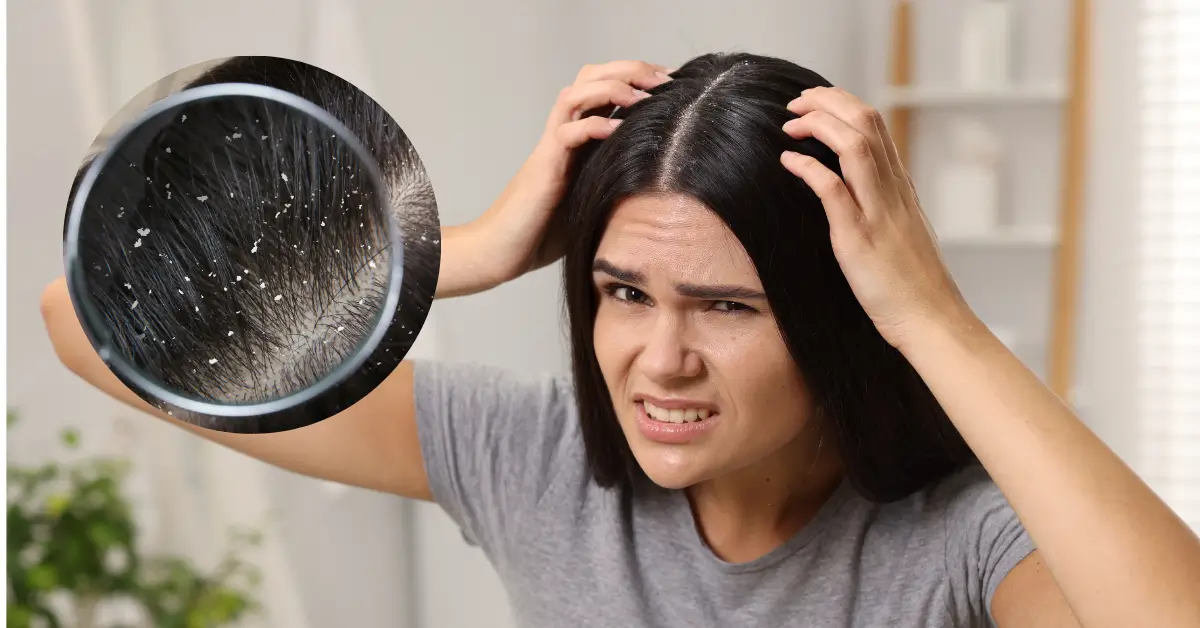
Boost your hair and scalp care with the best solutions for beautiful, healthy hair! Learn simple, actionable routines to maintain vibrant locks and a healthy scalp effortlessly.
Healthy hair begins at the root with a balanced, clean, and nourished scalp.
Core Scalp & Hair Care Steps
- Targeted Cleansing: Apply shampoo mainly to your scalp, not the full length of your hair. Match your cleanser to your specific scalp type: use tea tree oil or salicylic acid clarifying shampoos for oily scalps, and gentle, moisturizing formulas with aloe vera or argan oil for dry or sensitive scalps.
- Gentle Exfoliation: Clear away dead skin cells and stubborn product buildup by using a gentle scalp scrub or chemical exfoliant (like AHAs or BHAs) once or twice a week.
- Mindful Conditioning: Smooth lightweight conditioners or hydrating masks onto the mid-lengths and ends of your hair to lock in moisture without weighing down your roots or causing buildup.
- Scalp Massage: Stimulate blood flow and support follicle health by massaging your scalp with your fingertips in gentle circular motions for 2 to 3 minutes while washing or applying treatment.
- Protection & Maintenance: Shield your hair and scalp from damage by lowering heat styling temperatures, applying heat protectants, and protecting your scalp from prolonged UV exposure. Explore expert-backed routines and essentials in guides like the L’Oréal Professionnel Scalp Care Guide.
Apply Scalp Care Tips for Healthier Hair
Ready to elevate your hair care game? Your journey to healthier, stronger hair begins here. From the proper cleansing techniques to effective remedies for common issues like dryness or dandruff, these essential tips will help you build a simple yet impactful routine.
Whether you’re managing curly locks or combating a sensitive scalp, these strategies work for every hair type. Get ready to unlock the secret to vibrant, beautiful hair starting today!
Understanding Hair Types and Needs
One of the biggest mistakes people make in their hair care routine is using a “one-size-fits-all” approach.
What works wonders for your best friend’s hair might leave yours feeling dry, limp, or frizzy. The secret to healthy, beautiful hair is understanding your unique hair type and meeting its specific needs.
This guide breaks down different hair types and provides tailored care tips for each.
Straight Hair
Straight hair has a sleek structure where natural oils travel easily from root to tip, often leading to oil buildup. This hair type looks shiny but can feel limp if you don’t care for it properly.
- Challenges: Oiliness, lack of volume, and flatness.
- Care Tips:
- Use lightweight, volumizing shampoos and conditioners to avoid weighing hair down.
- Dry shampoo can be a lifesaver for managing oil between washes.
- Avoid heavy styling products and opt for mousses or sprays designed for added lift.
Wavy Hair
Wavy hair resembles loose or S-shaped waves and balances straight and curly styles. It is prone to frizz and can lose definition if you overload it with heavy products.
- Challenges: Frizz, uneven texture, and dryness.
- Care Tips:
- Use hydrating shampoos and conditioners to maintain moisture.
- Apply lightweight curl-enhancing creams or gels to define waves without stiffness.
- Avoid over-washing; aim for 2-3 times per week to preserve natural oils.
Curly Hair
Curly hair forms distinct ringlets or curls, creating gaps in the cuticle layer. This makes it harder for natural oils to travel, which can lead to dryness.
- Challenges: Dryness, tangling, and frizz.
- Care Tips:
- Opt for sulfate-free, moisture-rich shampoos and conditioners.
- Use leave-in conditioners or curl creams to lock in hydration and enhance the curl pattern.
- Detangle gently with a wide-tooth comb while hair is wet and saturated with conditioner.
- Avoid heat styling as much as possible to maintain curl integrity.
4. Coily Hair
Coily hair (kinky or Afro-textured hair) features tight curls or zig-zag patterns. Due to its coil structure, this texture is fragile and highly susceptible to breakage.
- Challenges: Intense dryness, shrinkage, and breakage.
- Care Tips:
- Deep condition weekly with products rich in natural oils like shea butter, coconut oil, or avocado oil.
- Use a leave-in conditioner or styling butter for added moisture and curl definition.
- Protective styles like braids or twists can minimize manipulation and reduce breakage.
- Sleep on a silk or satin pillowcase to reduce friction and maintain moisture.
General Hair Care Recommendations
- Know Your Porosity: Hair porosity (low, medium, or high) determines how well your hair absorbs and retains moisture. To tailor your routine further, conduct a porosity test (floating a strand of hair in water).
- Avoid Overloading Products: Use products sparingly and layer lightweight solutions to avoid buildup.
- Listen to Your Hair: Adjust routines based on how your hair feels—if it’s dry, hydrate more; if it feels heavy, cleanse with a clarifying shampoo.
Understanding and addressing your specific hair type’s needs is key to achieving healthy, vibrant locks. Consistency and the right products tailored to your texture will work wonders!

Universal Hair Care Needs
Regardless of your hair type, some practices benefit everyone.
| Practice | Why It Matters |
|---|---|
| Healthy Diet | Hair is made of protein. Eat lean meats, eggs, beans, and leafy greens. |
| Hydration | Drink plenty of water to keep hair hydrated from the inside out. |
| Scalp Care | A clean, exfoliated scalp promotes healthy hair growth. |
| Heat Protection | Always use a heat protectant spray before using flat irons or blow dryers. |
| Regular Trims | Trim every 6-8 weeks to prevent split ends from traveling up the hair shaft. |
| Gentle Handling | Avoid rough brushing, tight hairstyles, and excessive chemical treatments. |
| Satin/Silk Pillowcase | Reduces friction and breakage while you sleep. |
How to Build Your Routine
Step 1: Identify Your Hair Type
Use the chart above to determine your curl pattern, porosity, density, and texture.
Step 2: Choose the Right Products
- Straight Hair: Lightweight shampoos, volumizing conditioners, dry shampoo.
- Wavy Hair: Sulfate-free shampoo, lightweight curl creams, sea salt sprays.
- Curly Hair: Moisturizing shampoo, rich conditioners, curl gels, and leave-in creams.
- Coily Hair: Co-washes, deep conditioners, hair butters, and oils.
Step 3: Establish a Wash Day Routine
- Pre-Poo (Optional): Apply an oil treatment before washing.
- Cleanse: Shampoo or co-wash.
- Condition: Apply conditioner, detangle, and rinse.
- Deep Treatment (Weekly/Bi-Weekly): Mask for extra hydration or protein.
- Style: Apply leave-in, oil, and styling products.
- Dry: Air dry or use a diffuser on low heat.
Step 4: Adjust Seasonally
- Summer: Focus on sun protection and hydration.
- Winter: Combat dryness with heavier moisturizers and protect from cold wind.
- Humidity: Use anti-frizz products and seal cuticles.
Essential Scalp Care Practices
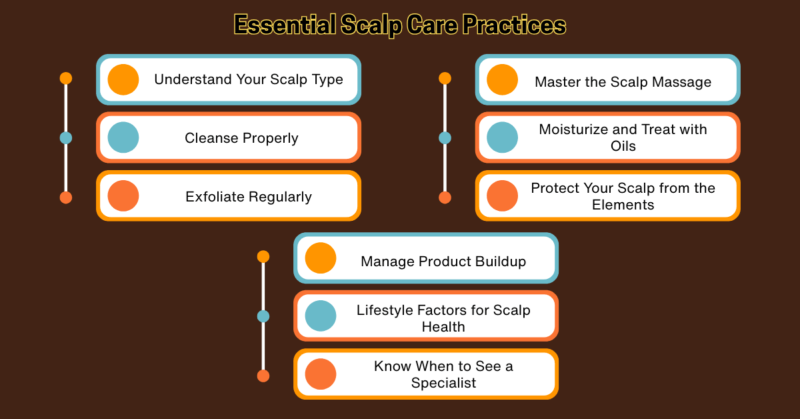
We often focus on styling, coloring, and treating our hair strands, but we forget the most crucial part: the scalp.
Think of your scalp as garden soil. If the soil is unhealthy, dry, or clogged, the plants (your hair) cannot thrive. Healthy hair growth begins at the root, so scalp care isn’t just an option—it is a necessity.
Here are the essential practices for maintaining a healthy, balanced scalp.
1. Understand Your Scalp Type
Before you can treat your scalp, you need to know what you are dealing with. Unlike hair type (curly, straight, wavy), scalp type refers to the skin on your head.
- Oily: Produces excess sebum, looks shiny, and feels greasy quickly.
- Dry: Feels tight and itchy and may have flaky white or grey dead skin.
- Combination: Oily at the roots but dry at the ends.
- Sensitive: Prone to redness, irritation, and allergic reactions.
Why it matters: Using products designed for an oily scalp on a dry scalp will only make the problem worse.
2. Cleanse Properly (Not Just Your Hair)
Shampooing is about cleaning the scalp first, then the hair.
- Focus on the Roots: Apply shampoo directly to the scalp and massage it in. The suds will naturally clean the ends of your hair as you rinse.
- The Double Cleanse: If you use a lot of styling products or have an oily scalp, shampoo twice. The first wash removes surface dirt; the second cleans the actual scalp.
- Temperature Control: Use lukewarm water. Hot water strips away natural oils and can cause inflammation, while cold water helps seal the hair cuticle and add shine.
3. Exfoliate Regularly
Just like the skin on your face, your scalp accumulates dead skin cells, oil, and product buildup. This buildup can clog hair follicles, leading to dandruff and stunted growth.
- Physical Exfoliation: Use a silicone scalp massager or a gentle scrub with sugar or salt particles.
- Chemical Exfoliation: Look for shampoos containing salicylic acid or glycolic acid to dissolve dead skin and oil.
- Frequency: Exfoliate once a week or every two weeks, depending on how oily your scalp is.
4. Master the Scalp Massage
Massage isn’t just for relaxation; it’s vital for hair health.
- Boost Circulation: Massaging increases blood flow to the hair follicles, delivering oxygen and nutrients essential for growth.
- How to do it: Use your fingertips (not your nails) to apply gentle pressure in circular motions. You can do this dry, during shampooing, or with oils.
- Duration: Aim for 5 minutes a day. Studies suggest consistent massage can help thicken hair over time.
5. Moisturize and Treat with Oils
Oils nourish the scalp, but moderation is key.
- Pre-Poo Treatment: Apply warm oil (like coconut, jojoba, or almond oil) to the scalp 30 minutes to an hour before washing. This protects the scalp from shampoo’s drying effects.
- Avoid Heavy Buildup: If you have an oily scalp, use lightweight oils like jojoba or grapeseed. If you have a dry scalp, heavier oils like castor or olive oil work well.
- Essential Oils: Add a few drops of tea tree, lavender, or peppermint oil to your carrier oil for added antibacterial and soothing benefits.
6. Protect Your Scalp from the Elements
Your scalp is skin, and it needs protection from the sun and environmental pollutants.
- Sun Protection: The sun can burn your scalp, especially along the part line. Wear a hat or use a scalp-safe SPF spray or powder.
- Environmental Shield: If you live in a polluted city, wash your hair more frequently to prevent pollutants from clogging pores.
7. Manage Product Buildup
Styling products like dry shampoo, hairspray, and gel can suffocate the scalp.
- Clarify Monthly: Use a clarifying shampoo once a month to deep clean and remove stubborn residue.
- Give Your Scalp a Break: Try going makeup-free (and product-free) for a few days each week to let it breathe.
8. Lifestyle Factors for Scalp Health
Your scalp reflects your overall health.
- Diet: Eat foods rich in omega-3 fatty acids (fish, flaxseed), zinc (nuts, legumes), and vitamins A, C, and E. These reduce inflammation and support skin health.
- Hydration: Drink plenty of water. Dehydration can lead to a dry, flaky scalp.
- Stress Management: High stress levels can trigger scalp issues like psoriasis, eczema, and telogen effluvium (stress-induced hair shedding).
9. Know When to See a Specialist
Sometimes, home care isn’t enough. Consult a dermatologist if you experience:
- Persistent redness or swelling.
- Painful sores or scabs.
- Sudden, severe hair loss.
- Chronic dandruff that does not respond to medicated shampoos.
Summary Checklist for Daily Scalp Care:
- □ Wash with sulfate-free shampoo focusing on the roots.
- □ Massage for 5 minutes daily.
- □ Exfoliate once a week.
- □ Protect from the sun.
- □ Drink plenty of water.
Remember: A healthy scalp leads to healthy hair. Treat it with the same care and attention you give your skin, and your hair will thank you.
Hair Care Routine
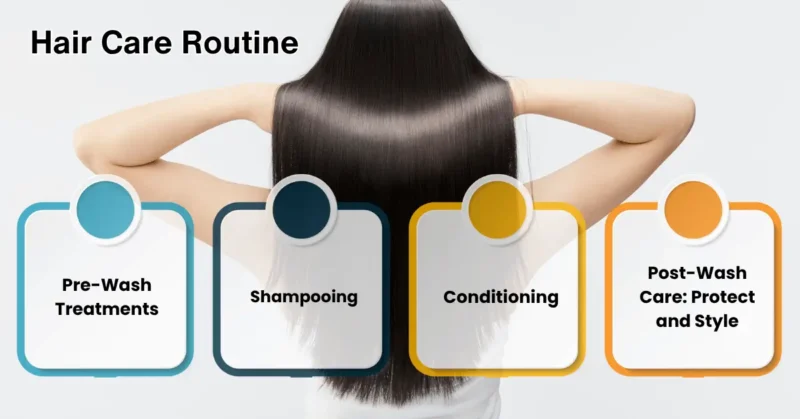
A structured hair care routine helps keep your scalp and hair healthy and manageable.
1. Pre-Wash Treatments: Deep Nourishment
Pre-wash treatments, such as oils or masks, prepare your hair for cleansing by adding an extra layer of nourishment.
- Key Ingredients: Coconut oil for deep penetration, argan oil for smoothing, or protein masks for strengthening.
- How to Use:
- Apply to dry hair, focusing on the mid-lengths and ends.
- Leave for 30 minutes or overnight for intensive hydration.
2. Shampooing: Cleanse with Care
Shampooing removes dirt, oil, and buildup while stimulating the scalp.
- Technique:
- Focus on your scalp, using fingertips (not nails) to massage gently in circular motions.
- Rinse thoroughly to avoid residue.
- Frequency: Adjust based on scalp type and activity level.
3. Conditioning: Target the Hair, Not the Scalp
Conditioning prevents tangling, adds shine, and protects the hair shaft.
- Application:
- Apply conditioner from the mid-lengths to the ends.
- Avoid the scalp to prevent greasiness.
- Ingredients to Look For: Keratin, silk protein, or natural oils to smooth and strengthen.
4. Post-Wash Care: Protect and Style
Proper post-wash care minimizes damage and enhances your styling results.
Drying:
- Use a microfiber towel to gently blot hair.
- Avoid vigorous rubbing to prevent breakage and frizz.
- Heat Protection: Always use a heat protectant spray or cream before styling with tools.
- Finishing Touches: Apply a serum or leave-in conditioner for extra shine and smoothness.
Natural Tips for Common Hair and Scalp Issues
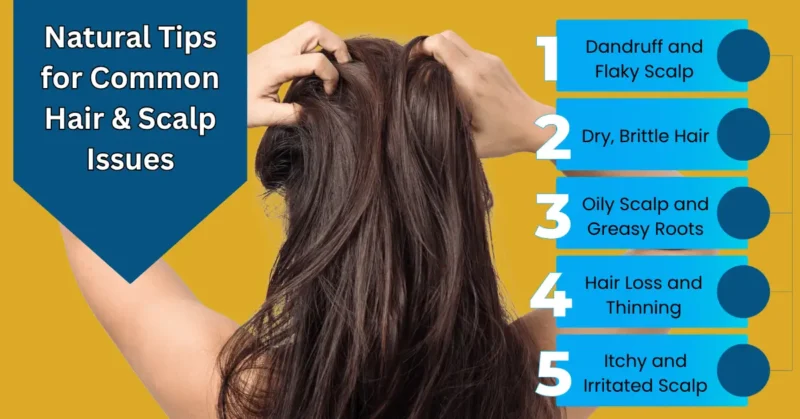
Our hair is often considered our crowning glory, but issues like dandruff, dryness, or thinning can be frustrating.
While countless chemical products are on the market, turning back to nature can often provide gentler, effective, and affordable solutions. Here is a guide to tackling common hair and scalp problems using natural remedies.
1. Dandruff and Flaky Scalp
The Issue: White flakes, itching, and irritation caused by a dry scalp or a yeast-like fungus.
Natural Solutions:
- Tea Tree Oil: Known for its antifungal and antibacterial properties. Add a few drops of tea tree oil to a carrier oil (like coconut or olive oil) and massage into the scalp before washing.
- Apple Cider Vinegar (ACV) Rinse: Mix equal parts ACV and water. Use this as a final rinse after shampooing. The acidity helps restore the scalp’s pH balance and removes buildup.
- Aloe Vera: Apply fresh aloe vera gel directly to the scalp. It has soothing properties that can reduce the itching and inflammation associated with dandruff.
2. Dry, Brittle Hair
The Issue: Hair that lacks moisture, feels rough, and breaks easily.
Natural Solutions:
- Coconut Oil Mask: Coconut oil is one of the few oils that can actually penetrate the hair shaft. Warm it up and apply generously to hair 30 minutes before washing (or leave it overnight).
- Avocado and Honey Mask: Mash one ripe avocado with two tablespoons of honey. Avocado is rich in healthy fats and vitamins, while honey is a natural humectant that retains moisture.
- Limit Hot Water: Wash your hair with lukewarm or cool water. Hot water strips away natural oils, leaving hair drier.
3. Oily Scalp and Greasy Roots
The Issue: Overactive sebaceous glands produce too much oil, making hair look limp and greasy quickly.
Natural Solutions:
- Clay Masks: Bentonite or Rhassoul clay can absorb excess oil. Mix the clay with water or apple cider vinegar to form a paste, apply to the scalp, let it dry, and rinse thoroughly.
- Lemon Juice: The acidity in lemon juice can help balance oil production. Mix a tablespoon of lemon juice with water, apply it to the scalp, then rinse. (Note: Do not use if you have a sensitive or broken scalp).
- Witch Hazel: Use witch hazel as a natural astringent on the scalp to remove excess oil without stripping it completely.
4. Hair Loss and Thinning
The Issue: Shedding more hair than usual or noticing a thinner density.
Natural Solutions:
- Scalp Massage: Regular massage increases blood circulation to the hair follicles, which can stimulate growth. Use your fingertips or a wooden comb.
- Rosemary Oil: Studies suggest that rosemary oil can stimulate hair growth as effectively as some chemical treatments. Mix a few drops with a carrier oil and massage into the scalp.
- Onion Juice: While the smell is strong, onion juice is high in sulfur, which can promote collagen production and help with hair regrowth. Apply to the scalp, leave for 15 minutes, and wash thoroughly.
5. Itchy and Irritated Scalp
The Issue: Persistent itching, redness, or sensitivity.
Natural Solutions:
- Oatmeal Soak: Blend plain oats into a fine powder, mix with water to make a paste, and apply to the scalp. Oatmeal is anti-inflammatory and can soothe irritation.
- Peppermint Oil: Provides a cooling sensation that can relieve itching immediately. Always dilute essential oils with a carrier oil before applying.
- Avoid Harsh Sulfates: Switch to a natural, sulfate-free shampoo to prevent stripping the scalp’s natural protective barrier.
General Tips for Healthy Hair
- Diet Matters: Eat a balanced diet rich in protein, iron, zinc, and B vitamins. Biotin (found in eggs and nuts) is particularly important for hair health.
- Manage Stress: Stress can trigger hair loss and scalp issues. Try yoga, meditation, or deep-breathing exercises.
- Be Gentle: Avoid brushing wet hair vigorously, as it is more prone to breakage. Use a wide-tooth comb.
- Stay Hydrated: Drinking enough water is essential for overall health, including your hair and scalp.
Disclaimer: Natural remedies are generally safe, but everyone’s scalp is different. If you have a severe medical condition or an allergic reaction, please consult a dermatologist.
FAQs on Scalp Care Solutions
Q. How do I make my scalp healthier?
To keep your scalp healthy, focus on regular cleansing, exfoliating, and moisturizing:
- Cleansing: Use a shampoo suited to your scalp type (e.g., moisturizing shampoo for dry scalps or clarifying shampoo for oily scalps). It helps to remove dirt, oil, and product buildup.
- Exfoliation: Gently exfoliate your scalp weekly to remove dead skin cells and improve circulation, encouraging healthy hair growth. You can use a scalp scrub or a shampoo with mild exfoliating ingredients like salicylic acid.
- Hydration: Use lightweight oils like jojoba or argan oil to keep your scalp hydrated. Overdrying or over-cleansing can lead to irritation, so balance is essential.
Q. How can I make my hair healthy every day?
To keep your hair healthy daily:
- Avoid over-washing: Shampooing every day can strip natural oils from your hair. Aim to wash it 2-3 times a week instead.
- Condition regularly: Use a conditioner suited to your hair type, focusing on the ends. Conditioning helps restore moisture and manageability.
- Minimize heat styling: Excessive use of blow dryers, straighteners, and curling irons can damage hair. Use a heat protectant when styling, and aim to let your hair air-dry when possible.
- Eat a nutrient-rich diet: Foods rich in biotin, vitamin E, zinc, and omega-3 fatty acids support hair health from within.
Q. What is the healthiest hair care routine?
A healthy hair care routine consists of these key steps:
- Pre-wash treatment: Use a nourishing oil or mask to hydrate and protect hair before washing.
- Shampooing: Use a gentle, sulfate-free shampoo that matches your scalp type. Massage gently to stimulate circulation.
- Conditioning: Apply conditioner to the hair’s mid-lengths and ends to keep it hydrated.
- Deep conditioning: Use a deep-conditioning mask weekly to restore moisture.
- Post-wash care: Apply a leave-in conditioner or serum to protect hair from environmental damage.
- Avoid chemical treatments: Reduce harsh chemicals like perms or relaxers, as these can weaken hair over time.
Q. What are a few Scalp Care Solutions?
Caring for both your hair and scalp involves:
- Healthy scalp care: Cleanse, exfoliate, and hydrate to ensure your scalp is free of buildup and irritation.
- Hair nourishment: Keep hair hydrated and nourished with regular conditioning treatments and a diet rich in vitamins that support hair growth, like biotin, zinc, and vitamin E.
- Avoid tight hairstyles: Styles that pull at the scalp can cause breakage and hair thinning. Opt for looser styles to prevent strain on hair follicles.
Q. How to increase hair thickness?
To increase hair thickness:
- Eat a balanced diet: Foods rich in vitamins, proteins, and healthy fats support hair growth. Eggs, fish, nuts, and leafy greens are great choices.
- Scalp massages: Massage your scalp regularly to improve blood circulation, which may stimulate hair growth.
- Use volumizing products: Shampoos and conditioners designed to add volume can make hair appear thicker. Look for products that contain biotin, keratin, or other hair-strengthening ingredients.
Q. Which oil is best for hair?
Several oils are excellent for different hair needs:
- Argan oil: Rich in vitamin E and fatty acids, it hydrates and adds shine while reducing frizz.
- Coconut oil: Known for its deep moisturizing properties, it helps nourish the scalp and hair shaft.
- Jojoba oil: This lightweight oil is similar to the scalp’s natural oils, making it great for moisturizing without clogging pores.
- Rosemary oil: Some studies suggest that rosemary oil may help promote hair growth by improving circulation to the scalp.
Incorporating the right oils into your routine can significantly improve the overall health of your hair and scalp. By following these tips, you can maintain a healthy scalp, thicker hair, and an intense hair care routine.
Conclusion on Scalp Care Solutions
Understanding your hair type is the first step toward giving your hair exactly what it needs. No hair type is “bad”—only hair that isn’t cared for properly. Embrace your natural texture, experiment with products, and be patient. Healthy hair is a journey, not a destination.
Key Takeaway: Listen to your hair. If it feels dry, add moisture. If it feels limp, add protein or clarify. If it breaks, handle it more gently. Your hair will tell you what it needs if you pay attention.
Read more articles on Health and Wellness.