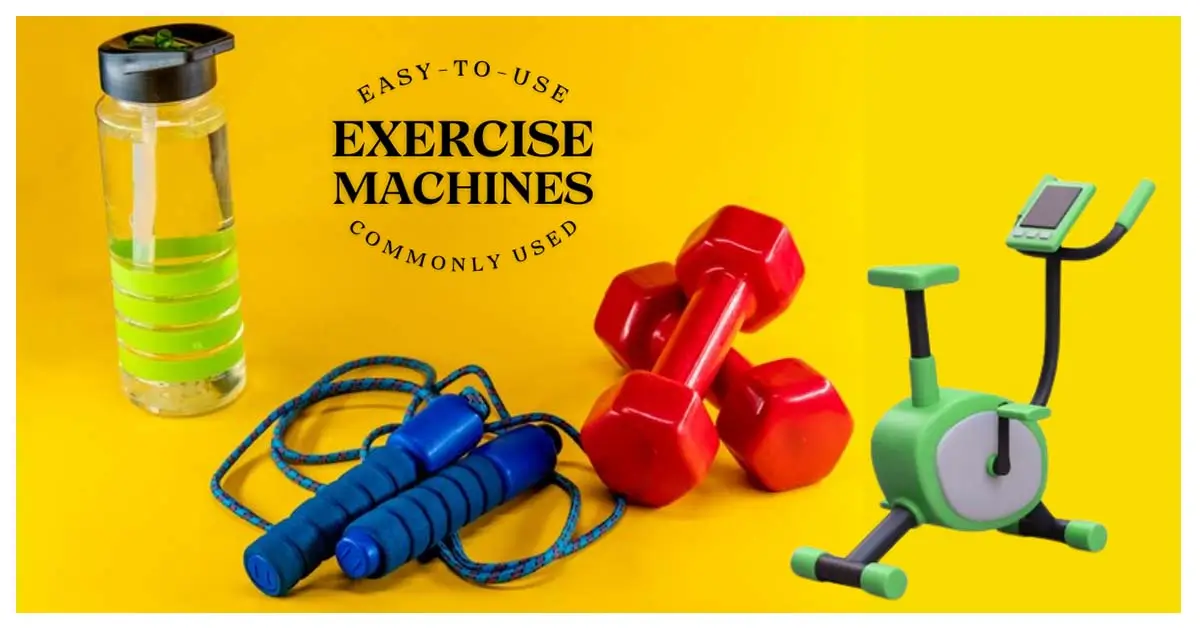
Explore 9 exercise machines for home workouts to build strength, improve fitness, boost stamina, and stay active every day.
You don’t need an expensive gym membership to build strength, improve fitness, and stay active. The right exercise equipment can help you create an effective workout space at home, even with limited room or a busy schedule.
From treadmills and stationary bikes to resistance bands and rowing machines, each option offers different benefits. Some improve heart health and stamina, while others help build muscle, balance, and core strength.
This guide covers nine useful exercise machines and fitness tools, explains what each one does, and helps you choose the right equipment for your home workout goals.
Why Use Exercise Equipment at Home?
Maintaining a healthy lifestyle requires regular exercise, and many individuals find it more convenient to work out at home.
Home exercise equipment makes it easier to stay active without traveling to a gym. You can exercise whenever it fits your routine, choose your preferred workout intensity, and progress at your own pace.
Here are some important benefits:
- Convenience: Exercise at home without worrying about gym hours or travel.
- Consistency: Keep your equipment nearby to make regular workouts easier.
- Flexible training: Combine cardio, strength, and balance exercises.
- Personal comfort: Adjust your workout according to your fitness level.
- Long-term value: A suitable piece of equipment can support years of exercise.
You don’t need to buy everything at once. Start with one or two items that match your goals and available space.
Treadmills: Walk or Run at Home
A treadmill is one of the most popular choices for home cardio workouts. It lets you walk, jog, or run indoors, no matter what the weather is like outside.
Most treadmills offer adjustable speed and incline settings. You can begin with a comfortable walk and gradually increase the intensity as your fitness improves.
Main benefits:
- Supports cardiovascular fitness and endurance.
- Lets you walk, jog, and run at different speeds.
- Incline settings add intensity and challenge your leg muscles.
- Makes it easier to follow a consistent walking or running routine.
What to check before buying: Look for a stable frame, a comfortable running surface, suitable speed settings, and an emergency stop feature.
If you plan to run regularly, check the motor specifications and weight capacity rather than relying on horsepower alone.
Elliptical Trainer: Low-Impact Cardio
An elliptical trainer provides a smooth cardio workout by moving your feet along continuous pedals. Many models also include moving handles, allowing you to work your arms and legs together.
Because your feet remain on the pedals, the movement involves less impact than running. This can make an elliptical a useful option for people who prefer lower-impact exercise.
Main benefits:
- Supports heart health and cardiovascular endurance.
- Engages the legs and, with moving handles, the upper body.
- Offers adjustable resistance for different fitness levels.
- Many models offer forward and backward pedaling options.
What to check before buying: Consider stride length, pedal comfort, resistance levels, stability, and available space. If possible, try the machine to make sure its movement feels natural.
Stability Ball: Build Core Strength
A stability ball may not look like a traditional exercise machine, but it is a useful home workout tool. Its unstable surface challenges your body to stay balanced as you move.
Use it for abdominal exercises, back extensions, wall squats, and gentle stretching. It can also make some familiar exercises more challenging.
Main benefits:
- Challenges abdominal and back muscles.
- Helps develop balance and body control.
- Adds variety to core and flexibility workouts.
- Can support gentle stretching and mobility exercises.
What to check before buying: Choose a ball that matches your height. When sitting on it, your feet should rest flat on the floor, with your knees close to a right angle. Use it on a clear, non-slippery surface.
Sit-Up Bars: Support Your Abs Workout
A sit-up bar is a small fitness accessory that holds your feet in place during certain abdominal exercises. Some models attach under a door, while others use a weighted or freestanding base.
It can help you perform sit-ups and similar movements, but it does not automatically make abdominal training more effective or protect your back.
Main benefits:
- Provides foot support during selected exercises.
- Takes up little storage space.
- Offers a simple way to add variety to abdominal workouts.
- Can help some people maintain a consistent position during sit-ups.
What to check before buying: Make sure the bar attaches securely and fits your floor or door. Avoid forcing your body through sit-ups if you feel back or neck pain. You can also strengthen your core with planks, dead bugs, and other controlled movements.

Stationary Bike: Indoor Cycling Made Easy
A stationary bike lets you enjoy cycling without leaving home. It is a practical option for people who want regular cardio exercise with less impact than running.
You can pedal at a steady pace for endurance or increase the resistance for a more challenging session. Some bikes also include workout programs and heart-rate tracking.
Main benefits:
- Supports cardiovascular fitness.
- Strengthens the muscles in your legs.
- Offers adjustable resistance and workout intensity.
- Provides a low-impact alternative to running.
There are two common types:
- Upright bikes: Have a riding position similar to a traditional bicycle.
- Recumbent bikes: Include a wider seat and back support for a more reclined position.
What to check before buying: Look for adjustable seat height, comfortable pedals, stable construction, and suitable resistance levels. At the bottom of each pedal stroke, your knee should remain slightly bent.
Resistance Bands: Simple Strength Training
Resistance bands are affordable, lightweight, and easy to store. They provide resistance when stretched, letting you train different muscle groups without heavy weights or bulky equipment.
You can use them for squats, rows, shoulder exercises, chest presses, and glute workouts. They are also useful for warm-ups and mobility routines.
Main benefits:
- Support full-body strength training.
- Offer different resistance levels.
- Fit easily into small spaces and travel bags.
- Allow many exercises for the arms, legs, shoulders, and back.
What to check before buying: Choose a set with several resistance levels. Inspect the bands for cracks or damage before every session. If using an anchor, make sure it is secure and designed for exercise.

Jump Rope: Quick and Effective Cardio
A jump rope is a simple tool that can make a workout challenging in a short time. It raises your heart rate and helps develop coordination, timing, and footwork.
You don’t need much equipment or space, but you do need a safe area with enough ceiling clearance.
Main benefits:
- Improves cardiovascular endurance.
- Develops coordination and rhythm.
- Challenges the lower legs and shoulders.
- Offers a convenient option for short cardio sessions.
What to check before buying: Choose an adjustable rope that fits your height. Start with short intervals and rest between rounds. Jump on a suitable surface and wear supportive shoes.
Jumping rope can place stress on your ankles, knees, and feet. If you have joint pain, balance problems, or difficulty with high-impact exercise, consider a lower-impact option.
Rowing Machine: Full-Body Cardio
A rowing machine combines cardio and muscular effort in one movement. Each stroke uses your legs, core, back, and arms, making it a useful option for full-body training.
You can row at a steady pace for endurance or use shorter, faster intervals to increase workout intensity.
Main benefits:
- Engages several major muscle groups.
- Supports cardiovascular fitness and stamina.
- Provides a low-impact workout when performed correctly.
- Allows you to adjust resistance or rowing intensity on many models.
What to check before buying: Consider the machine’s resistance system, rail length, seat comfort, noise level, and storage options. Learn the correct rowing technique before increasing speed or resistance.
A good rowing stroke starts with the legs, then the body moves back, and the arms pull toward the torso. Avoid rounding your lower back or relying only on your arms.
Balance Twister: Improve Core Control
A balance twister, sometimes called a balance disc or twist board, is a compact fitness tool designed for balance and movement exercises. Some models rotate, while others use an unstable surface to challenge your body to stay steady.
It can add variety to simple standing movements and light core workouts.
Main benefits:
- Challenges balance and coordination.
- Engages stabilizing muscles.
- Adds variety to standing exercises.
- Takes up very little storage space.
What to check before buying: Choose a stable product with a non-slip surface and a weight capacity that suits you. Begin with simple movements near a wall or sturdy support. Avoid twisting quickly or using the equipment if you feel unstable.
Remember that a balance trainer is not a replacement for strength training or aerobic exercise. It works best as an additional fitness tool.

How to Choose the Right Equipment
The best home workout equipment is not necessarily the most expensive or advanced. It is the equipment that suits your goals, space, budget, and fitness level.
Consider these five points before buying.
1. Set Your Fitness Goal
Decide what you want to improve. For cardio and endurance, consider a treadmill, elliptical, stationary bike, or rowing machine. For strength and core training, resistance bands and a stability ball may be more suitable.
2. Measure Your Space
Check the equipment’s dimensions before ordering. Leave enough room around it for safe movement. If you live in a small home, resistance bands, jump ropes, and compact fitness tools may be easier to manage.
3. Consider Your Budget
You don’t need to purchase all nine options. Start with equipment you will use regularly. A resistance band set or jump rope may be a good starting point, while larger machines usually require a bigger investment.
4. Check Comfort and Safety
Try equipment in a store if possible. Check seat adjustments, pedal movement, stability, weight limits, and safety features. Read the manufacturer’s instructions before using a new machine.
5. Choose Equipment You Enjoy
Enjoyment matters because it can help you stay consistent. If you dislike running, a stationary bike or elliptical may be a better choice. If you enjoy strength exercises, resistance bands may keep your routine interesting.

FAQs on Exercise Machines for a Powerful Home Workout
Q. What is the best exercise machine for a home workout?
The best machine depends on your fitness goals. A treadmill is useful for walking and running, an elliptical offers low-impact cardio, a stationary bike supports indoor cycling, and a rowing machine combines cardio with full-body movement.
Q. Which home exercise machine is best for weight loss?
Treadmills, stationary bikes, ellipticals, and rowing machines can all support weight management by helping you burn energy through physical activity. Your results also depend on food intake, workout consistency, sleep, and other lifestyle factors.
Q. What is the best exercise machine for beginners?
A stationary bike or elliptical can be a comfortable starting point for many beginners because both offer adjustable intensity. Start slowly and choose a machine that feels comfortable for your body.
Q. Are home workout machines worth buying?
They can be worthwhile if you use them regularly. Before buying, consider your fitness goals, available space, budget, and how often you expect to exercise.
Q. Can I get a full-body workout at home without a gym?
Yes. You can combine resistance band exercises, bodyweight movements, and cardio activities such as cycling or rowing. A simple routine can train your major muscle groups without requiring a complete home gym.
Q. How often should I use home exercise equipment?
Your schedule depends on your fitness level and the type of exercise you choose. Many adults can work toward at least 150 minutes of moderate-intensity aerobic activity each week, along with muscle-strengthening activities on two or more days, following public health guidelines. If you are new to exercise, start gradually.
Conclusion on Exercise Machines for a Powerful Home Workout
A powerful home workout does not require a room full of expensive machines. The right combination of cardio equipment, strength tools, and balance exercises can help you build a routine that fits your lifestyle.
Start with one piece of equipment that supports your main fitness goal. Learn how to use it correctly, begin at a comfortable intensity, and increase your effort gradually.
Most importantly, choose activities you enjoy so that exercise becomes a regular part of your life.
You don’t need an expensive gym membership to improve your fitness. Choose the right equipment, start moving, and build a stronger, healthier body at home. Read more articles on Health and Life-Balance at CureVigor.
Read more about Health and Wellness.