

A growth mindset is the belief that your abilities can develop through learning, practice, feedback, and persistence. It does not mean believing you can achieve anything instantly. Instead, it encourages you to see challenges as opportunities to learn and improve.
Cultivating growth mindset traits can help you approach setbacks differently, remain open to learning, and build greater confidence over time.

What Is a Growth Mindset?
A growth mindset is a way of thinking that views abilities and skills as developable.
Instead of thinking, “I am not good at this,” you might think, “I am not good at this yet.”
This small change can influence how you respond to mistakes, criticism, challenges, and new experiences.
A growth mindset does not ignore limitations or guarantee success. It encourages you to focus on what you can learn, practice, and improve.
Key Growth Mindset Traits for Lifelong Success
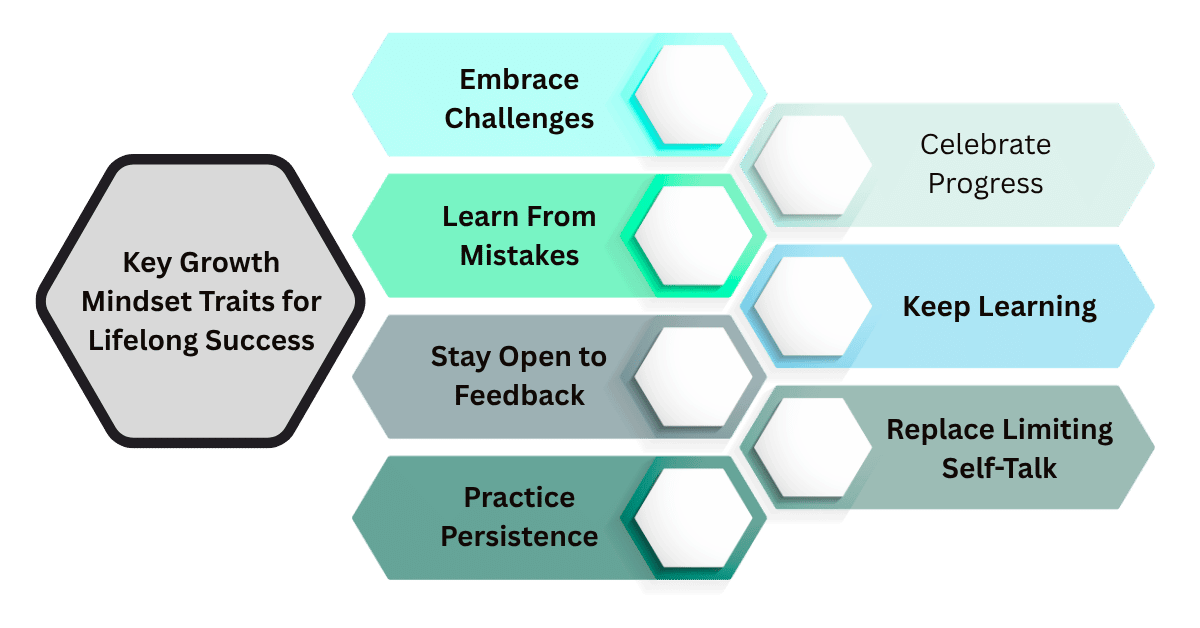
Several traits can help you develop a stronger growth mindset and apply it in everyday life.
1. Embrace Challenges
Challenges can reveal where you need to grow.
Instead of avoiding difficult tasks because you might fail, approach them as opportunities to develop your skills. Start with manageable challenges and gradually increase the difficulty.
2. Learn From Mistakes
Mistakes are useful when you examine what happened and adjust your approach.
After a setback, ask:
- What went wrong?
- What did I learn?
- What could I try differently next time?
This turns failure from a final judgment into feedback.
3. Stay Open to Feedback
Constructive feedback can show you what you cannot see yourself.
Listen carefully, avoid becoming defensive, and decide which suggestions can help you improve. You do not have to accept every opinion, but useful feedback can reveal valuable areas for growth.
4. Practice Persistence
Progress is rarely immediate.
When something matters to you, persistence helps you continue through slow progress and temporary setbacks. However, persistence does not mean repeating the same ineffective strategy forever.
Persist with the goal, but be willing to change the method.
5. Celebrate Progress
Do not measure success only by the final result.
Recognize improvements in your skills, habits, confidence, knowledge, or consistency. Noticing progress can help you stay motivated as you work toward larger goals.
6. Keep Learning
Lifelong learning strengthens a growth-oriented approach to life.
Read, practice new skills, take courses, ask questions, and learn from people with different experiences. Focus on applying what you learn rather than simply collecting information.
7. Replace Limiting Self-Talk
The way you speak to yourself can influence how you approach challenges.
Replace statements such as “I cannot do this” with something more realistic:
“I cannot do this yet, but I can learn the next step.”
This is not about using positive thinking to deny difficulties. It is about creating a more constructive response.
300 Inspiring Personal Growth Quotes To Motivate Success And Self-Improvement – CureVigor
How to Build a Growth Mindset Every Day
You can strengthen these traits through small daily actions.
Choose one difficult but realistic task, reflect on something you learned, ask for useful feedback, or spend a few minutes reviewing a mistake without judging yourself.
A simple routine is
Try → Learn → Adjust → Try again.
Over time, this approach can make learning and improvement a normal part of your life.
5 Game-Changing Growth Mindset Examples to Transform Your Path to Success
Leadership Traits of the Growth Mindset
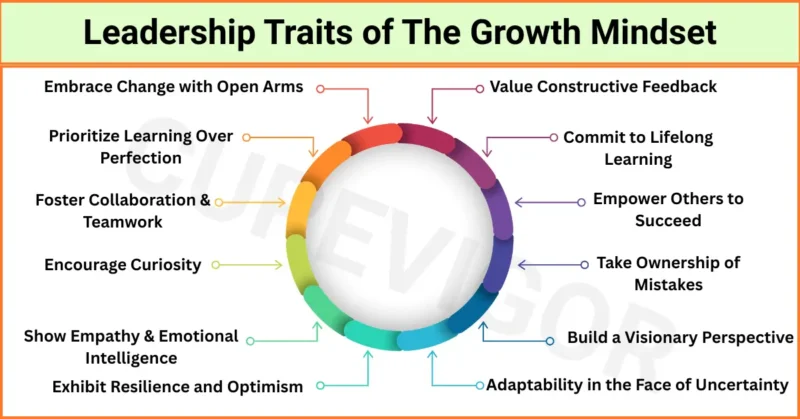
1. Embrace Change with Open Arms
Growth-minded leaders see change as an opportunity to learn, not something to fear. They remain open to new ideas, adjust strategies when necessary, and help their teams handle uncertainty.
Instead of resisting every change, they ask, “What can we learn from this, and what should we do next?”
2. Encourage Curiosity
Curious leaders create space for questions, experimentation, and new perspectives. They encourage team members to ask why, explore alternatives, and challenge outdated processes.
Questions such as “How could we improve this?” can turn routine problems into opportunities for innovation.
3. Prioritize Learning Over Perfection
A growth-minded leader understands that mistakes and imperfect attempts can provide useful information. Rather than demanding flawless results immediately, they encourage people to learn, adjust, and improve.
The goal is not lower standards. It is continuous progress toward better results.
4. Foster Collaboration and Teamwork

Growth rarely happens alone. Effective leaders encourage people to share knowledge, listen to different perspectives, and work toward common goals.
A collaborative environment allows team members to contribute their strengths while learning from one another.
5. Show Empathy and Emotional Intelligence
Leaders need more than technical skills. They also need to understand how their decisions affect people.
Empathy, active listening, self-awareness, and respectful communication help leaders build trust. When employees feel heard and respected, they may be more comfortable sharing ideas, asking for help, and learning from mistakes.
6. Exhibit Resilience and Optimism
Resilient leaders don’t pretend setbacks are easy. They acknowledge problems, learn from them, and help their teams focus on constructive next steps.
Healthy optimism means believing that improvement is possible while remaining realistic about the challenges ahead.
7. Value Constructive Feedback
Feedback gives leaders an opportunity to identify blind spots and improve their decisions.
Growth-minded leaders actively seek useful feedback rather than waiting for someone to point out a problem. They also create a culture where employees can give respectful feedback without fear of being dismissed.
8. Commit to Lifelong Learning
Leadership does not end when someone reaches a particular position.
Strong leaders continue developing their knowledge through reading, training, mentorship, professional experience, and reflection. They also encourage their teams to learn new skills as technology, workplaces, and expectations evolve.
9. Empower Others to Succeed
Growth-minded leaders do not try to control every decision. They give capable team members appropriate responsibility, resources, guidance, and opportunities to develop.
Delegating meaningful work can build confidence while helping employees strengthen their problem-solving and leadership skills.
10. Take Ownership of Mistakes
Taking responsibility for mistakes demonstrates accountability.
Instead of blaming others, growth-minded leaders examine what happened, identify what they can learn, and take corrective action. This creates a healthier environment where people can acknowledge problems early rather than hiding them.
11. Build a Visionary Perspective
A clear vision helps teams understand where they are going and why their work matters.
Growth-oriented leaders communicate meaningful goals while remaining open to changing their strategy when circumstances change. A strong vision provides direction without becoming rigid.
12. Adaptability in the Face of Uncertainty
Uncertainty is unavoidable in modern leadership. New technologies, economic conditions, customer expectations, and workplace changes can quickly alter existing plans.
Adaptable leaders assess new information, adjust their approach, and help their teams remain focused. Flexibility allows a leader to change direction without losing sight of the larger purpose.
These leaders unite their teams by building trust and emphasizing shared goals, fostering collective ownership and achievement.
The Science of Neuroplasticity in Leadership Growth Mindset Traits

Neuroplasticity refers to the brain’s ability to change and adapt through experiences and learning. It provides a useful biological perspective on why practice and repeated behaviors can influence learning.
For leaders, this reinforces the value of continuous practice. Learning a communication skill, developing a new habit, or improving decision-making takes repetition, not a single burst of effort.
However, neuroplasticity should not be presented as proof that simply “thinking positively” can rewire the brain. Growth requires practice, learning, and appropriate strategies.
The Role of Self-Motivation in Leadership
Self-motivation helps leaders continue working toward meaningful goals when progress is slow or challenges arise.
Rather than depending entirely on praise or external rewards, motivated leaders connect their work with personal values, purpose, and meaningful objectives.
They can strengthen self-motivation by setting realistic goals, tracking progress, learning from setbacks, and recognizing small improvements. Their behavior can also influence the people they lead.
Key Takeaway on Growth Mindset Traits
A growth mindset can strengthen leadership by encouraging:
- Embracing challenges instead of automatically avoiding them.
- Learning from setbacks rather than treating mistakes as final failures.
- Valuing effort and effective strategies alongside natural ability.
- Seeking constructive feedback to identify areas for improvement.
- Learning from others instead of viewing their success as a threat.
- Continuing to learn as skills and circumstances change.
- Building resilience when plans do not work.
- Recognizing progress instead of focusing only on the final outcome.
Growth-minded leadership is not about always being confident, positive, or successful. It means staying curious, adaptable, accountable, and willing to improve.

The same principles apply beyond the workplace. Whether you are developing a career, learning a skill, managing a team, or working toward a personal goal, a growth mindset encourages you to ask a more productive question:
“What can I learn from this, and what can I do better next time?”
That question can turn challenges into opportunities for meaningful growth.
Conclusion
A growth mindset is not about being positive all the time or believing that effort guarantees success. It is about recognizing that many abilities can develop through practice, learning, useful feedback, and effective strategies.
By embracing challenges, learning from mistakes, accepting feedback, staying persistent, and recognizing progress, you can build habits that support lifelong personal growth.
You do not have to become better overnight. You only need to keep learning and improving one step at a time.
Please read more articles on healthy tips.
You might like to read: