

Learn how to exfoliate face the right way with this complete skincare guide. Discover the best types of exfoliants, routines for every skin type, and expert tips for glowing, healthy skin.
Thank you for reading this post, don't forget to subscribe!Healthy, radiant skin doesn’t just happen overnight—it’s the result of consistent care, and one of the most essential yet often misunderstood steps in any skincare routine is exfoliation.
Whether your skin goal is to achieve a natural glow, reduce acne, or smooth uneven texture, learning how to exfoliate face properly can make a world of difference. Let’s explore how to do it safely, effectively, and with your unique skin in mind.
What Does It Mean to Exfoliate Face?
To exfoliate face means to gently remove the layer of dead skin cells that naturally accumulates on the surface of your skin.
Over time, these old cells can make your complexion look dull, rough, and uneven—no matter how much you cleanse or moisturize.
Exfoliation is the step that revives your skin’s natural glow by revealing the fresh, healthy cells underneath.
Think of your skin as a canvas. When it’s covered with old paint (dead cells), even the best skincare products can’t fully penetrate or perform. But once you exfoliate, the surface becomes smoother, brighter, and more receptive to hydration and active ingredients.

This process not only unclogs pores and prevents breakouts but also improves texture and tone, making your skin appear younger and more radiant.
Physical exfoliation involves gently scrubbing dead skin away, while chemical exfoliation involves using AHAs or BHAs to dissolve bonds between cells. The key lies in choosing the proper method for your skin type and applying it correctly to avoid irritation.
In this complete skincare guide, you’ll learn precisely how to exfoliate safely and effectively, which products work best for your skin type, and how to make exfoliation a consistent, skin-loving part of your routine for a glowing, healthy complexion.
Why Exfoliating Your Face is Important
Exfoliation is like hitting the refresh button for your skin. As we age, the natural process of shedding dead skin cells slows down, leading to dullness, rough texture, and clogged pores.
That’s where exfoliation steps in—it removes what’s no longer serving your skin and reveals what’s fresh and glowing underneath.
Removes Dead Skin Cells
Every day, your skin naturally produces new cells. But without proper exfoliation, old, dead cells linger on the surface, making your complexion appear uneven and lifeless.
By gently exfoliating, you sweep away this layer, uncovering smoother, healthier skin instantly.
Unclogs Pores
When oil, dirt, and dead skin build up, pores become blocked, leading to blackheads, whiteheads, and even acne. Regular exfoliation helps dissolve sebum and debris trapped within pores, keeping your skin clear and blemish-free.
Improves Skin Texture and Product Absorption
Ever wonder why your expensive serums or moisturizers don’t seem to work as well as promised? Dead skin buildup acts like a barrier.
Exfoliating allows your skincare products to penetrate more deeply, improving their effectiveness and leaving your skin more supple and radiant.
Types of Exfoliants for the Face
Not all exfoliants are created equal. Understanding the different types—and which one suits your skin—is crucial to achieving results without irritation.
Physical Exfoliants
Physical exfoliants use texture to slough away dead skin cells manually. These include facial scrubs, brushes, sponges, and even micro-exfoliating cloths. When used correctly, they can be incredibly effective, leaving skin soft and refreshed.
Note on Safety:
Always choose gentle scrubs that contain finely milled or spherical particles such as Jojoba beads or rice powder.
Avoid harsh ingredients such as crushed walnut shells or apricot pits, which can cause microscopic tears and damage your skin barrier over time.
Chemical Exfoliants
Chemical exfoliants work at a deeper, molecular level. They make the skin smoother, more even, and friction-free by dissolving the binding agent between dead skin cells.
Alpha-Hydroxy Acids (AHAs)
Water-soluble AHAs that primarily operate on the skin’s surface include lactic acid and glycolic acid. They’re perfect for dry or dull skin as they enhance hydration while refining tone and texture.
Beta-Hydroxy Acids (BHAs)
Because BHAs like salicylic acid dissolve in oil, they can enter pores more deeply. Because they help regulate excess sebum and lessen breakouts, they are perfect for oily and acne-prone skin.
Poly-Hydroxy Acids (PHAs)
PHAs, like Gluconolactone, are the gentlest of the group. They have larger molecules, so they don’t penetrate deeply, making them suitable for sensitive or rosacea-prone skin. They also provide added hydration and antioxidant benefits.
How to Exfoliate Face the Right Way (The Core Routine)
Knowing your skin type and adjusting your exfoliation regimen accordingly are the keys to radiant skin.

Determine Your Skin Type
Before you reach for any exfoliant, identify your skin type—normal, dry, oily, combination, or sensitive. Making the wrong decision can lead to irritation or excessive dryness, which may be more harmful than beneficial.
Exfoliate According to Skin Type
| Skin Type | Frequency | Recommended Exfoliants |
| Normal/Combination | 2–3 times/week | Alternate between AHA/BHA and gentle scrubs |
| Dry Skin | 1–2 times/week | Lactic Acid or hydrating AHAs |
| Oily Skin | 3 times/week | BHAs (Salicylic Acid) and mild scrubs |
| Sensitive Skin | 1 time/week | PHAs or enzyme-based exfoliants |
The Application Technique
- Start with a clean face.
- For chemical exfoliants, apply a few drops with a cotton pad or fingers, letting the formula work without rubbing.
- For physical exfoliants, use gentle circular motions and minimal pressure—your goal is to polish, not scrub raw.
Rinse well with lukewarm water after exfoliating, then pat dry with a gentle cloth.
Follow Up with Moisturizer & SPF
Constantly replenish your skin’s moisture barrier with a hydrating, fragrance-free moisturizer.
And here’s a non-negotiable rule: exfoliation increases sun sensitivity, especially when using AHAs or BHAs. Apply a broad-spectrum SPF 30 or higher every morning after exfoliating to protect your fresh new skin cells.
Tips for Exfoliating Specific Skin Concerns (Targeted Care)
Different skin concerns call for different exfoliation strategies. Here’s how to tailor your approach for your specific needs:
Acne-Prone Skin
Your best friend? Salicylic Acid (BHA). It penetrates deep into pores to clear out oil and bacteria, preventing future breakouts. Pair it with soothing ingredients like Niacinamide to calm inflammation.
Dull or Textured Skin
If your skin lacks radiance, reach for Glycolic or Lactic Acid (AHAs). These acids accelerate cell turnover, fading discoloration, and restoring brightness. Incorporating them twice a week can significantly improve tone and clarity.
Mature Skin
As we age, the skin’s renewal cycle slows down. Use gentle AHAs such as Lactic Acid, which hydrates while refining texture. Combine with antioxidants such as Vitamin C for extra luminosity and protection.
Sensitive Skin
Go for the mildest options: PHAs or enzyme exfoliants from fruits like papaya or pineapple. They deliver all the benefits of exfoliation without friction, irritation, or redness.
Exfoliate Face Scrub: The Classic Way to Smooth, Radiant Skin
An exfoliate face scrub is one of the most traditional and satisfying ways to buff away dull, dead skin cells and reveal a smoother, fresher complexion. These scrubs work through physical exfoliation, using tiny particles or beads to polish the skin’s surface and unclog pores.
When used correctly, they instantly improve texture, brighten tone, and help skincare products absorb better.
Modern scrubs are much gentler than older, harsher versions. Look for formulas with finely milled or round particles such as Jojoba beads, rice powder, or sugar crystals, which glide smoothly over the skin without scratching or irritating.
Avoid products that contain rough, jagged ingredients such as crushed walnut shells or apricot pits, as they can cause micro-tears and damage your skin barrier over time.
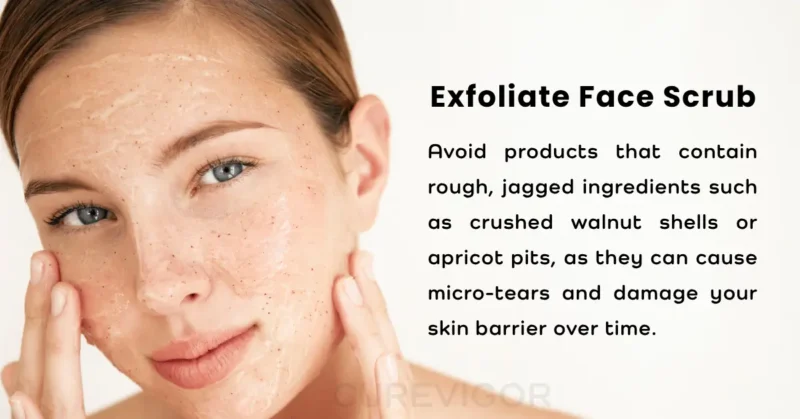
To use a face scrub safely, start with clean, damp skin. Apply a small amount of product and massage gently in circular motions for about 30 seconds—focusing on areas prone to buildup, such as the nose, chin, and forehead.
Rinse with lukewarm water, pat dry, and follow up with a soothing moisturizer.
Limit use to two to three times a week for normal or oily skin, and once weekly if you have dry or sensitive skin. Over-exfoliating can lead to redness, tightness, or flaking, so always listen to your skin’s feedback.
Choosing a hydrating scrub that includes nourishing ingredients like honey, aloe vera, or hyaluronic acid can make a big difference, leaving your skin not just polished but also soft, balanced, and glowing.
Common Mistakes to Avoid When Exfoliating
Exfoliation should reveal glowing skin—not cause redness, tightness, or peeling. Here’s what to steer clear of:
Over-Exfoliating
It’s tempting to think “more is better,” but exfoliating too frequently strips away your protective barrier, leading to irritation and dehydration. Listen to your skin—if it feels tight or looks shiny and sensitive, cut back immediately.
Using Harsh or Abrasive Products
Large, irregular particles (like nut shells) create micro-tears that damage your skin long-term. Stick to gentle, smooth formulations designed for facial use.
Combining Too Many Activities
Mixing AHAs, BHAs, retinoids, and Vitamin C in one routine is a recipe for irritation. Instead, space out potent ingredients—use exfoliants on one night and retinoids or Vitamin C on another.
Disclaimer
This article is for informational purposes only and is not intended as medical advice.
Always consult a dermatologist or other qualified skincare specialist before beginning a new skincare routine, particularly if you are using prescription medications or have underlying skin conditions.
FAQs on How to Exfoliate Face the Right Way
Q. What is the proper way to exfoliate the face?
The proper way to exfoliate your face begins with cleansing to remove surface dirt and makeup. Use a moderate exfoliant suited to your skin type, such as a mild scrub or a chemical exfoliant containing AHAs or BHAs.
Use light, circular motions if it’s a physical exfoliant; never press too hard or over-scrub. For chemical exfoliants, let the formula sit on your skin for the recommended time without rubbing.
Rinse with lukewarm water, pat dry, and follow with a hydrating moisturizer. Always finish with sunscreen in the morning, as exfoliation increases sun sensitivity.
Q. When should I exfoliate as part of my skincare routine?
Exfoliation is best done after cleansing but before toning or applying serums. It can be viewed as the connection between cleansing and nurturing your skin.
While cleaning removes trash and oil, exfoliation removes dead cells that hinder absorption.
After exfoliating, your skin is more receptive to toners, serums, and moisturizers, allowing them to work more effectively.
Most people find that exfoliating two to three times a week is ideal, but those with sensitive or dry skin should start once a week to prevent over-exfoliation and irritation.
Q. Which seven steps make up skincare?
The 7 steps of skincare form the foundation of a complete routine for healthy, glowing skin. They include:
- Cleanser – removes dirt and impurities.
- Exfoliant – clears dead skin cells and unclogs pores.
- Toner – balances pH and preps skin for treatment.
- Essence – hydrates and boosts absorption.
- Serum – delivers targeted active ingredients.
- Moisturizer – locks in hydration and strengthens the barrier.
- Sunscreen (AM only) – protects from UV damage.
Each step plays a unique role in keeping your complexion clear, smooth, and radiant.
Q. How do Koreans exfoliate face?
Korean skincare takes a gentle, consistent approach to exfoliation. Rather than using harsh scrubs, Koreans often rely on mild chemical exfoliants such as AHAs, BHAs, or natural enzyme peels derived from fruits.
Popular methods include using exfoliating toners, peeling gels, or soaked pads that sweep away dead skin without irritation.
They typically exfoliate just 1–2 times a week and follow up with soothing essences and hydrating masks to maintain balance. To get the distinctive Korean “glass skin” radiance, the emphasis is on nourishing the skin barrier rather than removing it.
Bottom Line on Exfoliate Face
Learning how to exfoliate face the right way is one of the most transformative steps in any skincare routine. When done correctly and consistently, exfoliation reveals brighter, smoother, and more youthful-looking skin while helping other skincare products work more effectively.
The key is to match your exfoliant—whether physical, chemical, or enzymatic—to your skin type and use it in moderation. Always follow up with a calming moisturizer and sunscreen to protect your newly renewed skin.
Remember, healthy skin isn’t about doing more—it’s about doing what’s right for your skin. Treat exfoliation as self-care, and your complexion will thank you with a long-lasting, radiant glow.
Get more Health and Beauty Tips.
You might love: