

The pandemic changed how we work, but the real shift is in what we expect from work.
Thank you for reading this post, don't forget to subscribe!If you’ve experienced freedom in how, when, or where you work, you’re not alone—and you’re right to want that flexibility long-term.
This guide shows you exactly how to negotiate flexible working for the future of your career—with step-by-step strategies, real-world examples, and communication scripts that work.
Flexible working is a long-term strategy that improves productivity, retention, and well-being.
To negotiate it successfully, define your needs, choose the right flexibility type, build a strong business case, address business concerns, and propose a trial period to prove results.
Quick Summary
What This Guide Provides
This guide is designed to help employees confidently navigate flexible working by breaking the process into three practical, easy-to-follow stages.
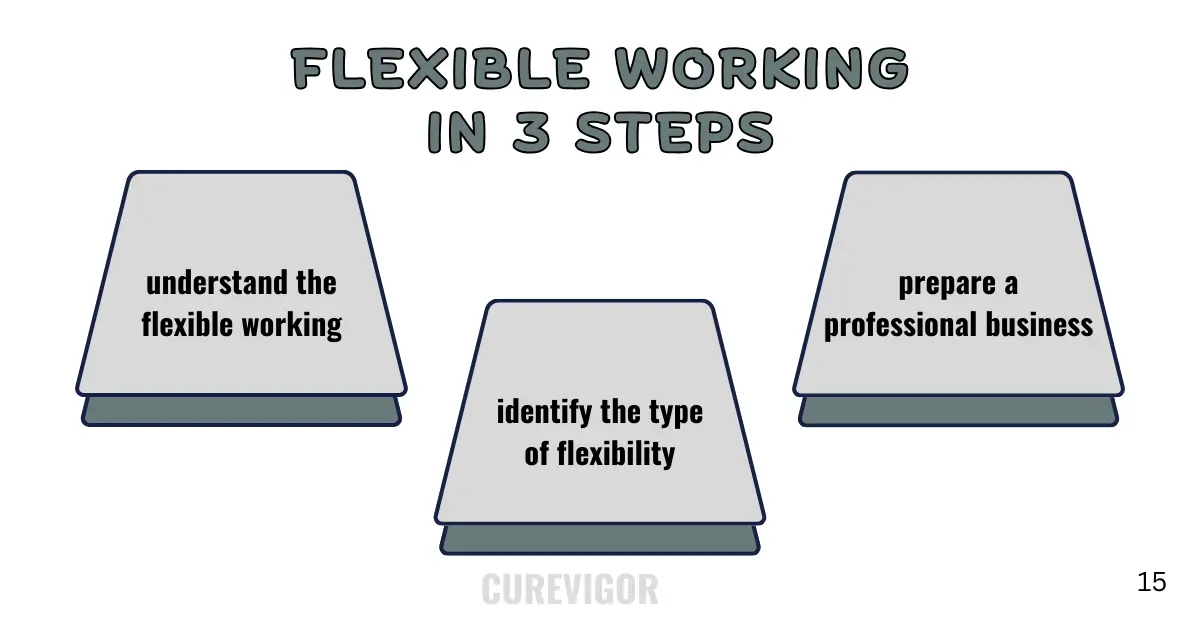
Part 1 helps you understand the flexible working options available and guides you in assessing how your personal needs can be balanced with your organisation’s priorities and expectations.
Part 2 focuses on identifying the type of flexibility that best suits your role, lifestyle, and working style, while exploring realistic ways to make that flexibility work within your team and business environment.
Part 3 helps you prepare a strong, professional business case that demonstrates how flexible working can benefit you, your team, productivity, and overall business performance.
Together, this write-up provides a structured approach to thinking about flexible working, making informed choices, and presenting a well-reasoned proposal that aligns individual needs with organizational goals.
Employees seeking flexibility will remember
- Flexible working is a strategic, mutually beneficial approach, not just a temporary fix.
- Preparation, clear communication, and a strong business case are key to successful negotiation.
- Trial periods and regular reviews help ensure the long-term success of flexible work.
What Is Flexible Working?

Flexible working is a modern approach to work that allows employees to adjust when, where, and how they do their jobs—moving beyond rigid office hours or a fixed workplace.
At its core, flexible working recognizes that productivity is not one-size-fits-all. People work best at different times, in different environments, and under different conditions.
Flexible working gives employees the freedom to structure their work in ways that support both performance and personal responsibilities while still meeting business goals.
Flexible working can include a wide range of arrangements, such as:
- Remote and hybrid schedules, where work is done from home or split between home and office
- Compressed workweeks, allowing full-time hours to be worked over fewer days
- Flex-time, with adjustable start and finish times within agreed boundaries
- Job sharing, part-time schedules, or term-time work, offering reduced or shared hours
Unlike the emergency work-from-home setups during lockdowns, sustainable flexible working is planned, intentional, and structured. It focuses on:
- Clear expectations
- Strong communication
- Measurable outcomes
- Mutual accountability
Flexible working isn’t about doing less work—it’s about doing the same or better work in a smarter, more sustainable way.
Defining Your Flexible Working Needs
Before negotiating flexible working, it’s essential to clearly define what flexibility actually means for you. Many requests fail because they are vague or poorly thought out.
Start by asking yourself:
- When am I most productive during the day?
- Which parts of my current schedule are challenging or inefficient?
- Do I need flexibility in hours, location, workload, or all three?
- What type of flexible working would realistically fit my role?
Defining your flexible working needs helps you move from a general desire for “more flexibility” to a specific, actionable proposal.
It also shows your employer that you’ve considered the practical impact on your role, your team, and the business.
The clearer you are about your needs, the easier it becomes to explain how flexible working can improve focus, performance, and long-term sustainability.
Why Flexible Working Matters After Lockdowns
Lockdowns forced businesses to experiment with new ways of working almost overnight. What surprised many employers was that productivity didn’t collapse—in many cases, it improved.
However, temporary remote work during a crisis is not the same as long-term flexible working. The post-lockdown workplace is about choice, structure, and balance—not emergency measures.
The pandemic accelerated several long-term shifts:
- Employees now place greater value on autonomy, trust, and work-life balance.
- Employers increasingly see flexible working as a tool for retention, engagement, and performance.
- Hybrid working models are becoming standard across many industries.
Today, flexible working is no longer viewed as an exception or special accommodation. It has become a strategic business approach built on trust, outcomes, and mutual benefit.
Organizations that adapt to flexible working are better positioned to attract talent, reduce burnout, and build resilient teams. Those who resist it risk higher turnover and disengagement.
Common Types of Flexible Working You Can Propose
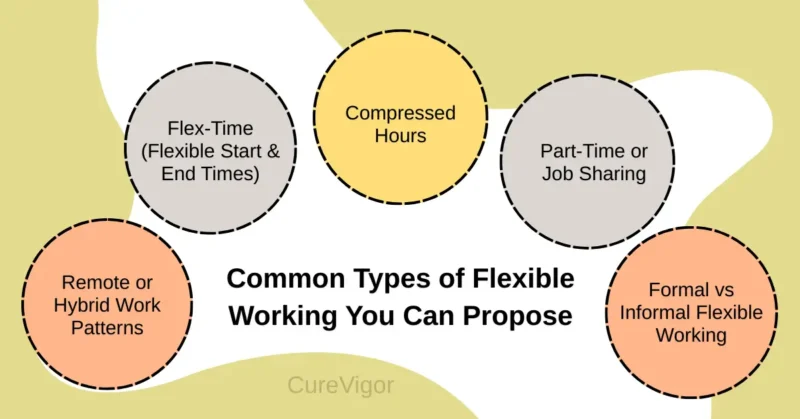
To negotiate effectively, it’s important to understand the different flexible working patterns available and how they might apply to your role.
1. Remote or Hybrid Work Patterns
This involves working from home either full-time or part-time. Hybrid models typically combine in-office and remote workdays, offering flexibility while maintaining in-person collaboration as needed.
Best for: Knowledge-based roles, project work, and roles requiring deep focus.
2. Flex-Time (Flexible Start and End Times)
Flex-time allows you to choose your start and finish times, as long as you complete your contracted hours and remain available during the agreed core times.
Example:
Starting at 7:30 am and finishing at 3:30 pm, rather than the fixed 9 am–5 pm schedule.
Best for: Employees with caregiving responsibilities or who are at peak productivity outside traditional hours.
3. Compressed Hours
Compressed work schedules allow you to work full-time hours across fewer days, such as four longer days instead of five standard ones.
Benefits:
- Longer rest periods
- Fewer commutes
- Improved focus through fewer handovers
Best for: Roles that benefit from extended periods of uninterrupted work.
4. Part-Time or Job Sharing
Part-time work reduces total weekly hours, while job sharing splits one full-time role between two people.
Best for: Employees seeking long-term balance without leaving their role or organization.
5. Formal vs Informal Flexible Working
- Informal flexible working is usually agreed verbally or via email and can be adjusted easily.
- Formal flexible working involves changes to your employment contract and provides long-term stability.
Understanding the difference helps you decide whether you want short-term flexibility or a permanent arrangement.
Flexible working is most successful when it is clearly defined, thoughtfully planned, and aligned with business needs.
By understanding what flexible working is, identifying your needs, and choosing the right arrangement, you set yourself up for a confident, professional negotiation—one that supports both your career and your well-being.
How to Negotiate Flexible Working for the Long Term: 8-Step Guide
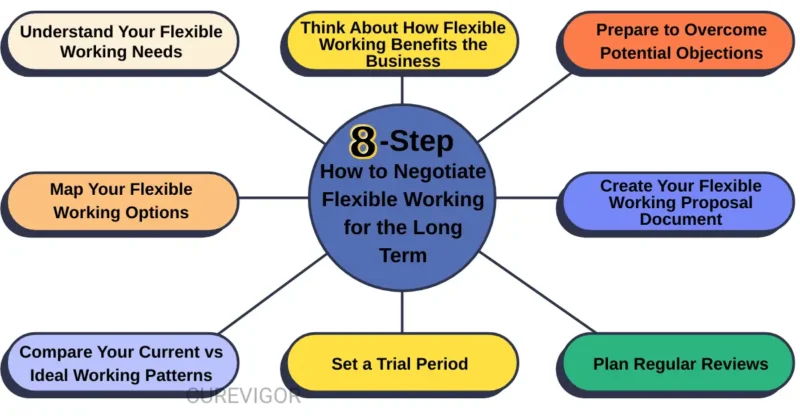
Negotiating long-term flexible working isn’t about sending an email and hoping for the best—it’s a strategic conversation. Here’s a step-by-step framework you can follow:
Step 1: Understand Your Flexible Working Needs
Start by identifying what flexible working pattern suits your lifestyle and work style. Ask yourself:
- What elements of my current schedule aren’t working?
- When am I most productive?
- What flexibility will improve my performance?
This personal clarity helps you present a thoughtful plan rather than a vague or emotional plea.
Step 2: Map Your Flexible Working Options
Use a structured model to assess the potential for flexibility. One useful approach is the WHERE / WHEN / HOW MUCH model—identifying:
- Where work takes place (office, home, hybrid)
- When you work (core hours, flex-time)
- How much you work (full-time, compressed hours, part-time)
This framework shows both you and your manager that flexible working options are deliberate and tailored, not random.
Step 3: Compare Your Current vs Ideal Working Patterns
Draw a simple chart or list showing:
- Your current work schedule
- Your ideal flexible working pattern
- The gaps and how flexibility might close them
This helps you articulate why you want flexible working and how it will support both your work and wellbeing.
Step 4: Think About How Flexible Working Benefits the Business
Leverage Timewise’s advice: flexibility works best when it works both for you and the organization. For example:
- Greater coverage if you shift hours strategically
- Reduced commute times, leading to more productive time
- Better focus outside traditional rush periods
By linking your flexible working proposal to business outcomes — like coverage, responsiveness, or project delivery — you shift the conversation from “personal preference” to shared value.
Step 5: Prepare to Overcome Potential Objections
Anticipating objections isn’t pessimism — it’s preparation. Common concerns include:
- Will work still get done effectively?
- How will we track performance?
- Will flexibility impact team collaboration?
For each, prepare solutions:
- Suggest measurable performance indicators.
- Set communication norms
- Propose core hours for team overlap.
This shows your manager you understand the business and are proposing flexibility responsibly.

Step 6: Create Your Flexible Working Proposal Document
Draft a short proposal that includes:
- Your current role and performance highlights
- Your recommended flexible working pattern
- Expected benefits for both you and the employer
- How communication, performance tracking, and team collaboration will operate
Think of this like a business presentation — clear, professional, and evidence-based.
Step 7: Set a Trial Period
If your manager hesitates, suggest a trial period. Agree to review performance and impact after a defined period (e.g., 6–8 weeks).
Trial arrangements reduce risk, increase willingness to experiment, and often lead to long-term acceptance.
Step 8: Plan Regular Reviews
Remote working needs periodic check-ins. Agree on a schedule with your manager to review how the arrangement is working and make adjustments based on feedback.
How to Communicate Your Flexible Working Request
Effective communication is the heart of negotiation. Follow these tips:
- Schedule a dedicated meeting — don’t bring it up casually.
- Lead with value (how your proposal helps outcomes)
- Be specific — vague requests are easy to deny
- Be open to compromise.
- Avoid emotional language — focus on clarity, respect, and objectives.
Your tone matters: professionalism + preparation = trust.
Scripts You Can Use for Asking for Flexible Working
Here are ready-to-adapt templates for your conversation:
Script 1 — Hybrid Working Request:
“I’d like to propose a long-term adaptable working arrangement where I work two days from home each week.
I believe this will enhance focus, streamline project turnaround times, and maintain core collaboration with the team.”
Script 2 — Flex-Time Proposal:
“I’m proposing a flexible working hours pattern with core team overlap from 10 am–3 pm, but varied start and end times otherwise — this would allow me to align peak productivity hours with my most demanding tasks.”
Mistakes to Avoid When Negotiating Remote Working
Even good requests can fail if handled poorly. Avoid:
1. Focusing only on personal convenience – Always tie your request to shared goals.
2. Asking without performance evidence – Proof builds credibility.
3. Being vague about availability – Clear schedules reassure managers.
4. Ignoring feedback or concerns – Collaboration wins trust.
5. Treating flexibility as a right rather than a negotiated privilege – A compromise approach works better long term.
What If Your Flexible Working Request Is Denied?
A “no” isn’t always permanent. Ask:
- What specific concerns led to the decision?
- What evidence or adjustments might change it?
- Can we revisit after a set period or a change in business need?
Flexibility is about negotiation — not confrontation.

Long-Term Tips for Making Flextime Successful
Once approved, success depends on your execution:
- Track results and share impact
- Communicate proactively with stakeholders.
- Stick to agreed norms and timelines.
- Invite feedback and adapt.
Flexible working is sustainable when it supports business outcomes instead of disrupting them.
Summary
- Flexible working is a long-term work strategy, not a temporary lockdown solution, focused on when, where, and how work gets done.
- Productivity is measured by results, not hours, and it supports better focus and performance.
- There are multiple remote work options, including remote or hybrid work, flex-time, compressed hours, part-time roles, and job sharing.
- Defining your flextime needs clearly is essential before starting any negotiation.
- Successful flexible doing balances individual needs with business priorities, not one at the expense of the other.
- Flexible working matters more after lockdowns, given changing employee expectations, well-being priorities, and the acceptance of hybrid work.
- Negotiating hybrid work requires preparation, not an emotional or casual request.
- A strong business case is critical, showing benefits to productivity, coverage, retention, and team performance.
- Managers’ concerns can be addressed through clear availability, communication plans, and measurable outcomes.
- Trial periods reduce risk and increase the likelihood of long-term approval.
- Flexible working works best when reviewed regularly and adjusted as business needs evolve.
- Common mistakes include being vague, unprepared, or focusing only on personal convenience.
- Flexibility is a responsibility, not an entitlement, built on trust and accountability.
- Employees who negotiate flexible working gain sustainability and career longevity.
- Organisations that embrace flexible working attract and retain top talent
Flexible tasks succeed when they are thoughtful, structured, and mutually beneficial. With the right preparation and mindset, it becomes a powerful tool for long-term performance, well-being, and workplace success.
Final Thoughts
Lockdowns accelerated trends that were already underway. Post-pandemic, flexible working is now central to modern employment—not just remote work but structured, sustainable flexibility that benefits both parties.
The key to lasting success is negotiating with clarity, purpose, and mutual respect. When you build your case the right way, it becomes not only possible but also advantageous for sustainable performance and long-term career growth.
Read more Life-Balance articles.
You might like: