
Working overnight can make staying awake a real challenge. Whether you’re a nurse, driver, security guard, or warehouse worker, early mornings can bring heavy eyelids, poor concentration, and low energy.
Coffee may help you feel more awake, but drinking cup after cup isn’t always the answer. Another approach worth understanding is the coffee nap.
This simple method combines caffeine with a short nap. Timed properly, it may help you feel more alert during demanding work hours.
Let’s look at how coffee naps work, how to use them, and when to avoid them.
A coffee nap means having a cup of coffee right before a 15- to 20-minute nap. Caffeine takes roughly 20 minutes to enter the bloodstream, so it kicks in as you wake up, clearing adenosine (the sleep-pressure chemical) from your brain and delivering a powerful, science-backed alertness boost. For shift workers, this strategy is one of the most effective fatigue-management tools available.
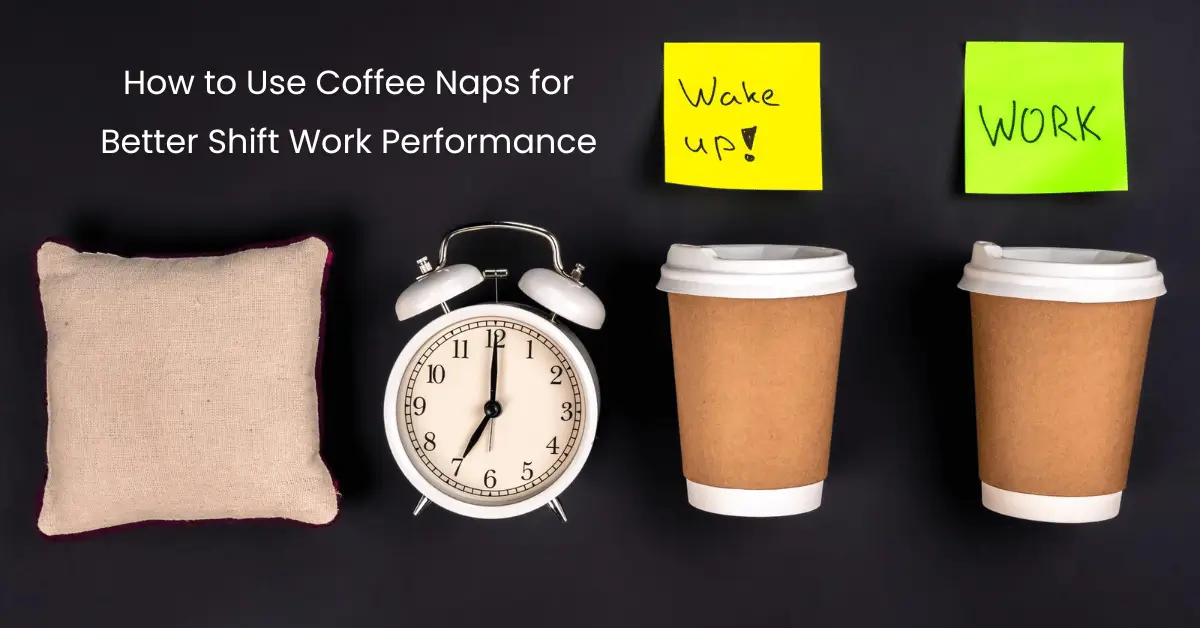
How to Use Coffee Naps for Better Shift Work Performance

A coffee nap combines approximately 150–200 mg of caffeine with a short nap of around 15–20 minutes. Drink the coffee promptly, lie down immediately, and set an alarm.
Caffeine takes time to take full effect, so you may wake up as its alerting effect begins. Adjust the dose to your caffeine tolerance.
What Is a Coffee Nap (And Why Shift Workers Use It)?
A coffee nap, sometimes called a nappuccino, combines drinking coffee with a short nap.
The idea is to use two alertness strategies together:
- Caffeine: A natural stimulant that temporarily blocks the effects of adenosine, a chemical involved in sleep pressure.
- Short nap: A brief sleep period that can reduce some of the sleep pressure built up while you’ve been awake.
For shift workers, this combination may help when tiredness becomes hard to manage.
For example, a nurse working from 7 p.m. to 7 a.m. might experience a noticeable drop in alertness around 2–4 a.m. A planned coffee nap, when permitted, may help manage temporary sleepiness.
Longer nap after coffee (45–90 minutes): Moves past a quick power nap into deeper sleep stages or a full cycle, which increases the risk of waking up groggy—or carrying lingering caffeine into your main daytime sleep window if taken too late on a night shift.
However, it isn’t a replacement for adequate sleep or a solution for severe sleep deprivation.
How Coffee Naps Work: The Science of Caffeine + Sleep
To understand why coffee naps may work, it helps to know what happens inside your brain when you’re tired.
Adenosine Clearance, Caffeine Metabolism, and the 20-Minute Window
Adenosine is a chemical that gradually builds up in the brain during wakefulness. As its activity increases, you feel more pressure to sleep.
Caffeine works by blocking adenosine receptors. It doesn’t remove adenosine from your brain; instead, it temporarily prevents adenosine from producing its usual sleep-promoting effects.
This is where the coffee nap comes in.
After you drink coffee, caffeine takes time to enter your system and fully alert you. Although individual reactions vary, CDC/NIOSH estimates that this typically takes about 30 minutes.
A short nap during this waiting period may reduce sleep pressure. When you wake, caffeine’s effects may also be starting to kick in.
Why approximately 20 minutes?
A short nap offers a chance to rest while generally reducing the chance of entering deeper sleep. This can make waking easier than after a longer nap, although sleep inertia is still possible.
Adenosine: Adenosine is a naturally occurring chemical in the brain that builds up the longer you are awake. It binds to receptors that make you feel drowsy. Sleep clears it. Caffeine temporarily blocks it. A coffee nap does both simultaneously.
What Sleep Research Says About Coffee Naps
Research has examined the combined effects of caffeine and short naps, particularly in sleepy drivers.
1. Loughborough University driving study
In 1997, researchers James Horne and Louise Reyner at Loughborough University’s Sleep Research Laboratory examined 12 sleepy participants.
The researchers compared caffeine, a short nap, and a combination of both during a break before a simulated drive.

In this small study, the combined approach produced fewer driving incidents than caffeine alone or a placebo.
This research helped establish the scientific interest in coffee naps. However, it involved a small group of participants and shouldn’t be treated as proof that coffee naps prevent road accidents in everyday conditions.
2. American Academy of Sleep Medicine (AASM)
The AASM’s clinical practice guideline supports certain uses of caffeine and planned naps for adults experiencing excessive sleepiness associated with shift work disorder.
It also discusses combining caffeine and naps before a night shift. These are conditional recommendations, not guarantees of benefit for every worker.
3. CDC/NIOSH guidance
The entire alerting effect of coffee takes around half an hour, according to the National Institute for Occupational Safety and Health. It discusses taking caffeine immediately before a short nap as a possible way to benefit from both strategies.
Research sources:
- Loughborough University study: Caffeine and Short Naps
- AASM Clinical Practice Guideline
- CDC/NIOSH: Napping and Sleep Inertia
How to Do a Coffee Power Nap Step by Step for Shift Work

You don’t need special equipment or an expensive coffee machine. A simple cup of coffee, a quiet place, and an alarm are enough.
Coffee Nap: A Simple 20-Minute Routine
| Step | Time | Action | Goal |
| 1 | 2–3 minutes | Drink your measured coffee | Consume caffeine before resting |
| 2 | Next 20 minutes | Lie down and set an alarm | Take a short nap |
| 3 | After waking | Get light, drink water, and move gently | Become fully alert |
1. Drink 150–200 mg of Caffeine Quickly (2–3 Minutes)
Start by choosing a coffee with a known or estimated caffeine amount.
A dose of 150–200 mg has been used in research involving coffee and short naps. However, this isn’t a required dose for everyone.
If you’re sensitive to caffeine or don’t usually drink much coffee, start with a smaller amount.
Drink it promptly rather than slowly sipping it throughout your break. The goal is to consume caffeine before you lie down.
Avoid adding large amounts of sugar or sweet syrups. Plain coffee is sufficient.
2. Set a Strict 20-Minute Alarm and Lie Down Immediately
After drinking your coffee, go somewhere quiet and comfortable.
Follow these steps:
- Set an alarm for approximately 20 minutes.
- Put your phone away.
- Close your eyes and relax.
- Keep the room dark or use an eye mask.
- Avoid worrying if you don’t fall asleep immediately.
The goal is to get a short period of sleep, not to force yourself into deep sleep.
If you don’t fall asleep, quiet rest can still provide a short break, but it won’t offer all the benefits of actual sleep.
3. Wake Up Into Bright Light, Water, and Movement
When the alarm rings, get up slowly.
Try these simple actions:
- Move into a brighter area.
- Drink a glass of water.
- Wash your face if it helps you feel refreshed.
- Stretch your arms and legs.
- Walk gently for a few minutes.
Give yourself time to fully wake up before returning to demanding tasks.
This is particularly important for nurses, drivers, and workers responsible for safety-sensitive activities.
Best Coffee Nap Timing and Sample Routines for Shift Workers
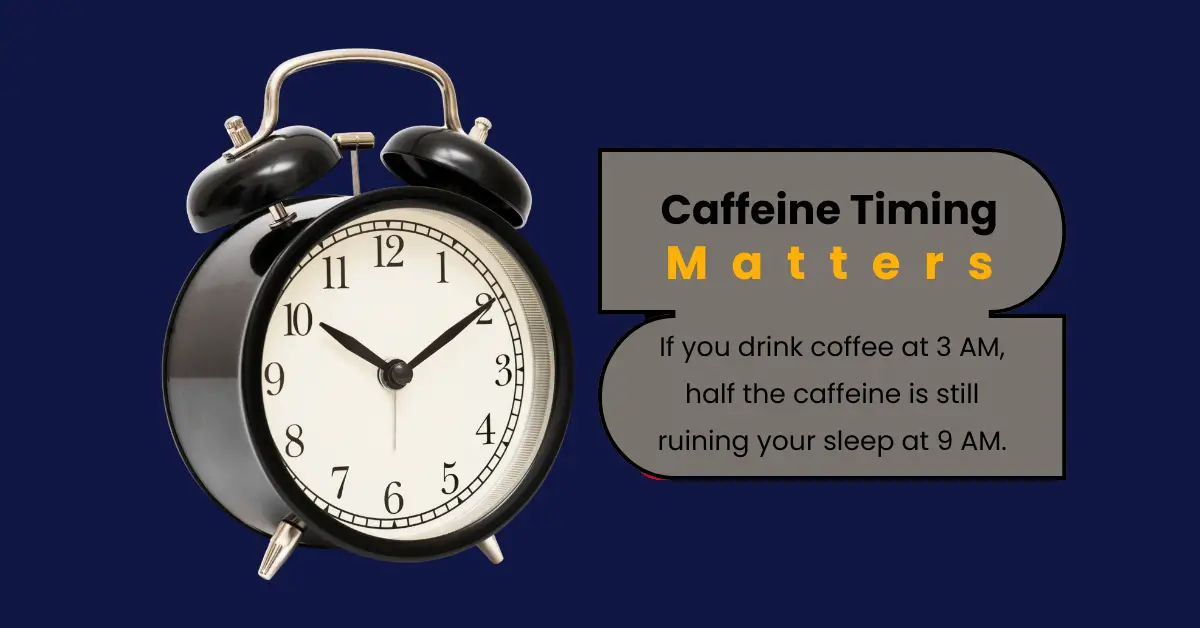
Timing matters because caffeine can remain in your system for several hours.
A coffee nap taken too close to your main sleep period may make it harder to fall asleep after work.
Pre-Shift Coffee Nap Routine (30–60 Minutes Before a 12-Hour Shift)
A coffee nap before work may help if you’re feeling sleepy before starting a long shift.
For example, if your shift begins at 7 p.m., try this illustrative routine:
| Time | Activity |
| 5:30 p.m. | Drink a measured serving of coffee. |
| 5:35 p.m. | Lie down and relax |
| 5:55 p.m. | Wake up. |
| 6:00–6:20 p.m. | Get light, hydrate, and move. |
| 6:20–7:00 p.m. | Prepare for work and commute if fully alert. |
This routine provides some time between waking and starting work.
If you need more recovery sleep, a longer pre-shift nap may be more appropriate than a coffee nap.
Mid-Shift Break Room Coffee Nap (Beating the 2:00 AM Circadian Slump)
The early morning hours can be particularly difficult for night workers because the body’s natural sleep rhythm encourages rest.
If your workplace permits planned naps, a coffee nap may be an option during an authorized break.
Example for a 7 p.m.–7 a.m. shift:
- 1:30 a.m.: Drink a measured coffee.
- 1:35 a.m.: Lie down in a quiet break room.
- 1:55 a.m.: Wake up.
- 2:00–2:15 a.m.: Get light and move gently.
- 2:15 a.m. onward: Resume duties when fully alert.
This is only an example. Your caffeine timing should depend on when you plan to sleep after work.
When to Avoid a Coffee Nap (Your Caffeine Cutoff Guardrail)
Avoid coffee naps as you approach your main sleep period.
Caffeine can remain active for hours. Even if you feel tired enough to sleep, it may make it harder to fall asleep or reduce sleep quality.
For example, if you finish work at 7 a.m. and plan to sleep at 8:30 a.m., drinking coffee at 5:30 a.m. may interfere with recovery sleep.
The CDC/NIOSH notes that caffeine has an average half-life of approximately five to six hours, although this varies.
For a practical guide to timing your last cup of coffee, read our related article:
What Is the Best Caffeine Cutoff for Night Shift Workers?
Best Coffee for Coffee Naps: Type, Dose, and Safety Limits
Not all coffee contains the same amount of caffeine. Your serving size, brewing method, and coffee beans can make a difference.
Black Coffee vs. Espresso vs. Energy Drinks (Caffeine Dose Guide)
Here’s a general comparison:
| Drink | Approximate caffeine amount | Notes |
| Small brewed coffee (240 ml) | 80–100 mg | Varies by preparation |
| Single espresso (30 ml) | 60–75 mg | Small but concentrated |
| Instant coffee (240 ml) | 60–80 mg | Depends on brand |
| Decaffeinated coffee (240 ml) | 2–15 mg | Contains a small amount |
| Energy drink (250 ml) | 50–100 mg | Check the product label |
These are approximate values, not fixed measurements.
Which coffee should you choose?
Plain brewed or instant coffee is usually a simple choice. You can measure your caffeine intake more easily by using the same brand and serving size.
Energy drinks aren’t necessary for coffee naps. Their caffeine content can vary, and some contain additional stimulants or large amounts of sugar.
Staying Under the 400 mg Daily Ceiling and Managing Tolerance
For most healthy people, up to 400 mg of caffeine per day is generally not linked to adverse consequences, according to the U.S. Food and Drug Administration (FDA).
However, this is a general reference point, not a target everyone should aim for.
Consider these points:
- Count caffeine from coffee, tea, chocolate, soft drinks, and energy drinks.
- Use smaller servings if you’re sensitive to caffeine.
- Avoid repeatedly increasing your dose to fight tiredness.
- Watch for headaches, nervousness, stomach discomfort, and sleep problems.
- Remember that caffeine tolerance can develop with regular use.
People who are pregnant, have certain health conditions, take medications that affect caffeine, or experience caffeine-related symptoms may need lower amounts or individual professional advice.
What Research Shows
Additional research published in Sleep, the journal of the Sleep Research Society, confirmed that the combination approach reduces subjective sleepiness more and improves performance on cognitive tasks more than either intervention alone.
Coffee Nap Benefits and Common Mistakes on Overnight Shifts
Coffee naps may offer a practical way to manage temporary tiredness, especially when workers have limited time for rest.
Key Benefits: Faster Reaction Time, Sharper Focus, and Less Sleep Inertia
When the method works well, you may experience:
1. Improved alertness
Caffeine can temporarily increase wakefulness and help you feel less sleepy.
2. Better attention
The combination of caffeine and a short nap may help support attention during monotonous or demanding tasks.
3. A short recovery opportunity
Even a brief nap gives your body a chance to rest during a long working period.
4. Potentially less post-nap grogginess
Because caffeine begins working around the time you wake, it may help reduce some sleep inertia. However, this effect isn’t guaranteed.
Remember that individual responses differ. Coffee naps won’t eliminate fatigue or make a severely sleep-deprived person safe to drive.
4 Mistakes That Ruin Coffee Naps
A few common mistakes can reduce this technique’s usefulness.
1. Sipping coffee too slowly
If you spend 20 minutes drinking coffee before lying down, you lose much of the timing advantage. Drink your measured serving promptly.
2. Sleeping for 45–60 minutes
Longer naps can take you into deeper sleep, increasing the chance of waking with sleep inertia. Use a short nap when following the coffee nap method.
3. Taking caffeine too close to daytime bedtime
Caffeine may interfere with your main recovery sleep. Plan your caffeine cutoff according to your intended sleep time and personal sensitivity.
4. Adding too much sugar
Large amounts of added sugar aren’t necessary. Choose plain coffee or a lightly sweetened option if preferred.
Coffee Naps vs. Other Shift Work Alertness Strategies
Coffee naps are one option, but they’re not the only way to manage tiredness.
| Strategy | How it works | Main consideration |
| Coffee nap | Combines caffeine and short sleep | Caffeine may affect later sleep |
| Regular 20-minute power nap | Provides a short rest period | May cause temporary grogginess |
| Coffee alone | Temporarily increases alertness | Doesn’t provide sleep |
| Bright light and movement | Helps promote alertness | Effects may be temporary |
Choose a strategy that fits your working hours, caffeine tolerance, and available rest time.
Who Should Skip Coffee Naps (And Caffeine-Free Alternatives)
Coffee naps aren’t suitable for everyone.
Consider avoiding caffeine-based naps if:
- Caffeine makes you anxious or restless.
- You experience sleep problems after drinking coffee.
- You have been advised to limit caffeine.
- You are approaching your main sleep period.
- You experience uncomfortable reactions such as palpitations or tremors after caffeine.

If you’re unsure whether caffeine is suitable for you, ask a qualified healthcare professional.
Caffeine-free alternatives include:
- A regular 15–20-minute power nap.
- A short walk in a well-lit area.
- Gentle stretching during your break.
- Drinking water if you’re thirsty.
- Eating a balanced snack when needed.
Coffee Nap vs Regular Nap vs Coffee Alone: A Direct Comparison
| Strategy | Alertness Boost | Risk of Grogginess | Caffeine Crash Later | Ease of Use |
|---|---|---|---|---|
| Regular nap (20 min) | Moderate | Low | None | Easy |
| Coffee alone | Moderate | None | Yes | Very easy |
| Coffee nap ✓ | High | Very low | Reduced | Moderate |
| Long nap (60–90 min) | High | High | N/A | Difficult on breaks |
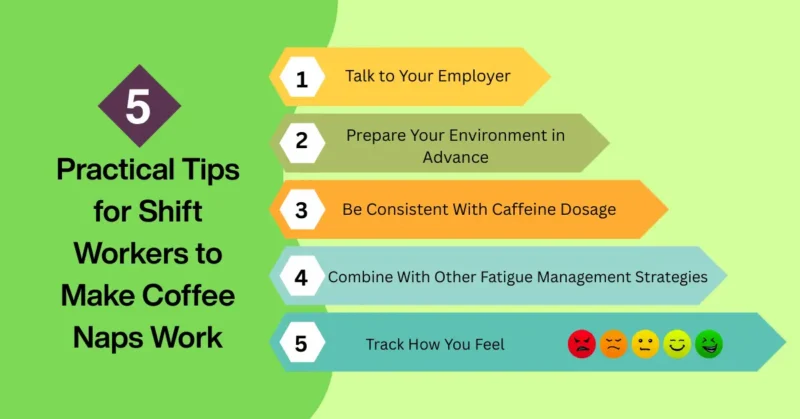
Practical Tips for Shift Workers to Make Coffee Naps Work
1. Talk to Your Employer
Many workplaces now support short rest breaks for safety-critical roles, particularly in healthcare, transport, and manufacturing.
If your employer does not have an official nap policy, you may be surprised how open managers are when you frame coffee naps as a performance and safety tool, which they genuinely are.
2. Prepare Your Environment in Advance
Identify a quiet, dimly lit space before your shift starts. Keep an eye mask in your locker. Install a white noise app on your mobile device. Your results will improve if you can go from drinking to resting more quickly.
3. Be Consistent With Caffeine Dosage
Different caffeinated drinks vary widely in caffeine content. A consistent dose of 100–200 mg, roughly one shot of espresso or one standard drip coffee, is the sweet spot for most people. Too little and the effect is minimal; too much increases the risk of disrupting subsequent sleep.
4. Combine With Other Fatigue Management Strategies
Coffee naps are powerful, but they work best as part of a broader strategy. To support circadian stability, prioritize blackout curtains for daytime sleep, stick to a regular sleep schedule even on days off, limit alcohol (which can disrupt sleep), and keep regular mealtimes.
5. Track How You Feel
Keep a simple note on your phone: what time you took the coffee nap, how long it lasted, and how you felt for the following two hours. After a week or two, patterns will emerge, and you can fine-tune your timing to your schedule, body clock, and caffeine metabolism.

Frequently Asked Questions
Q. Do coffee naps really work for night shift workers?
They may help. Research suggests that combining caffeine with a short nap can improve temporary alertness in certain situations. However, results vary, and coffee naps don’t replace adequate sleep.
Q. How long should a coffee nap be to avoid grogginess?
Aim for approximately 15–20 minutes. Short naps generally reduce the chance of waking during deeper sleep, although some grogginess may still occur.
Q. How much coffee should I drink before a coffee nap?
Research has examined doses around 150–200 mg. However, you don’t need that much. A smaller amount may be sufficient, especially if you’re sensitive to caffeine.
Q. Is a coffee nap better than a regular power nap?
Not necessarily. A coffee nap combines two alertness strategies, while a regular power nap provides rest without caffeine. The better option depends on your caffeine tolerance and sleep schedule.
Q. Can I take a coffee nap during every night shift?
You can use the method occasionally if caffeine suits you, but you don’t need to do it every night. Monitor your total caffeine intake and make sure it doesn’t interfere with daytime sleep.
Q. Will a coffee nap ruin my daytime sleep after work?
It might if you drink coffee too close to bedtime. Caffeine can remain in your system for several hours, so schedule your coffee nap early enough to protect your main sleep period.
Final Takeaway: Coffee First, Nap Second, Wake Up Sharper
A coffee nap can be a useful tool for managing temporary sleepiness during demanding shifts. Drinking a measured amount of coffee before a short nap may help you benefit from both rest and caffeine.
Start with a smaller caffeine serving if you’re unsure about your tolerance. Keep your nap short, allow time to fully wake up, and avoid caffeine near your main sleep period.
Above all, remember that your body needs regular, sufficient sleep to recover.
Coffee first, nap second, wake up sharper—one smart break at a time!
Read more about the health of night-shift workers.
You might like: