Master meal prep for night shift nurses with this ultimate guide. Get easy recipes, timing tips, portable snacks, and full weekly plans to stay energized and sleep better after every shift.
You finish a 12-hour shift at 7 AM and still need to eat something before crashing. Meal prep for night-shift nurses removes the guesswork so you can maintain steady energy without relying on vending machines or fast food. Poor planning leads to sugar crashes, constant fatigue, and disrupted daytime sleep.
You are running between patients, charting on three different screens, and your break was supposed to be 30 minutes but ended up being 8. You have zero time to cook a balanced meal at 2 AM, and the hospital cafeteria is serving grease and carbs.
That is why meal prep for night shift nurses is not optional; it is survival. Preparing your food ahead of time gives you control over your energy, your weight, and your recovery.
This guide provides a complete system designed specifically for nurses who stay on their feet all night.
Why Meal Prep for Night Shift Nurses Matters
The Unique Energy Demands of 12-Hour Shifts
Night shift nursing burns 2,000 to 3,000 calories per shift because you are constantly moving, lifting, and making critical decisions.
You cannot survive on a granola bar and a soda. Your brain needs glucose, your muscles need protein, and your immune system needs micronutrients to fight off the constant exposure to sick patients.
Nursing burns massive calories, and skipping meals guarantees a mid-shift crash and poor patient care.
Unlike desk workers, nurses rarely get uninterrupted breaks. You might eat in the supply room, at the nurses’ station, or while walking down the hall. Your food must be fast, portable, and eaten in under 10 minutes.
Bottom line: Nursing is physically and mentally demanding and requires nutrient-dense food that can be eaten on the go.
Why Hospital Cafeteria Food Fails Nurses
Cafeteria food is loaded with simple carbs, sodium, and inflammatory oils that cause energy crashes. The typical hospital cafeteria at 2 AM serves fried chicken, mashed potatoes, and sugar-heavy desserts. These foods spike your blood sugar for 20 minutes, then leave you foggy and tired.
Hospital cafeteria food is designed for convenience, not for keeping nurses awake and alert.
You also do not control portion sizes, sodium content, or ingredient quality. Relying on the cafeteria leaves your energy levels dependent on whatever the kitchen serves.
Bottom line: Hospital cafeteria food spikes your blood sugar and destroys your energy; meal prep gives you control.
How Meal Prep Saves Time and Reduces Stress
Spending 2 to 3 hours prepping on your day off saves you 10+ hours of decision fatigue during the week. When you are exhausted after a shift, the last thing you want to do is chop vegetables and cook chicken. Meal prep removes that burden entirely.
Meal prep removes the daily stress of deciding what to eat when you have zero mental energy left.
Prepped food also reduces food waste and saves money. You buy exactly what you need and use it all. No more wilted lettuce or expired yogurt sitting in your fridge.
Bottom line: 2 hours of meal prep on your day off save you time, money, and stress all week.
CureVigor Quick Callout
The Nurse’s Prep Rule: Spend 2-3 hours on Sunday prepping proteins, carbs, and snacks. Pack your cooler the night before every shift. Never rely on the cafeteria or vending machines for energy.
Challenges Unique to Night Shift Nurses
Short breaks and no prep time on the floor
You might get five minutes between meds or vitals checks. That means no heating food or sitting down for a full meal. Your prep needs to be grab-and-go items that require zero assembly during the shift.
Pack everything in single-serve containers so you can eat while standing.
Bottom line: Design every item for one-handed, under-two-minute consumption.
Rotating shifts and changing sleep windows
When your schedule flips from nights to days, your meal timing must adjust fast. The same foods work, but the schedule changes. Build flexibility into your weekly prep, so one batch covers both patterns.
Rotate your eating times with your shifts instead of forcing the same plan every week.
Bottom line: Flexible prep handles both fixed and rotating night schedules.
Foot pain, fatigue, and post-shift recovery
Long hours on your feet increase calorie burn and the risk of dehydration. Heavy or greasy foods make you sluggish and worsen foot swelling. Light, anti-inflammatory meals help you recover faster after the shift.
Choose foods that reduce inflammation rather than add to it.
Bottom line: Meal prep for night shift nurses should support recovery, not just energy.
Building Your Weekly Meal Prep Plan
Choose your prep day and batch cook.
Pick one day off to cook proteins, grains, and vegetables in bulk. Spend two to three hours making chicken, hard-boiled eggs, quinoa, and roasted vegetables. Keep them apart for easy mixing and matching.
Batch cooking once a week cuts daily prep to five minutes or less.
Bottom line: One focused prep session sets up your entire week.
Focus on nurse-friendly containers.
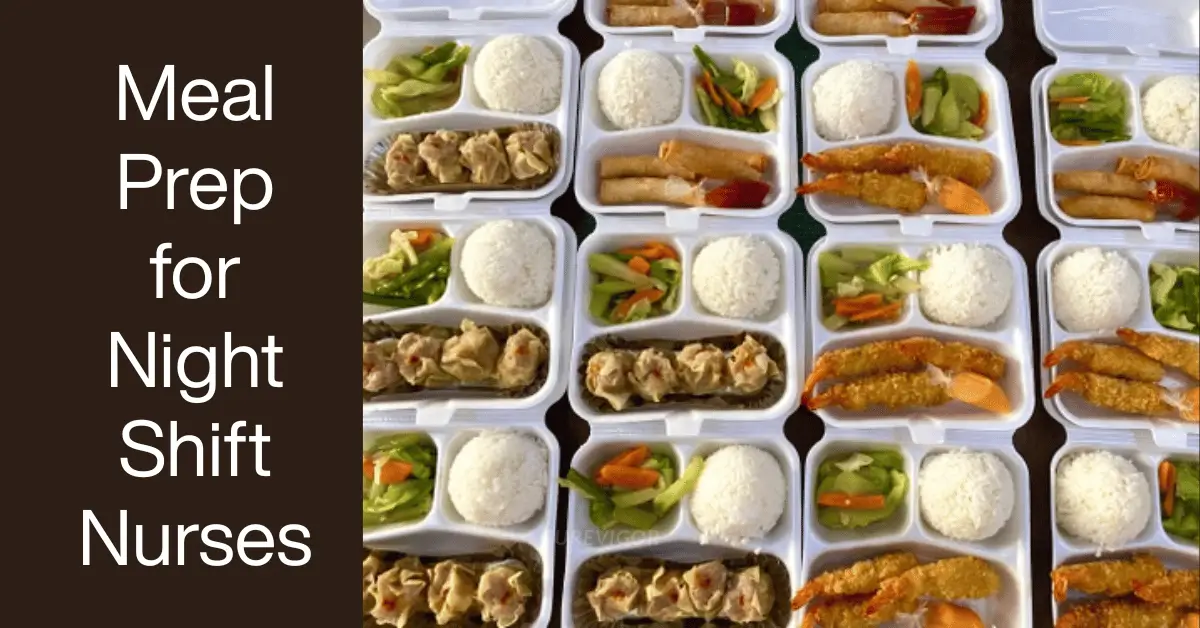
Use leakproof, insulated containers and a good cooler bag. Bento-style boxes keep items separate until you eat them. Pre-portion everything into grab-and-go sizes that fit in your scrub pocket or locker.
Invest in quality containers that keep food safe for 12 hours.
Bottom line: Good containers make or break your meal prep success.
Plan for both 8-hour and 12-hour shifts
An 8-hour shift needs one solid meal and one snack. A 12-hour shift requires an extra snack to prevent the 3 AM wall. Build your weekly plan with both in mind so you never run short.
Prep extra snacks on long-shift weeks.
Bottom line: Scale portions based on shift length, not just hunger.
Best Foods and Recipes for Night Shift Nurses
High-protein options that keep you full
Protein prevents mid-shift hunger and supports muscle recovery after long hours on your feet. Focus on eggs, Greek yogurt, turkey, chicken, and cottage cheese.
Aim for 15–20 grams of protein in every meal or snack.
Easy nurse recipes:
- Hard-boiled eggs with cheese cubes
- Turkey roll-ups in lettuce wraps
- Greek yogurt parfaits with berries
Bottom line: Protein is your foundation for staying full without heaviness.
Slow-digesting carbs for steady energy
Pair protein with complex carbs like sweet potatoes, oats, or whole-grain crackers. These release energy gradually, avoiding the 3 AM crash.
Never eat carbs alone during your shift.
Quick options:
- Overnight oats in small jars
- Sweet potato slices with turkey
- Whole-grain crackers with hummus
Bottom line: Complex carbs fuel your brain without the sugar drop.
Anti-inflammatory add-ins
Add berries, nuts, spinach, and olive oil to fight inflammation from standing all night. These also support better daytime sleep.
Small amounts of healthy fats and colorful produce reduce post-shift soreness.
Bottom line: Anti-inflammatory foods help you recover faster between shifts.
Timing Your Meals During the Shift

Eat your main meal before the shift starts.
Have a balanced dinner 1–2 hours before you clock in. This gives you sustained energy for the first half of the night, when your digestion is still working well.
Front-load calories early so you stay light later.
Bottom line: Your pre-shift meal sets the tone for the entire night.
Snack every 3–4 hours on the floor
Use your short breaks for small protein-and-carb snacks. Keep them in your pocket or locker so you never go more than four hours without fuel.
Set a phone reminder if you tend to skip breaks.
Bottom line: Regular small snacks prevent the 3 AM energy crash.
Light protein snack right before daytime sleep
Eat something small and casein-rich 30–60 minutes before bed. Cottage cheese or a turkey slice keeps hunger away without keeping you awake.
Steer clear of large meals within two hours of going to bed.
Bottom line: A light pre-bed snack protects your daytime rest.
Storage and Packing Tips for Nurses
Cooler bag and ice pack strategy
Use an insulated lunch bag with ice packs to keep food safe during a 12-hour shift. Halfway through the week, change up the ice packs for best results.
A reliable cooler bag is non-negotiable for night-shift nurses.
Bottom line: Temperature control keeps your food safe and fresh.
Pocket-sized and locker snacks
Store backup items like protein bars, nuts, and jerky in your locker. Carry one or two pocket snacks for moments when you cannot reach the break room.
Always have a backup plan for chaotic nights.
Bottom line: Redundancy prevents vending machine decisions.
Sample 7-Day Meal Prep Plan for Night Shift Nurses
Days 1–3: High-protein focus
- Pre-shift: Grilled chicken, quinoa, and broccoli
- Mid-shift snack: Greek yogurt with almonds
- Late-shift snack: Hard-boiled eggs and apple slices
- Pre-bed: Cottage cheese
Days 4–5: Quick grab-and-go
- Pre-shift: Turkey and sweet potato bowls
- Mid-shift snack: Protein bar and banana
- Late-shift snack: Cheese sticks and carrots
- Pre-bed: Small protein shake
Days 6–7: Rotating shift adjustments
- Pre-shift: Egg muffins with spinach
- Mid-shift snack: Overnight oats
- Late-shift snack: Turkey roll-ups
- Pre-bed: Handful of walnuts
Bottom line: Rotate these templates based on your shift length and energy needs.
Common Meal Prep Mistakes Night Shift Nurses Make
Skipping the pre-shift meal
Going into your shift hungry almost guarantees a bad food decision by 2 AM. Always eat something substantial before you leave home.
Never start a night shift on an empty stomach.
Bottom line: The pre-shift meal is the most important one of the day.

Relying on sugary snacks for quick energy
Candy and pastries cause a quick crash during your busiest hours. Replace them with protein and fiber options.
Sugar is the fastest way to feel worse halfway through your shift.
Bottom line: Ditch the sweets and keep real food ready.
Eating too close to bedtime
Heavy meals right before sleep destroy the quality of rest. Keep your final intake light and protein-focused.
Give yourself at least two hours between your last bite and sleep.
Bottom line: Protect your daytime sleep by finishing food early.
Quick Night Shift Nurse Meal Prep Checklist
- Batch cook proteins and carbs on your prep day
- Portion everything into single-serve containers
- Pack a cooler bag with ice packs.
- Stock locker with backup snacks
- Set phone reminders for mid-shift eating times.
- Prep a light pre-bed snack the night before
Bottom line: A short checklist removes decision fatigue in busy weeks.
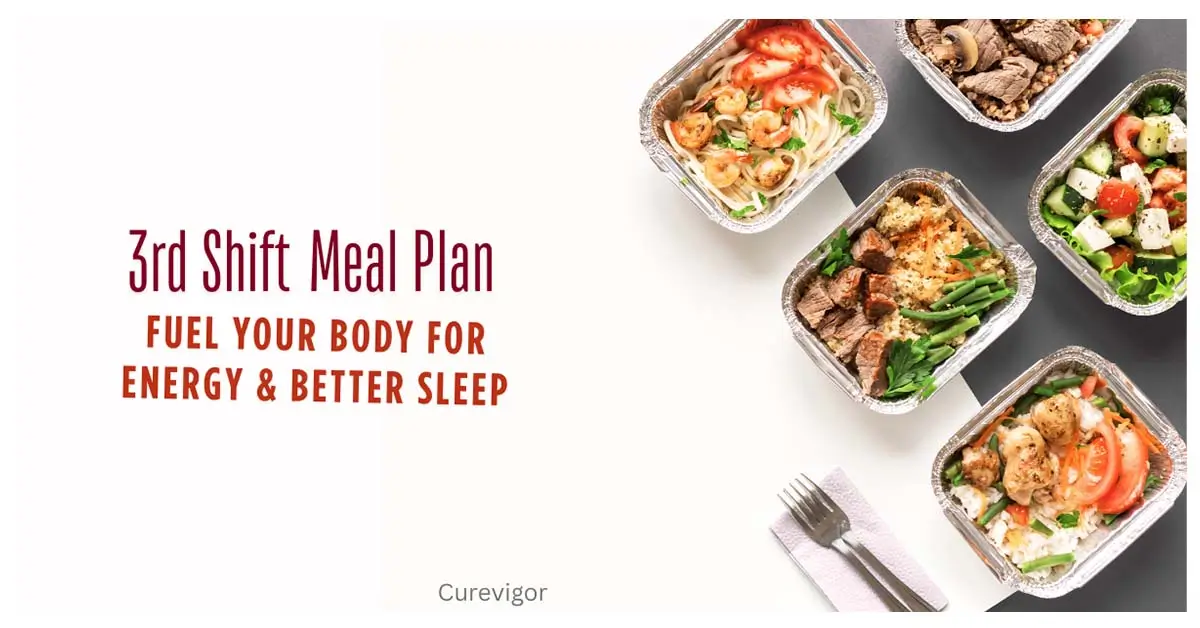
Night Shift Meal Plan Made Easy: Fuel Your Body for Energy and Better Sleep
Struggling with what to eat on the 3rd shift? This expert night-shift meal plan guide helps night-shift workers fuel their bodies, boost energy, and improve sleep without relying on junk food or caffeine.
Recap
Meal prep for night shift nurses is not about perfection; it is about survival. Batch cook proteins and carbs on your day off. Rotate four different meals across your shift block to avoid boredom. Pack bento boxes and snacks that can be eaten one-handed in 5 minutes.
Use blackout curtains and set strict boundaries to protect your daytime sleep. On days you have zero energy, rely on no-cook meals like yogurt bowls and turkey wraps.
You do not have time to cook after a 12-hour shift, so do the work on your day off. Your patients need you alert, and your body needs real fuel to survive the night.
Frequently Asked Questions on Meal Prep for Night Shift Nurse
Q: How far ahead of time can I prepare meals for nurses who work nights?
You can safely prep most meals 4–5 days ahead. Cook proteins and grains on Sunday, then assemble fresh snacks mid-week to keep everything tasting good and safe.
Q: What are the best portable snacks for nurses on the floor?
The best portable snacks combine protein and fiber: Greek yogurt cups, hard-boiled eggs, cheese sticks with an apple, or turkey jerky with whole-grain crackers. These require no prep and fit in your pocket.
Q: How do I adjust meal prep when my shifts rotate?
Keep the same foods but shift your eating times. On the first night back, move your main meal earlier and add an extra snack if the shift feels longer. Your body adapts faster when the food stays consistent.
Q: How do I stop gaining weight on night shifts as a nurse?
Control portions, front-load calories earlier in the shift, and avoid heavy meals after 2 AM. High-protein meal prep reduces mindless snacking and helps keep insulin levels stable.
Q: What meal prep ideas can you give for someone working 4 night shifts in a row, 7-7, in nursing?
Focus on batch cooking three core items on your day off: grilled chicken or turkey, quinoa or sweet potatoes, and roasted vegetables. Portion them into five to six containers so you can quickly assemble meals before each shift. Add easy snacks like Greek yogurt cups, hard-boiled eggs, and cheese sticks for your locker.
Prep once, then rotate the same base foods across all four nights to eliminate daily decisions.
This approach keeps your energy steady during long shifts and gives you a light pre-bed snack ready for daytime sleep.
Bottom line: Batch cook proteins and carbs once, then mix and match for four nights straight.
Q: Night shift nurses who meal prep, what meals/snacks do you bring to work with you?
Most nurses who prep well bring one solid pre-shift meal, two to three pocket-friendly snacks, and a small pre-bed item. Common choices include turkey roll-ups, Greek yogurt with berries, hard-boiled eggs, and overnight oats in small jars.
Pack everything the night before so you can grab your cooler and go without thinking.
These items require no microwave and can be eaten in under two minutes between tasks.
Bottom line: One main meal plus two or three simple snacks is the standard winning combo.
Q: What do you eat on a 12-hour night shift?
You eat your largest balanced meal 1–2 hours before your shift starts, then have small protein-and-carb snacks every 3–4 hours. Good options include chicken with sweet potato early, Greek yogurt mid-shift, and eggs or turkey later. Finish with a light casein snack, such as cottage cheese, before bed.
Keep every overnight item under 300 calories to avoid the 3 AM slump.
This timing works with your slowed digestion and protects your daytime sleep.
Bottom line: Front-load your main meal, then snack lightly and often.
Q: What are some ways to mentally prepare for working night shifts as a nurse?
Create a consistent pre-shift routine that includes your meal, hydration, and a short wind-down activity, such as stretching or listening to a podcast. Set clear boundaries around daytime sleep so your brain knows when to rest.
Treat your sleep and meal timing like non-negotiable appointments.
This reduces decision fatigue and helps your body adapt faster to the flipped schedule.
Bottom line: Build a simple routine and protect your sleep window as if it were part of the job.
Q: Do you still have energy to cook after a 12-hour shift?
Most nurses do not, which is why meal prep happens on your days off. Keep post-shift eating to simple grab-and-go items like cottage cheese, a protein shake, or pre-made turkey slices so you can eat and sleep quickly.
conclude
Nursing on night shift is one of the hardest jobs in healthcare. You cannot control the chaos of the ER or the ICU, but you can control what goes into your cooler bag. Meal prep gives you that control. It saves you time, protects your energy, and keeps you sharp when your patients need you most.
Prep your meals, protect your sleep, and show up for your patients at full strength.
Bottom line: Batch-cook on your day off, pack portable meals, and protect your sleep to thrive on the night shift.
Take Control of Your Night Shift Health
Ready to stop surviving on vending machine snacks and start thriving on every shift? Explore CureVigor’s Night Shift Health Hub for more nurse-specific meal plans, caffeine timing guides, and recovery tools. Subscribe to our newsletter today and get one practical tip delivered to your inbox every week.
Read more about night shift workers’ health.
You might like: