

One powerful habit separates exhausted night shift workers from well-rested ones. Discover what it is and how to build it into your routine tonight.
If you work nights, you already know the exhaustion isn’t just in your head. You clock out as the sun comes up, your body is still wired from your shift, and somehow you’re expected to fall asleep while the rest of the world starts its day.
Here’s the good news: you don’t need a complete lifestyle overhaul to fix this. You need one habit, one powerful habit, done consistently, every single time you finish a shift. Get this one thing right, and everything else about your energy, focus, and health starts to follow.
The single most powerful habit for night shift workers is a consistent post-shift wind-down routine. By preparing your sleep space, reducing light exposure, and eating less after each shift, you can teach your body to fall asleep faster and stay asleep longer, even if your work schedule does not align with your natural clock.
If you work nights, you already know the struggle. You clock out as the sun comes up, your body is wired from hours of alertness, and somehow you’re supposed to fall asleep while the rest of the world is starting its day. It’s not just inconvenient; it’s a biological uphill battle.

You may notice that some days you sleep well and feel almost normal, while other days you toss and turn for hours, wake up groggy, and drag yourself through your next shift running on fumes. That inconsistency isn’t random.
It usually comes down to one thing: whether or not you gave your body a clear, repeatable signal that it’s time to shut down.
In this article, you’ll learn why your circadian rhythm makes night shift work so hard on your body, the one habit that makes the biggest difference, a simple 5-step routine you can start using today, and the tools and mistakes that can make or break your recovery.
Why Night Shift Workers Struggle Without a Core Habit
The Science of Shift Work’s Circadian Rhythm Disruption
Your body’s inherent 24-hour clock is called your circadian rhythm. It is mostly triggered by exposure to light and instructs your brain when to release cortisol, which increases alertness, and melatonin, which induces sleep. For most people, that rhythm is built around daylight hours: melatonin rises at night, and cortisol rises in the morning.
When you work nights, you’re asking your body to do the opposite of what millions of years of biology trained it to do. Your eyes see daylight right when you’re trying to wind down, which suppresses melatonin and keeps cortisol elevated. This is why simply “trying to sleep” during the day often doesn’t work; your internal signals are actively working against you.
How Poor Sleep Leads to Fatigue, Brain Fog, and Burnout
When your circadian rhythm stays out of sync, sleep quality suffers even if you technically get enough hours in bed. You might sleep 7 hours but wake up feeling like you only got 3. Over time, this pattern compounds.
Common effects you may notice include:
- Difficulty concentrating or making decisions
- Slower reaction times, especially dangerous in safety-sensitive jobs
- Increased irritability and mood swings
- A weakened immune system and more frequent illness
- Long-term burnout that bleeds into your personal life
Why “Just Sleeping When You Can” Doesn’t Work for Night Shift Health
Many night shift workers try to wing it, sleeping whenever they feel tired, with no consistent pattern. Your goal should be the opposite. Without a predictable routine, your body never fully adapts to your schedule. Every day becomes a fresh negotiation with your own biology, which is exhausting in itself.
The One Powerful Habit: A Consistent Post-Shift Wind-Down Routine

Direct Answer: A post-shift wind-down routine is a fixed sequence of actions you perform every time you finish a night shift, before you attempt to sleep. By telling your brain that the “day” is over, you’ll fall asleep more quickly and profoundly. It typically takes 20 to 45 minutes.
What a Wind-Down Routine Actually Is for Night Shift Workers
Think of it as the night shift equivalent of a normal person’s evening routine: brushing teeth, dimming lights, and reading before bed. The difference is timing: yours happens after sunrise instead of after sunset, so it has to work harder against natural light and noise.
How This Habit Resets Your Circadian Rhythm and Protects Sleep Quality
Repetition is what makes this habit powerful. Each time you follow the same steps in the same order, you reinforce a behavioral cue that tells your brain “sleep is coming.” Over days and weeks, this consistency helps retrain your circadian rhythm to align more closely with your actual schedule, rather than fighting it every single day.
The Link Between Routine, Melatonin Production, and Recovery
Melatonin production is highly sensitive to light and habit cues. A consistent wind-down routine, especially one that includes blocking light early, supports your body’s natural melatonin release even though you’re sleeping during daylight hours.
This is one of the most well-supported strategies in shift-work sleep research, and it’s something you can start using immediately without medication.
5 Steps To Build Your Night Shift Wind-Down Routine
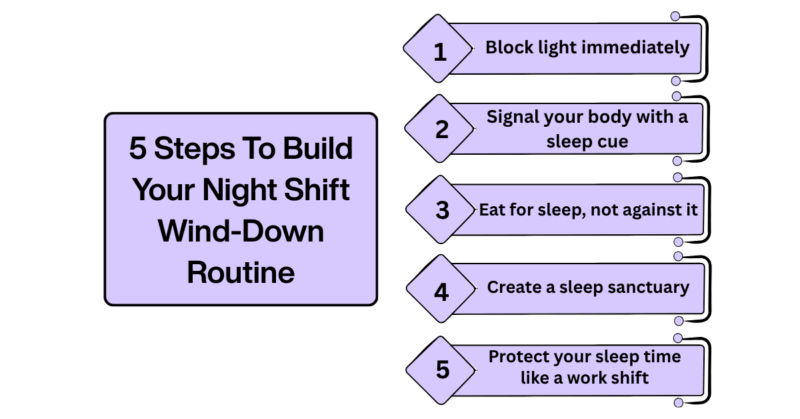
Here’s a simple, repeatable sequence you can adapt to your own schedule.
- Block light immediately. Put on blue-light-blocking glasses before you even leave work, and use blackout curtains at home so your bedroom stays dark at any time of day.
- Signal your body with a sleep cue. Choose one consistent cue, a warm shower, herbal tea, or light stretching, and do it every single time. The specific activity matters less than the consistency.
- Eat for sleep, not against it. Have a light, protein-based meal instead of something heavy or sugary, and avoid caffeine for at least 6 hours before you plan to sleep.
- Create a sleep sanctuary. Keep your bedroom dark, cool (around 65°F/18°C), and quiet. Treat this space as reserved exclusively for sleep.
- Protect your sleep time like a work shift. Turn off your phone notifications, and treat interruptions, errands, calls, and daytime noise as things to schedule around, not around.
Quick Summary:
- Block light → Cue your body → Eat light → Optimize your room → Guard your sleep window
What Happens When You Skip This Habit
Increased Risk of Shift Work Sleep Disorder and Chronic Fatigue
Skipping a consistent wind-down routine doesn’t just mean one bad night. Over weeks and months, it increases your risk of developing shift work sleep disorder, a recognized condition marked by chronic insomnia and excessive sleepiness tied directly to a misaligned schedule.
Hormonal Imbalance: High Cortisol, Low Melatonin, Poor Metabolism
Without a clear wind-down signal, cortisol can stay elevated well past the point where it should be dropping. Combined with suppressed melatonin, this imbalance has been linked to metabolic issues, including changes in appetite regulation and blood sugar control.
Long-Term Effects on Mental Health, Immunity, and Energy Management
Chronic sleep disruption is associated with higher rates of anxiety and depression, reduced immune function, and a general decline in your ability to manage energy throughout the day. This is why building the habit early, rather than waiting until burnout hits, matters so much.
Common Mistakes Night Shift Workers Make With Their Routine
Scrolling on Phone Before Bed and Killing Melatonin
Screens emit blue light, which is one of the most effective ways to suppress melatonin production. Scrolling social media “for just a few minutes” after your shift is one of the most common habits that quietly sabotages sleep quality.
Sleeping at Different Times on Days Off
It’s tempting to flip your schedule on days off to spend time with family or friends. However, constantly switching between night-shift and day-shift sleep patterns is like giving yourself jet lag every few days, making it harder for your body to settle into any consistent rhythm.
Using Caffeine to “Push Through” Instead of Recovering
Relying on caffeine late into your shift or right after it ends may feel necessary in the moment. Still, it directly interferes with your ability to wind down and fall asleep afterward, creating a cycle of poor sleep followed by greater reliance on caffeine.
Tools That Make This Habit Easier
| Blackout curtains | Blocking daylight completely | Bedrooms with lots of natural light |
| Sleep mask | Portable light-blocking | Travel or shared living spaces |
| White noise app/machine | Masking daytime household or street noise | Light sleepers |
| Earplugs | Reducing sudden noise disruptions | Noisy environments |
| Herbal tea (chamomile, valerian) | Supporting a calming wind-down cue | Building a consistent bedtime ritual |
| Blue-light-blocking glasses | Reducing light exposure on the commute home | Workers who drive home after sunrise |
Best Blackout Curtains and Sleep Masks for Daytime Sleep
Look for curtains rated for near-total light blockage, or double up with a fitted sleep mask for extra coverage around window edges.
White Noise Apps and Earplugs for Shift Workers Sleep Hygiene
A steady white noise or fan sound can mask unpredictable daytime noises like traffic, deliveries, or neighbors, helping you stay asleep longer.
Herbal Teas and Supplements That Support Melatonin Naturally
Some people find that a warm, caffeine-free tea supports relaxation as part of their cue-based routine. If you’re considering a melatonin supplement, it’s worth discussing appropriate timing and dosage with a healthcare provider, since needs vary by individual and shift pattern.
Final Thoughts: Make This Habit Non-Negotiable
How 30 Minutes of Routine Can Save Hours of Recovery
A short, consistent wind-down routine may feel like an extra step when all you want to do is collapse into bed. But that 20- to 30-minute investment often makes the difference between falling asleep quickly and lying awake for hours.
Your Body Will Adapt Faster When You Give It Consistency.
The biggest mistake night shift workers make isn’t a lack of effort; it’s inconsistency. Your body adapts to patterns, not intentions. The more consistently you repeat your routine, the faster your circadian rhythm will align with it.
Quick Checklist to Start Your Wind-Down Tonight
- Put on blue-light-blocking glasses before leaving work.
- Choose one sleep cue (tea, shower, or stretch) and stick with it.
- Eat a light, protein-based meal—skip caffeine.
- Close blackout curtains and set your room temperature
- Silence your phone and protect your sleep window.
Key Takeaways
- Night shift work fights against your natural circadian rhythm, making sleep harder even with enough hours in bed.
- A consistent post-shift wind-down routine is the single most effective habit for improving sleep quality.
- The 5-step routine, block light, cue your body, eat light, optimize your room, and protect your sleep, can be started tonight.
- Skipping this habit raises your risk of shift work sleep disorder, hormonal imbalance, and long-term health issues.
- Consistency matters more than perfection: the same routine, repeated daily, retrains your body faster than sporadic effort.
Frequently Asked Questions
Q. What is the best sleep schedule for night shift workers?
The best sleep schedule is one you can keep consistent, even on days off. Ideally, you sleep during the same hours every day, including non-work days, rather than flipping back to a daytime schedule.
This consistency helps stabilize your circadian rhythm rather than resetting it every few days. Many night shift workers find success sleeping immediately after their shift ends, in a dark, cool, quiet room, for 7 to 9 hours.
If full consistency isn’t realistic due to family or social obligations, aim to keep your sleep window as consistent as possible day to day, and use a wind-down routine to reinforce the pattern despite small schedule shifts.
Q. How long does it take to adjust to night shift work?
Most people need one to two weeks of consistent scheduling to feel meaningfully adjusted to night shift work, though full circadian adaptation can take longer for some individuals. During this adjustment period, you may notice fatigue, mood changes, or disrupted digestion as your body recalibrates its internal clock.
A consistent wind-down routine can speed this process by giving your body clear, consistent signals about when to sleep and when to wake. Avoiding schedule flips on days off during this early adjustment period is especially important, since inconsistency can reset the adaptation process and prolong How long you feel out of sync.
Q. Is melatonin safe for night shift workers to use regularly?
Many adults believe melatonin to be safe for short-term use. However, as the right dosage and timing depend on your unique schedule and medical history, regular or long-term use should be evaluated with a healthcare expert.
Melatonin works best as a timing cue rather than a sedative, meaning it can help signal to your body when to prepare for sleep if taken at a consistent point in your wind-down routine. It is not a substitute for good sleep hygiene practices like light blocking and a consistent schedule.
If you experience ongoing sleep difficulties despite lifestyle changes, a doctor can help determine whether melatonin or another approach is appropriate for you.
Q. Why do I feel more tired after sleeping during the day than at night?
Daytime sleep is often lighter and more fragmented than nighttime sleep because your circadian rhythm is naturally primed for wakefulness during daylight hours.
Even with blackout curtains, ambient light, noise, and your body’s internal alertness cues can reduce the amount of deep, restorative sleep you get. This is why night-shift workers often feel they haven’t fully rested even after 7 or 8 hours in bed.
Building a strong wind-down routine and optimizing your sleep environment—dark, cool, and quiet—helps offset these disadvantages and improves the overall quality of daytime sleep.
Q. What foods should night shift workers avoid before sleeping?
Night shift workers should generally avoid caffeine, heavy or greasy meals, and high-sugar foods in the hours before their planned sleep time.
Caffeine can stay in your system for several hours and directly interferes with your ability to fall asleep, while heavy or sugary meals can cause digestive discomfort or blood sugar spikes that disrupt sleep quality.
Instead, a light meal with lean protein and complex carbohydrates tends to be easier on digestion and less likely to interfere with your wind-down process. Staying well hydrated while avoiding large amounts of liquid right before bed can also support more comfortable, uninterrupted sleep.
Q. How can I make my bedroom better for daytime sleep?
The most effective changes are blocking light, controlling noise, and managing temperature. Blackout curtains or a well-fitted sleep mask can eliminate most daylight, while white noise machines, apps, or earplugs help mask daytime sounds like traffic or household activity.
Keeping your room slightly cool, generally around 65°F (18°C), supports deeper sleep for most people. It also helps to reserve your bedroom exclusively for sleep, avoiding activities like eating or scrolling on your phone there, so your brain strongly associates the space with rest rather than alertness.
Q. Does working the night shift long-term cause health problems?
Extended night shift work has been associated with a higher risk of certain health issues, including sleep disorders, metabolic changes, and increased stress on the cardiovascular and immune systems.
These risks stem from the ongoing misalignment between your work schedule and your natural circadian rhythm, especially when there’s no consistent routine to help your body adapt.
However, many of these risks can be reduced with consistent sleep hygiene practices, a strong wind-down routine, and regular checkups with a healthcare provider to monitor your overall health over time.
Q. What is shift work sleep disorder, and how do I know if I have it?
Shift work sleep disorder is a recognized sleep condition characterized by chronic insomnia and excessive sleepiness that occurs specifically because of a work schedule that conflicts with your natural sleep-wake cycle.
Common signs include persistent difficulty falling or staying asleep, feeling excessively drowsy during your shift, and noticeable impacts on mood, concentration, or safety.
If you experience these symptoms regularly despite trying consistent sleep hygiene practices, it’s worth speaking with a healthcare provider or sleep specialist, who can properly evaluate your symptoms and recommend appropriate treatment options.
Q. Can exercise help or hurt my night shift sleep routine?
Exercise can be beneficial for night shift workers, but timing matters. Vigorous exercise too close to your intended sleep time can raise your heart rate and alertness, making it harder to wind down.
Many night shift workers find that light exercise earlier in their shift, or gentle stretching as part of their wind-down routine, supports better sleep without overstimulating the body beforehand.
Regular exercise, done at a consistent time relative to your schedule, can also help regulate your overall circadian rhythm and improve sleep quality over time.
Q. How do I balance a night shift wind-down routine with family responsibilities?
Balancing a wind-down routine with family life often requires clear communication and some environmental adjustments.
Letting household members know your sleep window, using visual cues like a sign on your door, and creating a dedicated quiet period can help reduce interruptions.
Where possible, try to keep your core routine steps, light blocking, your chosen sleep cue, and a consistent bedroom setup non-negotiable, even if the surrounding schedule shifts slightly for family needs. Small compromises at the edges of your routine are usually more sustainable than abandoning it altogether.
Conclusion
Working the night shift will always put you at odds with your body’s natural clock, but that doesn’t mean you’re stuck feeling exhausted and foggy forever. The one habit that makes the biggest difference is deceptively simple: a consistent, repeatable wind-down routine that you follow after every single shift.
You don’t need to overhaul your entire life or buy a long list of products to get started. Blocking light, choosing one sleep cue, eating light, optimizing your bedroom, and protecting your sleep window are all steps you can begin tonight.
The real power comes from repetition; the more consistently you follow this routine, the faster your body adapts and the better you’ll feel, shift after shift.
Your energy, your health, and your quality of life depend on how well you recover between shifts. Make this habit non-negotiable and finally give your body the consistency it needs to work with you, not against you.
Continue Building Your Night Shift Routine
A sleep anchor is just one piece of the puzzle. For a complete hour-by-hour plan covering sleep, meals, exercise, caffeine timing, and recovery, read our comprehensive guide:
👉 The Best Successful Daily Routine for Night Shift Workers
It will help you turn one powerful habit into a sustainable lifestyle that supports your health for years to come.
Read more about night shift workers’ health.
You might like: