
Learn the best daily routine for night-shift workers. Find how to sleep better, eat smarter, stay energized, reduce fatigue, and protect your health with a practical step-by-step schedule.
What Is the Best Daily Routine for Night Shift Workers?
The first steps in the ideal daily routine after work for night shift workers are:
- Protecting daytime sleep
- Keeping regular wakefulness
- Sleep schedules
- Eating the largest meal after waking
- Taking a quick pre-shift nap when necessary
- Staying hydrated during the shift
- Adhering to a structured wind-down routine.
Consistency is the key factor that helps reduce fatigue, improve alertness, and support long-term health.

The Complete Hourly Timetable (7 p.m.–7 a.m.)
The most effective daily routine for night shift workers is built around one principle: sleep comes first.
Everything else should support your recovery.
The schedule below assumes a typical 7 p.m. to 7 a.m. shift, though the same principles apply to other schedules.
| Time | Activity |
| 7:00 AM | Finish shift |
| 7:30 AM | Light breakfast and wind-down |
| 8:00 AM | Begin sleep preparation |
| 8:30 a.m.–3:30 p.m. | Main sleep block |
| 3:30 p.m. | Wake up |
| 4:00 p.m. | Main meal |
| 5:00 p.m. | Exercise or movement |
| 6:00 p.m. | Relaxation and family time |
| 6:30 p.m. | Optional pre-shift nap |
| 7:00 p.m. | Prepare for work |
| 7:00 p.m.–7:00 a.m. | Night shift |
The exact timing is less important than consistency. Your goal should be to create a routine that your body can recognize and anticipate every day.
The First Hour After Your Shift Ends
Many workers unknowingly sabotage their sleep before they even arrive home. The period immediately after work is one of the most important parts of a healthy night shift routine.
Why the Post-Shift Period Matters
After a demanding overnight shift, your brain is often still stimulated. Stress hormones may remain elevated, and sunlight exposure can signal your body to stay awake.
This creates a situation where you feel physically tired but mentally alert. The longer this state continues, the harder it becomes to fall asleep.

What You Should Do After Work
- Instead of running errands, checking emails, or scrolling through social media, focus on preparing for sleep.
- Hydrate well.
- Eat a small, balanced meal if you are hungry.
- Keep lighting low whenever possible.
- Avoid unnecessary stimulation.
- Think of this period as the nighttime equivalent of preparing for bed after a long day.
The goal is to make the transition from work mode to sleep mode as smooth as possible.

Creating an Effective Wind-Down Routine
How successful and unsuccessful night-shift workers spend the hour before bed is one of the main distinctions between them.
Many people expect sleep to happen automatically. However, after a busy shift, your body often needs help transitioning into rest mode.
A Practical Wind-Down Strategy
A good wind-down routine should feel predictable and calming.
For example, you might arrive home, take a warm shower, have a light snack, dim the lights, and spend a few minutes reading before bed.
Repeating the same sequence each day teaches your brain that sleep is approaching.
Over time, this habit can make it easier and faster to fall asleep.
Common Wind-Down Mistakes
One of the most common mistakes is exposure to bright screens immediately before bed. Phones, tablets, and televisions can suppress melatonin production and delay sleep.
Another mistake is engaging in stressful activities such as checking work messages or handling difficult conversations.
Your focus should be on relaxation rather than stimulation.
How to Build the Perfect Daytime Sleep Environment
Daytime sleep is often the biggest challenge for overnight workers. Noise, sunlight, family responsibilities, and social obligations can all interfere with rest.
Unfortunately, poor daytime sleep accumulates into sleep debt over time.
What Is Sleep Debt?
Sleep debt occurs when you consistently get less sleep than your body requires.
Even losing one or two hours each day can create noticeable effects over time.
You may experience reduced concentration, slower reaction times, increased hunger, mood changes, and persistent fatigue.
The good news is that these effects can be lessened by getting better sleep.
The Ideal Sleep Environment
Your bedroom should be designed to support uninterrupted rest.
The following table highlights essential sleep tools for night shift workers:
| Sleep Tool | Purpose |
| Blackout curtains | Block daylight |
| Sleep mask | Eliminate light leaks |
| Earplugs | Reduce environmental noise |
| White noise machine | Mask sudden sounds |
| Cool room temperature | Improve sleep quality |
| Do Not Disturb settings | Prevent interruptions |
These simple adjustments often provide noticeable improvements in sleep quality.
Bedroom Setup for Daytime Sleep: Temperature, Sound, Darkness
A daytime sleep room should feel like nighttime.
Ideal setup
| Darkness | Blackout curtains, sleep mask | Supports melatonin and deeper sleep |
| Sound | White noise machine, fan, earplugs | Blocks daytime noise |
| Temperature | Cool room, often around 60–67°F for many people | Supports natural body temperature drop |
| Phone | Do Not Disturb mode | Prevents fragmented sleep |
| Bedding | Comfortable and breathable | Reduces overheating |
| Door sign | “Sleeping—please do not disturb.” | Helps family or roommates respect sleep |
Core body temperature regularly drops during sleep. A cool room can support that process, especially when sleeping during warmer daylight hours.
Key Points
- Sleep duration is important, but so is the quality of sleep.
- Meal timing influences energy and alertness.
- Consistency helps your body adapt to night work.
- Strategic naps can reduce fatigue.
- Healthy habits reduce the long-term risks associated with shift work.
What is the science behind night-shift work?
Before building the ideal daily routine, it helps to understand why night work feels so challenging.
What Is Circadian Rhythm?
Circadian rhythm is your body’s internal 24-hour clock. It regulates important functions such as sleep, hormone production, digestion, body temperature, and alertness.
Under normal circumstances, this system follows daylight.
During the evening, your brain increases melatonin production, preparing you for sleep. In the morning, exposure to light signals your body to become alert and active.
Night shift work forces you to operate against this natural cycle.
As a result, many workers experience symptoms such as difficulty sleeping during the day, fatigue during the night, reduced concentration, and mood fluctuations.
What is Shift Work Sleep Disorder
Some people who work non-traditional hours suffer from a condition called shift work sleep disorder. It is characterized by excessive sleepiness during work hours and difficulty sleeping during designated rest periods.
Not every night-shift worker develops this condition, but understanding its symptoms can help you recognize when your schedule may be affecting your health.
Common signs include persistent fatigue, difficulty concentrating, irritability, and poor sleep quality despite spending enough time in bed.
Why Some Shift Workers Sleep Better Than Others
You may know someone who appears to thrive on overnight shifts, while others struggle constantly.
Several factors influence adaptation, including:
- Age
- Sleep habits
- Consistency of schedule
- Stress levels
- Physical activity
- Diet quality
- Exposure to light
Although genetics may play a small role, most workers can significantly improve their experience through better daily routines and lifestyle habits.
Daily Routine for Night Shift Workers
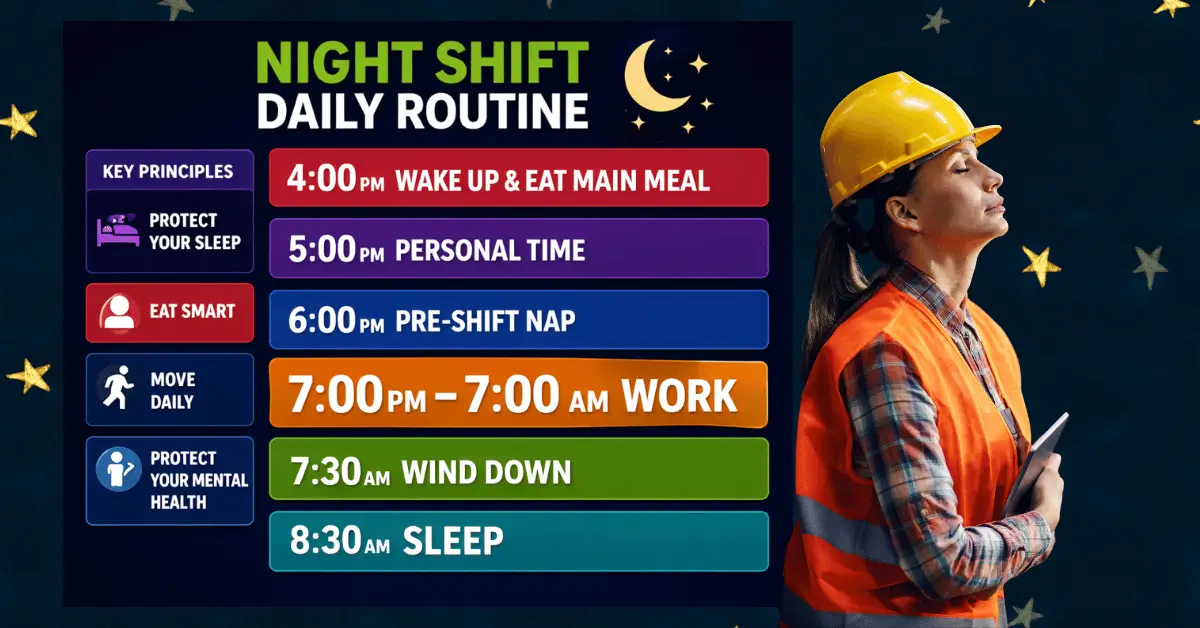
Working nights can feel like living in a world that was not designed for your schedule. While most people sleep at night and stay active during the day, night shift workers must reverse their routines and still perform at their best.
Whether you are a nurse, healthcare worker, security guard, factory employee, emergency responder, call center agent, driver, or any professional working overnight hours, the right daily routine can make the difference between constantly feeling exhausted and maintaining steady energy, good sleep, and long-term health.
The biggest mistake many shift workers make is focusing only on surviving the night shift. The real solution is building a complete 24-hour routine that supports your body’s needs before, during, and after work.
Why a Daily Routine Matters for Night Shift Workers
Most people never have to think about when they should sleep, eat, exercise, or expose themselves to light. Their body naturally follows the cycle of daylight and darkness.
Night-shift workers do not have that luxury.
When you work overnight, your body is often awake when it expects to be sleeping and trying to sleep when it expects to be awake.
This mismatch can affect almost every system in the body, including sleep, digestion, metabolism, mood, concentration, and immune function.
You may notice that some shifts feel manageable while others leave you exhausted for days. In many cases, the difference lies not in the workload itself but in the daily routine surrounding the shift.
A healthy night shift routine helps reduce the impact of circadian disruption. It provides structure during a schedule that can otherwise feel chaotic. More importantly, it gives your body predictable signals about when to sleep, eat, move, and recover.
Whether you work as a nurse, healthcare professional, factory worker, security guard, emergency responder, driver, or call center employee, building a reliable routine can improve your energy, sleep quality, productivity, and overall well-being.
From the end of your shift until you return to work, you will learn exactly how to organize your day in this book.
Why Night Shift Workers Need a Different Daily Routine
Your body follows the circadian rhythm, which is an internal clock.
This clock controls:
- Sleep and wake cycles
- Hormone production
- Digestion
- Body temperature
- Alertness levels
- Energy production
The human body naturally expects darkness at night and light during the day.
When you work overnight, your circadian rhythm becomes disrupted. This often leads to:
- Poor sleep quality
- Chronic fatigue
- Weight gain
- Digestive problems
- Mood changes
- Reduced concentration
- Increased health risks
A structured daily routine helps minimize these effects and creates consistency that your body can adapt to over time.
The Basis of Every Night Shift Schedule: Prioritize Sleep
Many workers focus on caffeine, supplements, or energy drinks.
Sleep is the real foundation.
Without adequate sleep, no productivity hack can compensate for the resulting fatigue.
Think of sleep as your primary recovery period. Everything else in your routine should be built around protecting it.
Sleep Goals for Night Shift Workers
Aim for:
- 7–9 hours of total sleep daily
- Consistent sleep timing
- Minimal interruptions
- A dark, cool, quiet sleep environment
If you cannot get all your sleep in one block, combine a main sleep period with a short pre-shift nap.
The Best Morning Routine After a Night Shift
The hours immediately after work determine how easily you will fall asleep.
Many night workers inadvertently sabotage their sleep by staying up too late after arriving home.
Step 1: Limit Light Exposure
Bright morning sunlight signals your brain to stay awake.
Wear sunglasses during the commute home if possible.
Once home:
- Close curtains immediately
- Keep indoor lighting dim.
- Avoid unnecessary screen exposure.
The goal is to tell your brain that bedtime is approaching.

Step 2: Eat a Light Recovery Meal
Heavy meals can interfere with sleep.
Choose something simple, such as
- Greek yogurt and fruit
- Eggs and whole-grain toast
- Oatmeal
- Smoothie with protein
A small meal helps satisfy hunger without making your digestive system work overtime while you sleep.
Step 3: Create a Consistent Wind-Down Ritual
A predictable routine trains your brain to prepare for sleep.
Examples include:
- Taking a warm shower
- Reading a few pages of a book
- Gentle stretching
- Deep breathing exercises
Avoid stressful tasks and work-related discussions.
How Can Night Shift Workers Sleep Better During the Day?
Night shift workers can sleep better during the day by creating a dark, quiet, and cool sleeping environment, following a consistent sleep schedule, avoiding caffeine before bedtime, and limiting exposure to bright light after work. These habits help the body transition into sleep despite daytime conditions.
Steps to Improve Daytime Sleep
- Install blackout curtains.
- Use white noise or earplugs.
- Maintain consistent sleep hours.
- Limit screen exposure before bed.
- Keep the room cool and comfortable.
Quick Sleep Improvement Summary
- Prioritize consistency.
- Reduce light exposure.
- Minimize noise disruptions.
- Avoid late caffeine intake.
- Create a calming bedtime routine.
The Ideal Daytime Sleep Schedule
A dedicated sleep block should be treated as seriously as any work shift.
Example Sleep Window
8:30 a.m. to 3:30 p.m.
This provides approximately seven hours of recovery.
Some workers benefit from sleeping until 4:00 p.m. or later.
Consistency matters more than perfection.
Create a Sleep-Friendly Bedroom
Your sleep environment should include:
| Sleep Tool | Benefit |
| Blackout curtains | Blocks daylight |
| Sleep mask | Eliminates light leaks |
| Earplugs | Reduces noise |
| White noise machine | Masks environmental sounds |
| Cool room temperature | Improves sleep quality |
Even small improvements in the sleep environment can dramatically improve recovery.
What is the best wake-up routine?
Many workers wake up groggy and sluggish because they lack a structured wake-up routine.
First 30 Minutes After Waking
- Hydrate immediately.
- Drink a large glass of water before coffee.
- Open the curtains or increase exposure to bright light.
- Movement is important.
- Even five minutes of stretching helps increase alertness.

Eat a Balanced First Meal
Your first meal after waking is equivalent to breakfast for daytime workers.
Include:
- Lean protein
- Complex carbohydrates
- Healthy fats
- Vegetables or fruit
Examples:
- Eggs with vegetables
- Chicken and rice bowl
- Oats with nuts and berries
- Protein smoothie
This meal should provide steady energy throughout the evening.
Exercise Timing Within the Routine
Exercise improves:
- Energy levels
- Mood
- Sleep quality
- Weight management
- Long-term health
However, timing matters.
What is the best time to exercise?
Most night shift workers perform best when exercising after waking and before work.
Ideal window:
4:30 p.m.–6:00 p.m.
Benefits include:
- Increased alertness
- Better physical performance
- Improved mood
- Enhanced metabolic health
Workouts That Fit a Night Shift Lifestyle
- Strength Training
- Builds muscle and supports metabolism.
- Walking
- Simple, sustainable, and effective.
- Cycling
- Provides cardiovascular benefits without excessive joint stress.
- Yoga
- Improves flexibility and reduces stress.
- Resistance Bands
- Convenient for workers with limited time.
- Consistency is more important than intensity.
Best exercise windows for night workers
| After waking | Alertness and energy | Start gradually if groggy |
| Before shift | Strength or cardio | Leave time to eat and commute |
| Mid-shift movement breaks | Circulation and alertness | Keep it short and practical |
| Immediately after the shift | Light stretching only | Intense workouts may delay sleep |
When to Eat Your “Breakfast” on Night Shift
Your “breakfast” is simply your first meal after waking, even if it happens at 4 p.m. or 6 p.m.
A balanced first meal should include protein, fiber, and slow-digesting carbohydrates. This helps support blood sugar stability before your shift.
Good night shift breakfast examples include the following:
| Eggs, whole-grain toast, avocado, fruit | Protein, healthy fat, fiber |
| Greek yogurt, oats, berries, nuts | Easy, light, high protein |
| Chicken rice bowl with vegetables | Balanced and filling |
| Lentil soup with whole-grain bread | Plant protein and fiber |
| Turkey wrap with salad | Portable before commute |
| Tofu stir-fry with quinoa | Good plant-based option |
Try not to rely on sugary cereal, pastries, or only coffee. They may give quick energy but can lead to a crash during the shift.
What to Eat Before a Night Shift
Food choices can determine how energized or sluggish you feel during the night.
The Best Pre-Shift Meal
Eat your largest meal approximately two to three hours before work.
Include:
- Protein
- Fiber
- Complex carbohydrates
- Healthy fats
Examples:
- Grilled chicken with brown rice
- Fish with vegetables
- Lentils and whole grains
- Turkey and sweet potatoes
These foods provide sustained energy rather than rapid spikes and crashes.
Healthy Eating During the Night Shift
Nighttime digestion is less efficient than daytime digestion.
Heavy meals often lead to:
- Bloating
- Acid reflux
- Sleepiness
- Digestive discomfort
Better Night Shift Snacks
Choose lighter options such as:
- Nuts
- Fruit
- Yogurt
- Cottage cheese
- Hard-boiled eggs
- Hummus with vegetables
- Whole-grain crackers
Small portions every few hours often work better than large meals.
Smart Caffeine Strategy for Night Shift Workers

Caffeine can be helpful when used strategically.
Many workers consume caffeine too late and then struggle to sleep.
Best Times for Caffeine
First dose:
Beginning of shift
Second dose:
Around midnight, if necessary
When to Stop
Most workers should stop caffeine approximately 5–6 hours before planned sleep.
For a worker who sleeps at 8:30 a.m., caffeine should generally be out of their system by 2:00–3:00 a.m.
This helps reduce sleep disruption.
Managing the 2 a.m. to 5 a.m. Energy Crash
Almost every night shift worker experiences a period of extreme sleepiness.
This is often the hardest part of the shift.
How to Stay Alert
- Increase movement.
- Walk whenever possible.
- Stay hydrated.
- Use bright lighting.
- Engage in mentally active tasks.
- Take brief stretch breaks.
If workplace policies allow, a short power nap may significantly improve alertness.
Mental Health Tips for Night Shift Workers
Night work affects more than physical health.
It can impact:
- Relationships
- Social life
- Emotional well-being
- Stress levels
Protect Social Connections
- Schedule time with family intentionally.
- Treat personal relationships like appointments.
- Waiting for free time often means it never happens.
Prioritize Recovery Activities
Examples include:
- Reading
- Walking outdoors
- Journaling
- Prayer or meditation
- Hobbies
Recovery is not wasted time. It is an essential part of staying healthy.
How to Manage Days Off Without Ruining Your Sleep
Many workers feel exhausted after every block of shifts because they constantly switch schedules.
Option 1: Maintain a Similar Schedule
This works best for permanent night workers.
Benefits include:
- Better sleep consistency
- Less fatigue
- Easier transition back to work
Option 2: Gradually Shift Sleep Times
Move bedtime by 1 to 2 hours each day rather than making dramatic changes.
Gradual adjustments reduce stress on the body’s internal clock.
Common Mistakes Night Shift Workers Make
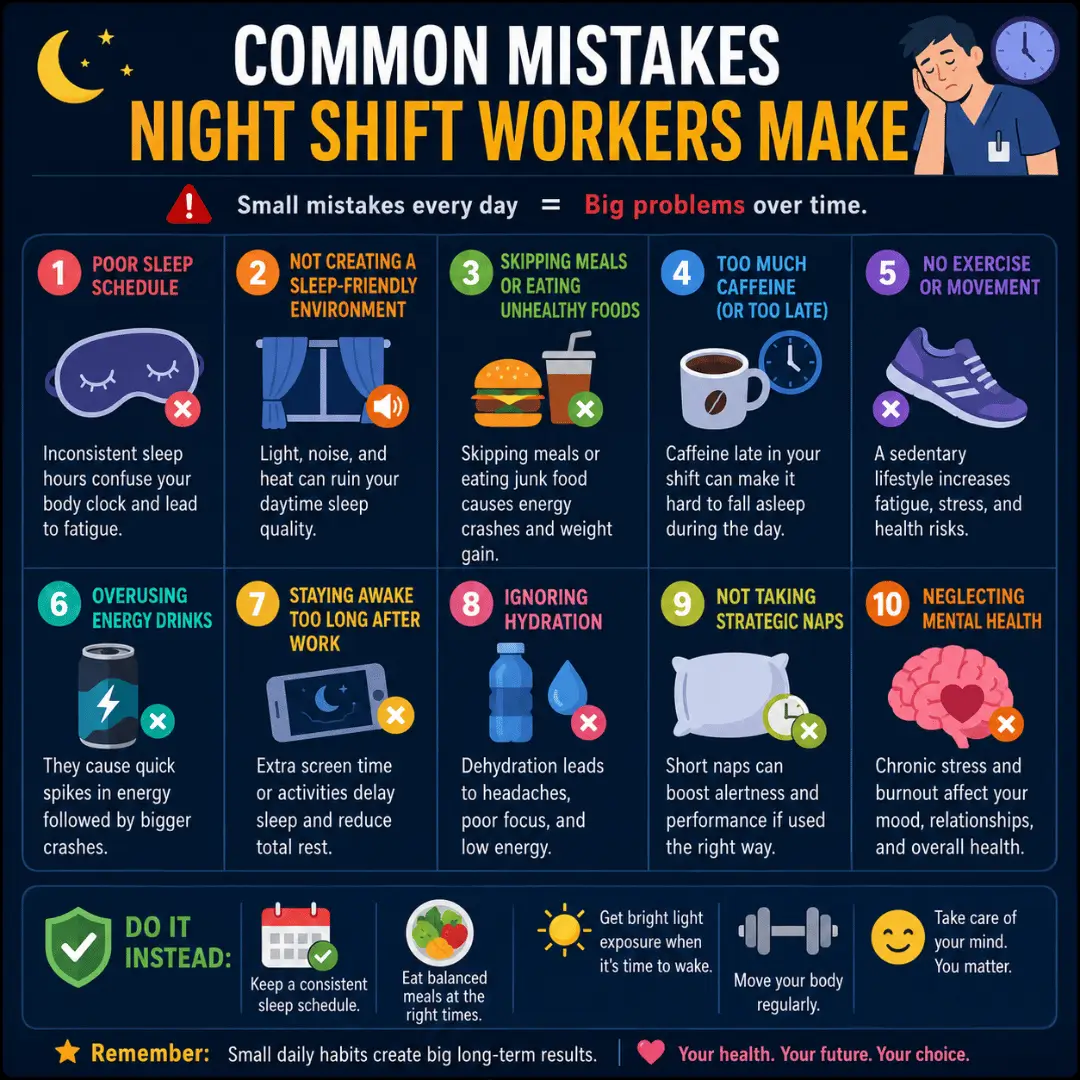
Even with the best intentions, many night-shift workers develop habits that make it harder to stay healthy, energized, and well-rested. Understanding these common errors can help you make minor changes that lead to major improvements in your overall well-being.
Sleeping Too Late After Work
It gets more difficult to fall asleep the longer you remain up after work. When you are exposed to sunlight and engage in stimulating activities, your brain may be signaled to stay alert, making it more challenging to achieve a good night’s sleep.
Drinking Energy Drinks All Night
Overindulgence in coffee frequently results in a vicious cycle of exhaustion and restless nights. Energy drinks may offer a little boost, but consuming them while working can make it harder to fall asleep later and leave you feeling even more worn out the next day.
Eating Heavy Meals at 3 a.m.
Large nighttime meals can worsen digestion and energy levels. Foods that are high in fat, sugar, or calories may cause discomfort, sluggishness, and digestive issues during the shift. Lighter, balanced snacks are usually a better choice.
Ignoring Physical Activity
Regular movement improves sleep and energy. Sitting for long periods or avoiding exercise altogether can contribute to fatigue, weight gain, and reduced overall health. Even short walks or stretching sessions can make a noticeable difference.
Relying on Screens Before Sleep
When they go home, many workers use their phones, tablets, or TVs. Blue light from these devices can inhibit melatonin production, making it more challenging to fall asleep quickly and achieve deep, restful sleep.
Not Drinking Enough Water
One frequent but often disregarded cause of exhaustion is dehydration. Workers who work nights frequently rely on coffee or energy drinks and neglect to stay hydrated during their shift. Maintaining hydration promotes focus, vitality, and general well-being.
Changing Sleep Schedules Constantly
One of the most effective strategies for wellness on the night shift is still consistency. Your body’s internal clock may become confused if you frequently alternate between daytime and nighttime sleep patterns. This can result in poor sleep quality, increased exhaustion, and trouble adjusting to work demands.
Sample Daily Routine for a 12-Hour Night Shift Worker
| Time | Task |
| 7:00 AM | Finish work |
| 7:30 AM | Light meal |
| 8:00 a.m. | Wind down |
| 8:30 a.m. | Sleep |
| 3:30 p.m. | Wake up |
| 4:00 p.m. | Main meal |
| 5:00 p.m. | Exercise |
| 6:00 p.m. | Family time |
| 6:30 p.m. | Short nap |
| 7:00 p.m. | Prepare for shift |
| 7:00 p.m.–7:00 a.m. | Work |
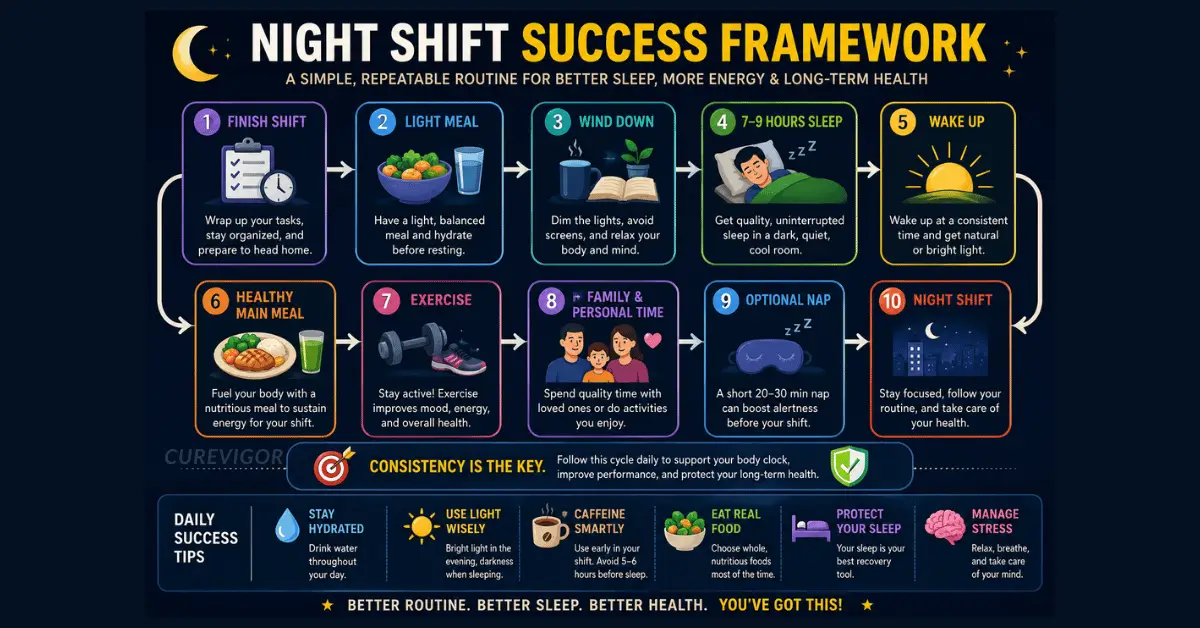
Night Shift Success Framework
Recap: The Best Daily Routine for Night Shift Workers
Working nights does not mean sacrificing your health. The key is to create a routine that helps your body recover, stay energized, and maintain consistency.
Prioritizing quality sleep, eating balanced meals at the right times, staying hydrated, exercising regularly, and managing caffeine strategically could dramatically improve How you feel during and after your shifts.
You should also remember that no routine is perfect from day one. Small improvements made consistently often produce the biggest results.
Whether you work as a nurse, security guard, factory worker, driver, or call centre employee, building healthy habits around your schedule can help reduce fatigue, improve focus, support weight management, and protect your long-term health.
The goal is not simply to survive night shifts. The goal is to create a lifestyle that enables you to perform well at work while maintaining your physical and mental health for years to come.
Final Thoughts on The Best Daily Routine for Night Shift Workers
Pushing through exhaustion is hardly an ideal daily habit for night-shift workers. It involves creating a timetable that accommodates the natural rhythms of nocturnal-hour workers’ bodies.
Protect sleep first. Eat strategically. Use caffeine wisely. Stay physically active. Maintain consistency even on days off.
When these habits work together, you can improve energy, productivity, mood, and long-term health while thriving on a night shift schedule rather than simply surviving it.
Ready to Take Control of Your Night Shift Health?
A healthier night shift lifestyle starts with one small change today. Choose one habit from this guide, improving your sleep schedule, drinking more water, planning healthier meals, or taking a short daily walk, and commit to it for the next seven days.
Your next shift is already on the calendar. Make sure your health is too.
Read more about night shift workers’ health.
You might like: