
Life today moves fast. Messages ping. Deadlines stack up. Family duties and work tasks mix together. Many people try to “fix” this by doing more.
Thank you for reading this post, don't forget to subscribe!They plan harder. They hustle longer. Yet they still feel off balance. The power of mindfulness offers a different path. It helps you manage attention, energy, and choices so your life feels steady rather than scattered.
This guide focuses on balance, not just inner peace. Balance means you can work with focus, rest without guilt, and respond to stress without losing control. It means your mind works for you, not against you.
Over the past decade, psychologists, neuroscientists, and behavioral health experts have studied mindfulness in real-life settings.
Research in cognitive science shows that attention training improves focus, emotional regulation, and decision-making. These are the real building blocks of a balanced life.
I have used mindfulness during busy work seasons and high-pressure moments. I learned that it is not about sitting still for an hour.
It is about small daily shifts in awareness. These shifts create stability over time. That is the true power of mindfulness.
Understanding the Power of Mindfulness in Daily Life
Mindfulness means paying attention on purpose. It means noticing what is happening right now without judging it. This sounds simple. In reality, it is hard because the brain loves autopilot mode.
Neuroscience shows that the brain’s default mode network becomes active when we drift into worry or overthinking. This drains mental energy.
When you train attention, you reduce that drift. You become aware of your thoughts before they run wild.
You notice stress before it explodes. You spot a distraction before it steals an hour of your day. The power of mindfulness lies in this pause. That pause gives you a choice.
Balance does not come from controlling everything around you. It comes from how you manage your response.
When you respond with awareness, you use less emotional fuel. You conserve mental bandwidth. Over time, this builds resilience.
Why Modern Life Feels So Unbalanced
We live in a culture of constant input. Smartphones, social media, emails, and news alerts compete for attention.
Multitasking feels normal, but cognitive psychology shows that switching tasks reduces efficiency and increases fatigue. Each switch costs mental energy.
This creates a cycle. You feel behind. You rush. You make quick choices. Then you feel stressed again. Many people think the problem is time.
Often, the real issue is attention overload. When your attention is scattered, your life feels scattered.
Mindfulness helps you notice this pattern. It does not remove responsibilities. It changes how you handle them.
When you focus on one task at a time, you reduce mental noise. This simple shift supports balance more than any complex productivity system.
The Science Behind the Power of Mindfulness
Clinical research has linked mindfulness practice with lower cortisol levels, improved emotional regulation, and better working memory.
Brain imaging studies show changes in the prefrontal cortex, an area responsible for planning and decision-making. These changes support clearer thinking under pressure.
Stress activates the amygdala, the brain’s alarm system. Mindfulness training reduces overactivation in this region.
This means you react less strongly to minor stressors. You recover faster from challenges. This is not a theory. It is a measurable change observed in neuroscience labs.
However, balance is not built in one session. It forms through repetition. Just like physical exercise strengthens muscles, mental exercise strengthens attention control.
The power of mindfulness grows through steady practice, not intensity.
Shifting from Reaction to Response
Most imbalance comes from reaction. Someone sends a sharp email. You reply quickly and regret it. A small delay triggers anger.
A minor mistake ruins your mood. These moments shape your day more than big events.
Mindfulness trains you to pause. In that pause, you notice your heartbeat, your breath, and your thoughts.
The stimulus and response are separated by this awareness. Behavioral psychology calls this cognitive flexibility. It is the ability to choose rather than react automatically.
I once used this approach during a stressful project deadline. Instead of reacting to every urgent message, I paused for three slow breaths before replying.
This tiny act prevented emotional escalation. It also improved my clarity. Small practices create large effects.
Managing Energy Instead of Time
Many time management systems fail because they ignore energy. You may have eight free hours, but if your mental energy is low, productivity suffers. Mindfulness helps you track energy patterns.
When you pay attention, you notice when your focus peaks. You see when it drops. You begin to schedule demanding tasks during high-energy windows.
You reserve routine work for low-energy periods. This alignment supports balance more than rigid schedules.
Energy awareness also prevents burnout. You sense fatigue early. You step back before exhaustion sets in. This self-awareness is a practical application of the power of mindfulness.
Building Strong Work–Life Boundaries
Work often follows us home through screens and notifications. Even when you stop working, your mind keeps processing tasks. This mental carryover disrupts rest.
Mindful transitions help break this cycle. Before you end your workday, take 2 minutes to review what you completed.
Write down the next step for tomorrow. Close your laptop with intention. This signals closure to your brain.
Over time, this ritual creates psychological separation between roles. You become present with family or personal time. Balance grows from clear boundaries supported by conscious habits.
Improving Focus Without Burnout
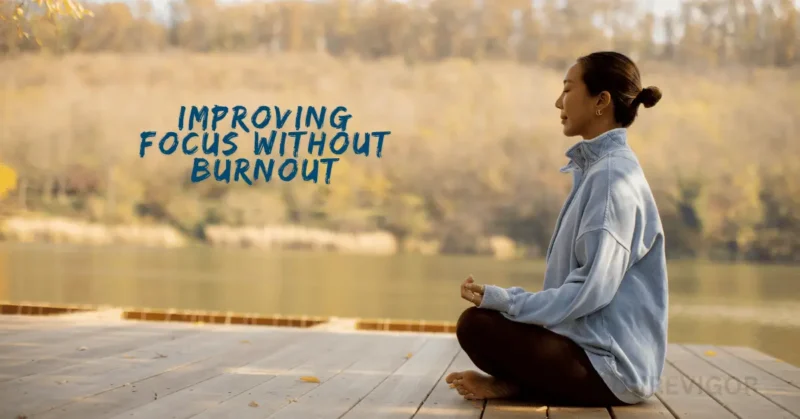
Deep focus is rare in a distracted world. Yet it is essential for meaningful progress. Mindfulness strengthens sustained attention.
When you practice noticing distractions without judgment, you return to your task more quickly.
Instead of blaming yourself for drifting, you gently guide attention back. This reduces mental friction. Over weeks, this builds concentration stamina. You can work longer without feeling as fatigued.
Balanced living does not mean working less. It means working with intention. Focused effort followed by real rest creates a healthier rhythm than constant partial attention.
Emotional Regulation in Real Situations
Emotional balance is central to life balance. Mindfulness increases emotional awareness. You detect irritation before it becomes anger. You sense anxiety before it becomes panic.
Research in clinical psychology shows that labeling emotions reduces their intensity.
When you silently name what you feel, you engage the rational part of the brain. This calms the emotional center.
In my experience, simply saying, “I feel overwhelmed,” shifts the tone inside the mind. The feeling loses some power. This small act supports steady behavior during pressure.
Starting Your Journey with Simple Awareness
You do not need special tools. Begin with your breath. Sit comfortably. Notice air entering and leaving your nose.
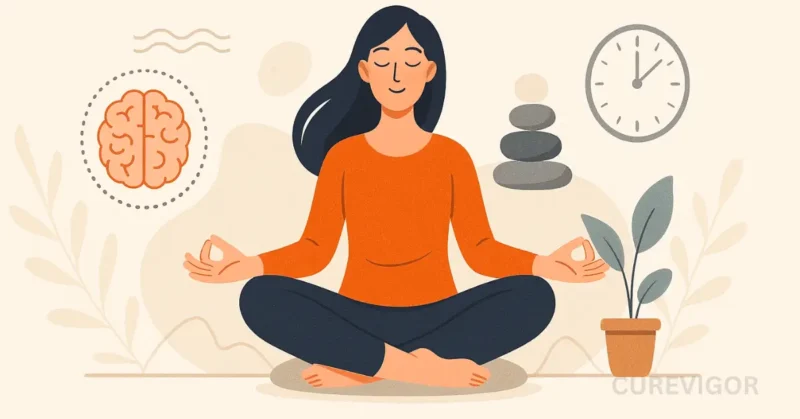
When thoughts appear, acknowledge them and return to breathing. Practice for five minutes daily.
Consistency matters more than duration. Short daily sessions build neural pathways related to attention control. Over time, this spills into daily activities.
You can also practice mindfulness during routine tasks. While washing dishes, notice the water temperature and the movement of your hands.
While walking, observe sounds and sensations. These moments train presence in everyday life.
Creating Anchors in Your Day
Anchors are small habits that remind you to reset. Morning awareness sets the tone for the day. Midday check-ins prevent stress buildup. Evening reflection supports learning.
During a morning anchor, notice how your body feels before checking your phone. This protects your focus from early distraction.
A midday anchor might include three slow breaths before lunch. Evening reflection helps you review reactions and adjust tomorrow’s approach.
These anchors strengthen life balance. They distribute awareness throughout the day rather than limiting it to a single session.
Overcoming Common Obstacles

Many beginners expect instant calm. When the mind stays busy, they quit. This expectation blocks progress. Mindfulness is not about stopping thoughts. It is about observing them.
Another obstacle is treating mindfulness as another task to complete. When it becomes performance-driven, stress increases. Approach it as practice, not competition.
Discomfort may arise as you notice difficult emotions. This is normal. If strong distress appears, consulting a licensed psychologist or psychiatrist is wise.
Professional guidance ensures safe practice. Seeking help demonstrates responsibility, not weakness.
Long-Term Growth and Stability
The power of mindfulness strengthens over months and years. It reshapes how you relate to stress, productivity, and relationships.
Long-term studies suggest that consistent practice improves overall well-being and reduces the risk of burnout.
For lasting results, integrate mindfulness into real decisions. Before committing, pause. Notice your energy level. Ask if the task aligns with your values. This prevents overcommitment.
Balanced living grows from aligned choices. Awareness guides alignment. Alignment reduces internal conflict. This chain reaction builds stability.
A Personal Insight: Closing the Tab in Your Mind
For the longest time, my “work-life balance” was a lie. I’d be physically sitting at the dinner table with my family, but my brain was still back in the office, replaying an awkward meeting or drafting a “perfect” response to an email I hadn’t even received yet. I was there, but I wasn’t there.
The turning point for me wasn’t a tropical vacation or a lighter workload—it was a simple, 30-second mindfulness habit I started in my driveway before walking into the house.
I’d turn off the car engine and just sit. I’d take three deep breaths and consciously “close the tabs” of the workday in my head. I’d tell myself: “The work is still there, but right now, my job is to be a partner and a parent.”
The reality? It was clunky at first. My brain would still scream about deadlines, and I’d feel that familiar itch to check my phone.
But mindfulness taught me that I don’t have to follow every thought down the rabbit hole. By acknowledging the stress without letting it drive me, I started reclaiming my evenings.
Balance didn’t come from a perfect schedule; it came from the focus to leave the ghost of my “work self” at the door.
That tiny gap in awareness was what finally allowed me to enjoy the life I was working so hard to build.
Personal Insight on Sustainable Balance
After years of practice, I realized balance is dynamic. Some weeks require intense work. Others allow more rest.
Mindfulness does not freeze life into perfect symmetry. It helps you adapt without losing yourself.
The most powerful lesson I learned is that attention shapes experience. When attention is scattered, life feels chaotic.
When attention is steady, even on busy days, they feel manageable. This insight came not from theory, but from repeated practice during stressful periods.
Balance is not a final destination. It is a daily adjustment guided by awareness. The power of mindfulness supports that adjustment with clarity and control.
Conclusion: Steady Growth Through the Power of Mindfulness
The power of mindfulness is not mystical. It is practical. It strengthens attention, regulates emotion, and supports wise decisions. These skills build a balanced life step by step.
You do not need to change everything at once. Start small. Practice daily. Notice shifts in focus and reaction. Over time, these small changes create lasting stability.
User-first growth requires patience and honesty. With steady effort, mindfulness becomes part of your system, not just a habit. When awareness guides your actions, balance follows naturally.
Start your journey today and unlock the power of mindfulness to create a more focused, balanced, and intentional life.
How do you start your journey in mindfulness?
Start with a small, daily awareness practice.
Focus on your breathing for five minutes without distractions.
Notice your thoughts without judging them.
Bring attention back gently when your mind wanders.
Stay consistent, because steady practice builds real balance over time.
What are the 7 principles of mindfulness?
The seven principles are non-judging, patience, beginner’s mind, trust, non-striving, acceptance, and letting go.
Non-judging means observing thoughts without labeling them good or bad.
Patience allows growth at a natural pace.
Beginner’s mind helps you stay open to new perspectives.
Together, these principles strengthen emotional awareness and self-control.
What is the 3-3-3 rule in mindfulness?
The 3-3-3 rule helps ground you during stress.
First, name three things you can see around you.
Then, notice three sounds you can hear.
Finally, move three parts of your body.
This simple method reduces anxiety and brings your attention back to the present moment.
What are the 5 basics of mindfulness?
The five basics include awareness, presence, acceptance, observation, and intentional response.
Awareness means clearly noticing thoughts and feelings.
Presence keeps your focus on what is happening now.
Acceptance reduces resistance to difficult emotions.
An intentional response helps you choose a calm action rather than an automatic reaction.
What are the 5 C’s of mindfulness?
The five C’s often refer to curiosity, compassion, calmness, clarity, and confidence.
Curiosity encourages open and non-judgmental awareness.
Compassion supports kindness toward yourself and others.
Calmness grows through steady breathing and focus.
Clarity and confidence develop as your attention becomes stronger and more stable.
What is the 5-4-3-2-1 rule?
The 5-4-3-2-1 rule is a grounding technique for anxiety.
Identify five things you see around you.
Notice four things you can touch.
Listen for three sounds, smell two scents, and focus on one taste.
This sensory exercise reconnects you with the present moment and reduces mental overwhelm.
Read more work-life balance articles.
You might like: