
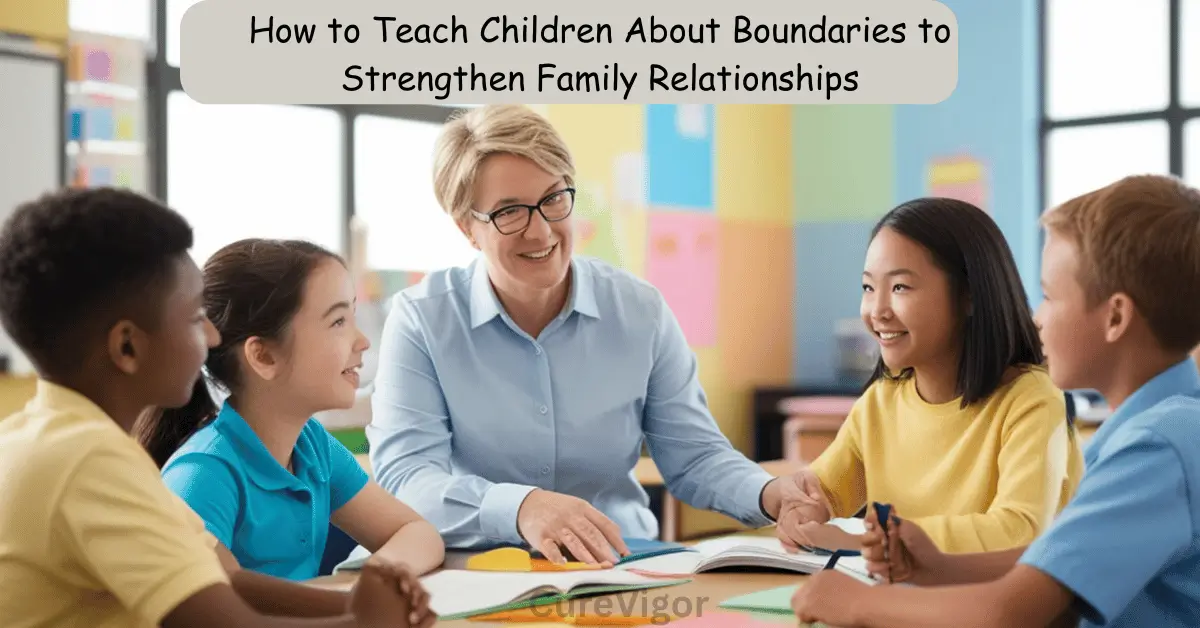
Set strong boundaries with your children for better family relationships. Our 11-step guide shows you how to communicate, model, and enforce boundaries with confidence.
Thank you for reading this post, don't forget to subscribe!Children learn boundaries by watching, not just listening.
As a busy parent, a wellness guide, and a listening coach, one of the most powerful truths I discovered is this:
Children absorb your behavior long before they understand your words.
How to Teach Children About Boundaries to Strengthen Family Relationships
For most parents, teaching boundaries starts early: no hitting, no interrupting, no grabbing toys. These basic rules help young children understand acceptable behavior.
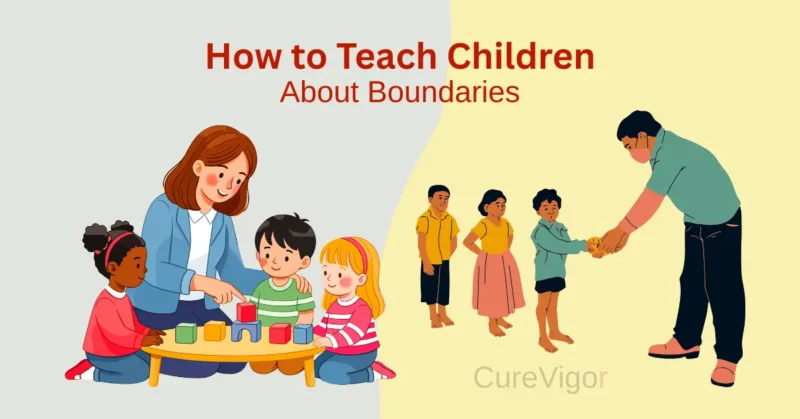
As kids grow and social situations become more complex, rules alone aren’t enough. Children need to learn how to recognize their own needs, respect others’ limits, and communicate clearly.
This requires developing empathy, self-awareness, and the ability to set personal barriers.
According to clinical psychologist Stephanie Dowd, PsyD, boundaries work best when children understand both their own feelings and the feelings of others. Empathy and self-awareness make respectful interactions possible.
Why is empathy important?
Teaching empathy to young children may sound unrealistic, but it starts with small steps. Kids don’t need to fully understand the concept—they just need to notice how others feel.
Rachel Busman, PsyD, explains that the goal isn’t to define empathy for kids, but to help them become aware of emotions and use that awareness to guide their behavior.
At the same time, children should learn to express their own feelings and set limits respectfully. Like any skill, this takes practice.
How to help kids develop empathy
Empathy begins earlier than many parents realize. By age three, many children naturally show concern when someone is hurt or upset.
Kids learn best through real-life moments. Addressing behavior as it happens helps children remember and apply what they learn later. For example, if a child takes a toy, ask them how the other child might feel.
Parents can also help children think before touching others by explaining that people may not always feel like playing.
Comparing situations to the child’s own experiences—such as how it feels when someone won’t share—can help them understand others’ emotions more clearly.
Rules that work in both ways
Rules are easier for kids to understand when they apply to everyone.
- Everyone controls their own body, and permission matters.
- What feels fun to one person may not feel fun to another.
- Listening helps keep everyone safe and ensures needs are understood.
Seeing rules as shared responsibilities helps children understand fairness and respect.
Practice setting boundaries
Empathy alone isn’t enough. Children also need to learn how to stand up for themselves when others ignore their limits.
Parents can help by practicing simple phrases like:
- “Please stop.”
- “I don’t like that.”
- “It’s my turn.”
It’s also important to teach children when to involve an adult, such as during rough play, repeated boundary-crossing, or unsafe situations.
Helping kids practice self-advocacy early builds confidence and prepares them to protect their boundaries as they grow older.
In this guide, we’ll explore why setting boundaries is crucial, the challenges parents face, and provide a step-by-step approach to teaching boundaries that fosters healthier family dynamics.
Importance of Setting Boundaries with Children
Setting boundaries with children is crucial for their development and family dynamics. Children thrive when they know what is expected of them and have a clear sense of what is acceptable and what is not.
Boundaries help children understand how to behave in different environments, teaching them self-control and respect for others.
When children learn to respect boundaries, they also learn the importance of empathy, kindness, and responsibility.
Healthy boundaries are not about restricting freedom or controlling behavior. They aim to establish a secure, orderly setting where kids can develop, express themselves, and learn to get around.
When boundaries are set consistently and respectfully, children develop a stronger sense of self, become more emotionally resilient, and build healthier relationships with others.
Challenges of Setting Boundaries with Kids
Setting boundaries with children isn’t always easy, and many parents face common hurdles. Understanding these challenges can help parents prepare for the difficulties they might encounter and make the process more manageable.
Common Hurdles in Setting Boundaries
- Resistance from Children: Children, especially toddlers and teenagers, often resist boundaries. They may throw tantrums, argue, or act out when told no.
This resistance can be frustrating, but it’s important to remember that it’s a normal part of the development process. Children are testing their limits and learning about authority. - Inconsistent Enforcement: One of the biggest challenges in setting boundaries is consistency. Parents may struggle to enforce rules consistently, especially when they are tired, stressed, or distracted. This inconsistency can confuse children and undermine the effectiveness of the boundaries being set.
- Lack of Clear Communication: Sometimes, parents fail to clearly communicate boundaries. If children don’t fully understand the rules or why they exist, they are less likely to respect them. Clear, age-appropriate communication is essential for effectively teaching boundaries.
Impact of No Boundaries on Kids
When boundaries are not set, children may struggle with behavior problems, anxiety, and difficulties in relationships. Without clear boundaries, children may feel insecure or overwhelmed because they don’t know what is expected of them.
They might also struggle with emotional regulation, as they haven’t learned how to manage their impulses and understand the impact of their actions on others.
In the long run, children raised without boundaries may have difficulty forming healthy relationships, both with their peers and with authority figures. They may lack the skills to navigate social situations, which can lead to increased stress and frustration.
The 11-Step Approach to Teach Children Boundaries
Teaching children boundaries requires patience, consistency, and empathy. These seven guidelines can help parents establish a disciplined and encouraging environment that teaches kids to respect and understand boundaries.

1. Model Healthy Boundaries
Youngsters learn knowledge by seeing their parents. You must set an example of appropriate boundaries if you want your child to respect them. Show them how to set limits with others and to respect others’ boundaries.
For example, if you need personal space, calmly explain that you need time to yourself and that it’s important for everyone to have boundaries.
Modelling healthy boundaries also means respecting your child’s boundaries. If your child says they don’t want to share a toy or need a break, respect that request.
This mutual respect will teach them the importance of setting their own boundaries,
Children learn boundaries when they see you respect your own limits. They watch everything. When you overwork, never rest, say yes to everyone, or hide your needs… they learn that sacrificing yourself is normal.
But when they see you say,
- “I need a break.”
- “I can’t do that right now.”
- “I’m resting because my body needs it.”
- “I need quiet time.”
They learn:
- Self-care is normal
- Rest is important
- Needs matter
- Limits are healthy
Example Scenario
You’re tired, and your child wants to play immediately.
Instead of pushing through exhaustion:
You say, “I want to enjoy playing with you, but I’m tired right now. I’ll rest for 20 minutes, and then we’ll play together.”
This teaches your child that:
- Waiting is okay
- Your needs matter
- Love doesn’t disappear when a boundary is set.
2. Communicate Boundaries Clearly
Setting limits with kids requires clear communication. Make sure your youngster understands the boundaries you are establishing and their significance. Make sure your explanations are age-appropriate and use straightforward language.
When establishing a nighttime routine, for instance, emphasize the need for sleep for overall health and well-being.
It’s also important to be firm but kind in your communication. Avoid using vague or contradictory language, as this can confuse children.
For example, instead of saying, “You need to go to bed early,” say, “It’s bedtime now because you need to get enough rest to feel good tomorrow.”
Children learn to say no when they see you say no calmly and confidently. Parents often avoid saying “no” to keep the peace, but kids need to see that a boundary can be loving and firm.
You Model
“No, I’m not buying more toys today.”
“No, I can’t help right now. Finish trying first.”
“No, this behavior isn’t okay.”
What Kids Learn
- What respect looks like
- How to protect their energy
- How to stay firm without being mean
- How to make decisions instead of following others
A child who watches healthy “no” grows into an adult who avoids peer pressure, toxic friendships, and emotional manipulation.

3. Set Consistent Boundaries
Consistency is one of the most important elements in teaching children boundaries. When parents set boundaries, they must follow through every time.
If a boundary is set but not consistently enforced, children may not take it seriously. It can lead to confusion and misbehavior.
If you’re setting a rule, be consistent about when and how it’s applied. For example, if you set a rule about screen time, enforce it every day at the same time.
Inconsistent enforcement can lead children to believe that boundaries are negotiable, resulting in frustration for both the child and the parent. So, teach children “Body Boundaries” early.
Children must understand physical and emotional boundaries from a young age.
Simple Ways to Teach This
- Knock before entering their room.
- Ask permission before hugging.
- Let them say, “I don’t want to be tickled.”
- Teach them to say, “Stop, I don’t like that.”
When kids see their own boundaries respected at home, they develop:
- Confidence
- Stronger self-worth
- Safety instincts
- Personal empowerment
This protects them later in friendships, school interactions, and adulthood.
4. Teach Respect for Boundaries
Respecting boundaries isn’t just about following rules—it’s about learning empathy and understanding how one’s actions affect others.
Teach children the importance of respecting not only their own boundaries but also others’ boundaries. This can be done through role-playing, discussions, and real-life examples.
For example, if your child refuses to share a toy, take the opportunity to explain that sharing is a way to respect others’ space and feelings. Use phrases like, “When we share, we show kindness and respect to others, and we make our friends happy.”

5. Encourage Emotional Regulation with Boundaries
Boundaries are closely linked to emotional regulation. By teaching children to respect boundaries, parents also help them develop emotional skills. Setting boundaries teaches children self-control, a crucial skill for managing emotions and behavior.
For instance, teaching a child to respect their own space when they feel upset helps them learn how to cope with anger or frustration.
Encourage emotional regulation by modeling calmness in difficult situations. If your child is upset or angry, guide them in managing their emotions by respecting their feelings and offering solutions.
This teaches children that boundaries aren’t just about rules—they’re about caring for emotional well-being. However, teach emotional boundaries by naming feelings
Children mimic how you express emotions.
You Model
“I feel overwhelmed. I need some space.”
“I’m upset, but I will calm down before talking.”
Kids Learn
- Emotional awareness
- How to pause
- How to regulate
- How to express needs without yelling
Firm emotional boundaries help them manage anger, disappointment, frustration, and conflict.
6. Use Positive Reinforcement for Boundaries
One effective strategy for teaching kids to respect limits is positive reinforcement. When children follow boundaries, praise them for their efforts.
This reinforces positive behavior and helps children understand the value of respecting limits.
For example, if your child consistently follows the screen time rule, praise them with words like, “I’m so proud of you for following the rule today!” Reinforcing positive behavior helps build self-esteem and encourages children to continue respecting boundaries.
7. Use “Boundary Language” Daily
The more your child hears boundary-friendly language, the easier it becomes for them to use it.
Helpful Phrases to Teach Kids
- “I don’t like that.”
- “Please stop.”
- “I need a break.”
- “That’s my space.”
- “I’m not comfortable.”
- “I want to do it myself.”
Children who can communicate their needs become more confident and secure. You should teach kids that others’ feelings are not their responsibility.
Many children feel pressured to make adults happy or keep everyone calm.
You can break this pattern.
You Model
“It’s not your job to fix my mood. I’m responsible for my feelings.”
Kids Learn
- They’re not responsible for adult emotions.
- They can set emotional limits.
- They don’t have to be people-pleasers
This gives them emotional freedom.
8. Practice Boundary-Setting Through Play
Children learn best when they are unaware that they are learning.
Use Role-Play
- Pretend someone keeps taking toys.
- Pretend a friend doesn’t listen.
- Pretend someone won’t share
- Pretend someone wants a hug they don’t want
Then teach them how to respond with kindness and firmness.
9. Allow Natural Consequences (Without Over-Rescuing)
Rescuing children every time a problem arises blocks their boundary development.
Instead of:
Packing their forgotten lunch
Finishing their homework
Cleaning their mess
Try:
“I know you forgot. Let’s plan better next time.”
“You’re capable of solving this. I’m here if you need help.”
Children learn:
- Responsibility
- Time awareness
- Personal accountability
- Natural boundaries
10. Celebrate When They Use Boundaries
Positive reinforcement is powerful.
Say things like
“I’m proud of how you spoke up.”
“You respected your space today.”
“You used your words so clearly.”
“You said no politely. That’s wonderful.”
Celebration builds confidence.
Remember, your home is the first school of boundaries. Children who grow up with healthy boundaries:
- Communicate better
- Form respectful friendships
- Handle conflict peacefully
- Feel confident saying no.
- Respect others
- Understand themselves deeply
This is not just a parenting skill—it is a lifelong gift you give them.
11. Review and Adjust Boundaries
As children grow, their needs and abilities change. Boundaries that were effective at one stage of development may need to be adjusted as children mature.
It’s important for parents to periodically review and adjust boundaries to ensure they continue to meet the child’s developmental needs.
For example, as children grow older, they may need more independence or autonomy in certain areas. Adjusting boundaries to reflect these changes empowers children and respects them while maintaining a healthy structure.
Benefits of Teaching Boundaries to Kids
Teaching children boundaries not only improves their behavior but also strengthens family dynamics and promotes emotional well-being.
Healthier Relationships with Boundaries
Children can flourish in a respectful, safe atmosphere created by boundaries. When children learn to respect boundaries, they build stronger relationships with family members and peers.
Healthy boundaries prevent conflicts and misunderstandings, as everyone in the family knows what is expected of them and what is not acceptable.
For example, when a child learns to respect their parent’s personal space, they foster mutual respect. This leads to a healthier and more harmonious family environment.
Empowered Kids with Boundaries
Teaching boundaries helps children feel empowered. When children understand their own limits and the importance of respecting others’ boundaries, they develop confidence and a sense of security.
Boundaries provide children with a framework for understanding their rights and responsibilities, helping them make better decisions and navigate the world with confidence.
FAQs
Q. How do you teach children about healthy boundaries?
Teaching children about healthy boundaries involves setting clear and consistent limits, modeling respectful behavior, and providing explanations they can understand.
Start by communicating boundaries in simple terms, explaining why they are important for their safety, well-being, and relationships.
Use positive reinforcement to encourage respect for these boundaries and address any violations calmly, reinforcing the rules with empathy and patience.
Over time, children will internalize these concepts, learning to establish their own boundaries and respect others’.
Q. What is the 7-7-7 rule for parenting?
The 7 7 7 rule for parenting is a simple strategy to help parents stay engaged with their children’s emotional and social needs.
It suggests spending 7 minutes each day listening to your child without distractions, engaging in 7 activities a week that build a positive connection (like reading or playing), and setting 7 clear, consistent rules that help children understand boundaries.
This rule aims to ensure a balance between emotional connection and structure, fostering trust, respect, and healthy communication in the parent-child relationship.
Q. What are the 4 C’s of boundaries?
The 4 C’s of boundaries stand for Clear, Consistent, Calm, and Compassionate. Clear boundaries involve making rules and expectations understandable to the child.
Consistency ensures that boundaries are enforced regularly, without exception, so children know what to expect.
Calm means maintaining emotional control when enforcing boundaries, offering a stable and predictable environment.
Compassion involves approaching situations with understanding and empathy, recognizing that boundaries are meant to protect, not punish, children.
Q. What are the 3 C’s of boundaries?
The 3 C’s of boundaries are Communication, Consistency, and Consequences. Communication is essential for clearly expressing the rules and expectations to children.
Consistency means consistently enforcing boundaries, ensuring the rules are applied every time.
Consequences are the outcomes or responses when a boundary is crossed, and they should be fair and proportionate to the behavior. Together, these elements help children understand and respect boundaries, fostering a sense of security.
Q. What is the golden rule of boundaries?
The golden rule of boundaries is: “Treat others as you want to be treated.” This principle teaches children the importance of mutual respect and empathy in relationships.
By understanding that their actions affect others, children learn to respect others’ boundaries while also asserting their own.
The golden rule emphasizes kindness, fairness, and respect, promoting healthy interactions where everyone’s limits are honored.
Q. What are 5 healthy boundaries?
Five healthy boundaries include:
- Emotional boundaries: Allowing yourself and others the space to feel and express emotions without judgment.
- Physical boundaries: Respecting personal space and physical touch preferences, ensuring comfort for all involved.
- Time boundaries: Setting limits on time spent on certain activities, including work, family time, and self-care.
- Mental boundaries: Maintaining the right to your thoughts, beliefs, and opinions, free from outside manipulation.
- Material boundaries: Respecting possessions, ensuring that others ask for permission before borrowing or using personal items.
Conclusion
Setting boundaries with children is essential for their development and for creating a positive family dynamic.
By following the 11-step approach outlined in this post, parents can teach their children the value of healthy boundaries, leading to stronger emotional regulation, better relationships, and a more peaceful home environment.
Recall that respect, consistency, and clear communication are essential for effective boundary-setting.
By following these guidelines, you’ll establish a foundation that supports your child’s development into a self-assured, courteous, and emotionally stable person.
Start teaching your children the power of healthy boundaries today! Read our step-by-step guide and create stronger, more respectful family connections.
Read more Life-Balance articles.
You might like: