
Do you know how to guard the mind vs the heart and what it means to guard your mind and heart?
Have you ever known what you should do, yet your heart wanted something completely different?
Your mind may tell you to choose the safe path. Your heart may pull you toward something uncertain but meaningful. This inner conflict is part of being human, and learning to understand it can help you make choices with greater clarity.
How to Guard Your Mind and Heart
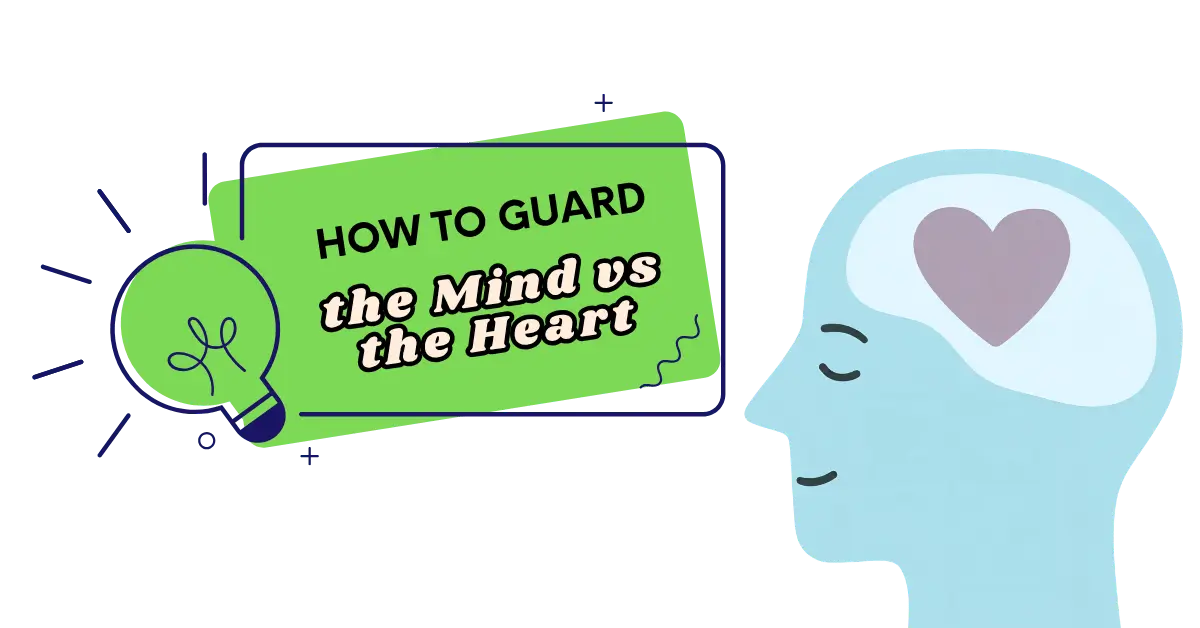
The mind and heart are often described as opposites. One is seen as logical, while the other is emotional. But life is rarely that simple. Your thoughts, feelings, values, experiences, and intuition can all influence the way you see the world.
Exploring the relationship between your mind and heart can help you understand yourself better and approach life’s decisions with more balance.
Quick Summary
- The mind helps you analyze information and consider consequences.
- The heart represents emotions, values, desires, and personal meaning.
- Neither should automatically control every decision.
- Self-awareness can help you understand conflicting thoughts and feelings.
- The best choices often consider both reason and emotion.
- Reflection can help you recognize what truly matters to you.
What Does “Mind vs. Heart” Really Mean?
The phrase mind vs. heart is not about two separate forces literally fighting inside you.
It is a simple way of describing an inner conflict between what you think and what you feel.
Your mind may examine facts, risks, responsibilities, and possible outcomes. Your emotions may draw your attention toward love, excitement, fear, compassion, or personal values.
For example, you might receive a job offer with better pay but feel unhappy about leaving work you genuinely enjoy. Your mind may focus on financial security, while your emotions focus on satisfaction and purpose.
Neither response is automatically right or wrong.
The challenge is learning how to listen to both.
The Role of the Mind in Your Decisions
Your mind helps you process information and think through possibilities.
It can ask useful questions:
- What could happen if I choose this?
- What are the risks?
- What information am I missing?
- Does this decision fit my responsibilities?
- What might I regret later?
This kind of reasoning can protect you from impulsive choices.
However, thinking too much can also create problems. You may analyze every possibility until you become overwhelmed and unable to act.
Sometimes you do not need another hundred calculations.
You need enough information to make a thoughtful choice and the confidence to move forward.
The Role of the Heart
When people talk about following their heart, they often mean listening to emotions, personal values, desires, and what feels meaningful.
Your emotional response can provide information that pure logic may overlook.
You might feel deeply connected to a person, inspired by an opportunity, or uncomfortable in a situation even when everything appears fine on paper.
That feeling does not automatically mean you should act on it.
But it may be worth asking why you feel that way.
Your emotions can sometimes point toward needs, values, fears, or experiences that deserve your attention.

7 Ways to Balance Your Mind and Heart
1. Pause Before Making Important Decisions
You do not always have to decide immediately.
When emotions are intense, give yourself some space before taking action.
Take a walk, sleep on the decision, or write down your thoughts.
A short pause can help separate a temporary emotional reaction from what you genuinely want.
2. Listen to Your Feelings Without Automatically Following Them
Your feelings deserve attention.
They do not always need to become instructions.
If you feel angry, ask what caused the anger. If you feel afraid, ask what you are afraid of losing.
Understanding an emotion is different from allowing it to control your behavior.
3. Look at the Facts
After acknowledging your feelings, examine the practical side.
What do you actually know about the situation?
Separate facts from assumptions and fears.
This can help you avoid making a major decision based entirely on a moment of excitement, anxiety, or disappointment.
4. Ask What Matters Most to You
A good decision should not only make sense today.
Consider your deeper values.
Ask yourself whether the choice supports the kind of person and life you want to build.
Money, convenience, approval, comfort, relationships, freedom, growth, and purpose may all matter—but not always equally.
5. Imagine Both Outcomes
Picture yourself choosing each option.
How might your daily life look six months from now?
What opportunities could each choice create? What could each choice cost you?
This exercise allows your reasoning and emotions to work together rather than compete.
6. Notice When Fear Is Making the Decision
Sometimes what feels like intuition is actually fear.
You may avoid something because it is unfamiliar rather than because it is wrong.
Ask yourself:
“Am I saying no because this choice is genuinely unsuitable, or because I am afraid of what might happen?”
The answer can reveal an important difference.
7. Give Yourself Permission to Reconsider
Not every decision is permanent.
As you gain information or your circumstances change, you may realize that another path makes more sense.
Changing your mind does not necessarily mean you failed.
It can mean that you learned something new.
When Should You Follow Your Heart?
Following your heart can be valuable when a decision involves your personal values, relationships, creativity, purpose, or happiness.
For example, you may know that a particular career path is financially safer, yet another direction feels much more aligned with the life you want.
That emotional pull deserves consideration.
But following your heart does not mean ignoring reality.
You still need to consider finances, responsibilities, safety, and possible consequences.
Let your heart tell you what matters. Let your mind help you decide how to pursue it wisely.
When Should You Listen to Your Mind?
Logic becomes especially important when a decision involves significant risk or long-term consequences.
Financial commitments, major career decisions, health choices, legal matters, and safety concerns require careful consideration.
Your feelings may tell you what you want.
Your reasoning can help you determine whether that desire is realistic and safe.
A thoughtful decision does not have to be cold or emotionless.
It can be both practical and deeply personal.
What Happens When You Ignore Your Heart?
Ignoring your emotions for too long can leave you feeling disconnected from your own life.
You might keep choosing what looks sensible while quietly feeling unhappy.
Over time, that conflict can create frustration and resentment.
This does not mean every uncomfortable feeling signals a wrong decision. Sometimes responsibilities require temporary sacrifices.
The important thing is to understand what your emotions are trying to communicate rather than dismissing them completely.
What Happens When You Ignore Your Mind?
The opposite can also create difficulties.
A strong emotional reaction can make an opportunity look better than it really is.
You might overlook warning signs because you are excited. You might make a major purchase because you feel you deserve it. You might return to an unhealthy situation because you miss someone.
Emotions can be powerful.
That is why giving your mind a seat at the table matters.
Mind and Heart in Relationships
Relationships are one of the clearest places where this conflict appears.
Your heart may want to stay because you love someone. Your mind may notice patterns that concern you.
Or your mind may say that someone looks perfect on paper while your emotional connection feels absent.
Healthy relationships require more than emotion alone.
Consider how you feel around the person, but also look at trust, respect, communication, boundaries, compatibility, and behavior.
Love can be important without being the only factor.
Mind and Heart at Work
Career decisions can also create an inner struggle.
Your mind may prioritize salary, stability, benefits, or career growth.
Your heart may care more about meaningful work, creativity, flexibility, or personal satisfaction.
Instead of asking, “Should I choose my mind or my heart?” ask a better question:
“How can I build a decision that respects both?”
Perhaps you can negotiate better conditions. Maybe you can test a new career through part-time work. Or perhaps you can make a gradual transition instead of leaving everything behind at once.
Sometimes the solution is not choosing one side.
It is finding a third option.
How to Know If It Is Intuition or Emotion
People often use the word “intuition” to describe a strong inner feeling.
But not every strong feeling is intuition.
Fear can feel like intuition. Anxiety can feel like a warning. Excitement can make risky choices seem obviously correct.
Before trusting an inner feeling, slow down.
Ask yourself whether you have noticed actual evidence supporting it.
Also consider your past experiences. Are you responding to something happening now, or is an old experience influencing how you see the situation?
Reflection can make your inner signals easier to understand.
A Simple The Mind vs the Heart Decision Exercise
When you are facing an important choice, take a sheet of paper and create three sections.
What Does My Mind Say?
Write down the facts, risks, responsibilities, costs, and possible outcomes.
What Does My Heart Say?
Write down your feelings, desires, fears, values, and hopes.
What Do I Need?
Now look for the connection between the two.
Perhaps your heart wants freedom while your mind wants financial stability.
Instead of choosing one immediately, ask how you might create more freedom without putting your financial security at unnecessary risk.
This simple exercise can turn an emotional argument into a thoughtful conversation with yourself.
Can the Mind and Heart Work Together?
Absolutely.
In fact, many important life decisions are better when you consider both.
Your mind can help you understand reality.
Your emotions can help you understand what that reality means to you.
Your values can provide direction.
Your experiences can provide context.
Together, these parts of your inner life can help you make choices that are both thoughtful and meaningful.
Give Yourself Time to Understand Your Own Voice
You may not always know what you want immediately.
That is normal.
Sometimes clarity appears after a good night’s sleep. Sometimes it comes through writing, talking with someone you trust, spending time alone, or simply allowing yourself to stop rushing.
You do not need to force an answer because everyone else seems to have one.
Give yourself permission to think.
Give yourself permission to feel.
Then decide when you are ready.
FAQs About Mind vs. Heart
Q. Should I follow my heart or my mind?
Neither should automatically control every decision. Consider your feelings and values alongside facts, risks, responsibilities, and likely consequences. The best approach often involves giving both perspectives a place in the decision.
Q. Is following your heart always a good idea?
No. Strong emotions can sometimes lead to impulsive decisions. Your feelings are valuable information, but important choices also deserve careful thought and consideration of real-world consequences.
Q. Can your heart and mind want different things?
Yes. It is common to feel emotionally drawn toward one choice while logically preferring another. This conflict can be useful because it encourages you to examine what you truly value and what you realistically need.
Q. How can I make a decision when I feel confused?
Slow down rather than forcing an immediate answer. Write down the facts, your feelings, possible outcomes, and personal priorities. Talking with someone you trust can also help you see the situation from another perspective.
Q. How do I know if a feeling is intuition or fear?
Look for evidence and patterns. Fear often focuses on possible danger or loss, while what people call intuition may arise from recognizing subtle information or patterns. Neither should automatically be treated as correct without reflection.
Q. Why do I overthink important decisions?
Overthinking can happen when you are afraid of making the wrong choice or want complete certainty before acting. Unfortunately, complete certainty is rarely possible. Set a reasonable point for gathering information, then make the best decision you can with what you know.
Final Thoughts on the Mind vs the Heart
Life does not always give you choices that are clearly right or wrong.
Sometimes your mind says one thing while your heart says another. That does not mean something is wrong with you.
It may simply mean the decision matters.
Instead of asking whether you should always choose your mind or your heart, learn to listen to both.
Let your heart reveal what matters. Let your mind examine the path. Let your values guide the direction.
That balance can help you make decisions that are not only sensible but also meaningful to the life you want to create.
Read more articles on Mind & Soul.