
Learn the energy drink mistakes that lead to shift-work crashes and get science-backed tips to stay alert safely on night shifts.
How Energy Drink Mistakes Cause Shift-Work Crashes
If you work the night shift, you’ve likely reached for an energy drink at some point to power through fatigue. For many shift workers, these beverages feel like a lifeline when their body is fighting their natural circadian rhythm.

But relying on energy drinks can backfire in a big way. In fact, certain energy drink mistakes are a common culprit behind the sudden energy crashes that leave you struggling to stay alert, especially during critical moments like the end of your shift or your morning drive home.
The problem isn’t necessarily caffeine itself, but how and when you use energy drinks.
Missteps in timing, dosage, and overall strategy can lead to a cycle of temporary alertness followed by a steep slump, impaired judgment, and increased risk of drowsy driving or workplace errors.
Worse, chronic misuse can compound the long-term health risks already associated with shift work.
This article will break down the most common energy drink mistakes that cause shift-work crashes, explain the science behind them, and provide practical, evidence-based alternatives to help you stay safely alert without the rollercoaster.
Whether you’re a veteran of the graveyard shift or new to overnight work, understanding these pitfalls can help you protect your performance and your health.
Why Shift Workers Turn to Energy Drinks (and the Appeal)
Before diving into mistakes, it’s important to understand the context. Night shift workers face a perfect storm of fatigue factors: circadian rhythm disruption, chronic sleep debt, and the body’s natural dip in alertness during the early morning hours.
Energy drinks promise a quick boost by combining caffeine with sugar, taurine, B vitamins, and other stimulants. For someone fighting to stay awake at 3 a.m., that promise is understandably tempting.
However, the physiological reality is more complex. Caffeine can temporarily block adenosine (a sleep-promoting neurotransmitter), but it doesn’t replace lost sleep or fully override your internal clock.
And many of the other ingredients don’t deliver the sustained alertness people expect ، or can cause negative side effects when used improperly.
The Top Energy Drink Mistakes That Cause Shift-Work Crashes
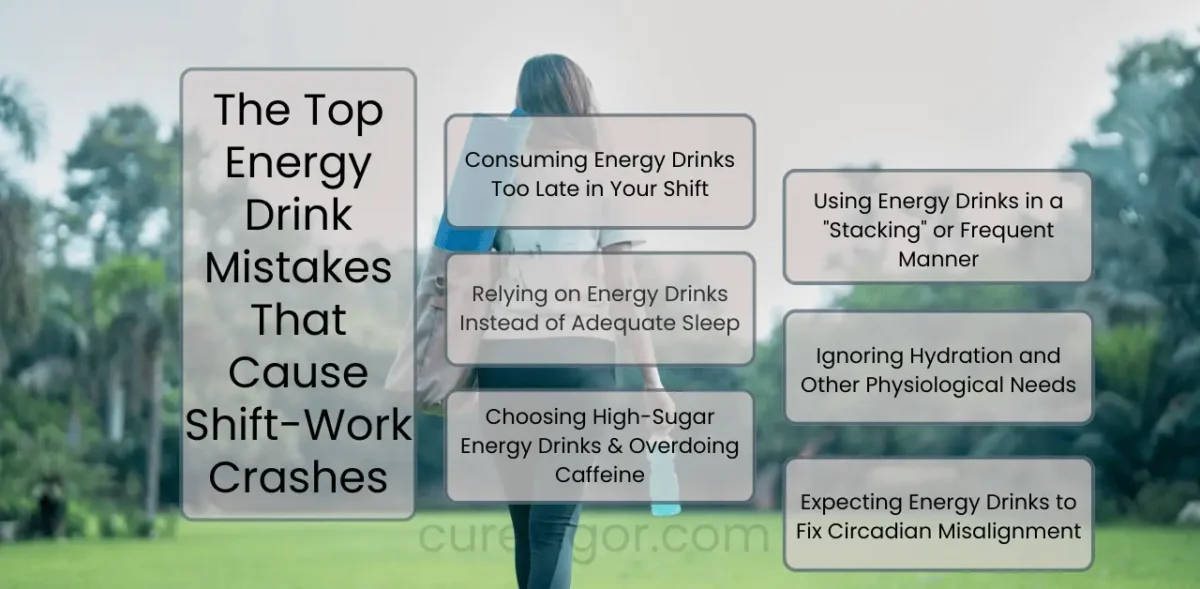
Mistake 1: Consuming Energy Drinks Too Late in Your Shift
Timing is everything when it comes to caffeine. One of the most frequent errors is drinking an energy drink in the final hours of your night shift, often in an attempt to push through to the end or to stay alert for the drive home.
The issue is that caffeine can stay in your system for a long time after consumption because most adults have a half-life of three to seven hours.
If you down an energy drink at 5 a.m. before leaving work, a significant amount of caffeine may still be active when you’re trying to fall asleep later in the morning.
It can delay sleep onset, reduce total sleep time, and worsen sleep quality—setting you up for even greater fatigue on your next shift. Paradoxically, this creates a vicious cycle where you need more caffeine the following night.
Even more immediately, the stimulant effect can wear off just as you’re getting in the car, leading to a sudden energy crash during your commute when alertness is most critical.
Mistake 2: Relying on Energy Drinks Instead of Adequate Sleep
Sleep cannot be replaced by energy drinks. Using them to compensate for chronic sleep deprivation is one of the most dangerous habits for shift workers.
While caffeine can mask some symptoms of fatigue in the short term, it does not reverse the cognitive impairments caused by sleep loss, such as slowed reaction time, poor decision-making, and microsleeps.
Studies have shown that being sleep-deprived while under the influence of caffeine can still result in performance deficits comparable to alcohol impairment in certain tasks.
Relying on energy drinks night after night to “get by” without addressing sleep debt increases your risk of workplace accidents, drowsy driving incidents, and long-term health consequences.
Mistake 3: Choosing High-Sugar Energy Drinks and Overdoing Caffeine
Many popular energy drinks are filled with sugar, often 25 to 50 grams per can, which is equivalent to several teaspoons. When a high-sugar energy drink is consumed, blood glucose levels can rise quickly.
An insulin spike that follows causes blood sugar levels to drop precipitously (reactive hypoglycemia). Fatigue, irritation, lightheadedness, and trouble focusing are all well-known symptoms of this blood sugar collapse.
Additionally, mega-doses of caffeine (some drinks contain 200–300 mg per serving, and people may consume multiple servings) can overwhelm your system.
Excessive caffeine can lead to jitteriness, anxiety, increased heart rate, and eventually a more pronounced rebound fatigue once the stimulant wears off. For shift workers with underlying cardiovascular concerns, this is particularly risky.
Mistake 4: Using Energy Drinks in a “Stacking” or Frequent Manner
Another common mistake is consuming energy drinks repeatedly throughout a long shift or combining them with other caffeine sources (like coffee, tea, soda, or pre-workout supplements).
This stacking can quickly push your total caffeine intake beyond recommended limits. Health authorities generally advise healthy adults to limit caffeine to about 400 mg per day, but individual tolerance varies, and shift work may create a false sense of need.
Frequent consumption also accelerates tolerance, meaning you need larger amounts over time to achieve the same effect.
This can spiral into dependence and more severe withdrawal symptoms—including headaches, fatigue, and difficulty concentrating—on days off or between shifts, further disrupting your recovery.
Mistake 5: Ignoring Hydration and Other Physiological Needs
Energy drinks can have a mild diuretic effect due to caffeine, and many shift workers already struggle with hydration because they may forget to drink water during busy overnight hours.
Dehydration itself is a major contributor to fatigue, headaches, and reduced cognitive performance. Relying on energy drinks while neglecting water intake can exacerbate dehydration and intensify the crash later.
Moreover, the combination of stimulants and inadequate fluid replacement can place additional strain on your cardiovascular system, especially during prolonged wakefulness.
Mistake 6: Expecting Energy Drinks to Fix Circadian Misalignment
No beverage can realign your internal clock. Circadian rhythm disruption is a core issue for night shift workers, and energy drinks do nothing to address melatonin suppression patterns or the fundamental mismatch between your body clock and your schedule.
Relying on them as your primary strategy ignores the need for comprehensive sleep hygiene and light management practices, both of which are essential for long-term health and sustainable alertness.
The Science Behind Shift-Work Crashes from Energy Drinks
To understand why these mistakes cause crashes, it helps to look at the underlying physiology:
- Adenosine rebound: Caffeine blocks adenosine receptors temporarily. As caffeine levels decline, accumulated adenosine can bind more strongly, producing a pronounced feeling of sleepiness and fatigue.
- Blood sugar fluctuations: High glycemic load from sugary energy drinks triggers insulin release, leading to hypoglycemia a few hours later, which is associated with decreased alertness and cognitive function.
- Sleep disruption: Late caffeine consumption reduces slow-wave and REM sleep, impairs restorative processes, and increases next-day sleepiness.
- Tolerance and withdrawal: Chronic use alters adenosine receptor sensitivity, diminishing caffeine’s effectiveness and creating withdrawal symptoms when intake is reduced.
These mechanisms explain why the “boost” is often short-lived and followed by a crash that can be more severe than the original fatigue.
Safer Strategies to Stay Alert on Night Shifts (Without the Crash)
Optimize Timing of Caffeine
If you choose to use caffeine, strategic timing is critical:
- Front-load wisely: Consider a moderate dose of caffeine early in your shift (e.g., within the first 1–2 hours) to help overcome the initial transition, rather than saving it for the end.
- Avoid late consumption: Try to avoid caffeine within 4–6 hours of your planned sleep time. For most night-shift workers, this means steering clear of energy drinks during the last third of your shift or before your commute home.
- Stick to consistent amounts: Use the smallest effective dose and avoid increasing it over time.
Choose Smarter Beverage Options
- Low-sugar or sugar-free alternatives: Opt for sugar-free energy drinks or plain coffee/tea to minimize blood sugar spikes and crashes.
- Moderate caffeine content: Select products with reasonable caffeine levels (ideally under 150 mg per serving) and avoid consuming multiple servings.
- Consider natural sources: Green tea can provide a gentler lift thanks to L-theanine, which may help smooth out caffeine’s stimulant effects.
Prioritize Sleep and Circadian Health
No energy drink can replace these fundamentals:
- Protect your sleep window: Use white noise, earplugs, and blackout curtains to create a cool, calm, and dark sleeping environment. When feasible, aim for 7-9 hours of sleep in a 24-hour period.
- Consistent schedule: Try to maintain a regular sleep-wake schedule on workdays and, as closely as possible, on days off to support circadian stability.
- Light management: Use bright light exposure strategically during your shift to promote alertness, and minimize bright/blue light exposure before bed.
Use Non-Caffeine Alertness Strategies

- Strategic naps: A 10–20 minute power nap before or during a break can significantly improve alertness without the side effects of caffeine.
- Physical activity: Short bursts of movement (stretching, walking) can increase circulation and mental alertness.
- Hydration: Drink water consistently throughout your shift. Keep a bottle of water close at hand and take frequent sips.
- Environmental cues: Use cooler air, natural light when available, and engaging activities to combat monotony.
Know Your Limits and Seek Support
- Monitor your intake: Track how much caffeine you’re consuming from all sources to stay within safe limits.
- Recognize warning signs: Stay alert for signs that you may need to reduce your caffeine use, such as persistent anxiety, palpitations, increased fatigue, or exhaustion.
- Consult a professional: If you suspect shift work sleep disorder or struggle with dependence, speak with a healthcare provider or sleep specialist familiar with shift work.
FAQs: Energy Drink Mistakes and Shift-Work Crashes
Q. How much caffeine is too much for a night shift worker?
Most health guidelines recommend that people in good health limit their daily caffeine intake to 400 mg. However, individual sensitivity varies, and consuming caffeine too close to sleep can be problematic even in moderate amounts.
For night-shift workers, it’s often best to limit intake to the early part of the shift and be mindful of total daily consumption from all sources (coffee, tea, soda, energy drinks, supplements).
Q. Can energy drinks actually help prevent drowsy driving after a shift?
In the very short term, a moderate dose of caffeine taken well before your commute may temporarily improve alertness. However, this is not a reliable or safe long-term strategy, especially if used improperly.
The risk of a crash when the effect wears off is high, and it doesn’t address underlying sleep debt. Safer alternatives include a power nap before driving, ride-sharing, or pulling over if drowsy.
Q. What’s the best time to consume caffeine during a night shift?
The optimal time is usually at the beginning or during the first half of your shift to help you adjust to being awake. Avoid consuming caffeine in the last 4–6 hours of your shift to minimize sleep disruption later.
For example, if your shift ends at 7 a.m., try to avoid energy drinks after roughly 1–3 a.m., depending on your sleep schedule.
Q. Are sugar-free energy drinks safer for avoiding crashes?
Sugar-free versions eliminate the blood sugar spike and crash associated with high sugar content, which is a significant advantage.
However, they still contain caffeine and other stimulants, so timing, dosage, and frequency remain important to avoid tolerance, dependence, and rebound fatigue.
Q. How can I stop using energy drinks when working nights?
Start by gradually reducing your intake while improving sleep hygiene. Replace late caffeine with non-caffeine strategies like short naps, hydration, and light movement.
Create the ideal sleeping environment and establish a regular sleep regimen. If you’re struggling with withdrawal symptoms, consider tapering slowly and consulting a healthcare provider for support.
Q. What are some healthier alternatives to energy drinks for shift workers?
Healthier alternatives include black coffee or green tea (in moderation and timed well), electrolyte-rich water, small protein-rich snacks, strategic power naps, and physical activity breaks.
Additionally, exposure to bright light during your shift and proper sleep practices offer more sustainable alertness without the crash cycle.
Conclusion: Take Control of Your Alertness Without the Rollercoaster
Energy drinks can seem like a quick fix for shift work fatigue, but common mistakes in their use often lead to the very crashes you’re trying to avoid. From poor timing and high sugar intake to over-reliance and sleep neglect, these missteps can undermine your safety and long-term health.
The good news is that you don’t have to choose between exhaustion and energy drink dependency.
By adopting smarter caffeine strategies, prioritizing restorative sleep, and incorporating non-stimulant alertness techniques, you can maintain safer, more consistent energy levels throughout your shift and during your commute home.
Start by identifying which of these mistakes you might be making and implement one or two changes this week. Small adjustments, like swapping a late-night energy drink for a short walk or a glass of water, can add up over time.
Your body and your safety will thank you for it. If you’re concerned about your caffeine use or persistent fatigue, consider speaking with a healthcare professional who understands the challenges of shift work.
Read more about night shift workers’ health.
You might like: