
For many people, shift work is a reality. Maintaining energy levels at unusual hours might be difficult.
Unconventional work patterns can conflict with the body’s natural rhythm. Fatigue and diminished alertness may result from it.
For shift workers, knowing how to control their energy is essential. It can have a big impact on wellbeing and performance.
There are effective strategies to help boost energy levels. These strategies focus on sleep, nutrition, and lifestyle adjustments.
Creating a consistent sleep schedule is vital. It helps regulate the body’s internal clock, even on days off.
Maintaining energy largely depends on nutrition. It is crucial to have a balanced diet rich in complex carbohydrates, proteins, and healthy fats.
Hydration is just as essential. Fatigue and poor performance can result from dehydration very quickly.
This guide will look at five crucial tactics for shift workers. These suggestions are meant to keep you attentive and energized.
Understanding the Challenges of Shift Work
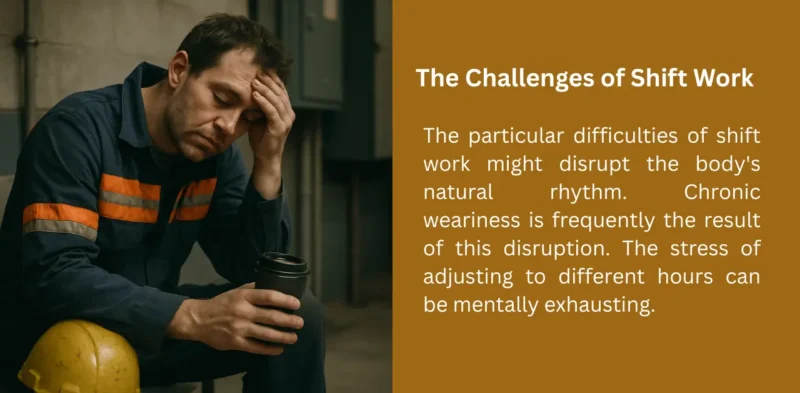
The particular difficulties of shift work might disrupt the body’s natural rhythm. Chronic weariness is frequently the result of this disruption. The stress of adjusting to different hours can be mentally exhausting.
Many shift workers experience a clash between their work hours and their social lives. This often leads to feelings of isolation or stress. Social support is important, but harder to maintain when schedules don’t align with typical ones.
The human body is programmed to be active during the day and rest at night. Shift work disrupts this natural cycle. This shift can affect sleep quality, making it difficult to get restful sleep.
Frequent schedule changes can compound these issues. For those with rotating shifts, this inconsistency makes it hard to establish a routine. The lack of a fixed schedule leads to further stress and exhaustion.
Common Challenges for Shift Workers:
- Disrupted sleep patterns
- Social isolation
- Inconsistent schedules
- Difficulty maintaining energy levels
These challenges require a proactive approach to energy management. The first step in solving problems is to comprehend them. Shift workers must equip themselves with effective strategies to enhance well-being.
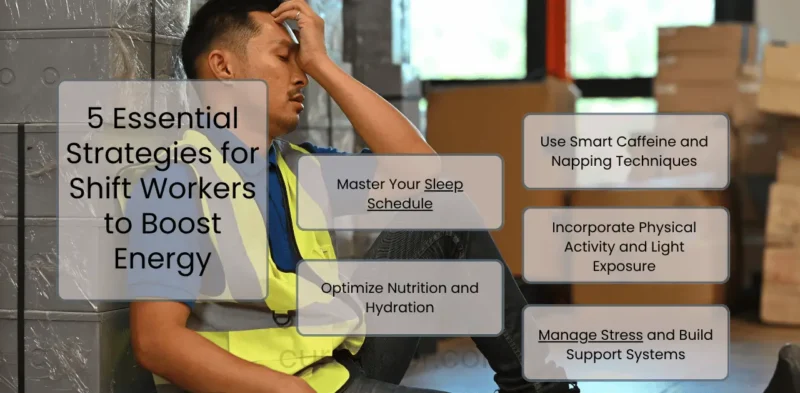
5 Essential Strategies for Shift Workers to Boost Energy
Strategy 1: Master Your Sleep Schedule
One essential strategy for shift workers to boost their energy is to master their sleep schedule. The goal is to adapt your body to a consistent routine. Consistent sleep routines help regulate your body’s internal clock.
Firstly, aim to keep a regular sleep schedule, even on days off. Consistency helps maintain your circadian rhythm. It signals your body when to feel sleepy or wakeful.
Create a sleep-conducive environment for quality rest. A dark, cool, and quiet room is crucial. Use blackout curtains, earplugs, and fans to create ideal conditions.
Strategic napping can provide an energy boost. Consider a short nap before or during your shift. To prevent grogginess, keep naps to 20-30 minutes.
Set your bedroom lighting to mimic natural light changes. Dim lights as you approach bedtime. Brighten them when you need to wake up.
Helpful Sleep Tips:
- Keep a consistent sleep schedule.
- Minimize light and noise disturbances.
- Use relaxation techniques before bed.
Use relaxation techniques to get ready for bed. Stress reduction techniques include deep breathing and meditation. This promotes relaxation in both your body and mind.
Limit the amount of time you spend on screens before bed. Blue light from electronics throws off your sleep schedule. Try to stay away from them at least an hour before going to bed.
Create a pre-bedtime routine that tells your body it’s time to unwind. Reading or listening to relaxing music is an activity that can be beneficial. Maintaining a routine helps your body and mind get ready for sleep.
Avoid coffee and large foods right before bed. Both may make it difficult for you to fall asleep. If necessary, choose lighter snacks.
Implement sleep hygiene practices over time for the best results. Your body will gradually adjust, improving your overall energy levels.
Consistent commitment to these practices can enhance alertness and focus during shifts.
Strategy 2: Optimize Nutrition and Hydration

Maintaining energy levels largely depends on nutrition. Shift workers must prioritize balanced meals to sustain their energy throughout their shifts. A well-rounded diet can significantly impact alertness and mood.
Focus on consuming complex carbohydrates, proteins, and healthy fats. These provide sustained energy instead of quick spikes. Incorporate whole grains, lean meats, and nuts into your meals.
Hydration is equally important for energy maintenance. Fatigue and difficulty concentrating might result from dehydration. Aim to drink enough water throughout your shift to stay hydrated.
Try to avoid heavy, greasy foods that can cause lethargy. These types of food take longer to digest. They may leave you feeling sluggish and less alert.
Here are some smart nutrition tips:
- Include fiber-rich fruits and vegetables.
- Pack small, healthy snacks like nuts or yogurt.
- Plan meals around your shift schedule.
Maintaining energy levels is aided by regular eating. Three large meals may not be as useful as many smaller ones. It prevents energy crashes and helps maintain normal blood sugar levels.
Limit caffeine intake, especially close to bedtime. While caffeine can boost energy, it also affects sleep quality. Choose water or herbal teas instead of caffeinated drinks later in the day.
Balanced meal ideas for shift workers include:
- Grilled chicken with quinoa and roasted vegetables
- Oatmeal with berries and nuts
- Salads with beans, seeds, and healthy dressings
To ensure you have healthy options on hand, consider preparing meals ahead of time.
You may avoid reaching for unhealthy snacks by planning your meals in advance. During hectic shifts, meal preparation saves time and lowers stress.
In conclusion, a proper balance of nutrition and hydration is a powerful strategy. It supports sustained energy and improves overall well-being.
Adopt these practices consistently for long-term benefits, enhancing both performance and mood.
Strategy 3: Use Smart Caffeine and Napping Techniques
Caffeine is a common tool for boosting alertness, especially during night shifts. However, using it strategically is crucial. Consuming caffeine at the right times can enhance its positive effects without disrupting sleep.
Drink caffeine at the start of your shift to jumpstart energy levels. Avoid caffeine in the hours leading up to your intended sleep time. This helps prevent interference with your ability to fall asleep.
Consider caffeine alternatives, such as green tea or yerba mate. These can provide a gentler energy boost without jitters. Alternating between these options may also be beneficial.
Napping, when done right, can significantly increase alertness. Short naps are effective in rejuvenating your energy levels. They can help reset the mind and improve cognitive function during demanding shifts.
Here are some caffeine and napping tips to try:
- Limit naps to 10-20 minutes to avoid grogginess.
- Take power naps during breaks to recharge.
- Avoid caffeine at least six hours before sleep.
It’s vital to create a conducive environment for napping. Find a quiet, dark space if possible. Using earplugs or an eye mask can enhance nap quality.
Caffeine and a quick nap can work wonders. Known as a “coffee nap,” consuming caffeine right before a quick nap can maximize alertness. This technique can prepare you to tackle the remainder of your shift.
In summary, both caffeine and naps can help manage energy levels effectively. Mastering these techniques requires practice and adjustment to your body’s rhythms. Implementing smart strategies ensures you’re at your best, without sacrificing rest or alertness.
Strategy 4: Incorporate Physical Activity and Light Exposure

Exercise is a natural approach to increasing vitality. Frequent exercise enhances mental and physical well-being. Energy levels can be greatly increased by even brief spurts of activity.
Incorporate exercises like stretching or walking into your routine. They don’t require much time and can be done during breaks. These movements help to invigorate and refresh your body and mind.

Exposure to light is crucial for controlling sleep-wake cycles. During daylight hours, get outside whenever possible. Natural light keeps your internal clock aligned and boosts mood and alertness.
For those working night shifts, artificial light can be beneficial. Bright light therapy boxes can mimic daylight. Using these devices before or during a night shift helps adjust your body’s rhythm.
Here are some tips to help incorporate exercise and light:
- Spend at least 30 minutes daily in bright light.
- Opt for outdoor walks during daylight shifts.
- Incorporate brief workouts before or after shifts.
Engaging in regular physical activity can ease the transition between shifts. It stimulates endorphin release, which naturally elevates energy levels and reduces stress.
Staying active benefits both your energy levels and sleep quality. When paired with adequate light exposure, you’re on your way to optimum alertness. Balancing these elements is key to sustaining energy throughout demanding shifts.
Strategy 5: Manage Stress and Build Support Systems
Managing stress is vital for sustaining energy during shifts. Stress can quickly drain energy, affecting performance and mood. Knowing how to handle stress allows you to remain focused and alert.
Stress can be significantly reduced with basic relaxation techniques. Deep breathing techniques and meditation help to reduce stress and quiet the mind. A few minutes a day can have a long-lasting effect.

Manage Stress and Build Support Systems
Managing stress is vital for sustaining energy during shifts. Stress can quickly drain energy, affecting performance and mood. Knowing how to handle stress allows you to remain focused and alert.
Social support is another crucial aspect. Having a supportive network provides emotional stability. Friends, family, or even colleagues can offer understanding and share helpful advice.
Building support systems might include:
- Joining shift worker communities
- Communicating regularly with family and friends
- Seeking help when feeling overwhelmed
Employers can also help with stress management. Scheduling flexibility and sufficient rest periods make employees feel more supported. A sense of belonging is fostered by a favorable work environment.
Understanding personal limits is essential. Knowing when to take breaks and seeking help prevents burnout. Shift workers often neglect these needs due to work pressure, but it’s crucial to prioritize well-being.
Stress management combined with robust support networks nurtures resilience. Shift work becomes less daunting as you’re better equipped to handle its challenges.
These systems not only boost energy but also improve overall job satisfaction. Building a connected environment makes shift work more manageable and rewarding.
Practical Shift Worker Tips for Sustained Energy
Maintaining energy levels during shifts can be greatly aided by useful advice. Even little adjustments can make a big difference in your daily routine.
The secret is to incorporate useful energy recommendations for shift workers into your daily tasks.
Start by concentrating on the fundamentals, such as diet and sleep. Following these fundamental guidelines creates the conditions for more energy.
Consider these quick tips to boost energy:
- Pack small, healthy snacks to maintain blood sugar levels.
- Stay consistent with your sleep schedule, even during days off.
- Engage in short, invigorating exercises during breaks.
Additionally, be mindful of adjustments to the workplace environment. Maximizing lighting or using noise-canceling devices can help maintain focus. Simple modifications often result in greater comfort and efficiency.
Utilize these proactive strategies to enhance your shift work experience:
- To avoid unhealthy options, plan and prepare meals in advance.
- Use technology to monitor sleep habits and adjust accordingly.
- Practice mindfulness techniques for mental clarity and stress reduction
These practical tips help you sustain energy throughout demanding shifts. By integrating them into your routine, you encourage long-term energy and wellness. Embrace these strategies to thrive in your shift work role.
FAQs on Strategies for Shift Workers to Boost Energy
Q. How can I have enough energy for shift work when my sleep schedule is always changing?
Focus on anchoring your energy with strategic light exposure, timed caffeine intake, and consistent pre-shift meals.
Using bright light during the first half of your shift signals alertness, while avoiding heavy, greasy foods prevents post-meal crashes.
Short, 20-minute naps right before your shift or during breaks can also provide a powerful energy reserve.
Q. What is the 3-3-3 shift pattern, and does it help boost energy?
The 3-3-3 shift pattern typically refers to working three-day shifts, followed by three night shifts, then taking three days off.
This rotation can help energy levels by giving your body a predictable block of time to adjust between cycles, rather than flipping daily.
However, it still disrupts your circadian rhythm, so pairing it with smart sleep hygiene and strategic napping is essential for maintaining alertness throughout each block.
Q. What are 4 ways a shift worker might manage their fatigue during a night shift?
First, use caffeine strategically: consume small amounts early in the shift and stop 6 hours before your planned bedtime.
Second, take power naps (10–20 minutes) during breaks. Third, stay in motion with light stretching or walking every 90 minutes to boost circulation.
Fourth, manage light exposure by using bright lights while working but wearing blue-blocking glasses on your commute home to prepare for daytime sleep.
Q. How to manage shift work fatigue effectively without relying on too much caffeine?
Build your fatigue management around strategic napping (10–20 minutes before or during shifts), light exposure (bright light at work and darkness on your commute home), and meal timing (eat light, protein-rich meals and avoid heavy carbs 2 hours before your shift ends).
Also, prioritize a strict sleep sanctuary, blackout curtains, white noise, and a cool room to improve daytime sleep quality, which naturally reduces reliance on stimulants.
Q. How to stay awake at work during a night shift when my body feels exhausted?
Combat drowsiness by combining short, strategic actions: take a 10–15 minute power nap during a break, then follow it with bright light exposure (a portable light therapy device or all overhead lights on).
Stay physically active by walking, stretching, or climbing stairs every 60–90 minutes.
Avoid large meals; instead, eat small, cold, or light snacks like fruit, yogurt, or nuts. Finally, sip cold water continuously; dehydration worsens fatigue more than most shift workers realize.
Q. What is the Japanese trick to sleeping, and can it help shift workers restore energy?
The “Japanese trick” often refers to the Uttanasana (forward fold) breathing method or the 4-7-8 breathing technique popularized by Dr. Andrew Weil but widely used in Japan for rapid sleep onset.
To do it: Exhale fully when sitting or lying down, then inhale softly through your nose for four seconds, hold it for seven, and then violently exhale through your mouth for eight. Repeat four to eight times.
It helps shift workers fall asleep more quickly during the day when anxiety or racing thoughts usually keep them awake by activating the parasympathetic nervous system.
Conclusion: Putting It All Together to Boost Energy
Harnessing energy during shifts requires a thoughtful approach. By mastering your sleep schedule, optimizing nutrition, and incorporating physical activity, you’ll see significant improvements.
Consistent application of these strategies fosters resilience. Smart caffeine use and strategic napping can help you stay alert. Managing stress and building support systems enriches your well-being and boosts your energy levels.
Implement these techniques thoughtfully. Integrate them into your daily routine for better energy and overall health. Remember, small changes can create lasting benefits, allowing you to thrive as a shift worker.
Embrace these strategies, and enjoy a more energized and fulfilling work life.
Read more about night shift workers’ health.
You might like: