
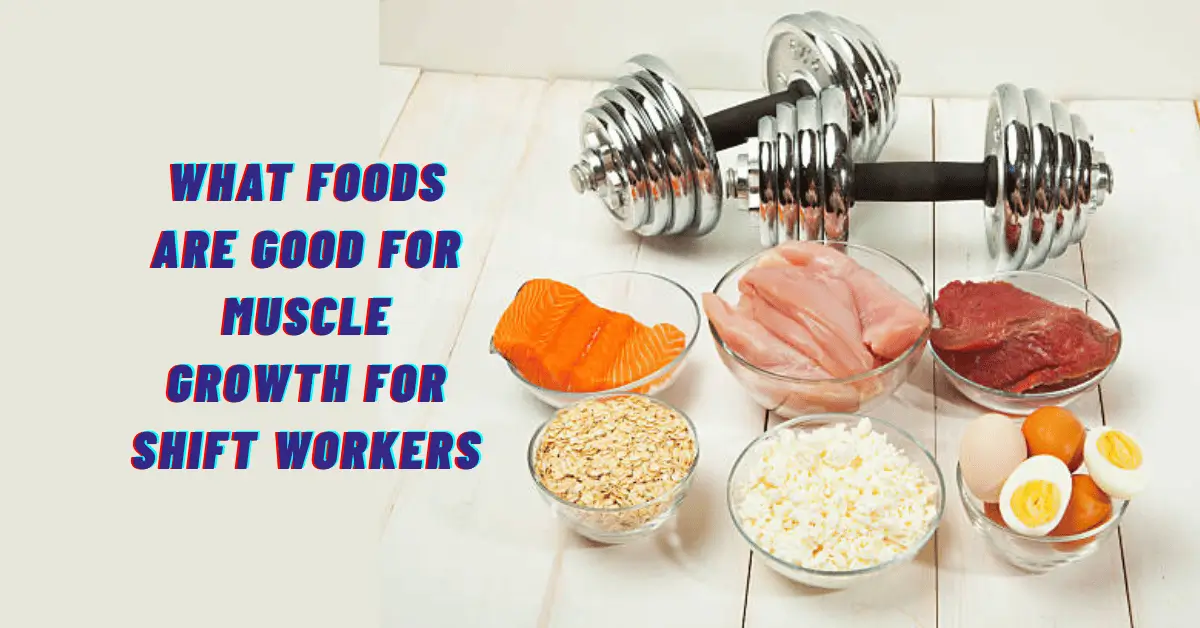
What foods are good for muscle growth for shift workers? Find out the 7 best foods for night-shift muscle building, plus meal timing, a sample day, foods to avoid, and supplements that actually help you recover and grow.
If you work nights, you already know your biggest enemy isn’t the gym; it’s the fridge, the vending machine, and the 3 AM slump that makes a candy bar feel like a genuinely good idea.
What foods are good for muscle growth?
Building muscle on the night shift comes down to eating the right foods at the right points in your shift, not just eating “healthy” in some vague sense.
Get the timing and the food choices right, and your body can build muscle just as well as anyone working a normal 9-to-5.
This guide walks through exactly why nutrition matters so much when you work nights, the 7 best foods to build your meals around, how to actually structure a day around them, what to avoid, which supplements are worth it, and the small mistakes that quietly kill progress even when you’re eating “right.”
(If you want the full picture, training, sleep, and recovery too, check out our companion guide: Build Muscle on Night Shift: A Complete Guide
Why Nutrition Matters to Fuel Muscle Growth on Night Shift

How circadian rhythm and nutrition affect muscle protein synthesis
Your body doesn’t run on a sleep-wake clock alone; your metabolism runs on a rhythm too. Muscle protein synthesis, the process that actually rebuilds and grows muscle fibers after training, is tied to your circadian rhythm.
When you eat, how much protein you eat, and how consistent your meal timing is all influence How efficiently your body uses that food to repair muscle.
Night shift throws a wrench into this. Your body expects to eat during daylight and fast overnight, so when you flip that schedule, your metabolism has to catch up. That’s not a reason to give up on muscle growth; it’s just a reason to be more intentional about meal timing for shift work instead of eating whenever it’s convenient.
Challenges: poor meal timing, low protein, and high cortisol
Three things quietly sabotage night shift workers more than anything else:
- Poor meal timing: skipping meals, then overeating in one sitting, which spikes blood sugar and blunts How well your body uses protein.
- Low protein intake: grabbing whatever’s fastest (chips, pastries, fast food) instead of protein-forward options, which starves muscle protein synthesis of the raw material it needs.
- High cortisol: night shift work naturally raises cortisol, a stress hormone that breaks down muscle tissue when it’s chronically elevated. Poor food choices make this worse; the right foods can help blunt it.
How the right foods support metabolism and recovery overnight
The foods on this list aren’t random picks; each one does something specific. Some deliver fast protein for right after training. Some deliver slow-release protein to feed your muscles while you sleep.
Some stabilize blood sugar so you don’t crash mid-shift. Together, they cover every window of a night shift: before you clock in, during your breaks, and after you clock out and get in bed.
The 7 Foods to Fuel Muscle Growth on Night Shift
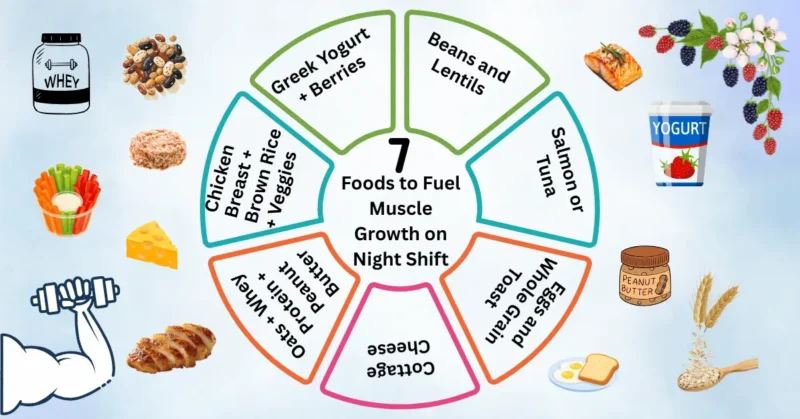
1. Greek Yogurt + Berries
Why it works: Greek yogurt is loaded with protein, often 15-20 grams per serving, and it comes with live probiotics that support gut health, which matters more than people realize, since a lot of night shift workers deal with digestive issues from irregular eating. Add berries for antioxidants that help with recovery, too.
When to eat: Great as a pre-shift or mid-shift snack. It’s quick, doesn’t need reheating, and keeps protein timing consistent through the night.
2. Chicken Breast + Brown Rice + Veggies
Why it works: This is the classic muscle-building combo for a reason. Lean protein from chicken drives muscle protein synthesis, while the complex carbs in brown rice keep your blood sugar balanced instead of spiking and crashing, which matters a lot when you need steady energy for hours on your feet.
When to eat: Works best as your main meal, either right before your shift starts or partway through if you get a proper break.
3. Salmon or Tuna
Why it works: Fatty fish like salmon bring omega-3s to the table, which act as anti-inflammatory foods and may support healthy testosterone levels, both useful when you’re already dealing with the extra inflammation and hormonal disruption that comes from working against your body clock.
When to eat: Best as a post-shift meal. It’s one of the better recovery foods you can eat right after a long night, helping your body start repairing before you sleep.
4. Eggs and Whole Grain Toast
Why it works: Eggs are a complete protein and one of the best natural sources of leucine, the specific amino acid that essentially flips the switch on muscle growth. Pair it with whole grain toast for some slow-digesting carbs, and you’ve got a simple, fast meal that punches well above its weight.
When to eat: Genuinely any time; that’s what makes it such a solid pick for a muscle-building meal plan, night shift, when your schedule doesn’t always cooperate.
5. Cottage Cheese
Why it works: Cottage cheese is packed with casein, a slow-digesting protein that releases amino acids gradually over several hours. That makes it uniquely good for the one window most people completely ignore: sleep.
While you’re out, cottage cheese keeps feeding your muscles instead of leaving them running on empty for 7-8 hours.
When to eat: Right after your shift, before bed, to support overnight recovery.
6. Oats + Whey Protein + Peanut Butter
Why it works: This combo covers all three macros at once: carbs for energy, protein for muscle, and fats to slow digestion down so it lasts. It’s one of the most reliable ways to avoid the mid-shift energy crash that sends people reaching for a caffeine boost or a sugary snack instead.
When to eat: Eat it pre-shift so it can fuel you through the first several hours of work (or a workout beforehand) without a crash.
7. Beans and Lentils
Why it works: Don’t sleep on plant protein. Beans and lentils bring protein and a huge amount of fiber, which supports gut health and, just as important, keeps blood sugar balanced over a long shift instead of letting it spike and dip.
When to eat: A solid lunch option during your shift, especially paired with a grain or some vegetables, when you want something filling that won’t leave you sluggish an hour later.

How to Use These Foods for Muscle Growth on Night Shifts
Meal timing for shift work: pre-shift, during, post-shift
Think of your night shift in three nutritional windows, not one long stretch:
- Pre-shift: A balanced meal with protein and slow carbs (oats + whey + peanut butter, or eggs and toast) to give you steady energy.
- During shift: One or two protein-forward meals or snacks (chicken and rice, Greek yogurt, beans and lentils) to keep muscle protein synthesis going and blood sugar steady.
- Post-shift: A recovery-focused meal (salmon or cottage cheese right before sleep) so your body has what it needs to repair while you rest.

Portion guide for muscle-building meal plan night shift
As a simple starting point, aim for a palm-sized portion of protein at each meal (roughly 25-40 grams depending on your size and goals), a fist-sized portion of carbs around your shift and workouts, and don’t be afraid of healthy fats in smaller amounts; they help slow digestion and keep you fuller for longer stretches.
Sample day using the 7 best foods for night shift muscle building
- Before shift: Oats with whey protein and a spoonful of peanut butter
- First break: Chicken breast, brown rice, and vegetables
- Mid-shift snack: Greek yogurt with berries
- Second break: Beans and lentils, or eggs and whole-grain toast
- After shift, before sleep: Salmon or cottage cheese, depending on how much time you have
Foods to Avoid That Hurt Muscle Growth on Night Shift
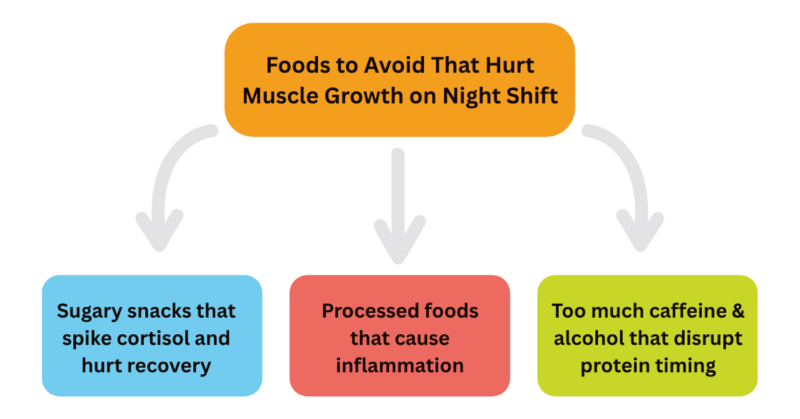
Sugary snacks that spike cortisol and hurt recovery
Vending machine snacks and sugary drinks feel like an easy fix for fatigue, but they spike blood sugar hard, crash it just as fast, and add to the cortisol load your body is already dealing with from working overnight.
Processed foods that cause inflammation
Heavily processed, fried, or fast food options tend to be pro-inflammatory, which works directly against the anti-inflammatory foods you’re trying to prioritize for recovery.
Too much caffeine and alcohol that disrupt protein timing
A coffee or two can genuinely help you get through a shift. The problem is overdoing it; excess caffeine and alcohol both interfere with sleep quality, and poor sleep undermines everything else you’re doing with your meal timing and protein intake.

Supplements That Pair With These Foods
Whey protein for easy protein for shift workers
When you don’t have time to cook, whey protein is the simplest way to hit your protein targets. It mixes in seconds and works well pre-shift or as a mid-shift top-up.
Creatine, fish oil, and vitamin D for muscle growth on the night shift
Creatine supports strength and muscle growth regardless of your schedule. Fish oil adds extra anti-inflammatory support on top of what you get from salmon or tuna.
Vitamin D is worth paying attention to for night shift workers, since reduced daylight exposure can lower levels, and vitamin D plays a role in muscle function.
Magnesium for sleep and muscle recovery
Magnesium supports sleep quality and muscle recovery, making it particularly useful for night shift workers already fighting an uphill battle with circadian rhythm and nutrition.
3 Mistakes That Stop Muscle Growth Even With the Right Foods
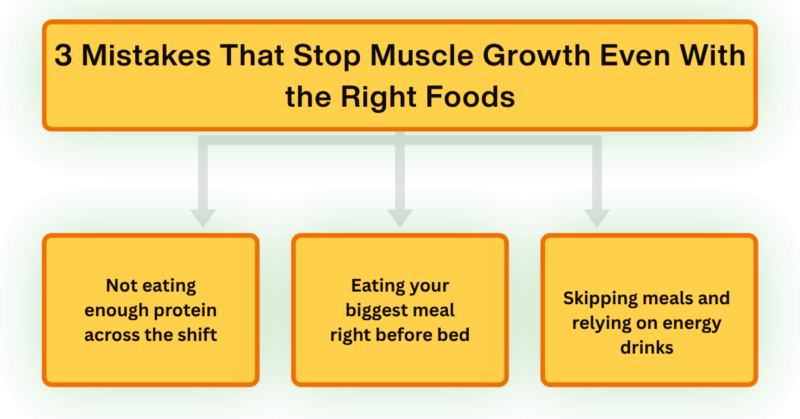
Not eating enough protein across the shift.
Even with all the right foods on hand, it’s easy to under-eat overall when your schedule is chaotic. Track your intake for a week if you’re unsure; most people are surprised by how far under their target they actually are.
Eating your biggest meal right before bed
A huge meal right before sleep can hurt sleep quality, which then undercuts the very recovery you’re trying to protect. Keep your pre-sleep meal moderate and protein-focused, like cottage cheese, rather than a heavy, high-fat feast.
Skipping meals and relying on energy drinks
Skipping meals and leaning on energy drinks to get through a shift is one of the fastest ways to stall progress; you lose out on proper protein timing, spike cortisol, and set yourself up for a crash later.
FAQs on What Foods Are Good for Muscle Growth
Q. How much protein do I need on the night shift to build muscle?
Most people actively training for muscle growth should aim for roughly 1.6 to 2.2 grams of protein per kilogram of body weight per day, spread across 3-4 meals during your shift and the meal before sleep.
Q. Can I build muscle if I only eat at night?
Yes. Muscle growth depends on total protein intake, consistent meal timing, and training stimulus, not on what time zone those meals happen in.
As long as you eat enough protein and space it out through your active hours, eating exclusively at night doesn’t hold back muscle growth.
Q. What’s the best post-shift food for muscle recovery?
Cottage cheese and salmon are two of the strongest choices. Cottage cheese delivers slow-digesting casein protein that feeds your muscles while you sleep, and salmon combines protein with anti-inflammatory omega-3s to support recovery right after a long shift.
Q. What should I eat before a night shift to build muscle?
A balanced meal combining protein and slow-digesting carbs, such as oats with Greek yogurt, provides steady energy and starts the day’s protein intake without causing an energy crash later in the shift.
Q. What’s the best food to eat right before sleeping after a night shift?
Slow-digesting proteins like cottage cheese or Greek yogurt are ideal, since they continue supplying amino acids for muscle repair while you sleep.
Q. Are energy drinks bad for muscle growth on the night shift?
Excess caffeine and sugar from energy drinks can interfere with sleep quality later and contribute to elevated cortisol, both of which work against muscle recovery. Whole foods with steady-release carbs are a better long-term energy source.
Q. How many high-protein meals do night shift workers need per shift?
Most people building muscle benefit from spreading protein across 3–4 meals during their active hours, which for a night shift worker means across the shift and the following pre-sleep meal.
The Bottom Line on What Foods are Good for Muscle Growth
You don’t need a complicated diet to build muscle on the night shift; you need a short list of reliable, portable, high-protein foods you can prep ahead of time.
Eggs, Greek yogurt, cottage cheese, chicken, oats, salmon, and nuts cover nearly every situation a shift throws at you, from a rushed break to the meal right before you finally get to sleep.
Don’t let your next shift catch you unprepared; pick 3 of these 7 foods, prep them tonight, and pack your bag before you clock in.
Read more about night shift workers.
You might like: