
Working nights or rotating shifts can quietly disrupt blood sugar, sleep, and insulin sensitivity. Here’s why shift work poses serious risks for people with diabetes and what you can do about it.
When your body clock and your work schedule are constantly at war, diabetes management becomes a whole different challenge.
Shift work disrupts sleep, throws off hunger hormones, and makes blood sugar spikes harder to predict, turning an already delicate balance into a daily guessing game.

If you work nights or rotating shifts and live with diabetes, understanding these risks isn’t just helpful; it’s essential.
Why Shift Work Affects Diabetes
- Circadian Disruption: Night shifts or rotating schedules confuse your body’s natural rhythm. This misalignment impairs how your body handles glucose and regulates insulin.
- Sleep Deprivation: Getting less than seven hours of poor-quality sleep raises insulin resistance (when cells do not respond well to insulin).
- Eating Patterns: Night shifts often lead to irregular meals, skipped eating times, and higher consumption of sugary or heavy comfort foods.
- Blood Sugar Swings: Physical fatigue and erratic eating cause dangerous spikes (hyperglycemia) or drops (hypoglycemia) in blood glucose.
- Medication Challenges: Changing daily routines make it difficult to take medications or monitor blood sugar at consistent times.
Working shifts and having diabetes
Shift work adds another layer of complexity to the full-time commitment required to manage diabetes. For people with diabetes, irregular schedules disrupt sleep, and inconsistent meal times can lead to dangerous blood sugar fluctuations.
Understanding the specific risks of shift work helps individuals take control of their health and avoid long-term complications.
Disrupted Circadian Rhythms and Diabetes
Your body’s internal clock (circadian rhythm) controls when hormones are released, when you feel sleepy, and even how you process glucose. Shift work, especially rotating or night shifts, disrupts this system’s balance. For people with diabetes, this can cause:
- Impaired insulin sensitivity
- Increased blood glucose variability
- Elevated cortisol levels
These factors increase the risk of both hyperglycemia and hypoglycemia, especially when meals and medications aren’t taken at regular times.
Spikes and Crash in Eating Patterns
Inconsistent eating is one of the biggest hazards for diabetic shift workers. The body struggles to maintain steady glucose levels when meals are missed, postponed, or eaten at irregular times. Common issues include:
- Late-night snacking on processed foods
- Skipped breakfast due to post-shift fatigue
- Inconsistent carb intake
- Overreliance on caffeine or energy drinks
Without a consistent eating plan, insulin dosing becomes harder to manage, increasing the chance of complications.

Sleep Deprivation and Insulin Resistance
Sleep is essential for insulin regulation and is not merely for rest. Shift work often causes shorter sleep, poorer sleep quality, and daytime sleepiness. These directly impact:
- Glucose metabolism
- Insulin resistance
- Appetite-regulating hormones (ghrelin/leptin)
Sleepless nights can lower insulin sensitivity, making it harder for people with diabetes to control their blood sugar levels the following day.
The Triple Threat of Stress, Cortisol, and Glucose
Shift work often comes with increased stress, including tight deadlines, isolation, and fatigue. For people with diabetes, chronic stress causes elevated cortisol, which:
- Promotes glucose release from the liver
- Raises blood pressure
- Lowers insulin effectiveness
This stress-glucose feedback loop can worsen physical and emotional well-being over time.
Common Complications Worsened by Shift Work
People with diabetes working shifts face a higher risk of complications such as:
- Neuropathy (nerve damage)
- Retinopathy (eye problems)
- Poor wound healing
- Cardiovascular disease
- Weight gain
These risks multiply when sleep is fragmented, meals are irregular, and stress levels are high.
Practical Tips to Manage Diabetes While Working Shifts
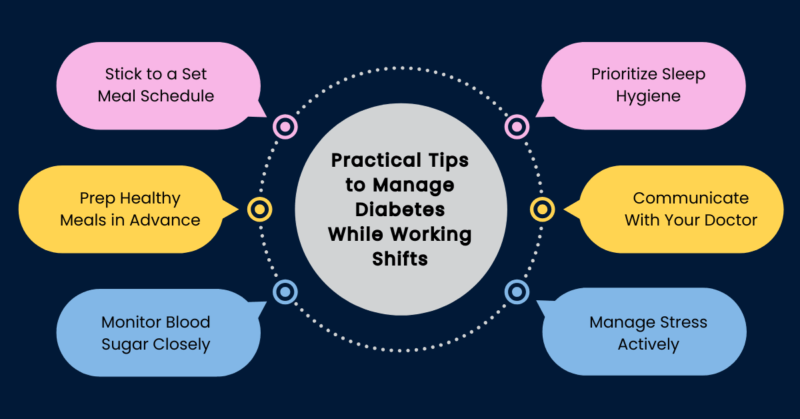
Shift work doesn’t have to ruin your diabetes management. These tried-and-true methods help you avoid long-term issues, boost your energy, and keep blood sugar steady.
1. Stick to a Set Meal Schedule
Irregular eating is a primary cause of blood sugar fluctuations. Create a customized meal plan that aligns with your work schedule and personal preferences. For example:
- If you work nights, treat 7 PM as your “breakfast” and eat every 3–4 hours afterward.
- Use reminders or smartphone apps to avoid skipped meals.
- Pair carbs with protein to slow down glucose absorption (e.g., a whole-grain wrap with chicken).
- Avoid large meals before bed to prevent overnight glucose surges.
Regular meals help your body anticipate insulin needs, improving glucose control even during off-hours.
2. Prep Healthy Meals in Advance
When hunger hits during a night shift, it’s tempting to grab sugary snacks or fast food. Meal prepping can make a big difference:
- Prepare and pack 2–3 days’ worth of balanced meals on your day off.
- Focus on fiber-rich carbs (quinoa, oats), lean protein (eggs, turkey, tofu), and healthy fats (avocado, nuts).
- Include low-GI snacks like hummus with veggies, plain Greek yogurt, or hard-boiled eggs.
- To prevent dehydration-related glucose spikes, keep a bottle of water nearby and drink regularly.
Having real food on hand reduces your dependence on vending machines or canteen fare.
3. Monitor Blood Sugar Closely
Unpredictable shifts affect insulin sensitivity. Increase your awareness:
- Test before, during, and after your shift, especially if you’ve changed sleep or meal timing.
- Log readings in a glucose tracking app to identify patterns (like higher post-meal spikes on night shifts).
- For real-time readings, ask your doctor about using a Continuous Glucose Monitor (CGM).
- Watch for signs of hypo- or hyperglycemia—such as fatigue, confusion, and blurred vision—especially in the early morning.
More frequent monitoring allows quicker adjustments to insulin or food intake.
4. Prioritize Sleep Hygiene
Sleep deprivation worsens insulin resistance and appetite regulation. Build a restful environment:
- After working a night shift, block sunlight with blackout curtains or a sleep mask.
- Turn off screens at least 30 minutes before sleep to reduce blue light exposure.
- Use white noise apps or machines to cancel daytime noise.
- Keep the bedroom cool (18–20°C / 65–68°F) and free from distractions.
- Try magnesium supplements or a short bedtime ritual (like reading or stretching) to ease into rest.
Aim for at least 7 hours of uninterrupted sleep—your blood sugar depends on it.
5. Communicate With Your Doctor
Your healthcare plan must evolve with your work schedule:
- Share your shift pattern with your doctor or diabetes educator.
- Ask if your insulin or oral medication timing needs adjustment.
- Discuss whether long-acting insulin, mealtime insulin, or other regimens may be more suitable for individuals working rotating shifts.
- If you’re on insulin, ask for guidance on correcting pre- or post-shift highs and lows.
- To catch early signs of issues that worsen with shift work, schedule routine checkups.
A proactive approach ensures your treatment stays as flexible as your work schedule.

6. Manage Stress Actively
Stress increases cortisol, which raises blood sugar levels. For shift workers, it’s vital to have daily stress-busting habits:
- Start or end your shift with 5–10 minutes of deep breathing or guided meditation.
- Take short mental breaks during work—stretch, journal, or walk if possible.
- Practice gratitude or mindfulness to stay emotionally grounded.
- Avoid excess caffeine, which worsens anxiety and disturbs sleep.
- Consider speaking with a counselor if you’re feeling overwhelmed or burned out.
A calm mind can positively influence your physical response to insulin.
Common Mistakes to Avoid When Managing Shift Work and Diabetes
| Mistake | Why It’s a Problem | Better Approach |
|---|---|---|
| Skipping meals or eating one huge meal | Causes blood sugar spikes and crashes | Eat smaller, balanced meals every 3–4 hours. |
| Loading up on caffeine all night | Disrupts sleep and raises blood sugar | Limit caffeine to early in the shift. |
| Eating heavy, sugary snacks during shifts | Spikes glucose and crashes energy | Choose protein- and fiber-rich snacks. |
| Ignoring sleep hygiene | Poor sleep worsens insulin resistance. | Use blackout curtains, earplugs, and a cool room. |
| Checking blood sugar inconsistently | Misses patterns and dangerous swings | Test at set times, even when busy. |
| Relying on fast food | High in refined carbs and unhealthy fats | Prep meals ahead and bring them to work. |
| Skipping medication doses | Throws off your entire management plan | Set phone alarms and keep a backup supply. |
| Not telling your employer | No support for breaks or scheduling needs | Communicate openly about your condition. |
| Drinking alcohol after shifts | Disrupts sleep and blood sugar | Avoid or limit alcohol, especially before sleep. |
| Exercising at random times | Makes glucose unpredictable | Stick to a consistent workout schedule |
FAQs on How to Manage Diabetes
Q. How to Manage Diabetes Effectively While Working Shifts
Keep your routine as consistent as possible—steady sleep, meals every 3–4 hours, and medication at the same times each day.
Check your blood sugar often, since shift work makes it unpredictable, and prep balanced meals ahead so you’re not stuck with vending machine food at 3 a.m.
Protect your sleep with blackout curtains and limited caffeine, squeeze in short walks when you can, and work with your doctor to adjust insulin timing for your schedule.
Finally, tell your employer about your condition so you can take breaks for testing and meals. Consistency and preparation make the biggest difference.
Q. Do working shifts affect your health?
Yes, shift work can take a real toll on both body and mind. It disrupts your natural sleep-wake cycle, which throws off hormones that control appetite, stress, and blood sugar.
Over time, that raises the risk of heart disease, type 2 diabetes, digestive issues, and depression. The effects build gradually, so many people don’t notice the damage until it’s already done.
Q. What blood sugar level is good for a diabetic?
For most adults with diabetes, a common target is 80–130 mg/dL before meals and under 180 mg/dL about two hours after eating. An A1C of below 7% is generally the goal, though your doctor may adjust it based on your age, other conditions, and how prone you are to lows.
To prevent hazardous hypoglycemia, older persons or those with significant medical conditions frequently strive for somewhat higher readings. Always follow the personalized range your care team sets for you.
Q. Is melatonin suitable for shift workers?
Melatonin can help shift workers fall asleep faster after a night shift, especially when taken at the right time—usually right before the planned sleep period. It works best in small doses, around 0.5 to 3 mg, and shouldn’t be used long-term.
Timing is everything: taken at the wrong hour, it can confuse your body clock even more. Talk to a doctor first, especially if you take other medications or have an autoimmune condition.
Q. How to avoid night shift side effects?
A few smart habits make a big difference. Keep your sleep schedule as consistent as possible, even on days off, and make your bedroom dark, cool, and quiet with blackout curtains.
Eat lighter, higher-protein meals during your shift and steer clear of heavy meals and caffeine in the hours before you intend to go to bed.
Get daylight exposure after waking to reset your clock, and squeeze in short workouts when you can. Staying hydrated and limiting sugary snacks also helps keep your energy steady.
Q. What is the healthiest shift to work?
A fixed daytime shift is generally the healthiest because it aligns with your body’s natural circadian rhythm. Morning or early-day schedules let you sleep at normal hours, eat at regular times, and stay socially connected.
If you must work evenings, a consistent evening shift is usually easier on the body than rotating schedules. The key isn’t just the time of day—it’s how predictable and stable the schedule is.
Q. At what age should you stop working night shifts?
There’s no hard cutoff age, but many experts suggest that after 50 to 55, the body recovers more slowly from night work and the health risks grow.
Around this time, chronic illnesses like diabetes, heart disease, and high blood pressure frequently start to manifest, making night shifts more difficult to handle.
The real signal isn’t a number; it’s how well you sleep, recover, and manage your health. If night shifts are leaving you exhausted, foggy, or unwell, it may be time to switch.
Q. What is the most unhealthy shift to work?
Rotating shifts, especially those that flip back and forth between days and nights, are considered the worst for your health.
Your body never fully adapts because the schedule keeps changing, so your circadian rhythm stays permanently disrupted. This constant misalignment is linked to higher rates of metabolic syndrome, heart problems, and depression.
Permanent night shifts are hard too, but the body can at least partially adjust over time.
Q. How long does it take your body to recover from shift work?
Recovery varies widely, but most people need several days to a couple of weeks to fully reset after a stretch of night shifts.
Some studies suggest that for every year of rotating shift work, the body needs a surprisingly long adjustment period to return to a normal rhythm.
Sleep, digestion, mood, and blood sugar often normalize first, while hormonal balance can take longer. The longer you’ve worked shifts, the slower the recovery tends to be.
Conclusion on How to Manage Diabetes
Shift work and diabetes can coexist, but only with intention and planning. Your body thrives on routine, and when your job won’t provide one, you have to create it yourself through consistent meal timing, protected sleep, regular blood sugar checks, and open communication with your employer and doctor.
The risks are real: disrupted circadian rhythms, unpredictable glucose, and long-term health consequences.
But they’re not unavoidable. Small, repeatable habits- prepping meals, limiting caffeine, prioritizing sleep, and staying active- make a measurable difference over time.
If you work shifts and live with diabetes, don’t settle for guessing games. Build a plan that fits your schedule, track what works, and adjust as you go. Your health is worth the effort, no matter what hours you keep.
Read more about night shift workers’ health.