

Discover essential life-balance hacks for new managers to lead effectively while maintaining personal well-being. Learn strategies for work-life balance, stress management, and overcoming leadership challenges.
Becoming a manager is an exciting step in one’s career, but it also brings new challenges. You are now responsible for a team’s success, and your ability to lead effectively plays a significant role in your organization’s success.
However, in pursuing leadership, many new managers struggle to maintain a healthy work-life balance. They often find themselves overwhelmed, burning the candle at both ends, and sacrificing their well-being for their roles.
This guide is here to help you navigate your new management position while also taking care of yourself.
Life balance is achievable, and it starts with understanding that leadership doesn’t mean sacrificing your health, happiness, or personal time.
Below, we explore key strategies and hacks to help you manage your career and life without losing yourself in the process.
Quick Summary
This write-up offers novice managers doable tactics for leading their teams successfully while preserving a positive work-life balance.
From setting clear boundaries and prioritizing self-care to mastering time management and delegating, the tips shared will help you lead without burning out.

You’ll also learn how to manage stress, foster trust, and embrace imperfections, all while ensuring personal well-being and professional success.
What You Will Get
- Introduction: New managers face the challenge of balancing leadership with personal well-being. It’s crucial to learn how to lead effectively without sacrificing health or happiness.
- Understanding the Manager Role: Managers must develop skills in guiding teams, making decisions, and handling responsibilities while maintaining their personal lives.
- Why Managers Struggle with Work-Life Balance: Burnout and neglect of personal obligations can stem from pressure to manage teams, achieve goals, and remain available.
- Work-Life Balance Strategies: Prioritize self-care, set clear boundaries, manage time effectively, delegate tasks, and use technology to streamline work.
- Balancing Leadership and Self-Care: Engage in hobbies, seek support from other managers, and regularly assess your work-life balance to avoid burnout.
- Leading Without Losing Yourself: Empathetic leadership, fostering trust, avoiding perfectionism, and clear communication are key to maintaining balance.
- FAQ Section: The article provides practical answers to common questions on leadership strategies, such as the 30-60-90 rule and the 8 8 8 rule, and offers guidance on improving work-life balance.
- Conclusion: Emphasizes the importance of maintaining balance while leading. With the right strategies, new managers can thrive without sacrificing their well-being.
Understanding the Role of a Manager
Before diving into strategies for work-life balance, it’s important to understand what it really means to be a manager. Managing a team requires not only strong technical skills but also the ability to guide, motivate, and empower others.
As a new manager, you’ll need to wear many hats: making decisions, resolving conflicts, and aligning team goals with company objectives. But this doesn’t mean you should run yourself ragged in the process.
Why Managers Struggle with Work-Life Balance
One of the primary reasons new managers struggle with work-life balance is the sheer responsibility that comes with the role.
Managers often feel they need to be available at all hours to address team issues, review reports, and ensure that everything runs smoothly.
Add to that the pressure of meeting deadlines and achieving organizational goals, and it’s easy to see why burnout is a common concern.
Furthermore, the expectation to “always be on” can cause a disconnect from personal life. Managers often feel guilty about taking time off or setting boundaries because they fear being perceived as less committed to their work.
Challenges to Face and How to Overcome:
- Overwhelming Responsibility
- How to Overcome: Prioritize well-being, delegate effectively, and use time-management strategies such as time blocking to manage tasks and prevent burnout.
- Difficulty Setting Boundaries
- How to Overcome: Clearly communicate work hours to your team, respect personal time, and adhere to established boundaries between work and personal time.
- Pressure to Be Perfect
- How to Overcome: Prioritize progress above perfection, accept errors, and grow from them. Establish a culture of empowerment and trust among your team members.
- Stress and Anxiety from High Expectations
- How to Overcome: Incorporate mindfulness and stress-management practices such as deep breathing, meditation, or journaling to manage stress.
- Struggling to Delegate
- How to Overcome: Trust your team with tasks, recognize their strengths, and give them ownership of responsibilities to lighten your workload.
- Managing Time Efficiently
- How to Overcome: Use project management tools to organize tasks, prioritize work, and allocate time for strategic thinking and team collaboration.
- Lack of Work-Life Balance
- How to Overcome: To maintain balance, use the 8-8-8 rule (8 hours of work, 8 hours of sleep, and 8 hours of personal leisure). Regularly assess and adjust your balance to fit your needs.
Work-Life Balance Strategies for New Managers
Achieving work-life balance as a new manager isn’t about dividing your time equally between work and personal life.
It is about creating harmony between the two. The following strategies will help you lead effectively without sacrificing your well-being.

How Wellness Tech Simplifies Health for Busy Professionals
1. Prioritize Your Well-Being
Putting your personal health first is the first step towards keeping a healthy work-life balance. You set an example for your team as a manager.
Your team would probably do the same if you consistently put in long hours and neglect your personal needs. Setting a good example is crucial.
Make sure to schedule time for physical activity, healthy meals, and adequate sleep. If your well-being declines, your ability to lead effectively will diminish. Healthy managers are more focused, more empathetic, and more productive.

2. Set Clear Boundaries
Maintaining a good work-life balance requires having clear limits. Establishing and adhering to your working hours is crucial. Unless it is an emergency, don’t answer emails or take calls after your office hours end at 6 PM.
Share these boundaries with your team so they know when to reach out to you. This helps set expectations for your team and ensures your personal time is respected.

3. Master Time Management
Time management is one of the most critical skills new managers need to develop. Without proper planning, you could find yourself spending too much time on low-priority tasks while neglecting more important responsibilities.
Use time blocking to allocate dedicated time to each task. For instance, reserve your mornings for strategic thinking and planning, and use afternoons for meetings and team check-ins.
By organizing your time, you will not only reduce stress but also improve your effectiveness as a leader.

4. Delegate Effectively
One key to managing your time and workload as a new manager is learning to delegate. New managers often try to do everything themselves, thinking that it’s faster or easier than delegating tasks to others. However, this quickly leads to burnout.
Assign duties to your team members based on their strengths, and have faith that they will take responsibility for their work.
Delegation not only lightens your workload but also empowers your team, allowing them to grow and develop their own leadership skills.

5. Use Technology to Streamline Processes
Take advantage of the many tools available to managers to streamline your workflows and reduce your administrative burden.
Project management tools such as Trello, Asana, and Monday.com help you track team projects and deadlines in a centralized location.
Communication tools like Slack can help you stay connected with your team without the constant barrage of emails.
You will have more time to focus on strategic decisions rather than being mired in administrative minutiae if you automate repetitive tasks and use solutions that increase efficiency.

6. Practice Mindfulness and Stress Management
Deep breathing, meditation, and journaling are mindfulness practices that can help you control stress and maintain composure under pressure.
Being a new boss can put you under pressure and trigger feelings of overload and worry, but practicing mindfulness can help you stay resilient and emotionally clear.
By incorporating stress-management techniques into your daily routine, you’ll be better equipped to handle workplace challenges without letting them take a toll on your mental and physical health.
Balancing Leadership with Self-Care
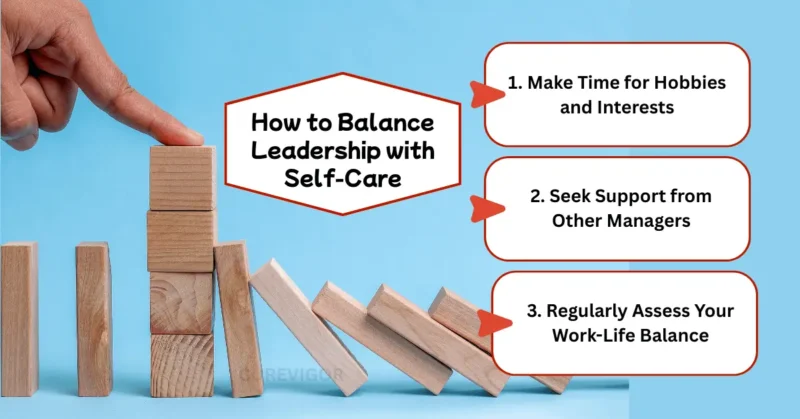
Self-care should be an essential part of your routine, not something you only resort to in times of burnout.
A balanced leader knows when to step back and take care of themselves so they can give their best at work.
1. Make Time for Hobbies and Interests
Don’t let work consume all your time. Engage in enjoyable and fulfilling hobbies outside of work, such as cooking, reading, working out, or hanging out with loved ones.
Engaging in hobbies and interests helps you recharge and brings renewed energy to your work.
2. Seek Support from Other Managers
Being a new manager can be isolating, but you don’t have to do it alone. Build a support network of other managers, whether through formal mentoring relationships or informal peer groups.
Talking about your struggles and experiences with people who understand your position can offer priceless advice and comfort.
3. Regularly Assess Your Work-Life Balance
Every few weeks, take a step back and assess your work-life balance. Are you still maintaining the boundaries you’ve set?
Are you feeling overwhelmed or disconnected from your personal life?
Regularly evaluating your balance helps you identify when things are getting off track, so you can adjust your approach before burnout sets in.
Leadership Without Losing Yourself
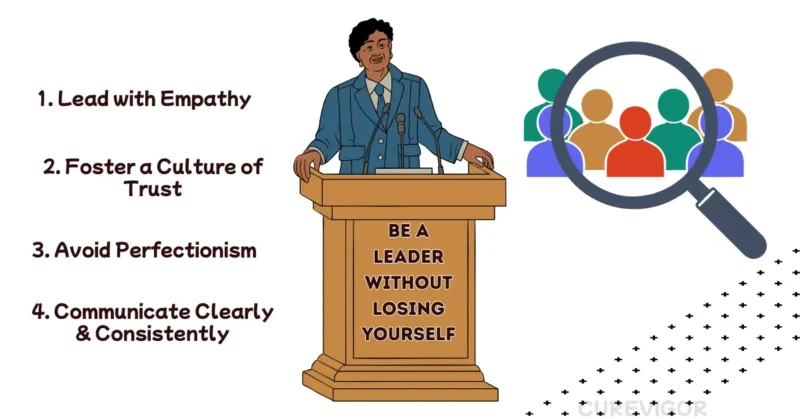
It’s possible to be a great leader without compromising your personal life. In fact, being mindful of your own needs will make you a better leader. The following principles will help you lead without losing yourself in the process.
1. Lead with Empathy
Empathy is a core leadership trait, and it starts with self-compassion. If you’re kind and understanding toward yourself, you’ll be more likely to treat others with the same empathy.
Taking the time to understand your team’s needs, concerns, and aspirations creates a positive work environment and strengthens relationships.
2. Foster a Culture of Trust
A strong leader has faith in their team’s ability to perform their duties effectively. You don’t have to micromanage every activity; instead, assign tasks wisely and have faith in your team’s ability to succeed.
Your staff is more likely to feel empowered and inspired to give their best work when you demonstrate trust.
3. Avoid Perfectionism
You may feel pressure to perform flawlessly in your new manager role. But aiming for perfection can be ineffective and paralyzing.
It’s better to focus on progress over perfection and be willing to make mistakes and learn from them.
Embrace your imperfections, and your team will feel more comfortable doing the same.
4. Communicate Clearly and Consistently
Effective leadership is built on clear and consistent communication. Inform your staff of any changes, expectations, and goals.
Frequent team check-ins and one-on-one meetings ensure everyone is aligned and understands their roles.
Additionally, being open and honest builds team trust, which facilitates management and leadership.
Manager’s Work-Life Balance Checklist:
- Prioritize Your Well-Being:
- Schedule daily time for exercise, meals, and rest.
- Commit to 7-8 hours of sleep each night.
- Set Clear Boundaries:
- Define your work hours and stick to them.
- Communicate boundaries clearly with your team.
- Master Time Management:
- Use time-blocking techniques to organize your day.
- Prioritize high-value tasks and delegate low-priority ones.
- Delegate Effectively:
- Identify team strengths and delegate tasks accordingly.
- Trust your team to take ownership of responsibilities.
- Leverage Technology:
- Use project management tools to stay organized.
- Automate repetitive tasks to save time.
- Practice Mindfulness and Stress Management:
- Incorporate deep breathing, meditation, or journaling.
- Take regular breaks to avoid burnout.
- Maintain Hobbies and Interests Outside of Work:
- Engage in activities you enjoy to recharge.
- Spend quality time with family and friends.
- Regularly Assess Your Work-Life Balance:
- Review your balance every few weeks and adjust as needed.
- Assess what is productive and what needs improvement.
- Lead with Empathy and Trust:
- Foster a supportive and collaborative work environment.
- Communicate openly with your team and model self-care.
Use this checklist to ensure you’re leading your team while also staying healthy, happy, and balanced in your personal life!
FAQ
Q. What is the 30-60-90 rule for managers?
The 30-60-90 rule is a framework used by new managers to break down their first 90 days into three phases:
The first 30 days are about learning the company culture, meeting your team, and observing how things work.
The next 60 days focus on taking ownership of projects and building relationships.
The final 90 days are about making a noticeable impact and optimizing workflows.
Q. What is the 8 8 8 rule for work-life balance?
The 8 8 8 rule is a simple guideline for balancing work and life: work 8 hours, sleep for 8 hours, and spend the remaining 8 hours on personal time, including family, exercise, hobbies, and relaxation.
It’s a useful reminder to maintain balance and prioritize self-care.
Q. How to improve work-life balance as a manager?
To improve work-life balance as a manager, prioritize your health and well-being, set clear boundaries between work and personal life, delegate effectively, and manage your time wisely. Use technology to streamline tasks and free up time for hobbies and relaxation.
Q. How to lead without being a manager?
You can lead without a formal managerial title by fostering a collaborative environment, influencing others through your expertise and actions, and serving as a role model. Leadership is about guiding others, even without direct authority.
Q. What are the 4 pillars of work-life balance?
The four pillars of work-life balance are time management, setting boundaries, prioritizing well-being, and maintaining relationships.
These pillars help ensure that work, personal life, and self-care receive the attention they need.
Q. What is the 3-month rule in a job?
The 3-month rule holds that it typically takes about 3 months for a new hire to settle into a role, learn the company culture, and start performing at their best.
This period allows time for adjustment and understanding of workplace dynamics.
Conclusion
As a new manager, finding a balance between your personal life and your professional responsibilities is crucial to long-term success and well-being.
By prioritizing self-care, setting clear boundaries, and practicing mindful leadership, you can lead your team effectively without losing yourself.
Remember that balance is a dynamic process—it’s okay to adjust as needed to maintain harmony in your life. Embrace these life-balance strategies and lead with confidence while maintaining your well-being.
Are you ready to lead your team without losing yourself in the process? What strategies have you found helpful in maintaining work-life balance as a manager?
Share your thoughts in the comments below. Let’s learn and grow together!
Read more Life Balance and Productivity articles.
You might like: