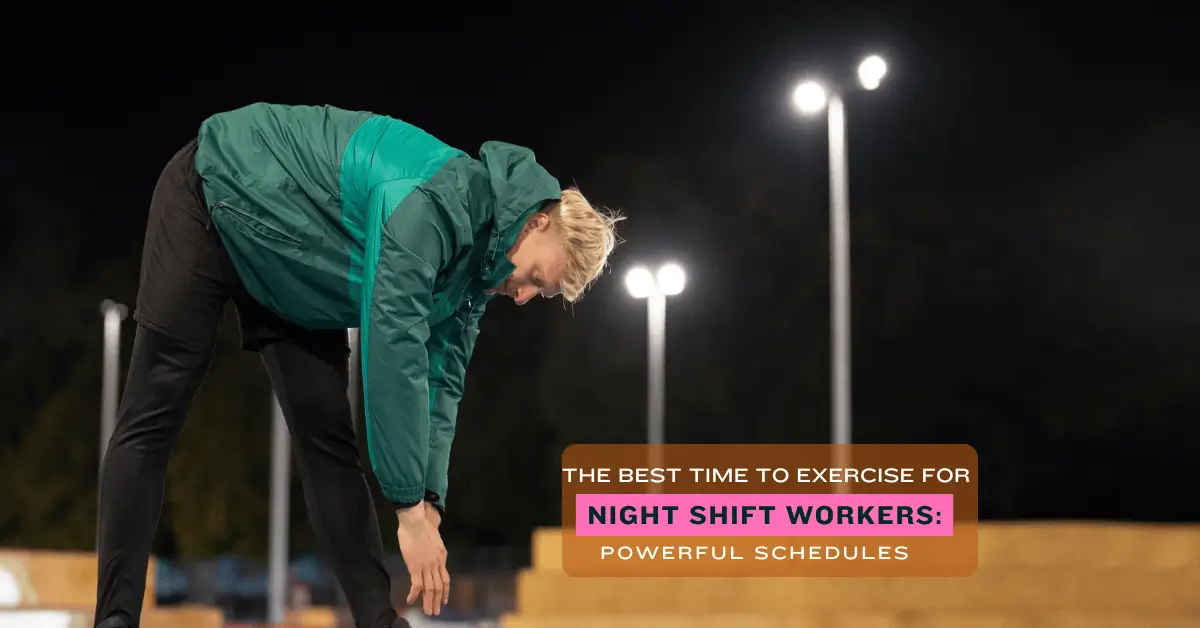
Learn the best time to exercise for night shift workers to improve energy, sleep, recovery, and overall health with science-backed tips.
Night-shift workers often treat exercise like a leftover task. They squeeze it in whenever energy appears, which usually backfires.
Poor workout timing can increase fatigue, disrupt sleep, and make recovery harder.
What is the Best Time to Exercise for Night Shift Workers
Night-shift work can turn your body clock upside down. While most people sleep at night and stay active during the day, shift workers often fight against their natural circadian rhythm.
This disruption affects energy, sleep quality, metabolism, hormones, and even workout performance.
The good news is that strategic workout timing can reduce many of these problems. Choosing the right exercise window helps improve alertness during shifts, supports better sleep, and protects long-term health.
For many people who work overnight shifts, the question is not whether to exercise, but when to exercise for maximum benefit.
The right workout schedule can improve energy, stabilize sleep, and help your body handle shift work more efficiently.

This guide explains the optimal time for exercise for night shift workers, using circadian rhythm science, recovery research, and practical schedules you can actually follow.
Why Timing Matters for Night-Shift Workers
Most night shift workers focus on whether they exercise, but timing often matters just as much.
Exercise timing matters more for shift workers than daytime workers because their sleep-wake cycle is already under stress. The circadian rhythm is your body’s intrinsic 24-hour clock.
This clock influences body temperature, hormone production, digestion, energy levels, and athletic performance.
When you work nights, your internal clock often becomes misaligned with your work schedule. Poorly timed exercise can worsen fatigue and insomnia. Properly timed workouts can help regulate energy and recovery.
Understanding Circadian Rhythm Disruptions
Your circadian rhythm naturally expects darkness at night and light during the day. Night shifts reverse this pattern. As a result, many workers experience the following:
- Low energy during work hours
- Trouble sleeping after shifts
- Increased cravings for unhealthy foods
- Reduced physical performance
- Mood instability
Research shows that circadian disruption can negatively affect muscle recovery, cardiovascular health, and metabolic function. Exercise acts as a powerful “time cue” that helps partially reset your body clock.
This is why the timing of the workout chosen by night shift workers can directly impact sleep and alertness.
Health Risks of Poor Exercise Timing
Poor timing of exercise can increase stress hormones and interfere with sleep recovery. Some common issues include:
- Elevated cortisol before sleep
- Delayed melatonin release
- Higher risk of insomnia
- Increased fatigue during shifts
- Slower muscle recovery
Night shift workers already face higher risks of obesity, diabetes, hypertension, and heart disease. Poorly timed workouts may add more stress to an already strained nervous system.
The goal is to exercise at a time that improves energy without sacrificing recovery.
Optimal Workout Windows During Night Shifts
Many shift workers assume there is one perfect workout hour, but the best window depends on sleep timing and work demands.
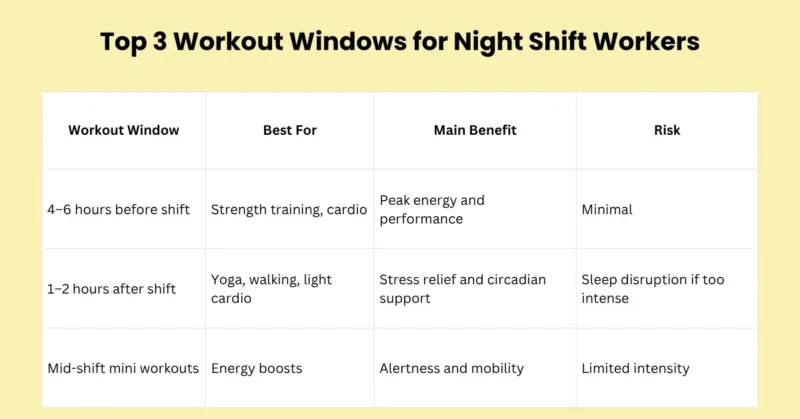
The best time to exercise for night shift workers depends on your schedule, chronotype, sleep habits, and fitness goals. However, research consistently points toward three effective workout windows.
Top 3 Workout Windows for Night Shift Workers
| Workout Window | Best For | Main Benefit | Risk |
| 4–6 hours before shift | Strength training, cardio | Peak energy and performance | Minimal |
| 1–2 hours after shift | Yoga, walking, light cardio | Stress relief and circadian support | Sleep disruption is too intense |
| Mid-shift mini workouts | Energy boosts | Alertness and mobility | Limited intensity |
Pre-Shift Exercise (Afternoon/Early Evening)
The best time is usually 4 to 6 hours before your shift starts. For most night shift workers, this is the best overall window for exercise.
If your shift starts at 11 PM, the ideal workout time is usually between 3 PM and 5 PM. During this period, body temperature, reaction time, and muscle function are naturally higher.
Why Pre-Shift Workouts Work Best
Benefits include:
- Higher strength and endurance output
- Better coordination and reaction time
- Improved mood before work
- Reduced fatigue during shifts
- Less interference with post-shift sleep
Chronobiology research suggests that late afternoon and early evening align with the body’s natural performance peak.
Best Exercises Before a Night Shift
Good pre-shift options include the following:
- Strength training
- Moderate cardio
- HIIT sessions
- Cycling
- Swimming
If you want to gain muscle or lose fat, this window is usually optimal.

Sample Pre-Shift Schedule
For an 11 PM–7 AM shift:
- Wake up: 1 PM
- Meal: 2 PM
- Workout: 4 PM
- Recovery meal: 5:30 PM
- Prepare for shift: 8 PM
This structure supports energy production while preserving sleep quality.
Post-Shift Workouts (Morning After Shift)
Some night shift workers prefer to exercise after work because it helps relieve stress and tension. However, workout intensity matters greatly here.
The ideal post-shift slot is usually 1–2 hours after finishing work.
For a shift ending at 7 AM, light workouts between 8 AM and 10 AM may help.
Best Post-Shift Activities
Light exercise works best after shifts. Recommended low-to-moderate activities include:
- Walking
- Stretching
- Yoga
- Light cycling
- Mobility exercises
Why Intense Morning Workouts Can Be Problematic
Heavy exercise after a shift may increase:
- Cortisol
- Adrenaline
- Core body temperature
These factors delay melatonin production and make daytime sleep harder.
If you struggle with insomnia, avoid high-intensity training after work.
Key Takeaway
The best time is often before the shift for intense workouts and after the shift for light recovery sessions.
Mid-Shift Quick Sessions
Short exercise bursts during work breaks can improve alertness and mental focus.
Studies on shift work recovery show that even 10–15 minutes of movement can reduce fatigue and improve concentration.
Effective Mid-Shift Exercises
Try:
- Stair climbing
- Bodyweight squats
- Resistance band exercises
- Stretching routines
- Fast-paced walking
These mini sessions are especially useful during the “circadian low point,” usually between 3 AM and 5 AM.
Benefits of Mid-Shift Movement
- Better circulation
- Reduced stiffness
- Improved alertness
- Lower mental fatigue
- Increased energy
Keep these sessions brief and moderate.
Factors Influencing Your Best Time
No single exercise schedule works for all shift workers. Several factors influence your ideal timing.
Chronotype
Your chronotype determines whether you naturally function better early or late.
- Night owls often tolerate post-shift exercise better.
- Early birds typically perform better pre-shift
Understanding your chronotype training style can improve workout consistency.
Fitness Goals
Your goal affects timing:
| Goal | Best Timing |
| Muscle gain | Pre-shift |
| Fat loss | Pre-shift or mid-shift |
| Stress relief | Post-shift |
| Better sleep | Light post-shift activity |
| Energy boost | Mid-shift |
Work Demands
Physically demanding jobs require more recovery. Nurses, factory workers, and emergency staff may need lighter workouts on workdays.
Sleep Quality and Recovery
Sleep is the foundation of night shift fitness.
Even perfectly timed exercise cannot compensate for chronic sleep deprivation.
Recovery Tips for Shift Workers
- Use blackout curtains
- Wear blue-light-blocking glasses after shifts.
- Maintain consistent sleep hours.
- Keep your room cool and dark.
- Avoid caffeine near bedtime.
Avoid Exercising Too Close to Sleep
This is one of the biggest mistakes shift workers make.
Never exercise within 3 hours of bedtime.
Exercise raises:
- Heart rate
- Core temperature
- Adrenaline
- Nervous system activation
These changes delay sleep onset and worsen insomnia.
Science-Backed Evidence on Exercise Timing
Many fitness tips online ignore the reality that shift workers operate on a completely different biological schedule. Scientific studies on shift work and exercise timing continue to grow.
Researchers have found that properly timed exercise can partially reset circadian rhythms and improve metabolic health.
Studies on Chronotypes and Shift Work
Exercise timing has a substantial impact on shift workers’ sleep efficiency, according to studies published in the Journal of Clinical Sleep Medicine.
Research indicates:
- Afternoon workouts improve performance.
- Morning intense workouts delay sleep.
- Moderate exercise supports circadian adaptation.
The National Sleep Foundation also recommends consistent exercise schedules to stabilize body rhythms.
Hormonal Impacts (Cortisol, Testosterone)
Hormones fluctuate differently in shift workers.
Cortisol
Cortisol helps maintain alertness but becomes problematic when elevated before sleep.
Intense post-shift exercise can spike cortisol levels and reduce sleep quality.
Testosterone
Strength performance often peaks later in the day, when testosterone and body temperature naturally rise.
This is another reason pre-shift evening workouts are usually superior for resistance training.
Personalized Schedules for Different Shifts
The mistake many workers make is copying fitness schedules designed for people with normal daytime jobs. Different work patterns require different exercise approaches.
Rotating vs. Fixed Night Shifts
Fixed Night Shifts
Workers on permanent nights adapt more easily.
Best strategy:
- Maintain consistent workout timing.
- Exercise 4–6 hours before shifts
- Keep sleep schedules stable even on days off.
Rotating Shifts
Rotating schedules are more challenging because the body clock constantly changes.
Best strategy:
- Prioritize consistency over perfection.
- Exercise during waking hours
- Reduce workout intensity during transition weeks.
- Focus heavily on recovery.
Tracking sleep and energy levels becomes essential.
12-Hour vs. 8-Hour Shifts
12-Hour Shifts
These shifts leave less recovery time.
Best approach:
- Shorter workouts
- Moderate intensity
- More mobility work
- More rest days
8-Hour Shifts
Workers often tolerate the following:
- Longer sessions
- More frequent strength training
- Greater workout flexibility
Common Mistakes and How to Avoid Them
Most workout problems for shift workers are not caused by laziness, they come from poor timing and recovery habits.
Even motivated shift workers can sabotage recovery with poor habits.
Exercising Too Close to Bedtime
This remains the most common mistake.
Avoid:
- Heavy lifting immediately before sleep
- Intense cardio after work
- Pre-bed HIIT workouts
Instead:
Choose calming activities like:
- Gentle yoga
- Walking
- Stretching
Ignoring Recovery Days
Night-shift workers need more recovery than daytime workers.
Overtraining combined with poor sleep increases the following:
- Injury risk
- Fatigue
- Hormonal imbalance
- Immune suppression
Recovery Strategies
- Schedule 1–2 weekly rest days
- Prioritize hydration
- Eat protein-rich meals
- Practice active recovery
Tools and Apps for Tracking Optimal Times
Tracking patterns removes guesswork and helps shift workers discover when their bodies actually perform best. Technology can help identify the optimal time for exercise among night shift workers.
Helpful Apps
Sleep Tracking Apps
These tools monitor:
- Sleep stages
- Recovery
- Heart rate variability
- Fatigue trends
Fitness Tracking Apps
Tracking energy and performance patterns helps optimize timing.
The CDC shift work guidelines also provide useful recommendations for managing fatigue and recovery.
Best Weekly Exercise Strategy for Night Shift Workers
Here is a simple science-backed structure:
| Day Type | Workout Recommendation |
| Workday | Moderate pre-shift workout |
| Heavy fatigue day | Mobility or walking |
| Off day | Main strength session |
| Transition day | Light recovery activity |
Consistency matters more than perfection.
FAQs on The Best Time to Exercise for Night Shift Workers
Q. Is morning exercise best after a night shift?
Yes, but only light-to-moderate exercise works best after a shift. Activities like yoga, stretching, or walking help reduce stress without elevating cortisol levels excessively. Intense workouts after work may delay sleep and worsen fatigue.
Q. How does chronotype affect workout timing?
Chronotype affects when your body naturally feels most awake, focused, and physically strong. People who are natural night owls often handle post-shift workouts better because their energy levels stay higher later in the day.
Early chronotypes, on the other hand, usually perform better with pre-shift exercise in the afternoon or early evening. Sleep-tracking apps and energy journals can help you identify your ideal exercise time for night shift workers.
Q. Can mid-shift workouts work?
Yes, short mid-shift workouts can be very effective for boosting energy and reducing fatigue during long overnight hours.
A quick 10 to 15-minute walk, stretching session, or bodyweight routine can improve circulation and mental alertness without draining your energy.
It works like a small reset button for the brain and body during demanding shifts. Moderate movement during breaks may also reduce stiffness caused by sitting or standing too long.
Q. What time is best for the gym for night shift workers?
The best time to exercise for night shift workers is usually 4 to 6 hours before the shift starts. This is when body temperature, strength, and energy levels naturally rise, helping workouts feel easier and more productive.
For example, if your shift begins at 11 PM, training around 4 PM or 5 PM often works best. Avoid intense gym sessions right before sleep because they can delay melatonin production and make recovery harder.
Q. What are the worst exercise habits for shift workers?
One of the worst habits is doing high-intensity workouts immediately before bed after a long shift. Many workers also skip recovery days, overuse caffeine, and train inconsistently depending on energy levels.
It is similar to driving a car hard every day without maintenance, the system breaks down. Poor workout timing can increase fatigue, worsen sleep, and make muscle recovery slower over time.
Q. Why am I gaining weight while I exercise before my night shift?
Weight gain during night shift work is often linked to hormones, sleep disruption, and eating patterns rather than a lack of exercise.
Poor sleep can increase cortisol and hunger hormones, making cravings stronger even if you work out regularly.
Some people also reward themselves with extra snacks after training without realizing it. Focus on consistent sleep, protein-rich meals, and balanced workout timing, rather than just burning calories.
Q. What is the best schedule when working a night shift?
The healthiest schedule keeps sleep, meals, and workouts as consistent as possible.
Many night shift workers do well by waking in the afternoon, exercising before work, eating lighter meals overnight, and sleeping shortly after returning home. A simple routine helps the body adapt faster and reduces energy crashes.
Think of your body clock like a routine-based machine, it performs better when timing stays predictable.
Q. What is the healthiest way to work the night shift?
The healthiest approach is to protect sleep while carefully managing stress, meals, hydration, and movement. Use blackout curtains, limit caffeine late in the shift, and keep a steady sleep schedule even on days off when possible.
Short walks and light exercise can improve circulation and energy without exhausting the body. Recovery matters just as much as productivity during night work.
Q. Is 7 PM too late to work out?
For many people, 7 PM is still a good time for a workout, especially for night shift workers who start later in the evening. The problem usually happens when exercise is too close to bedtime rather than the clock time itself.
If you sleep around midnight or later, a 7 PM session is often completely fine. Just avoid intense training within about 3 hours of going to sleep.
Q. Can night-shift workers build muscle?
Yes, night shift workers can absolutely build muscle with proper recovery and nutrition. Muscle growth depends more on training consistency, protein intake, and sleep quality than on having a daytime schedule.
Many healthcare workers, security staff, and warehouse employees successfully gain strength while working nights. The key is balancing workouts with enough recovery time rather than training while constantly exhausted.
Q. What are the side effects of working the night shift?
Night shift work can affect sleep quality, digestion, hormones, mood, and long-term energy levels.
Many workers experience fatigue, weight gain, poor concentration, and increased stress because their bodies are operating against their natural circadian rhythm.
Over time, inconsistent sleep may also increase the risk of heart health and metabolic issues. Good sleep habits, regular movement, and structured routines can reduce many of these problems.
Final Thoughts
The best time to exercise for night shift workers depends on balancing energy, performance, and recovery. For most people, exercising 4–6 hours before a night shift offers the best combination of physical performance and sleep protection.
Light post-shift exercise can support relaxation, while short mid-shift sessions help maintain alertness.
The key is consistency. Small adjustments in workout timing can significantly improve sleep quality, recovery, mood, and long-term health for anyone living the night-shift lifestyle.
Start improving your sleep, energy, and fitness today by choosing the right workout time for your night shift schedule. Small timing changes can make a big difference in your long-term health.
Read more about night shift workers’ health.
You might like: