Exercises for night shifts help improve energy, reduce fatigue, boost circulation, and support healthier overnight work routines with simple quick movements.
Working overnight can take a serious toll on your body and mind. Long hours, artificial lighting, limited movement, and interrupted sleep patterns often leave night shift workers feeling exhausted and sluggish.
That’s why many people ask, “What are the best quick exercises for night shifts?”
What Are the Best Quick Exercises for Night Shifts?
The good news is that you don’t need a gym membership or long workout sessions to feel better.
A few simple movements during your shift can improve blood circulation, reduce stiffness, sharpen focus, and help you stay alert. In fact, quick exercises may also lower stress levels and support better long-term health.
Whether you work in healthcare, security, customer service, transportation, or an office setting, adding movement into your shift can make a noticeable difference.
Small bursts of activity can refresh your body and prevent that heavy, tired feeling many overnight workers experience.
The Centers for Disease Control and Prevention (CDC) states that shift workers frequently have higher levels of exhaustion and health concerns related to sleep disturbances and inactivity. Regular movement helps reduce some of these challenges.
Let’s explore the best quick exercises for night shifts and how they can help you stay energized, productive, and healthier throughout your shift.
Quick Summary Box
Exercises for night shift workers can help reduce fatigue, improve circulation, boost focus, and support overall health during overnight hours.
Simple movements like stretching, chair squats, walking, calf raises, and breathing exercises keep the body active without requiring a gym or large space.
Taking short exercise breaks every 1–2 hours may help prevent stiffness, increase energy, and improve mental alertness throughout the shift.
Why Night Shift Workers Need Exercise
Night shift schedules can disrupt the body’s circadian rhythm. As a result, many workers struggle with fatigue, low motivation, headaches, and muscle tension. Sitting or standing for long periods only makes things worse.
Quick exercises help combat these issues by:
- Improving blood circulation
- Increasing oxygen flow
- Reducing muscle stiffness
- Supporting mental alertness
- Helping posture and flexibility
- Lowering stress and anxiety
Even five minutes of movement can reset your energy levels. That’s especially important in the middle of the night when concentration tends to drop.
Common Health Challenges During Night Shifts
People working overnight often experience unique health concerns. These may include:
| Fatigue | Disrupted sleep cycle |
| Back pain | Sitting or standing too long |
| Weight gain | Poor eating habits |
| Stress | Irregular schedules |
| Low focus | Mental exhaustion |
| Swollen legs | Reduced circulation |
Adding short exercise breaks during work can naturally help reduce many of these problems.
How Quick Exercises Improve Energy Levels
Movement stimulates circulation and wakes up the nervous system. When you exercise briefly, your muscles receive more oxygen, which helps you feel refreshed and alert.
Quick exercises during night shifts can also:
- Prevent sluggishness after meals.
- Improve concentration
- Reduce mental burnout
- Enhance mood naturally
- Support healthier sleep after work.
Instead of reaching for another sugary snack or an extra cup of coffee, movement may provide a healthier energy boost.
Best Time to Exercise During a Night Shift
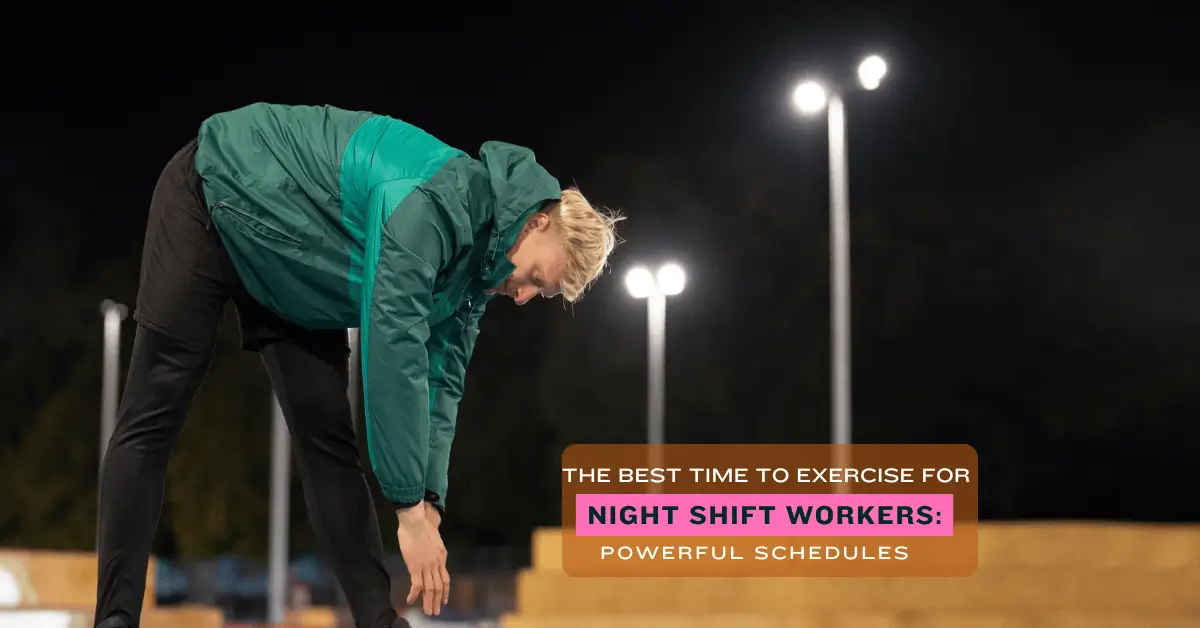
Timing matters. The best moments for quick exercises are usually the following:
- Before your shift starts
- During breaks
- After long periods of sitting
- Around the middle of your shift
- Before driving home, if you feel sleepy
Avoid intense exercise right before bedtime because it may make it harder to sleep after work.
Safety Tips Before Exercising at Work
Before starting any quick exercises during night shifts, remember these simple precautions:
- Wear comfortable shoes
- Stay hydrated
- Move slowly if you feel dizzy.
- Avoid slippery areas
- Choose exercises suitable for your workspace.
- Stop if you feel pain.
Always listen to your body. Gentle movement is often more effective than intense exercise during work hours.
15 Powerful Moves to Stay Energized
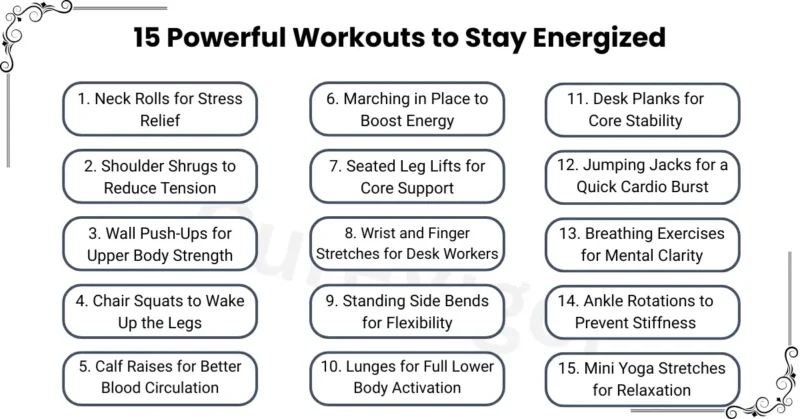
1. Neck Rolls for Stress Relief
Neck tension is extremely common during overnight work. Looking at screens, paperwork, or equipment for hours at a time may cause stiffness and headaches.
Neck rolls are one of the best quick exercises for night shifts because they relax tight muscles almost instantly.
How to Do Neck Rolls
- Sit or stand comfortably.
- Slowly lower your chin.
- Roll your head gently in a circle.
- Repeat 5 times each direction.
This movement improves flexibility and reduces upper-body stress.
2. Shoulder Shrugs to Reduce Tension
Shoulder stiffness can make your entire body feel heavy and uncomfortable.
Steps
- Lift both shoulders toward your ears.
- Hold for 3 seconds
- Release slowly
- Repeat 10 times
Shoulder shrugs increase blood flow and help reset posture.
3. Wall Push-Ups for Upper Body Strength
Wall push-ups are ideal for workplaces with limited space.
How to Perform
- Stand facing a wall
- Place your palms on the wall.
- Bend your elbows slowly.
- Push yourself back
Aim for 10–15 repetitions.
These exercises strengthen the chest, shoulders, and arms without exhausting you.
4. Chair Squats to Wake Up the Legs
Chair squats activate major leg muscles and improve circulation.
Instructions
- Stand in front of a chair.
- Lower yourself slowly
- Stop just before sitting.
- Rise back up
Repeat 10–12 times.
Chair squats are excellent for workers who spend long hours sitting.
5. Calf Raises for Better Blood Circulation
Calf raises are simple yet highly effective.
Steps
- Stand upright
- Lift your heels off the floor.
- Hold briefly
- Lower slowly
Repeat 15–20 times.
These movements improve circulation and may reduce swollen feet during long shifts.
6. Marching in Place to Boost Energy
Marching in place acts like a mini cardio session.
Benefits
- Raises heart rate
- Improves alertness
- Boosts mood
- Warms up the body
March for 1–2 minutes whenever you feel sleepy during your shift.
7. Seated Leg Lifts for Core Support
Seated exercises are useful for desk workers.
How to Do Them
- Sit upright
- Extend one leg straight.
- Hold for 5 seconds
- Lower slowly
- Switch legs
Repeat 10 times per leg.
These movements gently strengthen the core and legs.
8. Wrist and Finger Stretches for Desk Workers
Typing and repetitive hand movements may cause stiffness.
Quick Stretch Routine
- Extend your arms
- Pull fingers back gently.
- Rotate wrists slowly
- Open and close fists.
These stretches improve flexibility and reduce tension.
9. Standing Side Bends for Flexibility
Side bends loosen the waist and lower back.
Steps
- Stand tall
- Raise one arm overhead.
- Lean gently to the side.
- Return to the centre
Repeat on both sides.
This exercise helps improve posture during long work hours.
10. Lunges for Full Lower Body Activation
Lunges engage multiple muscles at once.
Instructions
- Step one foot forward.
- Lower your body slightly.
- Push back up
- Alternate legs
Complete 8–10 repetitions per leg.
Lunges increase strength and improve balance.
11. Desk Planks for Core Stability
Desk planks provide a modified version of traditional planks.
How to Perform
- Place forearms on a sturdy desk.
- Step your feet back
- Keep your body straight.
- Hold for 20–30 seconds.
Desk planks support posture and strengthen the core.
12. Jumping Jacks for a Quick Cardio Burst
If your workplace allows more movement, jumping jacks can quickly wake you up.
Benefits
- Boosts circulation
- Raises energy
- Improves mood
- Fights sluggishness
Do 20–30 repetitions during a break.
13. Breathing Exercises for Mental Clarity
Not all exercises require movement. Deep breathing can refresh the brain and calm stress.
Simple Breathing Technique
- Inhale deeply for 4 seconds.
- Hold for 4 seconds
- Exhale slowly for 4 seconds
Repeat several times.
Breathing exercises support relaxation and concentration.
14. Ankle Rotations to Prevent Stiffness
Standing workers often experience ankle fatigue.
Steps
- Lift one foot slightly.
- Rotate the ankle clockwise.
- Rotate counterclockwise
- Switch sides
This movement improves mobility and circulation.
15. Mini Yoga Stretches for Relaxation
Gentle yoga stretches help calm the body during stressful shifts.
Popular options include:
- Cat-cow stretch
- Forward fold
- Child’s pose
- Seated twist
These exercises promote flexibility and naturally reduce tension.
Healthy Habits to Combine with Night Shift Exercises
Exercises for night shift workers become even more effective when paired with healthy daily habits.
Small lifestyle choices can boost energy, reduce stress, and help your body recover more quickly after long overnight hours.
Since night shifts can disrupt normal routines, building supportive habits is important for both physical and mental well-being.
Combining movement with proper rest, hydration, and regular breaks can help you feel more balanced and productive throughout your shift.
Prioritize Sleep
Quality sleep is one of the most important habits for night-shift workers. After work, try to create a cool, dark, and quiet sleeping environment to help your body relax.

Blackout curtains, sleep masks, or white noise machines may help improve sleep during the day. Consistent sleep routines support muscle recovery, mental focus, and stable energy levels throughout the week.
Stay Hydrated
Dehydration can quietly increase tiredness, headaches, and poor concentration during overnight work.
Drinking enough water helps your body maintain energy and supports healthy circulation during exercise.
Instead of waiting until you’re thirsty, keep a reusable water bottle close at hand and drink water frequently.
Herbal teas and water-rich fruits can also help support hydration naturally.
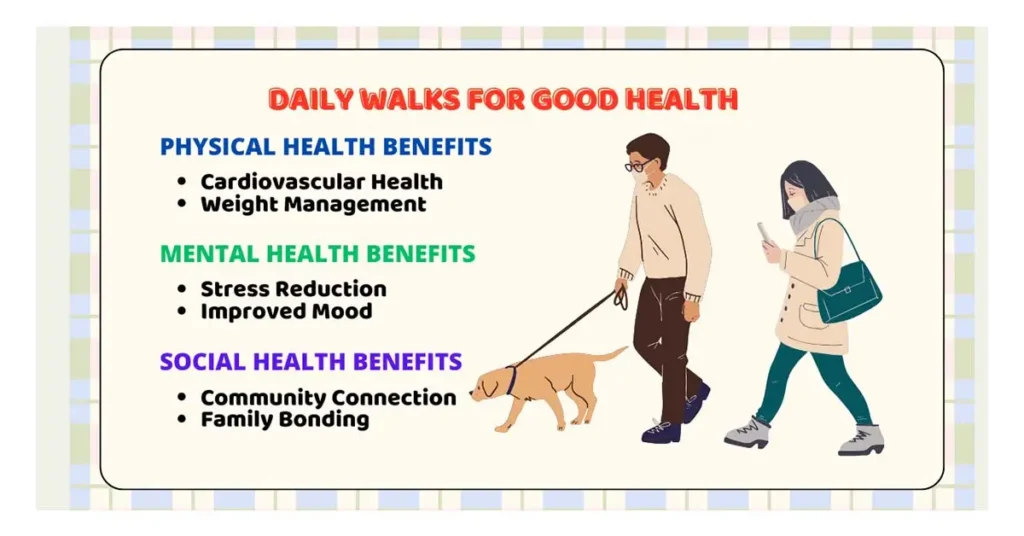
Take short walking breaks.
Sitting or standing in one position for too long can make the body feel stiff and sluggish.
Short walking breaks give your muscles a chance to loosen up while refreshing your mind at the same time. Even a quick walk around the workplace may improve circulation and alertness.
These mini breaks can help reduce stress and make long shifts feel less exhausting.
Stretch Regularly
Stretching every couple of hours can help prevent muscle tightness caused by repetitive movements or poor posture.
Gentle stretches for the neck, shoulders, back, wrists, and legs may improve flexibility and reduce discomfort during long shifts.
Stretching also encourages better blood flow and helps the body feel more relaxed. Simple movements done consistently can make a noticeable difference over time.
Choose Balanced Snacks
Healthy snacks can provide steady energy during overnight work without causing heavy fatigue later.
Foods like nuts, yogurt, fruit, boiled eggs, or whole-grain crackers are easier on the body than sugary snacks or greasy fast food. Balanced eating habits support focus, mood, and stamina while working long hours.

Limit Excessive Caffeine
Many night shift workers rely heavily on coffee or energy drinks to stay awake, but excessive caffeine intake may interfere with sleep after work.
Try to balance caffeine intake with water, movement, and healthy meals. Reducing caffeine closer to the end of your shift may also help your body relax more easily before bedtime.
Foods and Drinks That Support Energy at Night
Nutrition plays a huge role in overnight performance.

Best Foods for Night Shift Workers
| Bananas | Quick energy |
| Nuts | Healthy fats and protein |
| Yogurt | Light and filling |
| Oatmeal | Slow-release energy |
| Eggs | Protein support |
| Fruits | Hydration and vitamins |
Drinks That Help
- Water
- Herbal tea
- Low-sugar smoothies
- Coconut water
Try limiting sugary energy drinks because they often cause crashes later.
Mistakes to Avoid During Night Shift Workouts
While exercises for night shift workers can improve energy and reduce fatigue, certain mistakes may do more harm than good.
Overnight workers often feel tempted to push harder when they are tired, but balance is important.
Choosing safe, gentle, and consistent movement is usually more effective than intense training during work hours. Avoiding these common workout mistakes can help you stay active without exhausting your body.
Overexercising
Doing intense workouts in the middle of a night shift may leave you feeling even more drained afterward. Heavy exercise can increase fatigue, raise stress levels, and make it harder for your body to recover.
Instead of high-intensity training, focus on light stretches, short walks, or quick bodyweight exercises that refresh your energy without overwhelming your muscles.
Ignoring Pain
Pain is your body’s warning signal and should never be ignored. Some workers continue exercising even when they feel sharp discomfort, dizziness, or unusual muscle strain.
It can increase the risk of injury and worsen physical stress during long overnight hours. If an exercise feels painful, stop immediately and allow your body time to recover.
Poor Posture
Bad posture during exercise can place extra pressure on the neck, shoulders, back, and knees.
Many night shift workers already experience stiffness from sitting or standing for long periods, so incorrect form may increase discomfort.
Try to keep your spine straight, shoulders relaxed, and movements controlled while exercising. Good posture helps improve balance, circulation, and muscle support.
Skipping Warm-Ups
Even short workouts should begin with a gentle warm-up. Jumping straight into movement without preparing the body can increase muscle tightness and stiffness.
Simple stretches, shoulder rolls, ankle rotations, or a few minutes of slow walking can help loosen the muscles before exercising. A proper warm-up also helps improve flexibility and reduces the chance of strain.
Relying Only on Caffeine for Energy
Many overnight workers depend heavily on coffee or energy drinks instead of moving their bodies.
While caffeine may provide temporary alertness, too much of it can lead to crashes, dehydration, and trouble sleeping after work.
Quick exercises, stretching, and hydration often provide a healthier and more balanced energy boost during long shifts.
Forgetting to Stay Hydrated
Night shifts can quietly lead to dehydration, especially in busy work environments. Exercising without drinking enough water may increase tiredness, headaches, and muscle cramps.
Keep a water bottle nearby and take small sips regularly throughout your shift. Proper hydration supports circulation, energy, and overall physical performance.
Simple Weekly Exercise Routine for Shift Workers
Here’s a basic plan to stay active during overnight schedules.
| Monday | Stretching + marching |
| Tuesday | Chair squats + calf raises |
| Wednesday | Yoga stretches |
| Thursday | Lunges + wall push-ups |
| Friday | Breathing exercises |
| Saturday | Walking + stretching |
| Sunday | Light recovery movements |
Consistency matters more than intensity.
FAQs on Exercises for Night Shifts
Q. What are the best quick exercises for night shifts?
The best quick exercises for night shifts are simple movements that improve blood circulation and help you stay alert without causing exhaustion.
Exercises like chair squats, wall push-ups, calf raises, stretching, and marching in place are easy to perform in small workspaces.
These activities can reduce stiffness from sitting or standing for long hours. They also help refresh your mind and improve focus during overnight work.
Q. How often should I exercise during a night shift?
It’s a good idea to take short movement breaks every one to two hours during a night shift. Even a quick 3–5 minute exercise session can help reduce fatigue and muscle tension.
Regular movement keeps blood flowing properly and prevents your body from becoming stiff or sluggish. Consistency matters more than doing long workouts while working overnight.
Q. Can exercise help reduce night-shift fatigue?
Yes, gentle exercise can help reduce night shift fatigue by increasing oxygen flow and naturally stimulating the body. Physical movement wakes up the muscles and brain, helping you feel more energized and focused.
Exercises like walking, stretching, or light cardio can fight drowsiness during long shifts. They may also improve mood and lower stress levels over time.
Q. Are stretching exercises safe during work hours?
In most cases, stretching exercises are safe during work hours when done slowly and correctly. Gentle stretches can ease muscle tightness, improve flexibility, and reduce discomfort caused by repetitive tasks or poor posture.
However, workers should avoid overstretching or doing movements that cause pain. It’s always important to choose exercises that are safe for the workplace environment.
Q. Is walking during breaks helpful for overnight workers?
Yes, walking during breaks is very helpful for overnight workers because it improves circulation and keeps the body active. A short walk can refresh your mind, reduce stress, and help prevent stiffness from prolonged sitting.
Walking may also support digestion after meals and increase alertness during late-night hours. Even a few minutes of movement can make a noticeable difference.
Q. What foods support energy during night shifts?
Consuming foods high in fiber, protein, and healthy fats will help you stay energized while working nights. Fruits, nuts, yogurt, oatmeal, eggs, and whole grains are healthy options because they release energy more gradually.
It’s also crucial to drink enough water to avoid headaches and fatigue. Heavy, oily meals and sugary snacks should be avoided since they can cause energy slumps later.
Q. Can quick exercises improve sleep after work?
Quick exercises may help improve sleep after work by reducing stress and releasing physical tension built up during the shift.
Gentle stretches and light movement can help the body relax more naturally before rest.
However, intense workouts right before bedtime may make it harder to fall asleep. Choosing calming exercises and maintaining a regular sleep routine can support better recovery.
Recap
- Exercises for night shift workers help combat fatigue caused by long overnight shifts.
- Short movement breaks improve blood flow and reduce muscle stiffness.
- Chair squats, wall push-ups, and calf raises are easy exercises for limited workspaces.
- Stretching the neck, shoulders, wrists, and ankles can relieve tension from repetitive work.
- Marching in place and walking during breaks naturally increase alertness.
- Deep breathing exercises support mental clarity and reduce stress during demanding shifts.
- Gentle yoga stretches may improve flexibility and relaxation during overnight work.
- Drinking enough water and eating healthy snacks support better energy levels.
- Avoid heavy meals, sugary drinks, and prolonged sitting without movement.
- Small exercise sessions every 1–2 hours can make night shifts feel more manageable.
- Consistent movement habits may support better sleep and recovery after work.
- Safe, low-impact exercises are often the best choice during overnight schedules.
Final Thoughts
Although working night shifts can be mentally and physically taxing, minor lifestyle adjustments can have a significant impact.
If you’ve been wondering, “What are the best quick exercises for night shifts?” The answer is simple: choose movements that keep your body active, improve circulation, and help maintain energy without causing exhaustion.
From chair squats and calf raises to breathing exercises and mini yoga stretches, these quick routines fit easily into almost any workplace.
More importantly, they help you feel more awake, focused, and comfortable throughout the night.
Consistency is key. Even a few minutes of movement every couple of hours can support your overall well-being and make overnight shifts more manageable.
Start small, listen to your body, and build healthy habits one shift at a time.
Ready to feel more energized during overnight work hours? Start adding these simple exercises for night shift workers into your daily routine today.
Moving for even a short while can enhance concentration, reduce fatigue, and promote overall well-being.
Try one or two exercises during your next shift and notice the difference your body and mind can feel.
Read more about night shift workers’ health.
You might like: