
Learn simple nutrition tips to beat fatigue and brain fog, support steady energy, improve focus, and feel more alert throughout your day.
To beat fatigue and brain fog, eat balanced meals with whole grains, lean proteins, healthy fats, and antioxidants, and drink plenty of water.
Avoid sugar crashes and stay sharp by choosing steady-energy foods and staying properly hydrated.

How Do Simple Nutrition Tips Beat Fatigue and Brain Fog
Balanced meals with lean protein, complex carbohydrates, and healthy fats stabilize blood sugar and reduce fatigue and brain fog.
Balance Blood Sugar
- Eat protein and fiber: Combine 20–30 grams of lean protein (like eggs, chicken, or beans) with high-fiber vegetables or whole grains at lunch to prevent afternoon energy crashes.
- Skip high-sugar foods: White bread and refined sweets cause glucose levels to jump quickly and then drop sharply, making you lethargic and unable to concentrate.
Fuel Your Brain
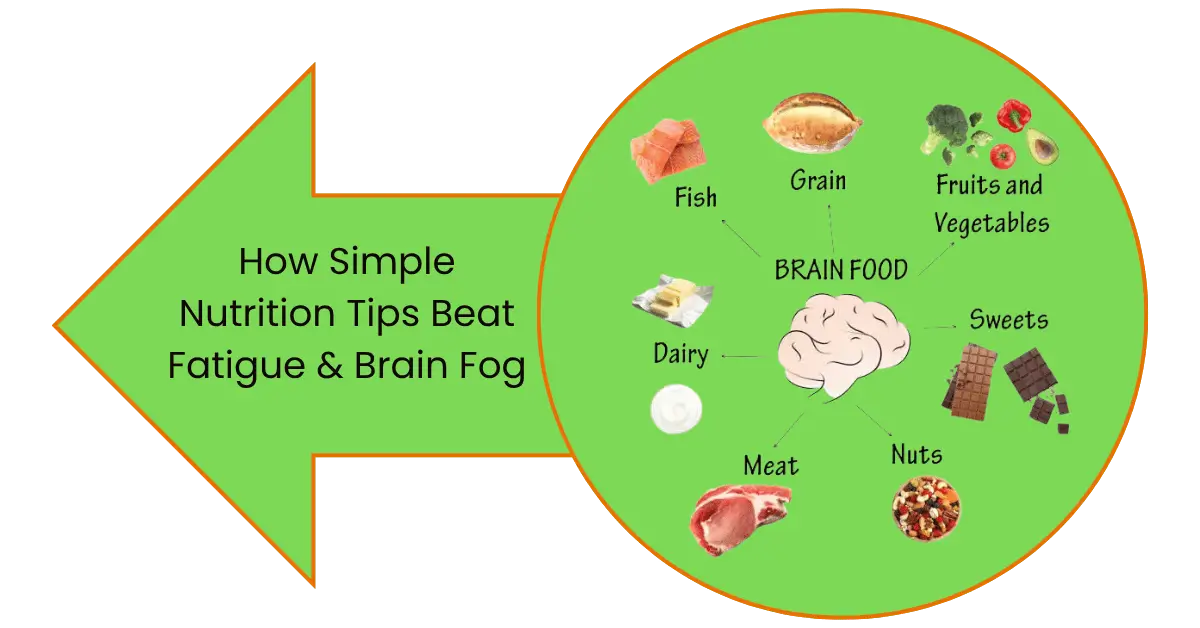
- Add healthy fats: For omega-3 fatty acids that reduce inflammation in the brain, eat walnuts, chia seeds, and fatty fish.
- Eat leafy greens: Include spinach, kale, or broccoli daily for vitamins and folate that protect cognitive health.
- Include antioxidants: Snack on blueberries or dark chocolate to support blood flow and mental clarity.
Hydrate and Time Meals
- Drink water: Mild dehydration causes fatigue and reduces focus; sip water or herbal tea consistently all day.
- Eat on a schedule: Avoid long gaps between meals by eating every few hours to keep your brain supplied with steady energy.
If you work nights, you already know why you feel foggy by 4 a.m.; your body clock wasn’t built for this. What most sleep advice skips is the part you actually control every shift: what and when you eat, drink, and caffeinate. Get that right, and fatigue and brain fog become a lot more manageable, even when the schedule itself doesn’t change.
This isn’t a repeat of the general science of sleep loss; it’s the practical playbook for the hours you’re actually awake and working.

Why Night Shift Eating Needs Different Rules
Your digestive system, insulin sensitivity, and hormone rhythms are all built around a daytime schedule. Overnight, your body is naturally less efficient at processing food, insulin sensitivity drops, digestion slows, and cortisol (which should be rising toward morning to help you feel alert) gets thrown off if you eat heavily in the middle of the night.
The practical result: the same meal that would be fine at 1 pm can leave you sluggish, foggy, or reaching for a nap you can’t take if you eat it at 3 am. That’s the core principle behind everything below.
Meal Timing: The Anchor Meal Framework
The simplest way to structure eating around a night shift is with three anchor points:
1. Pre-shift meal (1–2 hours before you clock in). This is your biggest, most substantial meal of the “day.” Eating it before your shift, while your metabolism is still closer to normal, gives you steady energy through the first several hours and reduces the urge to overeat later.
2. Light meals/snacks during the shift. Keep overnight eating light, especially between midnight and 6 am. CDC/NIOSH shift-work guidelines recommend minimizing food intake during these hours; heavy meals overnight are harder to digest.
They can blunt your body’s natural cortisol rise, which you actually want working in your favor toward the end of your shift.
3. Light meal before sleep, not after waking. Have something easy to digest after your shift ends, before you go to sleep, not a full meal. A heavy meal right before daytime sleep can disrupt sleep quality, which defeats the purpose.
Quick reference:
- Biggest meal → before your shift starts
- Light, protein-forward snacks → during the shift, especially the back half
- Minimal eating → midnight to 6 am window if possible
- Light snack, not a full meal → right before daytime sleep

Protein: Your Best Tool Against the 3 AM Crash
Blood sugar swings drive the fatigue-and-fog spiral during night shifts. Carb-heavy snacks (vending machine chips, pastries, and sugary drinks) spike blood sugar fast and drop it just as fast, right when you need to be sharp.
Protein slows that spike. Pairing protein with any snack keeps energy steadier for longer, which directly supports concentration during the hours your body least wants to cooperate.
Easy protein-forward options that hold up well overnight:
- Greek yogurt (individual cups travel well, no prep)
- Hard-boiled eggs (prep a batch at the start of the week)
- Jerky or protein bars (check sugar content; some bars are candy bars in disguise)
- A tiny handful of fruit and nuts.
- Cottage cheese with berries
Aim to have a protein source in every overnight snack, not just your pre-shift meal.

Hydration: The Thirst Signal You Can’t Trust
Most fatigue advice ignores the fact that night shift workers typically drink far less water than day shift workers.
This isn’t because they are less disciplined, but because circadian misalignment suppresses the body’s natural thirst signal at night. You can be dehydrated without feeling thirsty.
That matters because even mild dehydration, as little as 2% of body weight, measurably impairs concentration, reaction time, and short-term memory. On a night shift, that’s often indistinguishable from “just being tired,” so it goes unaddressed.
Practical fix: don’t wait until you’re thirsty. Keep a water bottle at your station and sip on a schedule every hour or so, rather than relying on thirst to remind you. Herbal tea (non-caffeinated) counts toward hydration and can double as a small comfort ritual during a long shift.

Caffeine: Timing Matters More Than Quantity
Caffeine isn’t the enemy on the night shift; bad timing is. Used strategically, it can meaningfully offset your circadian low point. Used carelessly, it wrecks the daytime sleep you’re relying on to recover.
A workable strategy:
- Time your main caffeine dose roughly 2 hours before your personal low point; for many night shift workers, that’s around 4 am, when alertness naturally bottoms out.
- Set a hard caffeine cutoff based on your sleep window, not the clock. Since caffeine has a half-life of about five to six hours, you should usually have your last cup well before the back half of your shift, rather than right before clocking out, if you need to be sleeping by nine in the morning.
- Avoid stacking caffeine sources (coffee + energy drink + pre-workout) without accounting for the total; it adds up faster than people expect.
If you’re relying on caffeine just to get through, more of it isn’t the fix; better timing and the meal/hydration strategies above will get you further than another cup.
Food Options for Overnight Shifts
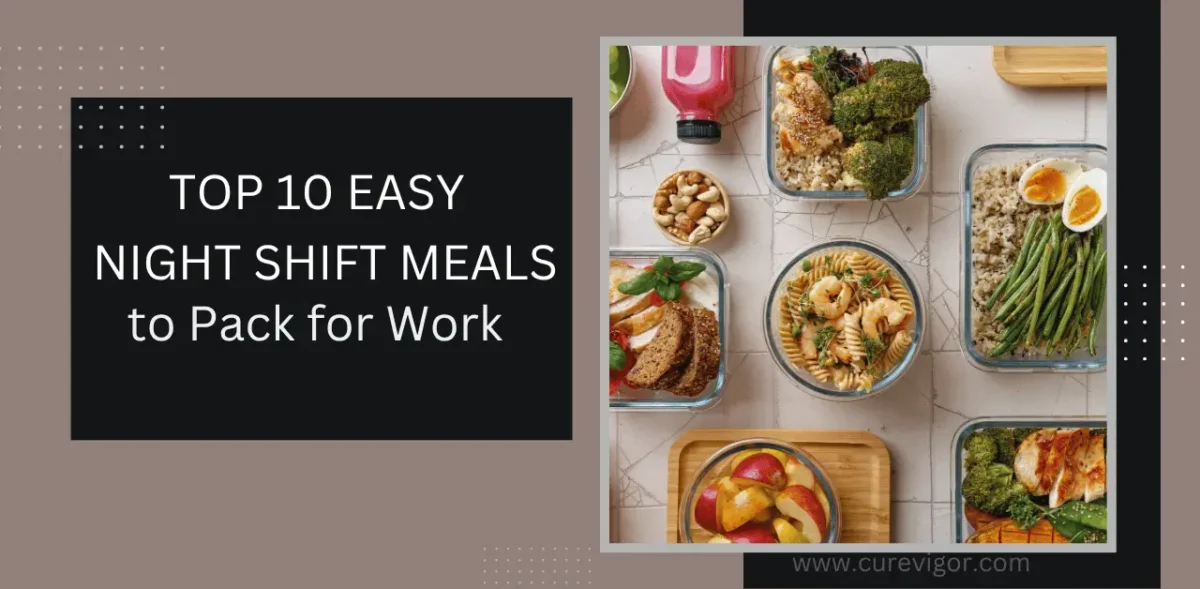
Planning ahead removes the 3 am decision, when you’re most likely to default to whatever’s in the vending machine.
Good options to prep or grab:
- Pre-cut vegetables with hummus
- Overnight oats (light on sugar, add protein powder)
- Turkey or chicken wraps with whole grain.
- Trail mix with more nuts than dried fruit
- Soup in a thermos (easy on digestion overnight)
What tends to backfire overnight:
- Heavy, greasy fast food: slows digestion and can cause discomfort during an active shift.
- High-sugar pastries and cereal: fast spike, faster crash
- Large portions late in the shift: harder to digest, disrupts the meal-before-sleep window.
A little meal prep at the start of the week, even just portioning snacks into grab-and-go containers, removes the moment-to-moment willpower most people don’t have left by 3 am.

For Weight-Conscious Night Shift Workers
If you’re also trying to manage your weight, night shift adds a real, physiological complication; this isn’t just about willpower.
Because insulin sensitivity is lower overnight, the same calories eaten at 2 am are processed less efficiently than during the day.
Research on shift workers has also linked overnight eating to a higher risk of weight gain and metabolic issues over time, independent of total calorie intake; timing genuinely matters here, not just quantity.
What tends to help:
- Front-load your calories around your pre-shift meal, when your metabolism is working more normally, rather than spreading them evenly across the night.
- Keep overnight eating light and protein-forward rather than skipping meals entirely; going too long without eating on a night shift often backfires into a bigger, less controlled meal later.
- If you’re drawn to intermittent fasting or time-restricted eating, schedule the fasting window on your days off or during sleep hours, not while you’re awake and working. Fasting during an active night shift tends to worsen fatigue and fog, working against the goal.
- Don’t fast during the shift itself; even research on structured fasting approaches with night shift workers found it worked best when the fasting window avoided active work hours.
The goal isn’t a stricter diet; it’s shifting when you eat what you already eat so it works with your body’s overnight metabolism, not against it.
FAQs on How to Beat Fatigue and Brain Fog with Simple Nutrition Tips
Q. How to fight night shift fatigue?
Night-shift fatigue responds best to a layered approach, not a single fix. Anchor your biggest meal before your shift, keep overnight eating light, and hydrate on a schedule rather than waiting to feel thirsty; dehydration mimics fatigue and often goes unnoticed overnight.
Time caffeine strategically around your circadian low point (often around 4 am) instead of sipping it continuously. Short, protective naps before or during breaks (where allowed) and consistent sleep hours on days off also matter more than most people expect.
Q. What foods help with brain fog and fatigue?
Protein-forward foods that stabilize blood sugar do the most work here; think Greek yogurt, eggs, nuts, and lean meats rather than sugary snacks that spike and crash energy.
Complex carbohydrates (whole grains, vegetables) paired with protein sustain focus longer than simple carbs alone. Staying hydrated matters as much as what you eat because even mild dehydration impairs concentration and memory.
Omega-3-rich foods like fatty fish are also commonly associated with supporting cognitive function, though they work best as part of a consistent pattern, not a one-off fix.
Q. What is the 3-3-3 rule for food?
The 3-3-3 rule is a simple eating framework: eat three meals a day, space them roughly three hours apart, and build each meal around three components: a protein, a fiber source, and a healthy fat.
It’s meant to steady blood sugar and reduce mindless snacking, not restrict specific foods. It isn’t a clinically validated protocol, just a memorable structure some people find easier to stick to than calorie counting.
For night shift workers, the same logic applies but shifted to your actual waking hours, not the clock.
Q. What is the best diet for night shift workers?
There’s no single “best” diet; timing and consistency matter more than a specific meal plan.
The most consistently recommended approach is to eat your largest meal before your shift, keep food light and protein-forward overnight (especially between midnight and 6 am), and have a light snack rather than a full meal before daytime sleep.
Whole, minimally processed foods generally outperform packaged snacks for sustained energy. Beyond that, the diet that actually fits your schedule and that you can maintain consistently will always beat a “perfect” plan you can’t stick to.
Q. How unhealthy is the night shift?
Night shift work is genuinely linked to higher risks of obesity, type 2 diabetes, cardiovascular issues, and metabolic syndrome, largely because eating, sleeping, and hormone cycles are pushed against your natural circadian rhythm.
That said, the risk isn’t fixed; it’s heavily influenced by how well you manage sleep, meal timing, and light exposure around your schedule.
Workers who protect consistent sleep windows and time meals thoughtfully tend to fare meaningfully better than those who don’t. It’s a real occupational health consideration, not an unavoidable outcome.
Q. How to survive a 12-hour night shift?
Break the shift into segments rather than treating it as one long stretch; plan your biggest meal before clocking in, a protein-based snack around the midpoint, and sip water throughout rather than chugging it all at once.
Save your strategic caffeine dose for a couple of hours before your energy typically dips, not the start of the shift when you’re already alert. Short movement breaks (a walk, stretching) help more than another snack when fatigue hits.
Protect your sleep window immediately after; rushed, poor-quality daytime sleep undoes most of what you did right during the shift.
The Bottom Line
Night shift fatigue and brain fog aren’t purely a sleep problem; they’re also an eating-and-timing problem, and it’s one you have real control over every single shift.
Anchor your biggest meal before you clock in, keep overnight eating light and protein-forward, drink on a schedule instead of waiting to feel thirsty, and time your caffeine around your personal low point rather than just whenever you feel tired.
None of this replaces sleep, but done consistently, it takes real pressure off a body clock that’s already working against you.
Best Foods for Energy and Focus
- Berries and nuts: Fight cell damage and boost memory.
- Leafy greens: Provide iron and vitamins to clear brain fog.
- Fatty fish: Deliver omega-3 fats for healthy brain function.
- Whole grains: Release slow and steady energy into your body.
Best Drinks to Stay Alert
- Water: Prevents low energy caused by dehydration.
- Green tea: Offers gentle caffeine and a focus-boosting amino acid.
- Black coffee: Restores alertness when used in small, sensible amounts.
Habits to Avoid
- Sugary snacks: Cause fast energy spikes and sudden crashes.
- Heavy processed foods: Make you feel slow and tired.
- Skipping meals: Drops your blood sugar and ruins focus.
Struggling to stay sharp through your shift? Start with one change tonight, anchor your biggest meal before you clock in, and build from there.
Save this guide, share it with a coworker on the same schedule, and check out our companion piece on how poor sleep leads to fatigue, brain fog, and burnout for the fuller picture.
Read more about night shift workers’ health.