
Discover effective strategies to stay awake on night shifts without caffeine. From mindfulness tips to social support, learn how to boost your alertness and maintain a healthy work-life balance.
Working the night shift can be challenging. It disrupts your natural sleep cycle and affects your health. Stay awake without caffeine is possible with the right strategies.
Caffeine is a common go-to for alertness. However, relying on it can lead to dependence and further disrupt sleep. There are healthier alternatives to keep you awake and alert.
Understanding your body’s internal clock is crucial. Night shifts can throw off your circadian rhythm, leading to fatigue. Adapting to this change is key to stay awake.
Creating a consistent sleep schedule helps. Even on days off, maintaining regular sleep patterns is beneficial. This consistency supports better rest and energy levels.
Your environment plays a significant role. A dark, cool, and quiet space promotes quality sleep. This setup helps you recharge effectively for your next shift.
Nutrition is another vital factor. Balanced meals and avoiding heavy foods can sustain energy. Hydration is equally important to prevent fatigue.
Physical activity boosts alertness. Simple exercises or stretches during breaks can invigorate you. Movement keeps your mind and body engaged.
Mindfulness and relaxation techniques can reduce stress. They improve focus and help manage the demands of night shifts. Staying connected with loved ones also provides essential support.
By adopting these strategies, you can thrive on night shifts without caffeine.
Understanding Night Shift Challenges and Your Body’s Clock
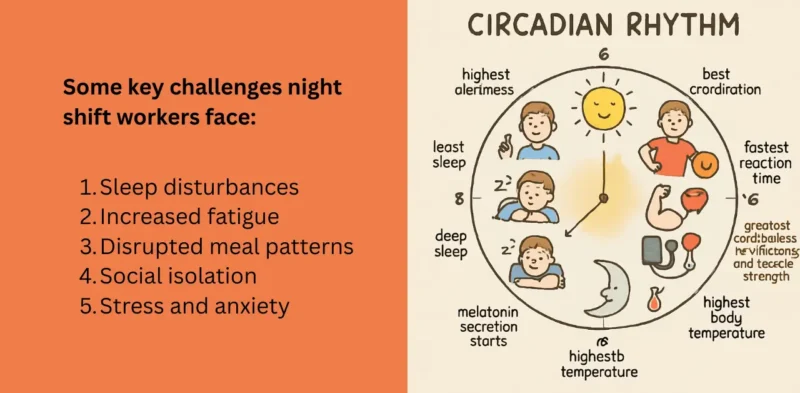
The human body operates on a natural cycle called the circadian rhythm. This internal clock regulates sleep and wake patterns. Night shift work often conflicts with this rhythm.
When you work nights, your sleep schedule can suffer. This disruption can affect mental and physical health. Adapting your body to a new rhythm is essential to maintain alertness.
Understanding these challenges helps in managing them better. Awareness of your body’s signals can guide you to make effective adjustments. Small changes can make a big difference in energy levels.
Keeping a routine aligned with your night shift is beneficial. Even small inconsistencies can impact your sleep quality. Creating a daily routine can stabilize your internal clock.
Let’s explore some key challenges night shift workers face:
- Sleep disturbances
- Increased fatigue
- Disrupted meal patterns
- Social isolation
- Stress and anxiety
Adapting to these challenges may require strategic planning. Gradually shifting your sleep schedule before starting night shifts can help. This approach reduces the initial shock to your system.
Additionally, light exposure influences your circadian rhythm. Bright light during night shifts can simulate daytime and keep you awake. Conversely, limit light exposure when it’s time to sleep.
By understanding the impact of night shifts on your body, you can develop strategies to cope. Through awareness and adaptation, you can effectively manage the unique challenges posed by working nights.
Building a Consistent Sleep Routine for Night Shift Workers
Keeping a consistent sleep routine is crucial for night shift workers. Irregular sleep can lead to exhaustion and long-term health issues. Your internal clock can be stabilized by creating a habit.
Make a sleep schedule and stick to it. Aim for a consistent bedtime and wake-up time each day. This consistency controls your circadian rhythm.
On your days off, resist the temptation to revert to a “normal” day schedule. Keeping your routine as consistent as possible is beneficial. This makes it easier to adjust back to work.
Use sleep-enhancing tools to improve quality. Consider blackout curtains, white noise machines, or even sleep masks. These can create an environment conducive to rest.
Establishing a pre-sleep routine can help your body recognize when it’s time to relax. Warm baths, meditation, and reading are some of the most calming activities. Steer clear of screens, as blue light may delay sleep onset.
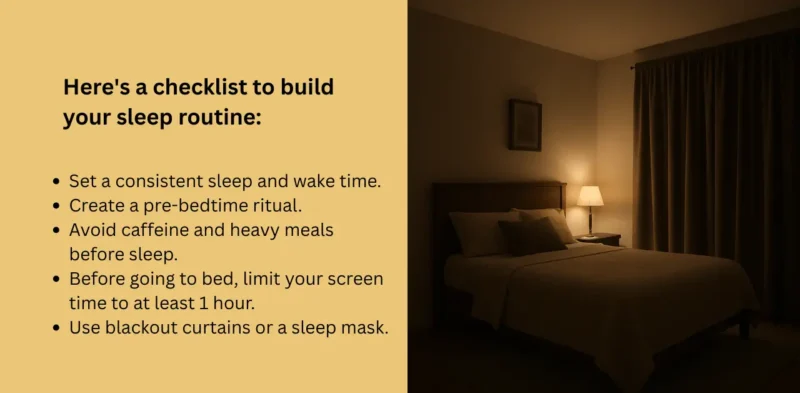
Here’s a checklist to build your sleep routine:
- Set a consistent sleep and wake time.
- Create a pre-bedtime ritual.
- Avoid caffeine and heavy meals before sleep.
- Before going to bed, limit your screen time to at least 1 hour.
- Use blackout curtains or a sleep mask.
Experiencing difficulties sticking to a routine is normal. If your schedule needs adjusting, make changes gradually. Small, incremental shifts are less disruptive to your system.
Routine changes might take time to show results. Be patient as your body adjusts. The secret to enhancing overall well-being and sleep quality is consistency.
Creating the Perfect Sleep Environment
A peaceful sleeping environment is necessary for restful sleep. Your bedroom ought to be an ideal haven for rest and sleep. Strive for fewer distractions and comfort.
Controlling light is essential. Heavy blinds or blackout drapes can simulate nightfall by blocking outdoor light. If the light continues, a sleep mask may also be useful.
The room temperature has a significant impact on how well you sleep. It is usually advised to be in a cool climate, usually between 60 and 67°F (15 and 19°C). Lowering your body’s core temperature promotes deep slumber.
Noise can interfere with sleep, resulting in light sleep or frequent awakenings. To block out distracting sounds, use a white noise machine or earplugs. These tools can create a consistent and calming backdrop for sleep.
Lastly, consider your bedding. Comfortable, breathable fabrics can improve how you sleep. A supportive mattress and pillows are worth the investment for quality sleep.
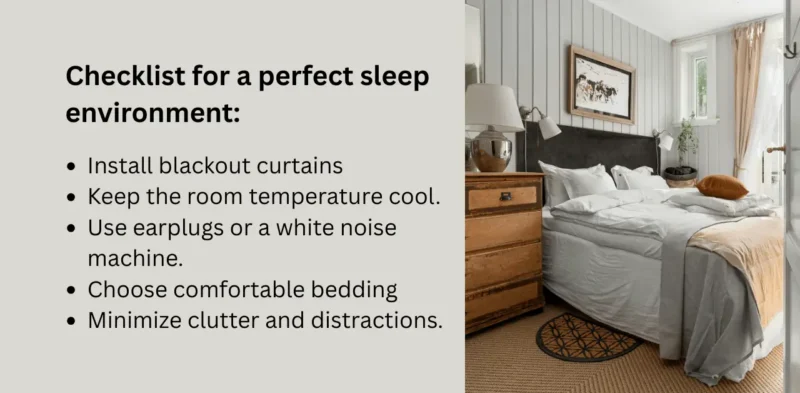
Checklist for a perfect sleep environment:
- Install blackout curtains
- Keep the room temperature cool.
- Use earplugs or a white noise machine.
- Choose comfortable bedding
- Minimize clutter and distractions.
Creating an ideal sleep environment helps soothe the senses. With these adjustments, your bedroom can become a restful retreat that promotes restorative sleep after night shifts.
Smart Nutrition: Eating for Energy Without Caffeine
Maintaining energy during a night shift largely depends on nutrition. Alertness and endurance can be greatly impacted by a balanced diet. The key is to eat with intentionality and awareness.
Eat a healthy supper to start your shift. Choose healthy fats, complex carbs, and proteins in balanced amounts. Sustained energy can be obtained from foods like avocados, whole grains, and grilled chicken.
Steer clear of large meals and sugary snacks. Energy spikes and crashes may result from this. Rather, concentrate on nutrient-dense foods that help control blood sugar levels.
Maintaining energy might also be aided by eating smaller, more frequent meals. Mini-meals or healthy snacks every 3 to 4 hours can help prevent fatigue. This approach keeps your metabolism engaged and energy levels steady.
Stay mindful of hydration, which we will cover in more detail later. Nevertheless, remember that water-rich foods like fruits and vegetables also aid hydration.
Timing your meals can be crucial. Align your eating schedule with your shift’s energy demands. This may mean different meal timing compared to a traditional workday.
Here are some energy-boosting snack ideas:
- Nuts and seeds
- Greek yogurt with berries
- Whole grain toast with nut butter
- Hummus with veggie sticks
By planning meals and snacks strategically, you can fuel your body effectively for the demands of night work. Balanced nutrition supports brain function, mood, and overall well-being, making caffeine unnecessary for staying alert.

Hydration: The Unsung Hero of Night Shift Stay Awake
Hydration is crucial to stay awake and alert during night shifts. Often overlooked, drinking enough water can significantly boost energy. Fatigue, headaches, and diminished focus can result from dehydration.
Begin your shift with a glass of water. This helps kickstart your hydration levels. Continue to sip water throughout your shift to maintain balance.
Avoid sugary drinks, including sodas. These options can lead to sugar crashes, which can affect your wakefulness. Water remains the best choice for consistent hydration.
For extra benefits, include high-water meals in your diet. Oranges, watermelons, and cucumbers offer vital nutrients in addition to hydration.
Consider using a reusable water container with time markers or creating reminders. This method guarantees consistent water consumption and holds you responsible. Here are some other pointers for maintaining hydration:
- Before you eat, have a glass of water.
- Use lemon or mint slices to add flavor to the water.
- Use the color of your urine as a gauge of your hydration level.
By prioritizing hydration, you support bodily functions that keep you energized. This simple practice naturally helps you remain awake and focused.

The Power of Movement: Physical Activity and Stretching
Movement is a powerful way to maintain alertness during night shifts. Sitting or standing still for long hours can lead to sluggishness. Incorporating regular physical activity can counteract this.
Even short bursts of activity, like stretching or walking, improve circulation. This not only energizes you but also helps clear your mind. Simple exercises at your workstation can make a difference.
Consider setting a timer for every hour. When it rings, take a two-minute moving break. Stretch your arms, legs, and back to keep your muscles limber.
Engaging in light exercises can boost endorphins, lifting your mood. This improves focus, making tasks seem less daunting.
Examples of quick exercises:
- Desk push-ups
- Seated leg lifts
- Neck and shoulder rolls
The key is consistency. Regular movement keeps your body active and your mind sharp, naturally helping you fight fatigue. You improve your ability to remain awake and focused during your night shifts by incorporating exercise into your routine.

Harnessing Light and Technology for Alertness
The internal clock of our bodies is greatly influenced by light. During night shifts, exposure to bright light can improve alertness. It helps synchronize your irregular hours with your circadian rhythm.
Consider using a light therapy box. These devices mimic daylight and can boost your energy levels. Place them near your workspace for optimal effects.
Incorporate technology to aid alertness. Apps can remind you when it’s time for a quick activity or break. Some apps even offer brief brain exercises to sharpen focus.
Be mindful of blue light from screens. Too much exposure before sleep can disrupt your rest. Consider blue-light filters on devices to minimize the impact.
Examples of technology to support alertness include:
- Light therapy lamps
- Screen filters or blue-light glasses
- Reminder apps for breaks
Employ these tools to create a work environment conducive to stay awake. By strategically using light and technology, you can enhance your performance without reaching for caffeine.
Power Naps and Rest Breaks: Timing and Techniques
Power naps can be a lifesaver for night shift workers. Short, strategic naps improve alertness and performance. Keep naps around 20 minutes to avoid feeling groggy.
Consider timing your naps thoughtfully. The ideal nap time is often midway through your shift. This can provide a significant boost in alertness and energy.
Take regular rest breaks to maintain focus. Brief breaks help refresh your mind and body. Aim for breaks every 90 minutes to prevent fatigue.
Incorporate relaxation techniques during rest breaks. Deep breathing exercises can reduce stress and recharge your mind. Simple stretches can invigorate and relieve tension.
Below are helpful nap and break strategies:
- Schedule 20-minute power naps.
- Take short breaks every 90 minutes.
- Practice deep breathing during breaks.
By using these techniques, you can manage fatigue effectively. Incorporate naps and breaks into your routine to smooth night shifts and boost productivity.

Mindfulness, Relaxation, and Stress Management
Night shifts can increase stress levels for many workers. This makes stress management crucial for maintaining mental health and energy. Mindfulness practices help reduce stress and improve concentration.
Mindfulness involves staying present and aware. Even a few minutes of meditation can enhance focus and lower stress. Techniques such as focused breathing can be practiced anytime, anywhere.
Relaxation techniques can also benefit night shift workers. Progressive muscle relaxation or guided imagery is an excellent way to unwind. These practices can be done during breaks to recharge mentally.
Hobbies are another way to relieve stress. Activities like reading or drawing can offer a mental escape. Such practices help balance work demands with personal relaxation.
Here are some effective mindfulness and relaxation tips:
- Practice mindful breathing
- Engage in meditation or yoga.
- Explore hobbies for mental rejuvenation.
By integrating mindfulness and relaxation into your routine, you can manage stress effectively. This helps boost alertness and maintain a positive outlook.
Social Support and Communication: Staying Connected
Working the night shift can be isolating. Maintaining communication with friends and family is vital. Social connections provide emotional support and enhance well-being.
It might be difficult to find time to spend with loved ones. Scheduling regular calls or messages can help bridge gaps. Keeping loved ones informed about your schedule helps them understand your commitments.
Building a support network at work can also boost morale. Colleagues who understand the challenges of the night shift can offer valuable support. Sharing experiences and coping strategies can strengthen bonds.
Maintaining social ties helps reduce stress and loneliness. Being connected can provide motivation and joy in daily life. Simple gestures, like sending a quick text, can make a big difference.
Consider these tips for staying connected:
- Schedule weekly catch-ups with friends.
- Join online communities for night shift workers.
- Send quick updates to loved ones during breaks.
By fostering social connections, night-shift workers can find balance and support.
Alternative Ways to Boost Alertness (No Caffeine Required)
Staying alert on the night shift without caffeine is achievable. Various techniques can keep energy levels high and maintain focus. Small adjustments to your routine can make a significant difference.
Start by incorporating movement into your shift. Brief walks or stretches every hour can re-energize the body. These activities combat fatigue and increase circulation.
Consider engaging in mental stimulation to stay alert. Puzzles, reading, or problem-solving tasks can sharpen focus. These activities challenge the brain and provide a mental wake-up.
Sensory stimulation is another effective strategy. Listening to upbeat music or using essential oils like peppermint can invigorate the senses. Changing the sensory environment prevents monotony and promotes alertness.
Try these non-caffeine strategies to boost alertness:
- Take regular movement breaks.
- Engage in brain-stimulating activities.
- Utilize music or aromatherapy.
Experiment with these methods to find what works best for you during night shifts.
Managing Shift Work Sleep Disorder and When to Seek Help
Shift Work Sleep Disorder (SWSD) affects many night-shift workers. It disrupts natural sleep cycles and causes insomnia. SWSD-related fatigue can affect focus and job performance.
Recognizing symptoms early is crucial. Persistent fatigue, sleep troubles, and mood changes are warning signs. Acknowledging these symptoms allows for proactive management.
Several strategies can alleviate SWSD symptoms. Adopt a consistent sleep routine and use blackout curtains to create a restful environment. Also, limit exposure to blue light before sleeping.
In some cases, professional help becomes necessary. Consulting a sleep specialist can provide further insight. They may suggest treatments or specific lifestyle changes.
Consider these signs and actions when managing SWSD:
- Persistent tiredness despite rest
- Difficulty falling or staying asleep
- Mood swings or irritability
If symptoms persist, seek a specialist’s advice for a tailored sleep solution.
Transitioning Between Day and Night Shifts Smoothly
It can be difficult to transition between day and night shifts. It disrupts your body’s circadian rhythm. Preparing in advance eases this transition.
Start by gradually adjusting your sleep schedule. Shift your bedtime and wake time incrementally over several days. This helps your body adapt without shock.
Engage in activities that mimic your new shift. If transitioning to night shifts, stay active in the evening. Doing so helps align your body clock with the new schedule.
Communicate your needs to family and roommates. Let them know your preferred rest hours to minimize disturbances. This support is crucial for a successful transition.
To manage these transitions effectively, consider these steps:
- Gradually adjust sleep times leading up to the shift.
- Engage in activities that suit the upcoming schedule.
- Inform others about your changing rest hours.
Long-Term Health, Work-Life Balance, and Self-Care
Working night shifts can impact long-term health. Prioritize regular health check-ups to catch potential issues early. Maintaining health is essential for balance.
Establish boundaries between work and personal life. Prioritize time for family, friends, and hobbies. This balance aids emotional well-being.
Self-care should be non-negotiable. Engage in activities that relax and rejuvenate you. These can include reading, exercise, or a calming bath.
Consider incorporating specific strategies into your routine:
- Schedule regular health exams.
- Set clear boundaries for work and personal time.
- Dedicate time to self-care activities.
Balancing these elements supports both mental and physical health. When well-managed, night shifts become less daunting. The right strategies can transform challenges into manageable tasks.
FAQs About How to Stay Awake
Q. How to survive night shifts without caffeine?
Use a three-part replacement system: strategic napping (10–20 minutes before or during your shift), cold exposure (splash cold water on your face or drink ice water), and movement snacks (2 minutes of jumping jacks, stair climbing, or brisk walking every hour).
Also, eat small, frequent meals rich in protein and complex carbs (e.g., Greek yogurt with berries) to help maintain stable blood sugar levels.
Bright light exposure at 10,000 lux for 15 minutes midway through your shift naturally mimics caffeine’s alertness effect.
Q. What is the 10-5-3-2-1 rule for sleep?
It’s a countdown to bedtime that optimizes sleep quality for shift workers as they adjust their body clocks.
- 10 hours before bed: No caffeine.
- 5 hours before bed: No heavy meals (digestion disrupts deep sleep).
- 3 hours before bed: No alcohol (it fragments REM sleep).
- 2 hours before bed: No work or stressful mental tasks (lower cortisol).
- 1 hour before bed: No screens (blue light delays melatonin).
For night shift workers, apply this rule to your daytime sleep window—e.g., if sleeping at 8 AM, stop caffeine at 10 PM the night before.
Q. What is the 2-hour coffee rule?
The 2-hour coffee rule states, “Wait at least 90–120 minutes after waking before your first coffee, and stop all caffeine 6 hours before your planned bedtime (or 2 hours before the end of your shift for night workers).”
Why? Immediately upon waking, cortisol is naturally high; caffeine then disrupts this rhythm, causing a later energy crash.
For shift workers, adjust timing: if finishing a night shift at 6 AM, have your last coffee by midnight–1 AM to ensure it clears your system before daytime sleep.
Q. How do I stay awake on a night shift without relying on stimulants?
Use a sensory rotation system to reboot alertness every 45–60 minutes:
- Temperature—chew ice chips or hold a cold pack to your wrist.
- Sound – listen to an upbeat podcast or fast-tempo music (not soothing lo-fi).
- Light – turn on a bright lamp or headlamp pointed at your workspace.
- Movement – do 10 standing calf raises or shoulder rolls.
Also, talk out loud to a coworker or yourself—vocalization activates the reticular activating system in your brain, instantly increasing wakefulness.
Q. What vitamins should I take while working the night shift?
Focus on four key supplements after consulting a doctor:
- Vitamin D (2,000–4,000 IU daily) – night workers miss sunlight, leading to fatigue and low mood.
- Magnesium glycinate (200–400 mg before daytime sleep) improves the quality of deep sleep and reduces muscle tension.
- B-complex (especially B12) taken at the start of your night shift supports energy metabolism.
- Melatonin (0.5–3 mg, not more) taken 30 minutes before your daytime sleep helps reset your circadian rhythm. Avoid multivitamins with high B6 late in your shift, as they can disrupt sleep.
Q. What can I replace caffeine with for energy during night shifts?
Try these four caffeine-free alertness boosters:
- Cold water therapy – drink 500 ml of ice water quickly; cold activates the sympathetic nervous system.
- Peppermint or rosemary essential oil – inhale directly from the bottle or dab on your collar; both increase oxygen flow to the brain.
- Carbohydrate-protein snacks – apple slices with peanut butter or a small banana; steady glucose prevents the crash that sugary snacks cause.
Bright light exposure – 15 minutes under a 10,000 lux therapy lamp (commonly used for seasonal affective disorder) boosts alertness more effectively than a cup of decaf.
Q. How can I improve my sleep while working night shifts?
Understanding your body’s clock is crucial. A consistent sleep schedule, even on days off, is essential. Make your sleep environment conducive to quality rest.
Q. What foods help keep energy levels high during night shifts?
Opt for nutrient-rich foods over sugary snacks. Complex carbohydrates, proteins, and healthy fats provide sustained energy. Avoid heavy meals close to your bedtime.
Q. Are there non-caffeinated drinks that can boost alertness?
Yes, there are several options. Herbal teas, infused water, and smoothies with natural energy-boosting ingredients can help. They support hydration and vitality without caffeine.
Key Takeaways:
- Prioritize a consistent sleep schedule.
- Choose nutrient-rich foods for sustained energy.
- Explore non-caffeinated drinks to stay alert.
By exploring these strategies, you can improve your night shift experience. Finding what works best for your body to stay awake and alert.
Conclusion: Stay Awake on the Night Shift Without Caffeine
Thriving on the night shift without caffeine is achievable with the right strategies. By focusing on consistent routines and healthy habits, you can maintain energy and alertness throughout your shift. It’s essential to listen to your body and adjust your strategies as needed.
Remember, a balanced approach that incorporates nutrition, movement, and relaxation techniques can enhance your night shift experience.
Being mindful of your environment and engaging in supportive social interactions can further improve your well-being.
Embrace these changes to thrive in your role and maintain a healthy work-life balance. You have the power to navigate night shifts successfully and in a healthy way.
Ready to transform your night shift experience? Implement these tips today and find the perfect balance between work and well-being!
Read more about night shift workers’ health.
You might like: