
Learn practical tips to protect your mental health on night shifts, including better sleep, stress management, emotional wellness, and social connection.
Working night shifts can make everyday life feel harder than it should. You may finish work when everyone else is waking up, struggle to sleep during daylight, or miss family gatherings because you need rest.
Over time, these challenges can affect your mood, energy, and emotional well-being.
Fortunately, you can overcome these obstacles by adopting modest, practical routines. You do not need a perfect routine or hours of free time to care for yourself.
You need a few habits that fit your schedule and give your mind and body a chance to recover.
In this article, learn how to protect your mental health on night shifts, manage stress, reduce loneliness, build healthier sleep habits, and recognize when you may need extra support.
How to Protect Your Mental Health
To protect your mental health on night shifts, prioritize enough sleep, eat regular balanced meals, take breaks when possible, stay connected with people you trust, and make time to relax.
A consistent routine can support emotional well-being, but persistent anxiety, low mood, or sleep problems deserve attention and professional support when needed.
Here are five simple ways to start:
- Protect a regular sleep schedule.
- Take short breaks when your workload allows.
- Stay in touch with friends and family.
- Make time for activities you enjoy.
- Ask for help when stress becomes difficult to manage.
You do not have to change everything at once. Start with one habit that would make your next shift easier.

Why Night Shifts Affect Mental Health
Night work changes more than your working hours. It can affect your sleep, daily routines, relationships, and opportunities to relax.
Understanding these challenges can help you find practical ways to manage them.
Circadian Rhythm and Sleep Loss
The circadian rhythm is your body’s intrinsic clock. It helps regulate your sleep-wake cycle, alertness, and other daily processes. This clock generally follows a pattern that encourages you to sleep at night and remain awake during the day.
Night shifts can work against this natural pattern. You may need to stay alert when your body is preparing for sleep, then try to rest when daylight and everyday noise encourage wakefulness.
As a result, you might sleep less than you need or wake up feeling unrefreshed.

Insufficient sleep can affect concentration, patience, and emotional regulation. You may notice that small problems feel more frustrating after a difficult shift.
What can help? Protect a regular sleep window, make your bedroom dark and quiet, and avoid filling every free hour with errands or social commitments.
Stress, Mood, and Emotional Health
Night workers often manage unusual workloads, tiredness, staff shortages, or limited opportunities to take breaks.
When these demands continue without enough recovery time, everyday stress may become harder to handle.
Getting too little sleep can also make daily annoyances harder to handle. You might feel irritable, less motivated, or emotionally drained.

These experiences do not automatically mean you have depression or an anxiety disorder. However, persistent mood changes shouldn’t be ignored.
Give yourself permission to slow down when possible. A manageable schedule, supportive relationships, and regular recovery time can make daily life easier.
Loneliness and Social Isolation
When you work nights, your free time may not match your friends’ or family’s schedules. You might sleep while others are available and work while they relax.
Over time, missing conversations, celebrations, and everyday moments can leave you feeling disconnected.
This can be especially difficult if you already spend long periods working alone or have little social interaction during your shift.
Try to maintain small connections throughout the week. A short phone call, a shared meal, or a message to someone you trust can help you feel included without sacrificing essential sleep.
Mental Health Warning Signs
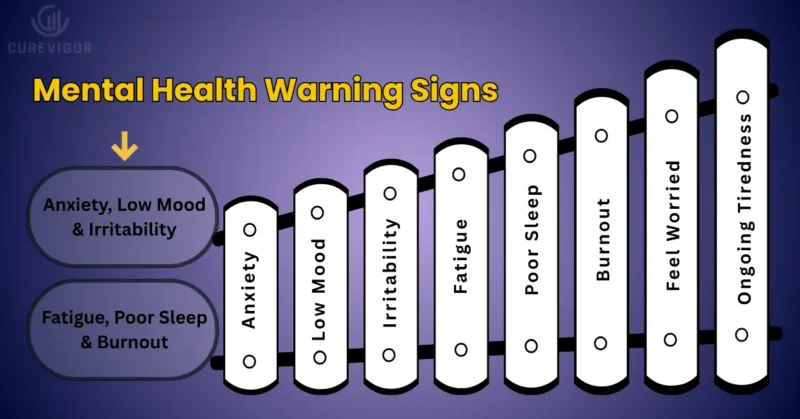
Everyone has difficult days. One tiring shift does not necessarily indicate a mental health problem. What matters is whether changes persist, intensify, or start interfering with your everyday life.
Anxiety, Low Mood, and Irritability
You may notice that you feel worried before every shift, lose interest in activities you usually enjoy, or become frustrated more easily than before.
Other changes may include feeling overwhelmed, struggling to relax, or having difficulty managing everyday responsibilities.
Night work can contribute to stress and sleep disruption, but many factors can cause these experiences. Don’t assume your work schedule explains everything.
Notice patterns without judging yourself. If low mood, anxiety, or loss of interest continues, consider speaking with a qualified health professional.

Fatigue, Poor Sleep, and Burnout
Ongoing tiredness can affect your patience, motivation, and ability to concentrate. You may feel exhausted even after sleeping or struggle to recover between shifts.
Work-related burnout can involve emotional exhaustion, increased distance from your job, and feeling less effective at work.
These signs deserve attention, particularly when they continue despite reasonable efforts to rest.
If you are so tired that driving or operating equipment feels unsafe, don’t push through just to finish your routine. Arrange a safer alternative when possible.

When to Seek Support
Consider getting professional advice if emotional difficulties persist, interfere with your relationships, affect your work, or make daily tasks increasingly difficult.
You do not need to wait until you reach a breaking point. Asking for help is a reasonable step toward taking care of yourself.
If you feel at risk of harming yourself or cannot keep yourself safe, contact local emergency services or seek urgent help from an appropriate crisis service.
9 Coping Strategies to Protect Your Mental Health
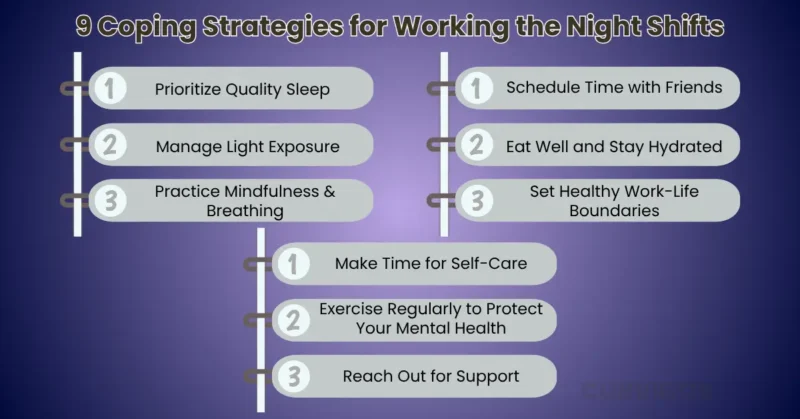
You may not be able to change your working hours, but you can often make small adjustments to improve your daily routine.
1. Prioritize Quality Sleep
Sleep is one of the most important parts of recovering from night work. Although needs vary, adults typically need 7 to 9 hours of sleep each day.
Daytime sleep can be difficult because of sunlight, noise, household responsibilities, and interruptions.
Make your sleep environment as comfortable as possible:
- Use blackout curtains or a suitable eye mask.
- Keep your bedroom cool, quiet, and comfortable.
- Silence unnecessary phone notifications.
- Tell household members when you need uninterrupted rest.
- Follow a repeatable wind-down routine before bed.
If one long sleep period isn’t realistic, some workers use a main sleep period plus an additional nap. The aim is to get enough total rest, not to follow a perfect schedule.
Avoid treating sleep as something you can continually sacrifice. It supports your attention, mood, and ability to cope with everyday demands.
2. Manage Light Exposure
Light helps regulate your internal body clock. Bright light can increase alertness, while darkness helps create a sleep-conducive environment.
During your shift, use workplace lighting appropriately and follow safety requirements. If your job allows, regular exposure to suitable light may help you remain alert.
After work, reduce unnecessary bright light as you prepare for sleep. Blackout curtains can be particularly helpful when daylight enters your bedroom.
Light timing can be complicated for permanent night workers, people on rotating shifts, and those with different sleep schedules. Don’t assume the same light routine suits everyone. If you are struggling with persistent sleep problems, a qualified sleep professional can offer individualized guidance.
3. Practice Mindfulness and Breathing
You do not need a long meditation session to take a mental break. A few minutes of quiet breathing can help you pause and notice how you are feeling.
Try this simple exercise during a suitable break:
- Sit comfortably and relax your shoulders.
- Breathe in gently through your nose.
- Exhale slowly without forcing your breath.
- Repeat for one or two minutes.
- Return your attention to the next manageable task.
If focusing on your breathing feels uncomfortable, try gentle stretching, calming music, or a quiet moment instead.
These techniques may help you manage everyday tension. They are not a substitute for professional care when anxiety or low mood becomes persistent.
4. Schedule Time with Friends
Your work schedule may make spontaneous social plans difficult, but relationships don’t always require long stretches of free time.
Instead, plan small opportunities to connect with people who matter to you. Always be clear about what you expect from your friends and family. Don’t be afraid to share your sleep and job schedule with your social circle.
You could schedule a regular call before your shift, share breakfast with a family member after work (when appropriate), or send a voice message during a break.
Explain your sleep schedule to loved ones so they understand why you cannot always respond immediately. This can prevent misunderstandings and help everyone plan around your availability.
Remember that social connection should support your well-being, not become another obligation. It is fine to decline plans when you need rest.
5. Eat Well and Stay Hydrated
Long shifts can make it tempting to rely on sugary snacks, skip meals, or eat whatever is available. Hunger and dehydration can also make an already tiring shift less comfortable.
Prepare simple meals and snacks before work. Options might include fruit, yogurt, eggs, whole-grain sandwiches, nuts, or leftovers from a balanced home-cooked meal.
Keep drinking water throughout your shift, adjusting your intake to your activity and environment.
Large, heavy meals immediately before sleeping may be uncomfortable for some people. If that happens to you, try eating a lighter meal before bed and having a more substantial meal earlier in your waking period.
No single meal plan works for every night worker. Focus on regular nourishment, practical preparation, and foods you enjoy.
6. Set Healthy Work-Life Boundaries
Night workers can feel pressure to handle family responsibilities, errands, overtime, and social commitments during the same limited hours.
Trying to meet every demand can leave little time for recovery.
Start by identifying what truly needs to happen today and what can wait. If possible, avoid accepting extra shifts when you are already struggling with fatigue.
You can also set simple boundaries with family members. Explain when you are available, when you are sleeping, and when you need uninterrupted rest.
If workload or scheduling is affecting your well-being, consider discussing breaks, staffing, or shift arrangements with your manager when it is safe and appropriate.
Healthy boundaries are not selfish. They help you protect the time and energy you need to function.
7. Make Time for Self-Care
Self-care doesn’t need expensive products, elaborate routines, or a full day off.
It can be as simple as enjoying a favorite meal, reading a few pages of a book, spending time outdoors, or listening to music after waking up.
Choose activities that help you feel rested or connected to life outside work.
On days off, don’t fill every available hour with chores. Leave time open for relaxation, hobbies, and relationships.
If you work rotating shifts, your routine may need to change from week to week. Aim for realistic habits instead of expecting yourself to follow the same schedule every day.
8. Exercise Regularly to Protect Your Mental Health
Regular exercise is one practical way to support your mental health while working night shifts.
Physical activity can help you manage everyday stress, improve your mood, and support better sleep. You do not need an intense workout or a gym membership to benefit.
Start with activities that fit your energy levels and work schedule:
- Walk for 10–20 minutes: Take a brisk walk after waking up or before your shift if you feel rested enough.
- Try gentle stretching: Loosen tight muscles after long periods of sitting or standing.
- Do simple home workouts: Try bodyweight exercises, dancing, or a short beginner workout.
- Stay active during breaks: When your job allows, stand up, stretch, or walk around for a few minutes.
- Choose consistency over intensity: A manageable routine you can maintain is more useful than pushing yourself through exhausting workouts.
If you feel extremely tired after a shift, prioritize safe travel and adequate sleep rather than forcing yourself to exercise. Instead, work out after you wake up.
Regular physical activity is not a cure for depression or anxiety, but it can be a helpful part of a broader self-care routine. Start gradually, choose activities you enjoy, and adjust your routine to your fitness level.
9. Reach Out for Support
Sometimes sleep routines, exercise, and relaxation are not enough to address what you are experiencing.
If you feel persistently low, anxious, isolated, or emotionally exhausted, speak with someone you trust. You may also contact a qualified mental health professional or another appropriate healthcare provider.
Depending on your circumstances, support might include counseling, workplace resources, peer support groups, or an assessment of ongoing sleep difficulties.
You do not need to label your experience or figure out its cause before asking for help.
If you are uncomfortable discussing mental health at work, consider what confidential support options are available to you.
A Daily Mental Wellness Routine
A simple routine can make self-care easier when you are tired. Adjust these suggestions to your working hours, commute, family responsibilities, and sleep needs.
Before Your Shift
When possible, prepare for work without rushing.
- Eat a balanced meal or prepare food to take with you.
- Check that you have water and any essentials you need.
- Take a few minutes to identify your priorities.
- Contact a friend or family member if you want some connection.
- Give yourself enough time to travel safely.
You do not need to complete every task. Choose the habits that make your shift more manageable.
During Your Shift
Look for small ways to support your physical and emotional well-being.
- Take permitted breaks when available.
- Drink water regularly.
- Eat your prepared meal or snacks.
- Stretch or move around when your job allows.
- Check in with a colleague or loved one.
- Notice when stress is building and pause if possible.
If your work involves driving, machinery, patient care, or other safety-sensitive responsibilities, follow workplace fatigue and safety procedures.
After Your Shift
Give yourself time to transition from work to rest.
Keep your wind-down routine simple. Reduce unnecessary stimulation, prepare your bedroom, and avoid turning every post-shift hour into a list of errands.
If you feel hungry, choose food that sits comfortably before sleep. Limit activities that keep you awake longer than intended.
Most importantly, allow yourself to rest without feeling guilty about being unavailable while you sleep.
Habits That Can Worsen Night Shift Stress
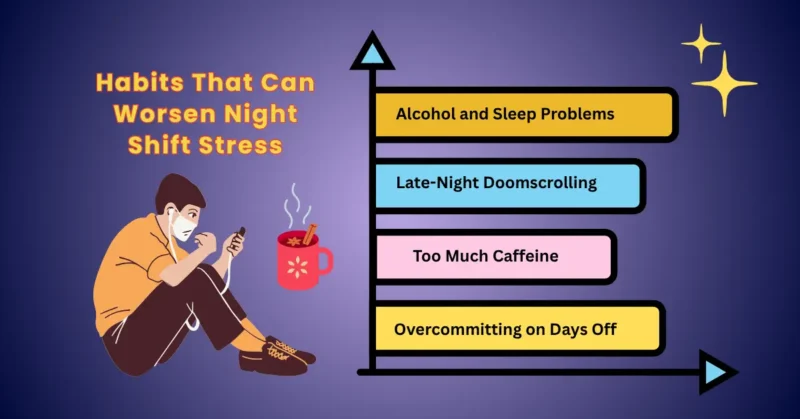
Some common coping habits can make sleep and stress more difficult to manage over time.
1. Too Much Caffeine
Caffeine can temporarily boost alertness, but drinking it too close to your intended sleep time may make it harder to fall asleep.
Pay attention to how long it lasts for you. Consider limiting caffeine later in your shift, especially if you struggle to sleep after work.
2. Alcohol and Sleep Problems
Alcohol can interfere with sleep quality and lead to less restorative sleep, even though it may initially make some people feel sleepy.
Avoid relying on alcohol to relax or fall asleep. If you regularly need something to help you sleep, talk to a qualified healthcare professional.
3. Late-Night Doomscrolling
Scrolling through upsetting news, arguments, or endless social media posts can increase stress and keep you awake longer.
Set a cutoff time for phone use before you plan to sleep. Choose a quieter activity, such as reading or listening to something relaxing.
4. Overcommitting on Days Off
It is understandable to want to make the most of your free time. However, filling every day off with errands and social plans can leave too little time for recovery.
Choose a few priorities and postpone less urgent tasks. Rest is a legitimate use of your time.
When to Seek Mental Health Support
Lifestyle changes may help you cope with everyday challenges, but they cannot guarantee protection from depression, anxiety, or other mental health conditions.
Persistent Stress, Anxiety, or Low Mood
Consider professional support if you experience ongoing sadness, excessive worry, loss of interest, difficulty functioning, or sleep problems that do not improve.
A professional can help you understand what may be contributing to these difficulties and discuss suitable next steps.
Talking to a Mental Health Professional
Start by contacting a qualified psychologist, counselor, or other appropriate healthcare professional
If access is difficult, ask about community services, workplace assistance programs, or reputable remote counseling options.
You deserve support even if your difficulties seem less serious than someone else’s.
Getting Urgent Help in a Crisis
If you think you may harm yourself or someone else, or you cannot keep yourself safe, seek immediate help through local emergency services or a crisis support service in your area.
If possible, tell a trusted person and avoid remaining alone while you arrange help.
FAQs on How to Protect Your Mental Health
Q. How Can I Stay Mentally Healthy on Night Shifts?
Prioritize sufficient sleep, eat balanced meals, take breaks when possible, stay connected with people you trust, and make time for activities you enjoy.
Notice ongoing mood changes and seek professional support if they start affecting daily life.
Q. Why Do Night Shifts Affect Your Mood?
Night shifts can disrupt the body’s usual sleep-wake rhythm and make it harder to get enough sleep.
Fatigue, demanding work, and reduced social contact may also affect mood. Individual experiences vary, and persistent symptoms can have causes beyond shift work.
Q. How Can I Manage Stress at Work?
Break large tasks into manageable steps, take permitted breaks, stay hydrated, and use simple relaxation techniques when appropriate.
If workload or scheduling creates ongoing stress, consider discussing practical changes with your supervisor.
How Can I Cope With Loneliness?
Schedule regular calls, share meals when your routines overlap, and maintain small daily connections with people you care about.
You might also explore hobbies or supportive groups that fit your working hours without interfering with sleep.
Q. How Much Sleep Do Night Shift Workers Need?
The average adult should strive for 7 to 9 hours of sleep every 24 hours. Some folks require more or less.
Because daytime sleep can be interrupted, protect your sleep environment and pay attention to how rested you feel.
Q. When Should I Seek Professional Help?
Seek support if low mood, anxiety, sleep problems, or emotional exhaustion persist, worsen, or interfere with everyday activities.
If you feel unsafe or have thoughts of harming yourself, seek urgent help immediately.
Final Thoughts: Protect Your Mental Health
Working nights can make it harder to sleep well, maintain relationships, and find time for yourself. But your well-being still matters, even when your schedule looks different from everyone else’s.
Start small. Protect your sleep, prep a meal before work, reach out to someone you trust, or set aside a few quiet minutes after a demanding shift. Choose changes that fit your real life rather than chasing a perfect routine.
Most importantly, don’t blame yourself if you keep struggling. Night work can create real challenges, and you don’t have to manage every difficulty alone.
Reach out for support when you need it, and give yourself the same care and patience you would offer someone you love.
Read more articles on Night Shift Workers’ Health.